Archive
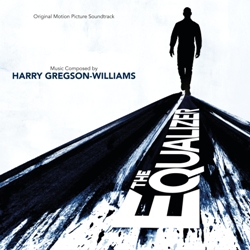
THE EQUALIZER – Harry Gregson-Williams
 Original Review by Jonathan Broxton
A gritty big-screen reboot of the popular Edward Woodward TV series from the 1980s, The Equalizer stars Denzel Washington as Robert McCall, a mysterious loner with a hidden past, who works in a Home Depot-like hardware store by day, and spends his evenings reading classic literature alone in a 24 hour diner. At the diner McCall befriends Teri (Chloë Grace Moretz), a teenage prostitute who longs to get out of the lifestyle, and who connects with McCall over the book The Old Man and the Sea. One day, after Teri is attacked and badly beaten by her pimp, McCall takes matters into his own hands and tries to bargain for her freedom with the gangsters who own her; unfortunately, things do not go as planned, and before long McCall is locking horns with members of the Russian mafia, and their dangerous leader, Teddy (Marton Csokas). The film is a dark, violent, but surprisingly engaging tale of vengeance and retribution; it is directed by Antoine Fuqua, and has an original score by Harry Gregson-Williams. Read more…
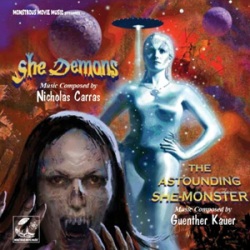
SHE-DEMONS/THE ASTOUNDING SHE-MONSTER – Nicholas Carras/Gene Kauer
 MOVIE MUSIC UK CLASSICS
Original Review by Craig Lysy
SHE-DEMONS
She Demons offers a classic science fiction B film, and that is being generous! Fred Maklin, Jerrie Turner and two others are pleasure boating when a storm shipwrecks them on an uncharted island. Their radio is damaged and cannot transmit, only receive. They soon discover that the island is scheduled to be used by the US navy for bombing practice. Of course things get worse when they also come upon strange human footprints. As the party explores the island, they soon discover that it is inhabited by deformed female humanoids; by products of horrific experiments perpetrated by a party of Nazis, who are led of course by the mad scientist Colonel Osler. We are informed that he has been extracting a rare glandular substance from the girls to inject into his wife Mona, who has suffered terrible facial disfigurement, so as to restore her beauty. This of course now makes perfect sense! In any event the film was a bust and received no critical acclaim. Read more…
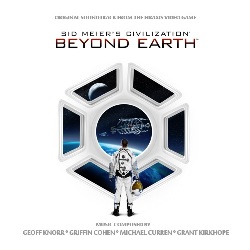
SID MEIER’S CIVILIZATION: BEYOND EARTH – Geoff Knorr, Griffin Cohen, Michael Curran, Grant Kirkhope
 GAME ZONE REVIEW
Original Review by Jonathan Broxton
Sid Meier’s Civilization: Beyond Earth is the latest installment in Sid Meier’s extremely popular Civilization video game series, in which players build a civilization from the ground up, taking turns to try to positively affect their civilization’s cultural, intellectual, and technical sophistication by conducting research, building infrastructure, and in some cases waging war against neighbors. In Beyond Earth – as the title suggests – game play takes place in the future, and in outer space. This is the 20th official entry into the Civilization series since it debuted in 1991 on the Super Nintendo, which has been consistently praised for its innovation, graphical design ideas, and music. Read more…
DESTINATION MOON – Leith Stevens
 MOVIE MUSIC UK CLASSICS
Original Review by Craig Lysy
Producer George Pal sought to start the decade of the 1950s with a well-made outer space drama. He adapted “Rocket Ship Galileo”, a novel by Robert Heinlein, for his project and installed Irving Pichel to direct. The story reveals humanity’s first effort to fly a spaceship to the Moon. Dr. Charles Cargraves and space exploration enthusiast General Thayer solicit aircraft executive Jim Barnes to join them in a collective effort to build Earth’s first nuclear powered spacecraft. Politics, public hysteria and regulations threaten to shutdown the project but are circumvented by a decision to pre-empt impending interference by launching early. They successfully launch and begin the epic trek, but are forced to make emergency repairs mid flight that includes a dramatic rescue of an un-tethered crewman. As they initiate lunar descent, miscalculation causes them to consume too much fuel during the landing. System check calculations indicate that they now have insufficient fuel reserves to successfully blast off and achieve lunar orbit with the full crew. They make desperate efforts to lighten the ship yet come up short by 110 pounds; meaning one of the crew must remain. With their launch window closing and crew anxiety building, they resolve to not only jettison the ship’s radio equipment, there-by losing contact with Earth, but also their sole remaining space suit. With time almost out the Luna safely blasts off from the Moon with all aboard and completes its epic voyage by returning to Earth. The film was a modest commercial success and earned two Academy Award nominations, winning one for Visual Effects. Read more…
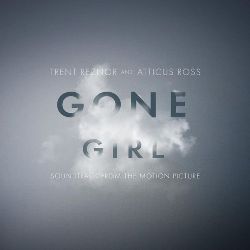
GONE GIRL – Trent Reznor, Atticus Ross
 Original Review by Jonathan Broxton
Gone Girl is a mystery-thriller based on the novel by Gillian Flynn, directed by David Fincher, and starring Ben Affleck, Rosamund Pike, Neil Patrick Harris and Tyler Perry. It follows the life of Nick Dunne, whose world is turned upside down when he returns to his suburban home to find his wife, Amy, missing and apparently abducted. Before long, and despite his protestations to the contrary, the police and the media have fingered Nick – who is awkward and sometimes behaves inappropriately in front of the camera – as being responsible for Amy’s disappearance. Not only that, but secrets are revealed which show that Nick and Amy’s marriage was not as idyllic as they liked to portray, leading to further scrutiny of Nick and his actions. But, of course, things are never quite as they seem in films of this type, with more revelations and twists before the final reel which I’m not going to spoil here. Suffice to say, Gone Girl is a dark, nihilistic movie with a lot of points to make about levels of trust in relationships, unreliable narration, and trials by media, although, ironically, it doesn’t work as well as an actual thriller, with numerous plot holes and illogical jumps in narrative flow. Where Fincher excels, however, is in creating an oppressive atmosphere of uncertainty, through his muted color palette, understated acting choices, and the score, by Oscar-winners Trent Reznor and Atticus Ross. Read more…
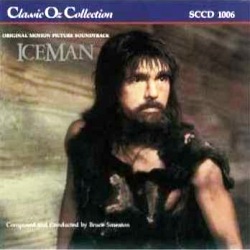
ICEMAN – Bruce Smeaton
 THROWBACK THIRTY
Original Review by Jonathan Broxton
Iceman was a thought-provoking scifi-drama directed by Fred Schepisi, and starring Timothy Hutton as Dr. Stanley Shephard, an anthropology scientist who is called to a remote research station in the farthest reaches of the Arctic when the body of a prehistoric Neanderthal man is discovered frozen in the ice. Astonishingly, the man is resuscitated, and before long Charlie (John Lone) – now alive and awake after 40,000 years – finds himself at the center of a moral tug-of-war, with one group of scientists wanting to dissect and exploit him, while Shepherd and his more empathetic colleagues defend Charlie’s right to life. The film, which also stars Lindsay Crouse, David Strathairn and Danny Glover among others, is almost forgotten today, obscure apart from its occasional screenings on cable TV, but has always been a favorite of mine. John Lone’s sensitive central performance as Charlie – who communicates through rudimentary grunts and gestures – is remarkable in its complexity, while the ethical implications of the story are fascinating. Read more…
THE BOXTROLLS – Dario Marianelli
 Original Review by Jonathan Broxton
The Boxtrolls is a stop-motion animated film from the people who brought us Coraline and Paranorman. Based on the novel “Here Be Monsters!” by Alan Snow, it follows the adventures of a community of quirky, mischievous creatures who have lovingly raised an orphaned human boy named Eggs in an amazing cavernous home beneath the streets of the fictional English town of Cheesebridge. When the town’s villain, Archibald Snatcher, comes up with a plot to get rid of the Boxtrolls – who are mistakenly believed to kidnap children – Eggs decides to venture above ground, “into the light,” where he meets and teams up with a feisty young girl named Winifred to save the Boxtrolls from an untimely fate. The film features the voices of Ben Kingsley, Toni Collette, Simon Pegg, and Game of Thrones’s Isaac Hempstead-Wright, and features an original score by Dario Marianelli, in what is his first significant work since Anna Karenina in 2012. Read more…
LILI – Bronislau Kaper
 MOVIE MUSIC UK CLASSICS
Original Review by Craig Lysy
MGM producer Edwin Knopf hired director Charles Walters to bring to life Lili, a fantasy tale based on a Saturday Evening Post short story “The Man Who Hated People” by Paul Gallico. For the film a talented cast was chosen; Lili Daurier (Leslie Caron), Paul Berthalet (Mel Ferrer), Marc (Jean-Pierre Aumont), Rosalie (Zsa Zsa Gabor) and Jacquot (Kurt Kaznar). In our story Lili, a naive country girl travels to a small provincial town in hopes of locating an old friend of her late father’s. When she discovers that he has died, a shopkeeper offers her employment as a guise to take sexual advantage of her. Marc, a handsome carnival magician whose Nome de plume is “Marcus the Magnificent” perceives her danger, covets her for himself and comes to her rescue. Yet her purity of heart dissuades his intentions and through him she gains work at the carnival assisting its master puppeteer Paul. Her wonderment and childlike innocence supports just endearing story-telling through his puppets; a brash red-haired boy named Carrot Top, Reynardo, a sly fox, Marguerite, a vain ballerina, and lastly Golo, a cowardly giant. Paul begins to fall in love with Lili but is embittered with life due to a leg injury he suffered during the war that ended his career in the ballet. We sadly see him reduced to expressing his true feelings for Lili through his puppets, while being mean-spirited when out of character. Lili eventually leaves Paul’s torment and while walking out of town, imagines the three puppets, now life-size, joining her as she finds a new life path. As she celebrates by dancing with each puppet, they all magically transform one by one into Paul. Lili realizes through each of them that they are a facet of Paul. She realizes her love for Paul and runs back to the carnival where they embrace and kiss passionately as the puppets applaud. The film was a critical success, earning composer Bronislau Kaper an Academy Award for Best Score. Read more…
DIE UNENDLICHE GESCHICHTE/THE NEVERENDING STORY – Klaus Doldinger, Giorgio Moroder
 THROWBACK THIRTY
Original Review by Jonathan Broxton
The Neverending Story is one of my most cherished childhood fantasy films, a love letter to books and the power of imagination, dressed up as a fantasy adventure set in a far-off world. Based on the novel Die Unendliche Geschichte by Michael Ende, it marked German director Wolfgang Petersen’s first English-language film after the international success of Das Boot in 1980, and starred Barret Oliver as Bastian, a young boy in suburban America who regularly suffers at the hands of school bullies. After being chased one day into a used book store owned by a grumpy bookseller, Bastian ‘borrows’ a book – The Neverending Story of the title – and begins reading it in his school’s attic. Bastian becomes quickly immersed in a story set in a world called Fantasia, which is being threatened by a force called “The Nothing”, a void of darkness that consumes everything. Fantasia’s child-like Empress (Tami Stronach) entreats Atreyu (Noah Hathaway), a young warrior, to find out how to stop The Nothing. In response, The Nothing summons Gmork, a highly intelligent werewolf, to find and kill Atreyu. The film has a rich and vivid cast of fantasy characters, most notably the luck dragon Falkor, and was a popular success when it was first released in the summer of 1984. Read more…
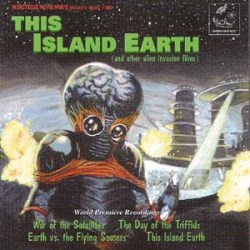
THIS ISLAND EARTH AND OTHER ALIEN INVASION FILMS – Various Composers
 MOVIE MUSIC UK CLASSICS
Original Review by Craig Lysy
Includes music from WAR OF THE SATELLITES by Walter Green, THIS ISLAND EARTH by Herman Stein, EARTH VS. THE FLYING SAUCERS by Daniele Amfitheatrof, and THE DAY OF THE TRIFFIDS by Ron Goodwin
THIS ISLAND EARTH
Universal-International’s producer William Alland well known for his penchant for Sci-Fi films, hired Joseph Newman to direct his latest project “This Island Earth”. Writers Franklin Coen and Edward O’Callaghan adapted a screenplay from ”Thrilling Wonder Stories”, three novelettes written by Raymond F. Jones. Principle actors Jeff Morrow (Exeter), Faith Domergue (Dr. Ruth Adams) and Rex Reason (Dr. Cal Meacham) were hired for the project. The story reveals the inhabitants of the planet Metaluna succumbing in their war with the plant Zahgon. Desperation leads them to Earth’s for its abundant uranium deposits, which they require to fuel their failing planetary shields, and for Earth’s greatest scientists whom they abduct to assist in their war efforts. The film earned praise for its story telling, cinematography and was also a commercial success. Read more…
WHEN THE GAME STANDS TALL – John Paesano
 Original Review by Jonathan Broxton
I’ve never fully understood the American obsession with high school sports. When I was a teenager I played football – soccer, for North Americans – pretty regularly, at school, and for my scout troupe team, and despite the game being by far the most popular one in the UK I never played in front of a crowd of more than, probably, 50 people, most of them being the parents of the players. By contrast, American high school football teams draw crowds in tens of thousands to near-professional standard stadiums, especially in places like Texas. The games are shown on local television, the results are reported and scrutinized in the newspapers, and the best players are treated like celebrity athletes. I’ve always considered the notion of treating teenagers like professional sportsmen somewhat odd and potentially damaging – who has the mentality and personality to handle pressure like that at that age? – but that’s the way things are here; it’s also the basis of the film When the Game Stands Tall, which is set in the world of high school football. Read more…
SNOW ON THE BLADES – Joe Hisaishi
 Original Review by Jonathan Broxton
Based on a classic short story in the collection Goroji Dono Oshimatsu by Jiro Asada, Snow on the Blades (Zakurozaka No Adauchi) is a Japanese samurai revenge action-drama directed by Setsuro Wakamatsu. The film stars Kiichi Nakai as Kingo Shimura, a fierce and noble samurai in the service of Lord Naosuke (Kichiemon Nakamura). After Naosuke is killed by a gang of mercenary ronins – samurai without a master to serve – Shimura is forbidden from committing ritual seppuku, and is instead sent on a secret mission to exact revenge. Over the curse of the next 13 years Shimura travels the length and breadth of Japan, searching for those who murdered his master, until only one remains: an equally fearsome samurai named Jyubei Sahashi (Hiroshi Abe). Read more…
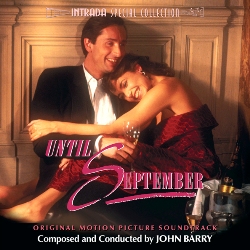
UNTIL SEPTEMBER – John Barry
 THROWBACK THIRTY
Original Review by Jonathan Broxton
Until September is a romantic drama directed by Richard Marquand – his first film after completing Return of the Jedi – written by Janice Lee Graham, and starring Karen Allen and Thierry Lhermitte. Allen plays Mo Alexander, an American tourist traveling through Europe, who misses a plane connection and gets stuck in Paris. While her new visa gets approved she goes to stay at the apartment of a friend who is away for the summer; there she meets her friend’s neighbor, Xavier, a wealthy French banker who is married but estranged from his wife and family. As Mo and Xavier spend time together in that most romantic of cities, their mutual attraction is overwhelming, and they eventually fall in love. Despite being a simple, uncomplicated story of passion and romance, Until September was not a major box office success in 1984, and today is known mainly for its sumptuous score by John Barry. Read more…
NO GOD NO MASTER – Nuno Malo
 Original Review by Jonathan Broxton
Two Italian immigrants to the United States, Nicola Sacco and Bartolomeo Vanzetti, became causes célèbres in New York in the 1920s when they were arrested, tried, and subsequently executed for their apparent part in the murder of two men during the armed robbery of a shoe factory. Popular contemporary thinking maintains that Sacco and Vanzetti – who were both unapologetic anarchists who advocated relentless warfare against a violent and oppressive government – were framed patsies, convicted as a political statement despite overwhelming evidence of their innocence, and much study into their case has been conducted in the years since their deaths. Director Terry Green’s film No God No Master uses the details of the Sacco and Vanzetti case as part of a broader-brush film about U.S. Bureau of Investigation Agent William Flynn, who in 1919 was assigned the task of finding those responsible for a series of package bombs which exploded on the doorsteps of prominent politicians and businessmen. Before long Flynn is immersed in an investigation that uncovers an anarchist plot to destroy democracy, and brings Sacco and Vanzetti to his attention. The film – which was completed in 2012 but only opened in limited markets this summer – stars David Strathairn as Flynn, James Madio and Alessandro Mario as Sacco and Vanzetti, and features an absolutely spectacular score by Portuguese composer Nuno Malo. Read more…
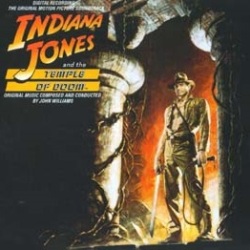
INDIANA JONES AND THE TEMPLE OF DOOM – John Williams
 THROWBACK THIRTY
GREATEST SCORES OF THE TWENTIETH CENTURY
Original Review by Jonathan Broxton
Fortune and glory, kid. Fortune and glory.
Even after thirty years, Indiana Jones and the Temple of Doom remains one of the most iconic and beloved action films of the 1980s. A darker, scarier prequel to Raiders of the Lost Ark, Steven Spielberg’s film has Harrison Ford returning as the archaeologist-adventurer Indiana Jones, crossing paths with Chinese jewel smugglers in Shanghai in 1934. After his deal with the Triads goes wrong, Indy flees on a plane with his diminutive sidekick Short Round (Ke Huy Quan) and nightclub singer Willie Scott (Kate Capshaw), only to crash over the Himalayas, washing up in a remote Indian village. Before long, Indy is embroiled in yet another adventure, this time involving missing children, ancient mystical stones said to have magic powers, and a terrifying cult that worships the Hindu goddess Kali. The film was a massive commercial success, ending up the third highest grossing film of 1984 with an adjusted-for-inflation gross of almost $436 million, and received two Academy Award nominations, including one for its score by John Williams. Read more…

Shop at the Movie Music UK Store

Member of the

 MOVIE MUSIC UK