Archive
Marvin Hamlisch, 1944-2012
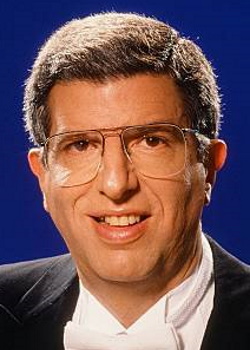 Composer Marvin Hamlisch died on August 6, 2012, at his home in Los Angeles, California, after a brief illness. He was 68.
Marvin Frederick Hamlisch was born in June 1944 in New York City to Austrian Jewish parents. He was a child prodigy who entered Juilliard at age seven, and then attended Queens College, earning his Bachelor of Arts degree in 1967.
A rare winner of the EGOT – Emmy, Grammy, Oscar, and Tony Awards – Hamlisch was one of the most decorated and versatile musicians of his generation. His work ranged from heartfelt ballads to rousing film scores, from Broadway showstoppers to pop hits, all marked by his melodic gift and deep emotional accessibility. He began his career as a rehearsal pianist for Barbra Streisand early in his career, later becoming her musical director and collaborator. His songs became hits for numerous artists, and his work as a conductor with major orchestras further expanded his artistic reach; his popular songs include “Sunshine, Lollipops and Rainbows” and “California Nights” for Lesley Gore, and “The Travelin’ Life” for Liza Minnelli.
His first film score was for 1968’s The Swimmer. He also wrote music for several early Woody Allen films, including Take the Money and Run (1969) and Bananas (1971). Hamlisch’s film work brought him three Academy Awards, all in 1974: two for The Way We Were (Best Original Score and Best Song, shared with lyricists Alan and Marilyn Bergman), and one for his adaptation of Scott Joplin’s ragtime music for The Sting. Other notable film and TV scores in his career include Kotch in 1971, Save the Tiger in 1973, the James Bond film The Spy Who Loved Me in 1977, Ice Castles in 1978, Ordinary People in 1980, Sophies Choice in 1982, Shirley Valentine in 1989, and The Mirror Has Two Faces in 1996. Read more…
Robert B. Sherman, 1925-2012
 Composer Robert B. Sherman, one of the greatest and most influential songwriters in the history of Hollywood, died on March 6, 2012, at his home in London, after a short illness. He was 86 years old.
Robert Bernard Sherman was born in New York, New York, in December 1925, the son of Russian Jewish immigrants. His father, Al, was a composer and arranger in Tin Pan Alley in New York, and was a contemporary of George Gershwin; the Shermans eventually relocated to Los Angeles in 1937, and Robert attended Beverly Hills High School. Robert joined the Army in 1943 aged 17, and was awarded the Purple Heart medal after being shot in the knee in 1945, an injury which forced him to walk with a cane for the rest of his life. After completing his national service, Sherman and his brother Richard started a songwriting company, and they enjoyed success writing popular songs for artists including Annette Funicello. This success brought them to the attention of producer Walt Disney, who eventually hired them as staff songwriters for the Walt Disney Studio. Read more…
John Barry, 1933-2011
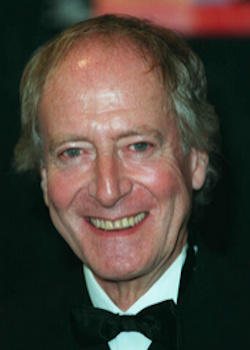 Composer John Barry died on January 30, 2011, at his home in Oyster Bay, New York, after suffering a heart attack. He was 77.
John Barry Prendergast was born in York, England in November 1933, where his father owned a chain of cinemas. He played the organ at York Minster and, after spending some time as a classical pianist, formed a jazz band, The John Barry Seven in 1957. The Seven had a number of popular instrumental hits in the UK, including a cover of “Walk Don’t Run” and the theme from the TV show Juke Box Jury, “Hit and Miss”, before moving into cinema.
Barry made his film music composing debut in 1960 writing music for the Adam Faith film Beat Girl at the age of 27, before establishing himself as a major force in the British film industry when he was brought in to arrange the theme for Dr. No, the first Bond film, in 1962. Though the “James Bond Theme” is credited to Monty Norman, Barry’s unmistakable arrangement—brassy, rhythmic, and insouciantly cool—established the sound of the series. He wrote the entire score for the second James Bond film, From Russia With Love, in 1963, and went on to score ten more, including Thunderball, Goldfinger, You Only Live Twice, On Her Majesty’s Secret Service, Diamonds Are Forever, Octopussy, and The Living Daylights. Read more…
Maurice Jarre, 1924-2009
 Composer Maurice Jarre died on March 29, 2009, at his home in Malibu, California, after a battle with cancer. He was 84.
Maurice Alexis Jarre was born in Lyon, France, in September 1924, and originally studied engineering at the Sorbonne before turning to music at the Conservatoire de Paris, where he studied composition, percussion, and conducting. His early career included work in French theatre, notably as musical director for Jean-Louis Barrault’s Théâtre National Populaire.
Jarre’s began scoring films in France in the 1950s, notably for acclaimed director Georges Franju, and came to international prominence in 1962 for his epic, percussive, sweeping masterpiece score for director David Lean’s Lawrence of Arabia. The film’s stirring main theme, performed by a full orchestra and augmented with Middle Eastern instruments, became one of the most recognizable in cinema and won Jarre his first Oscar. He capitalized on the success again in 1965 with another David Lean film, Doctor Zhivago, where his romantic and melancholic “Lara’s Theme” became a popular standard. Read more…
Leonard Rosenman, 1924-2008
 Composer Leonard Rosenman died on March 4, 2008, at the Motion Picture & Television Country House and Hospital in Woodland Hills, California. He had been suffering with dementia for many years, and died of a heart attack. He was 83.
Leonard Rosenman was born in September 1924, in Brooklyn, New York, to Jewish immigrants from Poland. After service in the Pacific with the United States Army Air Forces in World War II he studied piano and composition at Brooklyn College, and later at the University of California, Berkeley. Among his most influential teachers were Arnold Schoenberg and Roger Sessions – figures whose serialist and atonal techniques deeply informed Rosenman’s own compositional voice.
Rosenman’s entranc into the film world came through his friendship with actor James Dean; the two had met at a party for the cast of a Broadway play, and two weeks later Dean appeared at Rosenman’s doorstep wanting to take piano lessons. Dean later personally recommended him to director Elia Kazan for East of Eden in 1955, which proved to be a major breakthrough for the composer. Rosenman followed it later that year with Rebel Without a Cause, further establishing his reputation as a composer capable of capturing psychological intensity through unconventional harmonic language. These early scores were groundbreaking in their integration of dissonance and modernist techniques into mainstream Hollywood cinema. Read more…
Remembering Brian May, 1934-1997
 Composer Brian May died ten years ago today, on April 25, 1997, in his home in Melbourne, Australia, after a short respiratory illness. He was 62.
May was born in Adelaide, South Australia, in 1934. A classically trained musician and conductor, May studied at the Adelaide Elder Conservatorium and later joined the ABC (Australian Broadcasting Corporation), where he served as conductor of the ABC Showband. He made his transition to film scoring in the early 1970s and quickly became a key figure in the Australian New Wave cinema movement, alongside fellow composers such as Peter Best and Bruce Smeaton, through scores like The True Story of Eskimo Nell (1975) and Patrick (1978).
May’s most famous contributions to film came at the end of that decade, with his scores for George Miller’s Mad Max (1979) and Mad Max 2: The Road Warrior (1981). May’s propulsive, percussive orchestral style that matched those films’ raw, dystopian vision, and when they earned global acclaim and popularity, May became one of the first Australian film composers to enjoy a major international career.
Known for his dramatic orchestration and effective use of tension and rhythm, May was equally adept in the horror, action, and suspense genres. His film credits post-Mad Max include Roadgames (1981), Gallipoli (1981), The Survivor (1981), Turkey Shoot (1982), Cloak & Dagger (1984), Sky Pirates (1986), and Freddy’s Dead: The Final Nightmare (1991), among many others. Read more…
Shirley Walker, 1945-2006
 Composer Shirley Walker died on November 30, 2006, in Reno, Nevada, from complications following a stroke. She was 61.
Born Shirley Anne Rogers in April 1945, in Napa, California, Walker was a musical prodigy. She had an early start performing as a teenager at various hotels, jazz and art bands in tje 1960s, and later attended both San Francisco State University and Berkeley. She began her professional music career in the late 1970s, and for several years she wrote jingles and composed for industrial films.
Her career in film began in 1979, when she was hired to play the synthesizers on Carmine Coppola’s score for Apocalypse Now, and she quickly established herself as one of the most in-demand arrangers, conductors, and orchestrators in Hollywood, working notably with composers such as Danny Elfman, Hans Zimmer, and Brad Fiedel. Notably, she is credited for being a major influence on the symphonic style Elfman adopted on scores like Scrooged, Batman, and Edward Scissorhands.
Walker was one of the few female film score composers working in Hollywood during her career, and became one of the first female composers to earn a solo score credit on a major Hollywood motion picture when she was hired to score John Carpenter’s Memoirs of an Invisible Man in 1992. Her work on the animated super-hero film Batman: Mask of the Phantasm (1993) remains a standout achievement, praised for its operatic intensity and emotional complexity; this film also initiated her long-standing relationship with DC Animation, as over the course of the next decade she would write music for shows such as Batman: The Animated Series, Superman: The Animated Series, The Flash, The New Batman Adventures, and Batman Beyond, among many others. Read more…
Basil Poledouris, 1945-2006
 Composer Basil Poledouris died on November 8, 2006, at his home in Los Angeles, California, after a battle with cancer. He was 61.
Vassilis Konstantinos Poledouris was born in Kansas City, Missouri, in August 1945, to a family of Greek immigrants. A piano player from an early age, Basil moved to Los Angeles in 1964 to study filmmaking and music at the University of Southern California, where he was a contemporary of soon-to-be-directors George Lucas, John Milius and Randal Kleiser, who would go on to be lifelong friends and collaborators. Poledouris dabbled in acting – he had a non-speaking role as a crewmember on the original series of Star Trek – but concentrated on music following his graduation with a BA in film studies.
Poledouris composed music for over 100 educational films before getting his break in feature films, which came in 1978 following the release of the popular cult surfing movie Big Wednesday (directed by Milius), and which he followed by writing music for hit teen romance The Blue Lagoon in 1980, and the action fantasy epic Conan the Barbarian in 1982. The latter film launched the career of Arnold Schwarzenegger, and is considered one of the finest fantasy scores ever written. Read more…
Remembering Toru Takemitsu, 1930-1996
 Composer Toru Takemitsu died ten years ago today, on February 20, 1996, in Tokyo, Japan, of pneumonia while undergoing treatment for bladder cancer. He was 65.
FULL REMEMBRANCE COMING SOON.
Remembering Brian Easdale, 1909-1995
 Composer Brian Easdale died ten years ago today, on October 30, 1995, at his home in London, England. He was 86.
FULL REMEMBRANCE COMING SOON.
Remembering Miklós Rózsa, 1907-1995
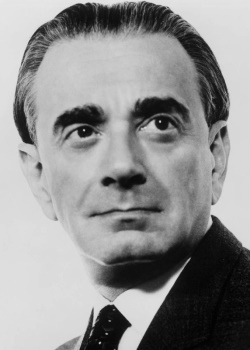 Composer Miklós Rózsa died ten years ago today, on July 27, 1995, at his home in Los Angeles, California, due to complications from a series of strokes. He was 88.
Born in Budapest in April 1907, Rózsa was a child prodigy who studied violin and composition from an early age. He completed his formal training in Leipzig, Germany, and initially made his name as a composer of concert music. In the 1930s he moved to Paris, and later London, having been encouraged by his friend, Swiss composer Arthur Honegger, to supplement his income writing music for cinema. His entry into film scoring came with Knight Without Armour (1937), produced by his fellow Hungarian Alexander Korda, and his success in British cinema led to a contract with MGM and a move to Hollywood in 1940.
Rózsa quickly distinguished himself in America with powerful, emotionally charged scores for films such as The Thief of Bagdad (1940), Lydia (1940), Sundown (1941), That Hamilton Woman (1941), Jungle Book (1942), Double Indemnity (1944), and Spellbound (1945), the latter of which earned him the the first of his three Oscar wins for Best Original Score. He was acclaimed for his ability to seamlessly blend traditional symphonic writing with dramatic storytelling, and often conducted extensive historical and ethnomusicological research to bring authenticity to his scores, resulting in a style that helped define the sound of Hollywood’s Golden Age.
He won his second Oscar for A Double Life (1947), and then a third for Ben-Hur (1959), which at time was heralded as one of the most ambitious film scores ever written, and which subsequently became a benchmark of epic film music. His other acclaimed and popular scores included such titles as The Lost Weekend (1945), The Killers (1946), The Red Danube (1949), Quo Vadis (1951), Ivanhoe (1952), Julius Caesar (1953), Knights of the Round Table (1953), Young Bess (1953), Valley of the Kings (1954), Lust for Life (1956), El Cid (1961), King of Kings (1961), Sodom and Gomorrah (1963), and The Golden Voyage of Sinbad (1974). Read more…
Elmer Bernstein, 1922-2004
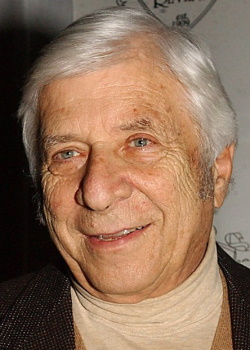 Composer Elmer Bernstein died on August 18, 2004, at his home in Ojai, California, after a lengthy battle with cancer. He was 82.
Bernstein was born in New York City in April 1922, the son of immigrants from Ukraine and Austria-Hungary. He studied piano as a child and showed early promise as a performer; during his childhood, he performed professionally as a dancer and an actor, but then switched to music and trained at the Juilliard School where he was encouraged by prominent figures such as Aaron Copland. During World War II, he served in the Army Air Forces, where he composed and arranged music for military radio programs.
Bernstein moved to California in in the early 1950s, when he was hired to score the thriller Sudden Fear in 1952. However, along with many other artists in Hollywood, Bernstein faced censure during the McCarthy era of the early 1950s, and was called by the House Un-American Activities Committee. After he refused to name names, pointing out that he had never attended a Communist Party meeting, he found himself composing music for Z-grade sci-fi movies such as Robot Monster and Cat-Women of the Moon.
His work on The Man with the Golden Arm (1955), one of the first major studio films to feature a jazz score, brought him back into the mainstream, earned him his first Oscar nomination and marked him as a daring and contemporary voice in film music. His score for The Ten Commandments (1956), an epic of biblical scale, demonstrated his facility with grand orchestration and established him as a composer of serious dramatic substance. He followed it with the heroic and unforgettable theme to The Magnificent Seven (1960), whose galloping rhythms and bold brass fanfares became one of the most enduring musical signatures in film history. Read more…
David Raksin, 1912-2004
 Composer David Raksin died on August 9, 2004, in Los Angeles, after a short illness. He was 92.
Raksin was born in Philadelphia, Pennsylvania, in August 1912. He studied at the University of Pennsylvania and the Curtis Institute of Music, and later with Isadore Freed in New York and Arnold Schoenberg in Los Angeles. He worked as an arranger for Charlie Chaplin on the score for Modern Times in 1936 when he was just 24 years old, and soon after began a long career as a composer for studio films.
With a career spanning more than six decades, Raksin composed music for over 100 films and numerous television programs, earning a reputation for melodic sophistication and dramatic sensitivity. His theme for the 1944 classic Laura is often cited as one of the most memorable in film history, and became a popular standard, with lyrics later added by Johnny Mercer. Raksin’s theme song for the 1953 film The Bad and the Beautiful (also called “Love is For the Very Young”) was also a hit.
Rakin’s other major composing credits include Forever Amber (1947), The Secret Life of Walter Mitty (1947), Force of Evil (1948), Whirlpool (1950), The Magnificent Yankee (1950), Across the Wide Missouri (1951), The Big Combo (1955), Bigger Than Life (1956), Separate Tables (1958), and Two Weeks in Another Town (1962), among many others. He received two Academy Award nominations and numerous honors for his work, which was admired for its lyrical beauty, harmonic depth, and keen dramatic sense. One of his last major scores was for the critically acclaimed nuclear holocaust-themed TV drama The Day After in 1983. Read more…
Jerry Goldsmith, 1929-2004
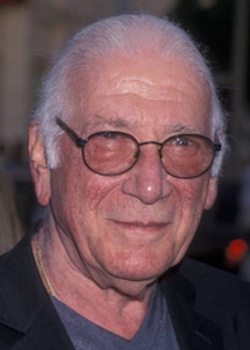 Composer Jerry Goldsmith died on July 21, 2004 at his home in Beverly Hills, California, after a battle with cancer. He was 75.
Jerrald King Goldsmith was born in Pasadena, California, in February 1929, and started playing piano at an early age, before later being tutored by pianist Jakob Gimpel and composer Mario Castelnuovo-Tedesco. He studied music at both the University of Southern California – where he attended classes given by Miklós Rózsa – and Los Angeles City College, before securing a job as a clerk-typist in the music department of TV network CBS under music director Lud Gluskin. He began writing music as early as 1951, for radio shows and live television (one of his first gigs was the first ever James Bond story, Casino Royale, produced as part of the Climax! series), and quickly became a television mainstay, contributing scores to such series as The Lineup, Black Saddle, Playhouse 90, Perry Mason and The Twilight Zone.
Goldsmith scored his first feature film, the western Black Patch, in 1957 at the age of 28, and spent much of the 1950s and 60s scoring both feature films and television projects: he worked on hit TV shows such as Gunsmoke, Wagon Train, Rawhide, Cain’s Hundred, Dr Kildare, The Man from U.N.C.L.E., The Loner, Room 222 and The Waltons, while scoring such popular films as Freud (1962), for which he received his first Oscar nomination, The List of Adrian Messenger (1963), Seven Days in May (1964), A Patch of Blue (1965), In Harm’s Way (1965), The Blue Max (1966), The Sand Pebbles (1966), the groundbreaking and avant-garde Planet of the Apes (1968), and numerous revisionist Westerns, which seemed to be his forte for much of the first two decades of his career. Read more…
Remembering Henry Mancini, 1924-1994
 Composer Henry Mancini died ten years ago today, on June 14, 1994, at his home in Los Angeles, California, after a battle with pancreatic cancer. He was 70 years old.
Enrico Nicola Mancini, nicknamed Henry or Hank, was born in April 1924 in Cleveland, Ohio, the son of Italian immigrants, and raised in a rural steelworking town in nearby Pennsylvania. He showed early musical promise and studied at the Juilliard School, but his education was interrupted by World War II, during which he served in the Army and worked with the Glenn Miller Air Force Band. After the war, Mancini joined Universal-International’s music department, where he gained experience scoring dozens of B-movies, including classics such as Creature from the Black Lagoon (1954).
Mancini’s big break came in 1958 when he collaborated with director Blake Edwards on the television series Peter Gunn, which featured a groundbreaking jazz score that became a hit in its own right. Their partnership continued through numerous films, with Mancini’s music often becoming as iconic as the films themselves. He won an Oscar for scoring Edwards’s film Breakfast at Tiffany’s in 1961, and co-wrote the iconic song “Moon River” for lead actress Audrey Hepburn. He won another Oscar in 1962 for the title song for Edwards’s film Days of Wine and Roses, received an Oscar nomination for timeless slinky jazzy main theme from The Pink Panther in 1964, and earned critical acclaim for his work on several other Edwards-directed films including The Great Race (1965), Darling Lili (1970), 10 (1979), and Victor/Victoria (1982), among many others.
Mancini had a rare ability to blend classical technique with contemporary popular styles, from swing and jazz to lush romantic ballads. Throughout the 1960s and 70s Mancini combined his scoring career with an equally successful parallel career as a songwriter, recording artist, touring conductor, and media personality, which made him one the most famous and popular American classical musicians of his era. His songs were recorded by the most popular vocalists of the day – Andy Williams, Frank Sinatra, Perry Como, Johnny Mathis, Tony Bennett, dozens of others – and many of them topped the charts. Read more…

Shop at the Movie Music UK Store

Member of the

 MOVIE MUSIC UK