Archive
KNIGHTS OF THE ROUND TABLE – Miklós Rózsa
 GREATEST SCORES OF THE TWENTIETH CENTURY
Original Review by Craig Lysy
The enormous commercial success of Ivanhoe in 1952 served as a catalyst for invigorating the swashbuckling costume epic. MGM executive Don Schary decided to proceed with his studio’s first film in Cinemascope with an epic retelling of the story of King Arthur and the Knights of the Round Table. He assigned production to Pandro S. Berman with a $2.6 million budget. Talbot Jennings, Jan Lustig and Noel Langley were hired to write the screenplay, adapting the 1485 tale “Le Morte d’Arthur” by Sir Thomas Malory, and Alfred Lord Tennyson’s 1859 work “Idylls of the King,” and Richard Thorpe was tasked with directing. A stellar cast was assembled, which included Robert Taylor as Sir Lancelot, Ava Gardner as Guinevere, Mel Ferrer as King Arthur, Anne Crawford as Morgan Le Fay, Stanley Baker as Mordred, Felix Aylmer as Merlin, Maureen Swanson as Elaine, Gabriel Woolfe as Sir Percival, and Robert Urquhart as Sir Gawain. Read more…
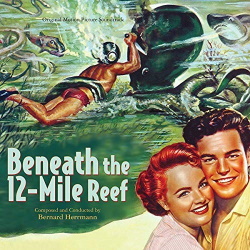
BENEATH THE 12-MILE REEF – Bernard Herrmann
 GREATEST SCORES OF THE TWENTIETH CENTURY
Original Review by Craig Lysy
20the Century Fox revolutionized the film industry in 1953 with Stereophonic Cinemascope, which was used for “The Robe” and “How to Marry a Millionaire”. To further capitalize on the new technology Darryl F. Zanuck, who was in charge of film production envisioned taking it underwater. A.I. Bezzerides was hired to write the screenplay, which would incorporate an underwater narrative and feature a love story inspired by Shakespeare’s play “Romeo and Juliet” (1597). Robert Bassler was assigned production, provided a $1.56 million budget, and Robert D. Webb was tasked with directing. The film cast would include; Robert Wagner as Tony Petrakis, Terry Moore as Gwyneth Rhys, Gilbert Roland as Mike Petrakis, Angela Clarke as Mama Petrakis, and Peter Graves as Arnold Dix. Read more…
ALL THE BROTHERS WERE VALIANT – Miklós Rózsa
 GREATEST SCORES OF THE TWENTIETH CENTURY
Original Review by Craig Lysy
In response to the commercial success of Captains Courageous in 1936, MGM purchased the film rights to the 1919 seafaring adventure novel All the Brothers Were Valiant by Ben Ames Williams. Remarkably it would take the studio fifteen years to finally get the project off the ground. In November 1951 Pandro S. Berman was assigned production and provided a $1.816 million budget, Harry Brown was hired to write the screenplay, and Richard Thorpe was tasked with directing. A stellar cast was assembled including; Robert Taylor as Joel Shore, Stewart Granger as Mark Shore, Ann Blyth as Priscilla Holt (a replacement for the Elizabeth Taylor who was recovering from childbirth), Betta St. John as Native girl, Keenan Wynn as Silva and James Whitmore as Fetcher. Read more…
FROM HERE TO ETERNITY – George Duning, Morris Stoloff
 GREATEST SCORES OF THE TWENTIETH CENTURY
Original Review by Craig Lysy
In 1952 Columbia Pictures was intent on producing a war romance as a vehicle for stars Burt Lancaster and Montgomery Clift. They found their story with the 1951 novel From Here to Eternity by James Jones. They purchased the film rights, assigned production to Buddy Adler and allocated a $2.5 million budget. Fred Zinnemann was given the reigns to direct with Daniel Taradash writing the screenplay. A stellar cast was assembled, including Lancaster as First Sergeant Milton Warden, Clift as Private Robert E. Lee “Prew” Pruwitt, Deborah Kerr as Karen Holmes, Donna Reed as Alma Burke, Frank Sinatra as Private Angelo Maggio, Philip Ober as Captain Dana “Dynamite” Holmes, and Ernest Borgnine as Staff Sergeant James R. “Fatso” Judson. Read more…
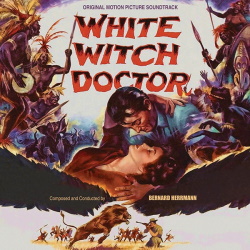
WHITE WITCH DOCTOR – Bernard Herrmann
 GREATEST SCORES OF THE TWENTIETH CENTURY
Original Review by Craig Lysy
20th Century Fox executive Darryl F. Zanuck was fond of adapting novels for the big screen and when he came across the 1950 work White Witch Doctor by Louise A Stinetorf he purchased the film rights and assigned Otto Land to production with a $2.02 million budget. Ivan Goff and Ben Roberts were hired to adapt the novel, but Zanuck instructed them to deviate from a literal retelling of the novel, insisting that they infuse the tale with romance, sex, physical excitement, and physical violence set against beautiful African vistas. Roy Ward Baker was tasked with directing, but was replaced by Henry Hathaway when he fell ill in Africa. A fine cast was assembled, including Robert Mitchum as Lonni Douglas, Susan Hayward as Ellen Burton, Walter Slezak as Huysman, Timothy Carey as Jarrett and Mashood Olabisi as Jacques. Read more…
YOUNG BESS – Miklós Rózsa
 GREATEST SCORES OF THE TWENTIETH CENTURY
Original Review by Craig Lysy
In 1945 MGM Studios took notice of the best-selling 1944 novel Young Bess by Margaret Irwin and believed they could present a grand adaptation for the big screen. The film rights were purchased and Sidney Franklin was assigned production with a budget of $2.423 million. In 1946 Katherine Anne Porter, Jan Lustig and later Arthur Wimperis were hired to write the screenplay, and George Sidney was tasked with directing. Casting problems and production postponements delayed filming until October 1952. After considering Deborah Kerr, Janet Leigh and Elizabeth Taylor for the lead role, Jean Simmons was chosen to play Elizabeth. Joining her would be; Stewart Granger as Thomas Seymour, Deborah Kerr as Catherine Parr, and Charles Laughton as King Henry VIII. Read more…
THE BAD AND THE BEAUTIFUL – David Raksin
 GREATEST SCORES OF THE TWENTIETH CENTURY
Original Review by Craig Lysy
MGM executives came across a magazine story “Of Good and Evil” by author George Bradshaw, which was expanded into a full story titled “Memorial to a Bad Man”. They believed this riveting character driven drama offered a potent narrative that would be perfect for the big screen. The studio purchased the film rights and assigned renown producer John Housman with production and a budget of $1.56 million. Charles Schnee was hired to write the screenplay and Vincente Minnelli was tasked with directing. A very talented cast was assembled, which included; Kirk Douglas as Jonathan Shields, Dick Powell as James Lee Bartlow, Walter Pidgeon as Harry Pebbel, Barry Sullivan as Fred Amiel, Lana Turner as Georgia Lorrison, Gloria Grahame as Rosemary Bartlow and Gilbert Roland as Victor “Gaucho” Ribera. Read more…
THE THING FROM ANOTHER WORLD – Dimitri Tiomkin
 GREATEST SCORES OF THE TWENTIETH CENTURY
Original Review by Craig Lysy
Producers Edward Lasker and Howard Hawks believed that the science fiction-horror novella “Who Goes There?” (1938) by John W. Campbell could be successfully adapted to the big screen. They hoped to tap into the public’s angst with how scientists had unleashed the atomic age and fundamentally changed the world. They purchased the film rights, and Hawks’ Winchester Pictures Production company would fund the project with RKO Pictures agreeing to distribute. Charles Lederer, Hawks and Ben Hecht collaborated in writing the screenplay, and Christian Nyby was tasked with directing. The cast did not feature any box office stars, and was comprised of Margaret Sheridan as Nikki Nicholson, Kenneth Tobey as Captain Patrick Hendry, Robert Cornthwaite as Dr. Arthur Carrington, and James Arness as the alien. Read more…
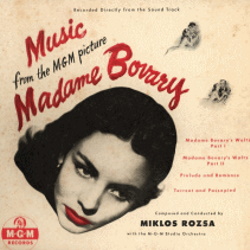
MADAME BOVARY – Miklós Rózsa
 GREATEST SCORES OF THE TWENTIETH CENTURY
Original Review by Craig Lysy
MGM Studios had a history of successfully adapting popular works of literature for the big screen. In that tradition, the 1857 French novel “Madame Bovary” by Gustave Flaubert was universally recognized as a classic of literature, which MGM believed merited a film presentation. The film rights were purchased, Pandro S. Berman was assigned production with a $2.076 million budget, Robert Ardey was hired to write the screenplay with instructions to maintain fidelity to the novel, and Vincente Minnelli was tasked with directing. A stellar cast was hired, including Jennifer Jones as Emma Bovary, Van Heflin as Charles Bovary, Louis Jourdan as Rodolphe Boulanger, and James Mason as Gustave Flaubert. Read more…
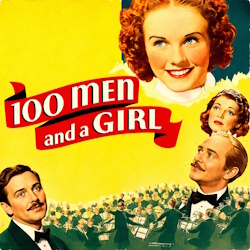
ONE HUNDRED MEN AND A GIRL – Charles Previn
 GREATEST SCORES OF THE TWENTIETH CENTURY
Original Review by Craig Lysy
In 1937 Universal Pictures decided to embark on a new musical comedy based on an original story by writer Hans Kraly. Joe Pasternak and Charles R. Rogers were assigned production with a $762,000 budget, Henry Koster was tasked with directing, and Kraly was hired to adapt his story and write the screenplay. For their cast, the studios premiere star Deanna Durbin, who was also a vocally trained soprano, would star as Patsy Cardwell. Joining her would be Adolphe Menjou as John Cardell, renown conductor Leopold Stokowski as himself, Eugene Pallette as John R, Frost, and Alice Brady as Mrs. Frost. Read more…
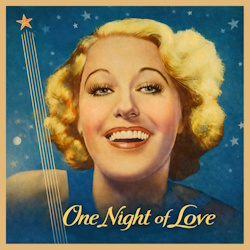
ONE NIGHT OF LOVE – Victor Schertzinger, Gus Kahn, Louis Silvers
 GREATEST SCORES OF THE TWENTIETH CENTURY
Original Review by Craig Lysy
Columbia Pictures was seeking a romantic musical set in the world of opera. Director Victor Schertzinger brought them a story “One Night of Love” by Charles Beahan and Dorothy Speare that seemed to fit the bill. Columbia executives were impressed and Schertzinger was given the green light to proceed with the project as director, Harry Cohn tasked with overseeing production with a budget of $500,000, and James Gow, S.K. Lauren, and Edmund H. North were hired to write the screenplay. A fine cast was assembled, which included Grace Moore as Mary Barrett, Tullio Carminati as Giulio Monteverdi, Lyle Talbot as Bill Houston, and Mona Barie as Lally. Read more…
THE BISHOP’S WIFE – Hugo Friedhofer
 GREATEST SCORES OF THE TWENTIETH CENTURY
Original Review by Craig Lysy
Samuel Goldwyn came across the novella “The Bishop’s Wife” (1928) by Robert Nathan and decided its tender family tale would translate well to the big screen. He would manage production using his own production company to fund the project, with RKO Pictures distributing. The film suffered repeated setbacks that led to Goldwyn sacking his director William A. Seiter and replacing him with Henry Coster, switching the actors for the two male lead roles, tearing down and rebuilding all the sets, and rewrites of the original screenplay of Leonardo Bercovici and Robert Sherwood, by Billy Wilder and Charles Brackett. A fine trio of actors were cast, including Cary Grant as Dudley the angel, Loretta Young as Julia Brougham, and David Niven as Bishop Henry Brougham. Read more…
BETWEEN TWO WORLDS – Erich Wolfgang Korngold
 GREATEST SCORES OF THE TWENTIETH CENTURY
Original Review by Craig Lysy
The play 1923 Outward Bound by Sutton Vane enjoyed successful theatrical runs in London and later on Broadway, where it achieved 144 performances. In 1943 Warner Brothers Studios decided to embark on a remake of their original fantasy film version of Outward Bound from 1930. Jack Warner and Mark Hellinger took charge of production, Edward A. Blatt was tasked with directing, and Daniel Fuchs was hired to write a new screenplay, incorporating story elements from both the original 1924 Broadway play and the 1930 film. A stellar cast was hired, including Paul Henreid as Henry Bergner, Eleanor Parker as Ann Bergner, Sydney Greenstreet as the Examiner, the Reverend Tim Thompson, Edmund Gwenn as Scrubby, John Garfield as Tom Prior, George Coulouris as Lingley, Faye Emerson as Maxine, Sara Allgood as Mrs. Midget, Dennis King as the Reverend Duke, Isobel Elsom as Genevieve Cliveden-Banks and Gilbert Emery as Benjamin Cliveden-Banks. Read more…
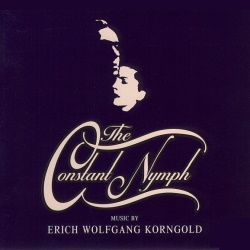
THE CONSTANT NYMPH – Erich Wolfgang Korngold
 GREATEST SCORES OF THE TWENTIETH CENTURY
Original Review by Craig Lysy
The 1924 novel The Constant Nymph by Margaret Kennedy was a popular sensation, which spawned a successful play by Basil Dean in 1926, and two movie incarnations; a 1928 silent film starring Ivor Novello and a 1933 talkie with Brian Aherne. Warner Brothers decided that they could offer a definitive film version and so bought the film rights from 20th Century Fox in 1940. The studio secured support from Kennedy to proceed and Henry Blanke and Hal B. Wallis were assigned production with a $1.1 million budget, Edmund Goulding was tasked with directing, and Kathryn Scola was hired to write the screenplay based on Basil Dean’s 1926 version. A superb cast was assembled, including; Joan Fontaine as Tessa Sanger, Charles Boyer as Lewis Dodd, and Alex Smith as Florence Creighton. Read more…
DEVOTION – Erich Wolfgang Korngold
 GREATEST SCORES OF THE TWENTIETH CENTURY
Original Review by Craig Lysy
In 1942 Warner Brothers decided to embark upon opulent period piece involving a fictionalized biopic of the renown Brontë sisters. Robert Buckner was assigned production with Keith Winter and Edward Chodorov hired to write the screenplay. Curtis Bernhardt was tasked with directing a lavish and opulent tale and a stellar cast was assembled, including Olivia de Havilland as Charlotte Brontë, Ida Lupino as Emily Brontë, Nancy Coleman as Anne Brontë, Paul Henreid as Reverend Arthur Nicholls and Sydney Greenstreet as the renowned publisher William Makepeace Thackeray. Read more…

Shop at the Movie Music UK Store

Member of the

 MOVIE MUSIC UK