Archive
HEUTE BIN ICH BLOND/THE GIRL WITH NINE WIGS – Johan Hoogewijs
 Original Review by Jonathan Broxton
Heute Bin Ich Blond is a German comedy-drama directed by Marc Rothemund and starring Lisa Tomaschewski as Sophie, a 21 year-old girl in contemporary Germany who learns she has cancer. Rather than letting her diagnosis rule her life, she instead decides to enjoy her life as though she were not sick; pre-empting chemotherapy, she shaves her head and invests in nine different colored wigs, which help her live out nine different aspects of her personality. Together with her best friend Annabel (Karolina Teska), Sophie goes to parties, flirts, has sex, falls in love with her long-time friend Rob (David Rott), and writes her daily blog, while all the while the possibility of her imminent death looms on the horizon. The film was based on the popular autobiography by Dutch author Sophie van der Stap, “Meisje Met Negen Pruiken”, and received generally favorable reviews when it opened in cinemas in March 2013. Read more…
OSTWIND: ZUSAMMEN SIND WIR FREI/WINDSTORM – Annette Focks
 Original Review by Jonathan Broxton
Ostwind: Zusammen Sind Wir Frei is one of those films which, had it been made in America, would have been made by Disney. It tells the story of a rebellious teenager, Mika, who is sent to stay with her stern grandmother, a former champion show jumper, on the family countryside stud farm, in order to “straighten her out”. There she encounters Ostwind, a temperamental old horse whose lack of discipline and bad temper led to the end of Grandmother’s competition career. Naturally, Mika and Ostwind bond, leading to reconciliations all round. The film is directed by Katja von Garnier, stars Hanna Binke, Marvin Linke, Cornelia Froboess and Tilo Prückner, and has a lovely original score by Annette Focks. Read more…
UNSERE MÜTTER, UNSERE VÄTER/GENERATION WAR – Fabian Römer
 Original Review by Jonathan Broxton
Unsere Mütter, Unsere Väter is an ambitious 3-part German mini-series broadcast on the ZDF network in March 2013. The story follows five friends in their 20s, each on different paths through Nazi Germany and World War II: two are Wehrmacht soldiers on the Eastern Front, one is a nurse, one is an aspiring singer, and one is a Jewish tailor. The narrative spans five years in Berlin in the 1940s, beginning when the friends meet up for a last time before embarking on their journeys, enthusiastically vowing to meet up again the following Christmas. The series stars Volker Bruch, Tom Schilling, Katharina Schüttler, Miriam Stein and Ludwig Trepte, was directed by Philipp Kadelbach, and has an original score by composer Fabian Römer. Read more…
BACZYŃSKI – Bartosz Chajdecki
 Original Review by Jonathan Broxton
Baczyński is a film about the life of Krzysztof Kamil Baczyński, one of Poland’s most celebrated contemporary poets, who wrote powerful, romantic poetry while also acting as a member of a resistance movement against the Nazis during World War II. He was killed by a sniper in Warsaw in August 1944, aged just 23, but remains a popular and influential figure in Polish literature. The film was written and directed by Kordian Piwowarski, stars Mateusz Kosciukiewicz as Baczyński, and features a gorgeous and heartfelt score by Bartosz Chajdecki. Read more…
RUBINROT/RUBY RED – Philipp F. Kölmel
 Original Review by Jonathan Broxton
Rubinrot is a children’s fantasy adventure film based on the first book in the “Liebe Geht Durch Alle Zeiten” series of popular German-language novels written by Kerstin Gier. The story follows a young girl, Gwendolyn Shepherd, who discovers that she and all the other members of her family can travel through time, and explores the opportunities and disadvantages such powers bring. The film is directed by Felix Fuchssteiner, stars Maria Ehrich, Jannis Niewöhner and Laura Berlin, and has a score by 40-year-old Philipp F. Kölmel, yet another composer who was completely unknown to me prior to this project. Read more…
NIGHT TRAIN TO LISBON – Annette Focks
 Original Review by Jonathan Broxton
Night Train to Lisbon is a German drama film directed by Bille August and starring Jeremy Irons. Based on the novel “Nachtzug Nach Lissabon” by Pascal Mercier, and written by Greg Latter and Ulrich Herrmann, the film is about a Swiss professor who saves the life of a woman and then abandons his teaching career and reserved life to embark on a thrilling intellectual adventure, following in the footsteps of a doctor who opposed António de Oliveira Salazar’s right-wing dictatorship in Portugal in the 1950s. The score for Night Train to Lisbon is by Annette Focks, who is finally starting to gain some international prominence, having been working tirelessly on films in the German film industry for many years. Read more…
SYBERIADA POLSKA/SIBERIAN EXILE – Krzesimir Dębski
 Original Review by Jonathan Broxton
Syberiada Polska is an epic wartime historical drama, directed by Janusz Zaorski, based on the novel by Zbigniew Domino. It tells the story of a family of Polish Jews who are deported to Russia during World War II. It follows the fortunes of one family, specifically the family’s youngest son Staszek, who are sent to Siberia and must struggle for survival against the harsh Siberian winter, and the cruel camp commandant who decides their fate. The film stars Adam Woronowicz, Sonia Bohosiewicz, and Pawel Krucz as Staszek, and is scored by composer Krzesimir Dębski using the Orkiestra Sinfonietta Cracovia. Read more…
KELEBEĞIN RÜYASI/THE BUTTERFLY’S DREAM – Rahman Altin
 Original Review by Jonathan Broxton
There aren’t many Turkish films which attain any sort of international prominence, but director Yılmaz Erdoğan’s film Kelebeğin Rüyası – The Butterfly’s Dream – is one of the rarities. It was Turkey’s official submission to the 86th Academy Awards for Best Foreign Language Film; according to its official press, the film is set in Turkey in the early 1940s, and revolves around two good friends, Rüştü Onur (Mert Firat) and Muzaffer Tayyip Uslu (Kıvanç Tatlıtuğ), who make a living out of publishing poetry. However, with World War II in full swing across the world, and with the social class system and religious barriers of the time giving rise to numerous problems, their story takes a turn when both fall in love. Read more…
VERGISS MEIN NICHT/FORGET ME NOT – Jessica de Rooij
 Original Review by Jonathan Broxton
Vergiss Mein Nicht is a feature-length German-language documentary about Alzheimer’s disease. Specifically, the film looks at the life of Gretel Sieveking, the mother of director David Sieveking, whose diagnosis inspires David to look at both his parents’ marriage – they had been a part of the student movement in the 1960s and led an open relationship – and the German health care system as a whole, which cares for 2 million other Alzheimer’s patients each year. The score is by Jessica de Rooij, best known amongst film music fans for being the composer du jour of controversial director Uwe Böll, but who has been given the chance to turn her hand to something more substantial and meaningful here. Read more…
ZERO DARK THIRTY – Alexandre Desplat
 Original Review by Jonathan Broxton
Zero Dark Thirty is the seventh and final score of 2012 from the workaholic composer Alexandre Desplat, whose output this year has ranged from the lush and emotional Cloclo to the quirky Moonrise Kingdom, the sweeping and playful Rise of the Guardians, and the darkly dramatic Argo, for which he received his fifth Academy Award nomination. His work on Zero Dark Thirty, as one would expect, is most closely aligned with his work on Argo, making use of subtle Middle Eastern tones as part of its orchestral makeup, but its overall demeanor is less flashy and less crowd-pleasing than that of Argo, matching the tone and style taken by the film’s director, Kathryn Bigelow, in the movie itself.
I have some serious issues with Zero Dark Thirty as a movie, but I’ll get to those in a minute. The film tells the painstakingly detailed and (allegedly) true story of the way the United States military tracked down Osama Bin Laden, the Al Qaeda leader responsible for masterminding the 9/11 terrorist attacks on New York in 2001, who was eventually killed by elite US special forces during a raid on a compound in Abbottabad, Pakistan in May 2011. Read more…
LE VOL DES CIGOGNES/FLIGHT OF THE STORKS – Éric Neveux
 Original Review by Jonathan Broxton
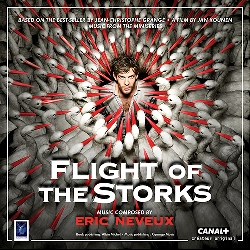
Flight of the Storks (Le Vol des Cigognes) is a French TV mini series starring Harry Treadaway as Jonathan, a young English academic ornithologist who teams up with a colleague to follow storks on their migration from Switzerland to Africa. However, when his colleague is found dead in mysterious circumstances, Jonathan finds himself caught up in an international web of intrigue, travelling through Bulgaria, Turkey, the Middle East, and the Congo along the pathway of the migrating storks, with a dogged Swiss detective hot on his heels. This mini-series was directed by Jan Kounen adapted from the novel by Jean-Christophe Grangé, co-starred Rutger Hauer and Perdita Weeks, and was scored by French composer Éric Neveux. Read more…
NIEDŹWIEDŹ: WŁADCA GÓR/LORD OF THE CARPATHIANS – Bartlomiej Gliniak
 Original Review by Jonathan Broxton
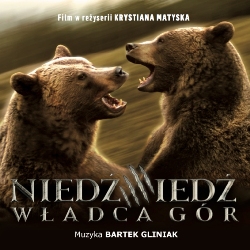
Lord of the Carpathians – Niedźwiedź: Władca Gór in its original Polish – is a feature documentary directed by Krystian Matysek about brown bears living in the Carpathian Mountains of eastern Europe. A well-regarded and well-made film, it won awards at the International Festival of Films on the Environment in Banska Bystrica, and at the International Festival of Nature Films in Lodz in 2012, before recieving a short theatrical release at the beginning of 2013. Read more…
JACK REACHER – Joe Kraemer
 Original Review by Jonathan Broxton
Jack Reacher is a new action-thriller film directed by Christopher McQuarrie, based on the popular character created by author Lee Child. This film is based on the plot of the novel “One Shot”, and stars Tom Cruise in the title role as an ex-military investigator called in to help ambitious defense attorney Helen Rodin (Rosamund Pike), who sees something wrong with the apparently open-and-shut case of a former military sniper accused of killing five innocent civilians along Pittsburgh’s Allegheny River waterfront. Helped and hindered by dogged police detective Emerson (David Oyelowo) and district attorney Alex Rodin (Richard Jenkins) – Helen’s father and legal opponent – Reacher discovers that there is much more to the story than meets the eye, and that a shadowy figure known only as The Zec (Werner Herzog) may be behind it all. Director McQuarrie, still best known for winning an Oscar for writing The Usual Suspects in 1996, has crafted a tight, enjoyable, engrossing little thriller with several superb set-pieces and a labyrinthine plot that is both believable and unpredictable, while Cruise’s lead performance is a good one, full of charisma and cockiness, despite him being the physical opposite of the character in the novels. Read more…
QUO VADIS – Miklós Rózsa
 GREATEST SCORES OF THE TWENTIETH CENTURY
Original Review by Craig Lysy
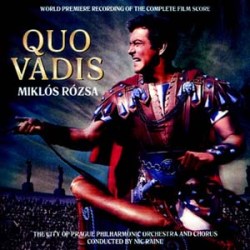
Producer Sam Zimbalist and director Mervyn LeRoy saw an opportunity to create a grand epic by adapting Henryk Sienkiewicz’s 1896 novel Quo Vadis. They hired a fine cast, which included Robert Taylor (Marcus Vinicius), Deborah Kerr (Lygia), Peter Ustinov (Nero) and Leo Glenn (Petronius). Set in imperial Rome during the reign of the maniacal emperor Nero (54 – 68 C.E.) we see a love story unfold between the pagan Marcus and the Christian Lygia. Our lovers are caught in the tide of history as an increasingly mad Nero terrorizes his court and ultimately sets Rome aflame in a stunning horrific conflagration. To cover his guilt Nero falsely blames the Christians and unleashes a reign of terror with gruesome executions in the Coliseum. Through their ensuing travails, Marcus converts and our lovers manage an escape to Sicily as an avenging mob, now aware that Nero burned Rome, storms the palace and brings Nero to a well-deserved end. The film was both a commercial and critical success, earning eight Academy Award nominations. Read more…
THE HOBBIT: AN UNEXPECTED JOURNEY – Howard Shore
 Original Review by Jonathan Broxton
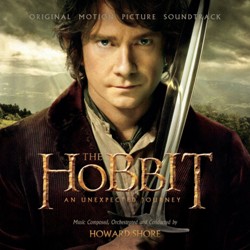
They say you can never go home again, but that’s not true for Howard Shore, the multi-award winning Canadian composer of the music for The Lord of the Rings. Prior to the release of the first LOTR film, The Fellowship of the Ring, in 2001, Shore was a respected but generally little-known composer, best known for writing a series of dark, brooding scores for director David Cronenberg, and thrillers like Seven and The Silence of the Lambs. Even when he was first announced as the composer for Fellowship, many commentators questioned whether Shore had the thematic strength to write the broad and expansive music the films required. Fast forward a decade, and Shore is a three-time Oscar winner and international film music superstar, with impressive album sales, sold-out concerts, and massive critical acclaim. When director Peter Jackson announced that he was making a new Middle Earth trilogy based on JRR Tolkien’s book The Hobbit, it was never a question of whether Howard Shore would return to score the films, but whether the music would stand up to the massive hype and sense of expectation that inevitably came with it’s release. For better or worse, the Lord of the Rings scores have become some of the best-loved of the new millennium, and for many fans whose first experience of film music came through those films and Shore’s now-iconic themes, there was bound to be an unimaginable sense of anticipation. So does The Hobbit continue the trend of excellent music in Middle Earth? The answer is yes and no, but not for reasons you might think. Read more…

Shop at the Movie Music UK Store

Member of the

 MOVIE MUSIC UK