SCL Award Nominations 2022
 The Society of Composers and Lyricists (SCL) has announced the nominations for the fourth annual SCL Awards, honoring the best in film and television music in 2022. The SCL is the premier professional trade group for composers, lyricists, and songwriters working in the motion picture, television, and game music industry, and is headquartered in Los Angeles. The nominees are:
OUTSTANDING ORIGINAL SCORE FOR A STUDIO FILM
- MICHAEL ABELS for Nope
- CARTER BURWELL for The Banshees of Inisherin
- ALEXANDRE DESPLAT for Guillermo Del Toro’s Pinocchio
- MICHAEL GIACCHINO for The Batman
- JOHN POWELL for Don’t Worry Darling
OUTSTANDING ORIGINAL SCORE FOR AN INDEPENDENT FILM
- LEO BIRENBERG and ZACH ROBINSON for Weird: The Al Yankovic Story
- SHARON FARBER for Brainwashed: Sex-Camera-Power
- SON LUX for Everything Everywhere All At Once
- ROB SIMONSEN for The Whale
- MARK SMYTHE for The Reef: Stalked
Golden Globe Nominations 2022
 The Hollywood Foreign Press Association (HFPA) has announced the nominations for the 80th Golden Globe Awards, honoring the best in film and American television of 2022.
In the Best Original Score category, the nominees are:
- CARTER BURWELL for The Banshees of Inisherin
- ALEXANDRE DESPLAT for Guillermo del Toro’s Pinocchio
- HILDUR GUÐNADÓTTIR for Women Talking
- JUSTIN HURWITZ for Babylon
- JOHN WILLIAMS for The Fabelmans
This is the fourth nomination for Burwell; the 14th nomination for Desplat, who previously won Globes for The Painted Veil in 2006 and The Shape of Water in 2017; the second nomination for Guðnadóttir, who previously won for Joker in 2019; the fourth nomination for Hurwitz, who previously won for La-La Land in 2016 and First Man in 2018 ; and the 26th nomination for Williams, who previously won Globes in 1975 for Jaws, 1977 for Star Wars, 1982 for E.T. The Extra-Terrestrial, and 2005 for Memoirs of a Geisha.
In the Best Original Song category, the nominees are:
- ALEXANDRE DESPLAT, ROEBEN KATZ, and GUILLERMO DEL TORO for “Ciao Papa” from Guillermo del Toro’s Pinocchio
- STEFANI GERMANOTTA (LADY GAGA), MICHAEL TUCKER (BLOODPOP), and BENJAMIN RICE for “Hold My Hand” from Top Gun: Maverick
- M. M. KEERAVANI and KANUKUNTLA SUBHASH CHANDRABOSE for “Naatu Naatu” from RRR
- TEMILADE OPENIYI (TEMS), ROBYN RIHANNA FENTY, RYAN COOGLER, and LUDWIG GÖRANSSON for “Lift Me Up” from Black Panther: Wakanda Forever
- TAYLOR SWIFT for “Carolina” from Where the Crawdads Sing
The winners of the 80th Golden Globe Awards will be announced on January 10, 2023.
Angelo Badalamenti, 1937-2022
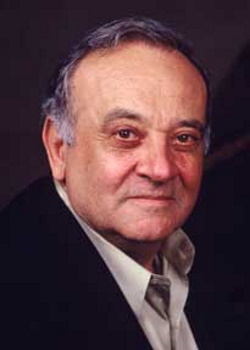 Composer Angelo Badalamenti died on December 11, 2022, at home in New Jersey after a short illness. He was 85.
Angelo Daniel Badalamenti was born in New York City in March 1937, the son of Italian immigrants from Sicily. A piano player from a young age, Badalamenti was already earning money as a pianist accompanying singers at resorts in the Catskill Mountains in his teens; he later studied at the Eastman School of Music at the University of Rochester, and then at the Manhattan School of Music, graduating with a master’s degree in 1959.
He began his career as a songwriter, penning works for singers such as Nina Simone and Shirley Bassey using the pen name Andy Badale. He made his film music debut was early as 1973, scoring the blaxploitation action pic Gordon’s War, but his break came when he was hired to be Isabella Rossellini’s vocal coach for David Lynch’s 1986 film Blue Velvet. Impressed with his work, Lynch asked Badalamenti to co-write the song “Mysteries of Love” for vocalist Julee Cruise, and then asked Badalamenti to composed the score for the entire film. Read more…
BROKEN ARROW – Hugo Friedhofer
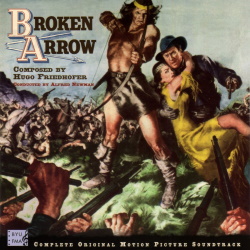 GREATEST SCORES OF THE TWENTIETH CENTURY
Original Review by Craig Lysy
In 1949 Darryl F. Zanuck, Director of Film Production at 20th Century Fox decided that the 1947 novel Blood Brother by Elliot Arnold, which explored the Arizona Indian War of 1870-1872 offered a compelling story, which needed to be brought to the bIg screen. He purchased the film rights, AND assigned production to Julian Blaustein, with Albert Maltz and Elliot Arnold hired to adapt the novel and write the screenplay. Delmer Daves was tasked with directing and a cast was assembled, which would cause great controversy. Once again, the issue was criticism of white actors coopting Indian roles. James Stewart at 41 would head the cast and star in his first Western film. Joining him would be Jeff Chandler as Cochise, Debra Paget as Sonseehray, Basil Ruysdael as General Oliver Howard, Will Geer as Ben Slade, and Jay Silverheels as Geronimo. Read more…
EMILY – Abel Korzeniowski
 Original Review by Jonathan Broxton
The Brontë Sisters – Emily, Anne, and Charlotte – are powerhouses of classic British literature. Born within four years of each other in Yorkshire between 1816 and 1820, the siblings would craft some of the most beloved works of the early Victorian era: Charlotte’s Jane Eyre, first published in 1847, Emily’s Wuthering Heights, published later that same year, and Anne’s The Tenant of Wildfell Hall, published in 1848, are now considered masterpieces, and the fact that they were written essentially simultaneously is astonishing. While there have been numerous screen adaptations of the stories they wrote, there have been few biopics of the actual sisters themselves, which is surprising considering that they all led romantically tragic lives, and died young: Emily of tuberculosis aged 30 in 1848, Anne of tuberculosis she caught from Emily aged 29 in 1849, and Charlotte of a pregnancy complication aged 38 in 1855. This new film Emily, written and directed by Frances O’Connor, is a look at their lives mostly from Emily’s point of view. It stars Emma Mackey, Alexandra Dowling, and Amelia Gething as the three sisters, with Fionn Whitehead, Oliver Jackson-Cohen, Adrian Dunbar, and Gemma Jones in supporting roles. Read more…
MALCOLM X – Terence Blanchard
 THROWBACK THIRTY
Original Review by Jonathan Broxton
Malcolm X is a biopic of one of the key figures in the American Civil Rights movement of the 1950s and 1960s, and tells his life story – growing up subjected to Jim Crow racism in Michigan in the 1920s, dealing with his father’s death and his mother’s mental illness, his youth as a juvenile delinquent, becoming a Muslim while in prison, and eventually joining the Nation of Islam, a black nationalist organization that was denounced as a terrorist group by the FBI. Along with leaders like Martin Luther King, Malcolm X was a prominent campaigner for civil rights, until – like King – he too was assassinated, just as he was giving a speech in Manhattan’s Audubon Ballroom in February 1965. The film was directed by Spike Lee and starred Denzel Washington as Malcolm, alongside a supporting cast that included Angela Bassett, Albert Hall, Al Freeman Jr., and Delroy Lindo. The film was a huge critical success, and earned Washington an Oscar nomination for his powerful lead performance. Read more…
GLASS ONION – Nathan Johnson
 Original Review by Jonathan Broxton
The unexpected success of the film Knives Out in 2019 led to immediate calls for a sequel; fans fell in love with Daniel Craig’s portrayal of Benoit Blanc, the master detective with an accent that sounds like a Cajun Foghorn Leghorn, and the disarming manner he solves murders in a way that would impress Agatha Christie. Writer-director Rian Johnson put Glass Onion into production almost immediately, but was knocked on the back foot by the COVID pandemic, before eventually deciding to incorporate elements of it into the plot of the film. The story is a labyrinthine whodunnit that revolves around a ‘murder mystery’ party held at the exotic island home of an Elon Musk-like billionaire, played by Edward Norton, where all the guests (Janelle Monáe, Kathryn Hahn, Leslie Odom Jr., Jessica Henwick, Kate Hudson, Dave Bautista) have a motive to kill him. The Glass Onion of the title, by the way, relates in several ways: the Beatles song that plays on the soundtrack, the literal design of the billionaire’s home, and the more philosophical concept about how sometimes things that initially appear to have multiple layers of depth can actually be unexpectedly hollow. Read more…
ANNIE GET YOUR GUN – Irving Berlin, Adolph Deutsch, Roger Edens
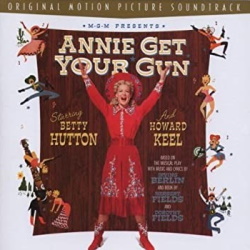 GREATEST SCORES OF THE TWENTIETH CENTURY
Original Review by Craig Lysy
The Broadway musical “Annie Get Your Gun”, which was based on the legendary Annie Oakley, stared Ethel Merman and had a very successful theatrical run of 1,147 performances. MGM studios took notice and decided that they would continue their parade of musicals with a new one based on Annie Oakley for their marquee star Judy Garland. They purchased the film rights, assigned production to Arthur Freed and Roger Edens with a $3.73 million budget. Sidney Sheldon was hired to write the screenplay adaptation of the novel “Annie Get Your Gun” (1946) by Herbert Fields. Filming conflicts with Garland led to the director being replaced twice, with Busby Berkeley and Charles Walters exiting and George Sidney finally taking up the reins. For the cast Judy Garland would star as Annie Oakley, however clashes with Berkeley exacerbated her health and insecurity problems and she was ultimately fired. Betty Hutton was hired as her replacement and joined by; Howard Keel and Frank Butler, Louis Calhern as Colonel William F. “Buffalo Bill” Cody, Keenan Wynn as Charlie Davenport, Benay Venuta as Dolly Tate, and J. Carrol Naish as Chief Sitting Bull. Read more…
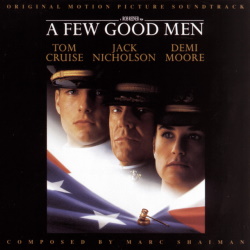
A FEW GOOD MEN – Marc Shaiman
 THROWBACK THIRTY
Original Review by Jonathan Broxton
I have always viewed A Few Good Men as one of the best legal drama-thrillers of the 1990s. It’s a richly detailed, wonderfully written, dazzlingly acted exposé of a part of the US military, based on the acclaimed stage play by Aaron Sorkin, directed by Rob Reiner. The film stars Tom Cruise at the height of his movie star fame, playing Daniel Kaffee, a military lawyer in the US Navy, whose reputation for juvenile antics and easy plea bargaining has made him something of a joke among his peers. Things change for Kaffee when he is hired to defend two Marines accused of killing a fellow soldier on the base at Guantanamo Bay. Kaffee’s appointment angers his reluctant co-counsel, Joanne Galloway (Demi Moore), who thinks that there is more to the case than meets the eye, and is concerned that Kaffee’s blasé approach will derail the defense. As they dig more deeply into the circumstances surrounding the marine’s death, they find themselves at loggerheads with Nathan Jessup (a phenomenal Jack Nicholson), the colonel in charge of the Guantanamo unit, a feared and respected career soldier with unorthodox methods of maintaining discipline. Read more…
THE FABELMANS – John Williams
 Original Review by Jonathan Broxton
At some point in the fall of 1973 a young 27-year-old filmmaker named Steven Spielberg was entering post-production on his second major film, The Sugarland Express, and was introduced to composer John Williams. Williams was the hot young composer in Hollywood – he had already been nominated for six Academy Awards at this point in his career, winning for Fiddler on the Roof in 1972, and had just scored the smash hit The Poseidon Adventure – and the two got on like a house on fire. The Sugarland Express was the first of their collaborations, and over the course of the next fifty years or so they would work together on more than 30 film and television projects, resulting in some of the most iconic and beloved scores in film music history: Jaws, Close Encounters of the Third Kind, Raiders of the Lost Ark and its sequels, E.T. the Extra-Terrestrial, Jurassic Park, Schindler’s List, Saving Private Ryan… the list goes on and on. Steven Spielberg is now 75 years old, and John Williams is now 90, and if the stories in the press are true, Spielberg’s new film The Fabelmans will be their last collaboration together. Read more…
THE FALL OF BERLIN – Dmitri Shostakovich
 GREATEST SCORES OF THE TWENTIETH CENTURY
Original Review by Craig Lysy
The Fall of Berlin was conceived by director Michail Chiaureli as a two-part documentary that would offer a propagandist cult of personality homage to the Supreme Leader Josef Stalin as a 70th birthday present. A pamphlet distributed with the film’s release reveals its intent, stating: “It is a moving picture in which great feelings of patriotism are assembled in an epic of the people’s common struggle for freedom, independence, and for happiness… through realistic and faithful pictures in which the Soviet man is shown in his unfailing union with the Great Leader of the People”. Chiaureli and Pyotyr Andreyevitch Pavlenko collaborated on the writing the screenplay, and secured approval from the Ministry of Cinema. Mosfilm would manage production and a fine cast was assembled, including; Miheil Gelovani as Josef Stalin, Boris Andreyev as Alexsei Ivanov, Yury Tymoshenko as Kostya Zaichenko, Marina Kovalyova and as Nayasha Rumyantseva. Read more…
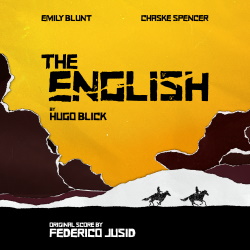
THE ENGLISH – Federico Jusid
 Original Review by Jonathan Broxton
The English is a 6-part television mini-series, co-produced by Amazon and the BBC. The show is an epic, romantic, action-packed but also uncompromisingly bleak and realistic western which follows the fortunes of an aristocratic English woman who finds herself on a quest for revenge on the plains of north America circa 1890. Emily Blunt plays Lady Cornelia Locke, who travels to the old West searching for the man she holds responsible for the death of her son; upon arrival, she immediately crosses paths with Eli Whipp, played by Chaske Spencer, a Pawnee who has just finished an honorable tour of duty as a cavalry scout for the US Army, and is trying to get back to his home. The fates of Cornelia and Eli are drawn together when they save each other’s lives, and from then on the bond that develops between them helps them in their epic trek across the rugged terrain, as they encounter ruthless cattle barons and gold prospectors, shady businessmen, vicious mercenaries, and various other dangers that threaten to keep them from their destiny. The series co-stars Rafe Spall, Tom Hughes, Stephen Rea, Toby Jones, and Ciarán Hinds, and is written and directed by Hugo Blick. Read more…
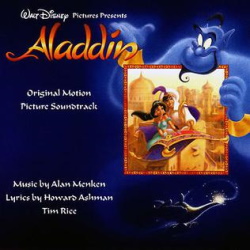
ALADDIN – Alan Menken, Howard Ashman, Tim Rice
 THROWBACK THIRTY
Original Review by Jonathan Broxton
The enormous success of Beauty and the Beast in 1991 ushered in what is now commonly known as the Disney Renaissance, which brought to an end a period of comparative creative and commercial failure for mouse house, and initiated what was quicky became a decade of constant growth and acclaim. Lyricist Howard Ashman, who had been a major part of Beauty and the Beast’s success alongside his composing partner Alan Menken, had also been working on a draft treatment for a potential Aladdin movie, based on the Arabic folktale of the same name from the One Thousand and One Nights, and the screenplay went through three drafts before then-Disney Studios president Jeffrey Katzenberg agreed to its production. The finished film is now one of the most beloved animated films of all time; it tells the story of street urchin Aladdin, who finds a magical lamp hidden in a cave and inadvertently releases from it a powerful genie who can grant him three wishes. Aladdin wishes to be a rich prince to that he can court the beautiful Princess Jasmine, the daughter of the sultan, but in doing so falls foul of Jafar, the sultan’s vizier advisor, who covets the power of the lamp for himself. Read more…
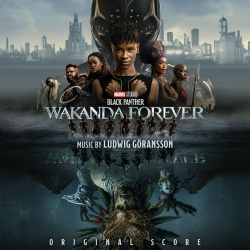
BLACK PANTHER: WAKANDA FOREVER – Ludwig Göransson
 Original Review by Jonathan Broxton
WARNING: THIS REVIEW CONTAINS PLOT SPOILERS. IF YOU HAVE NOT YET SEEN THE SHOW, YOU MIGHT WANT TO CONSIDER WAITING UNTIL AFTER YOU HAVE DONE SO TO READ IT.
The death of actor Chadwick Boseman in August 2020 resulted in an outpouring of grief and affection from the entire Hollywood community, but also necessitated wholesale changes to Black Panther: Wakanda Forever, the planned sequel to the 2018 blockbuster Marvel superhero film Black Panther, which was already in pre-production at the time of Boseman’s death. With the film’s lead gone, director Ryan Coogler, along with co-screenwriter Joe Robert Cole, re-fashioned the film to be not only a fun and interesting superhero action film, but also a surprisingly poignant meditation on death, grief, and legacy; despite not being there in person, Boseman’s presence weighs heavy on the film, giving it a depth and meaning that most films of this type do not contain. In terms of plot, Wakanda Forever sees Shuri, the younger sister of King T’Challa, having to step up and be a leader in her own right when her country comes under attack from a mysterious race of people seemingly descended from ancient Mayans, and who have a powerful leader of their own. The film has a groundbreaking headline cast made up almost entirely of black women – Letitia Wright, Lupita Nyong’o, Danai Gurira, Florence Kasumba, Dominique Thorne, Michaela Coel, Angela Bassett – with Winston Duke, Tenoch Huerta, Martin Freeman, and Julia Louis-Dreyfus in key supporting roles. Read more…
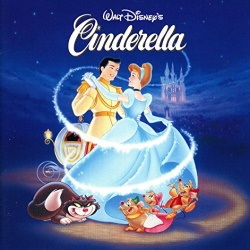
CINDERELLA – Oliver Wallace, Paul J. Smith
 GREATEST SCORES OF THE TWENTIETH CENTURY
Original Review by Craig Lysy
Walt Disney and his beloved studio had not achieved a commercial triumph since “Snow White and the Seven Dwarfs thirteen years earlier. He was $4 million in debt and tittering on bankruptcy. He threw caution to the wind with a gamble that would either save the company, or end it; he would adapt the story “Cinderella”, a universal transcultural tale told by many throughout time beginning with Strabo in 7 B.C.E. Disney selected the French version of the tale by author Charles Perrault, and personally took charge of production with a $2.2 million budget, which ultimately swelled to $3.0 million. A team of eight animators was assembled, ten writers overseen by Ben Sharpsteen would write the screenplay, and the trio of Clyde Geronimi, Hamilton Luske and Wilfred Jackson would direct. The voice cast would consist of Ilene Woods as Cinderella, Eleanor Audley as Lady Tremaine, Verna Felton as the Fairy Godmother, and William Edward Phipps as Prince Charming. Read more…

Shop at the Movie Music UK Store

Member of the

 MOVIE MUSIC UK