THE BAD AND THE BEAUTIFUL – David Raksin
 GREATEST SCORES OF THE TWENTIETH CENTURY
Original Review by Craig Lysy
MGM executives came across a magazine story “Of Good and Evil” by author George Bradshaw, which was expanded into a full story titled “Memorial to a Bad Man”. They believed this riveting character driven drama offered a potent narrative that would be perfect for the big screen. The studio purchased the film rights and assigned renown producer John Housman with production and a budget of $1.56 million. Charles Schnee was hired to write the screenplay and Vincente Minnelli was tasked with directing. A very talented cast was assembled, which included; Kirk Douglas as Jonathan Shields, Dick Powell as James Lee Bartlow, Walter Pidgeon as Harry Pebbel, Barry Sullivan as Fred Amiel, Lana Turner as Georgia Lorrison, Gloria Grahame as Rosemary Bartlow and Gilbert Roland as Victor “Gaucho” Ribera. Read more…
FREE WILLY – Basil Poledouris
 THROWBACK THIRTY
Original Review by Jonathan Broxton
When the movie Free Willy played in cinemas in the UK in the summer of 1993 the title elicited a great deal of snickering from the more childishly-minded among us, but in the end it turned out to be a very heartwarming film about the relationship between a troubled young boy and an orca killer whale. The film is directed by Simon Wincer and stars Jason James Richter as Jesse, a troubled orphan, who is assigned to do community service at a marine theme park after committing a minor crime. At the park he forms a deep connection with Willy, an intelligent and sensitive orca who has just been captured in the wild by unscrupulous whalers, and is now being held in captivity. As Jesse spends more time with Willy, he observes the orca’s miserable living conditions and the park’s exploitative practices, and with the help of his friends and a sympathetic park trainer named Rae (Lori Petty), devises a plan to release Willy back into the ocean. The film ended up being a popular success at the box office, and eventually spawned two sequels in 1995 and 1997. Read more…
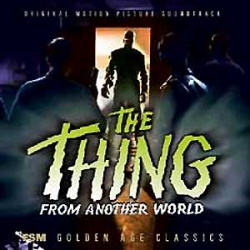
THE THING FROM ANOTHER WORLD – Dimitri Tiomkin
 GREATEST SCORES OF THE TWENTIETH CENTURY
Original Review by Craig Lysy
Producers Edward Lasker and Howard Hawks believed that the science fiction-horror novella “Who Goes There?” (1938) by John W. Campbell could be successfully adapted to the big screen. They hoped to tap into the public’s angst with how scientists had unleashed the atomic age and fundamentally changed the world. They purchased the film rights, and Hawks’ Winchester Pictures Production company would fund the project with RKO Pictures agreeing to distribute. Charles Lederer, Hawks and Ben Hecht collaborated in writing the screenplay, and Christian Nyby was tasked with directing. The cast did not feature any box office stars, and was comprised of Margaret Sheridan as Nikki Nicholson, Kenneth Tobey as Captain Patrick Hendry, Robert Cornthwaite as Dr. Arthur Carrington, and James Arness as the alien. Read more…
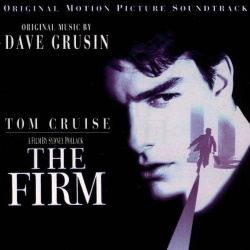
THE FIRM – Dave Grusin
 THROWBACK THIRTY
Original Review by Jonathan Broxton
The Firm was the first film adapted from the works of the massively successful novelist John Grisham, and is a crackerjack legal/political thriller. The film is directed by Sydney Pollack and stars Tom Cruise as a young and talented lawyer named Mitch McDeere, who joins a prestigious firm in Memphis called Bendini Lambert & Locke. Initially thrilled by the firm’s high salary and luxurious lifestyle, Mitch soon discovers that the firm is involved in criminal activities, and as he delves deeper into the firm’s workings, he uncovers a web of corruption, money laundering, and ties to organized crime; worse still, Mitch realizes that the firm’s previous associates who discovered the truth met with mysterious deaths. Faced with the dilemma of exposing the firm and risking his own life, or remaining silent and continuing to benefit from their illicit activities, Mitch decides to gather evidence against the firm for the FBI. As he investigates, he becomes entangled in a dangerous game of cat and mouse with the firm’s operatives, who will stop at nothing to protect their secrets. The film has a superb supporting cast, including Gene Hackman, Jeanne Tripplehorn, Ed Harris, Holly Hunter, Hal Holbrook, David Strathairn, Wilford Brimley, and Gary Busey, and was a strong critical and commercial success, grossing more than $270 million at the US box office, and receiving two Oscar nominations: one for Holly Hunter as Best Supporting Actress, and one for Dave Grusin’s score. Read more…
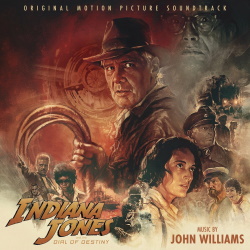
INDIANA JONES AND THE DIAL OF DESTINY – John Williams
 Original Review by Jonathan Broxton
WARNING: THIS REVIEW CONTAINS PLOT SPOILERS. IF YOU HAVE NOT YET SEEN THE FILM, YOU MIGHT WANT TO CONSIDER WAITING UNTIL AFTER YOU HAVE DONE SO TO READ IT.
When you look back at the film series that John Williams has been involved with over the course of his astonishing career, his musical legacy starts to come into sharp relief. Nine Star Wars movies. Two Jaws movies, with his themes used in multiple further sequels scored by other composers. The original Superman, plus themes in sequels. Two Home Alone movies, plus themes in sequels. Two Jurassic Park movies, plus themes in sequels. Three Harry Potter movies, plus themes in sequels. However, other than the three Star Wars ‘main trilogies,’ the only film series that John Williams has scored in its entirety is the Indiana Jones series, which began with Raiders of the Lost Ark in 1981, and continued through Temple of Doom in 1984, Last Crusade in 1989, and Kingdom of the Crystal Skull in 2008. His iconic Raiders March has underscored the escapades of the titular archaeologist and adventurer for more than 40 years, and has seen him clashing with death-worshipping cults, psychic communists, and far too many Nazis. Indiana Jones and the Dial of Destiny is the fifth film in the series and – if reports are to believed – will be the final cinematic adventure for the character. Read more…
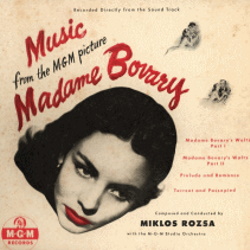
MADAME BOVARY – Miklós Rózsa
 GREATEST SCORES OF THE TWENTIETH CENTURY
Original Review by Craig Lysy
MGM Studios had a history of successfully adapting popular works of literature for the big screen. In that tradition, the 1857 French novel “Madame Bovary” by Gustave Flaubert was universally recognized as a classic of literature, which MGM believed merited a film presentation. The film rights were purchased, Pandro S. Berman was assigned production with a $2.076 million budget, Robert Ardey was hired to write the screenplay with instructions to maintain fidelity to the novel, and Vincente Minnelli was tasked with directing. A stellar cast was hired, including Jennifer Jones as Emma Bovary, Van Heflin as Charles Bovary, Louis Jourdan as Rodolphe Boulanger, and James Mason as Gustave Flaubert. Read more…
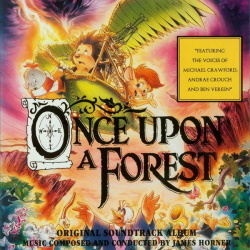
ONCE UPON A FOREST – James Horner
 THROWBACK THIRTY
Original Review by Jonathan Broxton
Once Upon a Forest is an animated adventure film with an environmental message, set in the tranquil world of Dapplewood, a lush and harmonious forest community. The story revolves around a group of small animal friends who must embark on a perilous journey to save Michelle, a young badger, who is exposed to toxic gas after a careless human truck driver spills it in the forest, and falls into a deep sleep. The group of friends – Abigail the wood mouse, Edgar the mole, and Russell the hedgehog, supported by their wise old mentor Cornelius – sets off on a quest beyond the borders of their familiar forest to find a rare medicinal herb, and along the way they face various challenges – including evading predators, navigating treacherous terrain, and surviving encounters with humans – while also learning about the delicate balance of nature and the interconnectedness of all living beings. Read more…
Under-the-Radar Round Up 2023, Part 2
 Original Reviews by Jonathan Broxton
I’m pleased to present the latest instalment in my on-going series of articles looking at the best under-the-radar scores from around the world. This article, the second of 2023, covers five scores for projects all from French cinema, highlighting yet again just what a treasure trove of outstanding music is coming from that country right now. The scores covered run the gamut of genres, from light comedy to historical melodrama, period romance, and more!
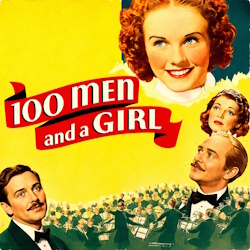
ONE HUNDRED MEN AND A GIRL – Charles Previn
 GREATEST SCORES OF THE TWENTIETH CENTURY
Original Review by Craig Lysy
In 1937 Universal Pictures decided to embark on a new musical comedy based on an original story by writer Hans Kraly. Joe Pasternak and Charles R. Rogers were assigned production with a $762,000 budget, Henry Koster was tasked with directing, and Kraly was hired to adapt his story and write the screenplay. For their cast, the studios premiere star Deanna Durbin, who was also a vocally trained soprano, would star as Patsy Cardwell. Joining her would be Adolphe Menjou as John Cardell, renown conductor Leopold Stokowski as himself, Eugene Pallette as John R, Frost, and Alice Brady as Mrs. Frost. Read more…
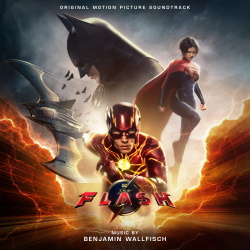
THE FLASH – Benjamin Wallfisch
 Original Review by Jonathan Broxton
WARNING: THIS REVIEW CONTAINS PLOT SPOILERS. IF YOU HAVE NOT YET SEEN THE FILM, YOU MIGHT WANT TO CONSIDER WAITING UNTIL AFTER YOU HAVE DONE SO TO READ IT.
There’s been a lot of talk lately about superhero fatigue, and how the movie industry has been eating itself alive with too many entries in the seemingly endless expanded universes from both Marvel and DC Comics. Director Andy Muschietti’s The Flash has been the recipient of a significant amount of criticism in this regard; it’s the 13th film in the DC series that was kickstarted in 2013 by Man of Steel, and the second of four DC entries slated for 2023, with the others being Shazam: Fury of the Gods, and the upcoming pair Blue Beetle and Aquaman and the Lost Kingdom. The film also came under fire for the fact that it’s star Ezra Miller, despite being inundated with legal issues stemming from his apparent real-life mental health problems, has been given the full support and backing of Warner Brothers, while the almost completed Batgirl film was unceremoniously scrapped back in August 2022. Whatever the case is; The Flash had problems from the get-go, and in the days since it’s release it has been a critical failure and a comparative flop with audiences. Read more…
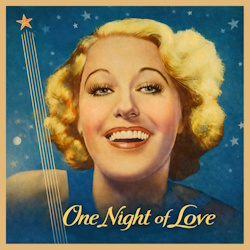
ONE NIGHT OF LOVE – Victor Schertzinger, Gus Kahn, Louis Silvers
 GREATEST SCORES OF THE TWENTIETH CENTURY
Original Review by Craig Lysy
Columbia Pictures was seeking a romantic musical set in the world of opera. Director Victor Schertzinger brought them a story “One Night of Love” by Charles Beahan and Dorothy Speare that seemed to fit the bill. Columbia executives were impressed and Schertzinger was given the green light to proceed with the project as director, Harry Cohn tasked with overseeing production with a budget of $500,000, and James Gow, S.K. Lauren, and Edmund H. North were hired to write the screenplay. A fine cast was assembled, which included Grace Moore as Mary Barrett, Tullio Carminati as Giulio Monteverdi, Lyle Talbot as Bill Houston, and Mona Barie as Lally. Read more…
THE BISHOP’S WIFE – Hugo Friedhofer
 GREATEST SCORES OF THE TWENTIETH CENTURY
Original Review by Craig Lysy
Samuel Goldwyn came across the novella “The Bishop’s Wife” (1928) by Robert Nathan and decided its tender family tale would translate well to the big screen. He would manage production using his own production company to fund the project, with RKO Pictures distributing. The film suffered repeated setbacks that led to Goldwyn sacking his director William A. Seiter and replacing him with Henry Coster, switching the actors for the two male lead roles, tearing down and rebuilding all the sets, and rewrites of the original screenplay of Leonardo Bercovici and Robert Sherwood, by Billy Wilder and Charles Brackett. A fine trio of actors were cast, including Cary Grant as Dudley the angel, Loretta Young as Julia Brougham, and David Niven as Bishop Henry Brougham. Read more…
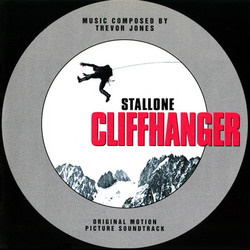
CLIFFHANGER – Trevor Jones
 THROWBACK THIRTY
Original Review by Jonathan Broxton
One of the silliest, but most enjoyable, action adventure movies of the early 1990s was the Sylvester Stallone vehicle Cliffhanger – aka the film that put many people off mountain climbing for life. Sly plays Gabe Walker, a park ranger and expert mountaineer working in the Colorado Rockies. Walker is left traumatized after the wife of his best friend Hal (Michael Rooker) falls to her death during an ill fated rescue; he plans to retire and tries to convince his girlfriend, fellow ranger Jessie (Janine Turner) to come with him. However, his plans for a quiet life are put on hold when they receive a distress call from the mountain, and Gabe and Hal set off to help – only for them to discover that the distress call was a fake placed by Eric Qualen (John Lithgow), a psychopathic British former military intelligence officer, now the leader of the gang of thieves trying to rob $100 million from the U.S. Treasury. Their plane has crashed on the mountain, and the money is scattered all over the area, and Qualen wants Gabe to retrieve it for them. The film was directed by Renny Harlin and was a major box office hit in the summer of 1993. Read more…
BETWEEN TWO WORLDS – Erich Wolfgang Korngold
 GREATEST SCORES OF THE TWENTIETH CENTURY
Original Review by Craig Lysy
The play 1923 Outward Bound by Sutton Vane enjoyed successful theatrical runs in London and later on Broadway, where it achieved 144 performances. In 1943 Warner Brothers Studios decided to embark on a remake of their original fantasy film version of Outward Bound from 1930. Jack Warner and Mark Hellinger took charge of production, Edward A. Blatt was tasked with directing, and Daniel Fuchs was hired to write a new screenplay, incorporating story elements from both the original 1924 Broadway play and the 1930 film. A stellar cast was hired, including Paul Henreid as Henry Bergner, Eleanor Parker as Ann Bergner, Sydney Greenstreet as the Examiner, the Reverend Tim Thompson, Edmund Gwenn as Scrubby, John Garfield as Tom Prior, George Coulouris as Lingley, Faye Emerson as Maxine, Sara Allgood as Mrs. Midget, Dennis King as the Reverend Duke, Isobel Elsom as Genevieve Cliveden-Banks and Gilbert Emery as Benjamin Cliveden-Banks. Read more…
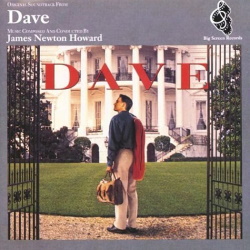
DAVE – James Newton Howard
 THROWBACK THIRTY
Original Review by Jonathan Broxton
There’s an old adage, which I’m paraphrasing, which says something like: “those who seek out power are the ones to whom it should not be given”. This philosophy is the heart of Dave, one of the best and most interesting comedy-dramas of the 1990s. The film stars Kevin Kline as Dave Kovic, the pleasant and genial owner of a temp agency in Washington, D.C., who, as a side job, capitalizes on his remarkable resemblance to US President Bill Mitchell by comically impersonating him at events. Dave is even occasionally hired by the Secret Service to impersonate the real Mitchell to allow him to carry out an extramarital affair – and it is while at one of these ‘clandestine’ events that Mitchell suffers a massive stroke and is left incapacitated. To cover it up, and to further his own political aspirations, Mitchell’s chief of staff Bob Alexander (Frank Langella) cooks up a scheme where Dave will continue to act as President, implicate the Vice President (Ben Kingsley) in a scandal, appoint Alexander in his place, and then ‘die’ for real, leaving Alexander in the oval office. However, Dave proves to be unexpectedly excellent at the top job, even reconciling with President Mitchell’s estranged wife Ellen (Sigourney Weaver), to the point where Dave wonders whether he shouldn’t have the job for real. The film co-stars Kevin Dunn, Ving Rhames, and Charles Grodin, and was directed by Ivan Reitman. Read more…

Shop at the Movie Music UK Store

Member of the

 MOVIE MUSIC UK