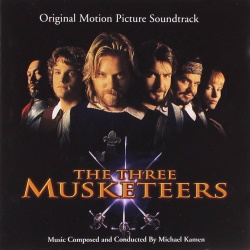
THE THREE MUSKETEERS – Michael Kamen
 THROWBACK THIRTY
Original Review by Jonathan Broxton
There have been countless adaptations of Alexandre Dumas’ classic novel The Three Musketeers over the years – some good, some bad. Many people consider the 1948 version starring Gene Kelly and Lana Turner to be the gold standard in terms of English-language versions, although I have always had a soft spot for the 1970s British version starring Oliver Reed, Raquel Welch, Richard Chamberlain, and Michael York, which had a terrific score by Michel Legrand. This version from 1993 was directed by Stephen Herek, and was basically a ‘brat pack’ version of the story. Like the others, the action is set in 17th-century France and follows a young and ambitious swordsman named d’Artagnan (Chris O’Donnell). Eager to join the musketeers, King Louis XIII’s elite guard, d’Artagnan travels to Paris where he befriends three charismatic and skilled musketeers: Athos (Kiefer Sutherland), Porthos (Oliver Platt), and Aramis (Charlie Sheen), and together they embark on a series of adventures involving political intrigue, love, and swashbuckling duels, specifically a plot by the villainous Cardinal Richelieu (Tim Curry), who plans to undermine the king and seize power for himself. Read more…
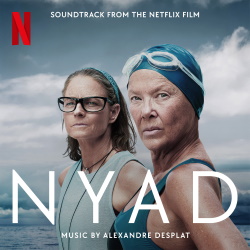
NYAD – Alexandre Desplat
 Original Review by Jonathan Broxton
Diana Nyad is an American long-distance swimmer who gained international fame for her remarkable achievements in open-water swimming, particularly for her tenacity and determination in attempting to swim from Cuba to Florida, a feat she eventually accomplished in 2013 at the age of 64. Nyad’s early passion for swimming became evident at a young age, and she quickly rose to prominence as a competitive swimmer in her teenage years. She later turned to long-distance swimming, and in 1975 she swam from the Bahamas to Florida, covering a distance of 102.5 miles, which set a world record for both men and women. Despite her early success, Nyad faced setbacks, including failed attempts to swim from Cuba to Florida in the 1970s, but after more than three decades away from the water, Nyad made headlines with her historic swim from Havana to Key West in September 2013; the 110-mile journey took her approximately 53 hours, and in doing so she became the first person to complete the swim without the aid of a shark cage. This new film tells Nyad’s remarkable life story, concentrating specifically on the events surrounding the 2013 Havana to Key West swim. The film stars Annette Bening as Nyad and Jodie Foster as her lifelong friend Bonnie Stoll, and was directed by Elizabeth Chai Vasarhelyi and Jimmy Chin, the Oscar-winning filmmakers of Free Solo. Read more…
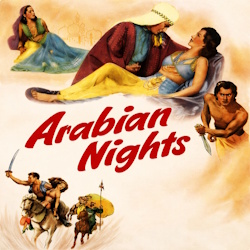
ARABIAN NIGHTS – Frank Skinner
 GREATEST SCORES OF THE TWENTIETH CENTURY
Original Review by Craig Lysy
The success of The Thief of Bagdad in 1940 spurred Universal Pictures to enter the exotic adventure film genre, resulting in production of four WWII era films, including Arabian Nights in 1942, White Savage in 1943, Ali Baba and the Forty Thieves in 1944, and Cobra Woman also in 1944. The first film, Arabian Nights would be derived from the Islamic classic “One Thousand and One Nights”. Walter Wagner was placed in charge of production with a $904,765 budget, John Rawlins was tasked with directing, and Michael Hogan was hired to write the screenplay. For the cast, John Hall would star as Haroun-Al-Rashid, Maria Montez as Scheherazade, Sabu as Ali Ben Ali, Leif Erikson as Kamar, Edgar Barrier as Nadan, Shemp Howard as Sinbad, Thomas Gomez as Hakim, Tuhan Bey as Captain of the Guard, and John Qualen as Aladdin. Read more…
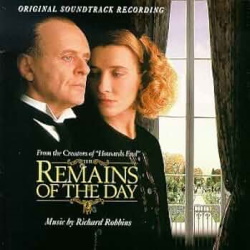
THE REMAINS OF THE DAY – Richard Robbins
 THROWBACK THIRTY
Original Review by Jonathan Broxton
The Remains of the Day is a British period drama film directed by James Ivory, based on Kazuo Ishiguro’s novel of the same name. The story follows James Stevens (Anthony Hopkins), a repressed English butler who has spent most of his life in service at Darlington Hall, a grand manor house formerly owned by Lord Darlington (James Fox), a man who was once deeply involved in political affairs and international diplomacy. The film is set in 1958 as Stevens, who is now working for an American named Farraday (Christopher Reeve), embarks on a journey across England, and reflects on his life at Darlington Hall – the events that transpired there in the years leading up to World War II, and specifically his relationship with housekeeper Miss Kenton (Emma Thompson), which Stevens never allowed to blossom into romance. The film explores themes of duty, loyalty, and personal sacrifice, particularly as Stevens begins to come to terms with the consequences of his unwavering blind loyalty to Darlington, who held complex political stances in the pre-war years. The film is also a poignant exploration of regret, nostalgia, and the changing social landscape of post-war England, as Stevens comes to the realization that he may have sacrificed his personal happiness for a sense of duty. Read more…
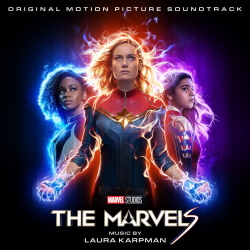
THE MARVELS – Laura Karpman
 Original Review by Jonathan Broxton
The Marvels is the 33rd superhero film in the Marvel Cinematic Universe, and the second to feature Brie Larson as Carol Danvers in the primary role, following on from 2019’s Captain Marvel. It draws together plot strands not only from the first film but also the Marvel TV shows Wandavision, Ms. Marvel, and Secret Invasion, and sees Carol teaming up with Captain Monica Rambeau, the daughter of her old friend Maria, as well as Pakistani-American teenager Kamala Khan, who grew up idolizing Captain Marvel; Monica obtained superhero powers during the events of Wandavision, just as Kamala did during the events of Ms. Marvel. The plot involves the emergence of a new super-villain named Dar-Benn, whose home world was massively damaged during the events of Captain Marvel, and who is now seeking to repair her own planet, while simultaneously exacting revenge on Carol, who she blames for her planet’s devastation. Dar-Benn has a ‘magical bangle’ identical to the one that Kamala also owns, the existence of which keeps making Carol, Monica, and Kamala switch places with each other every time they try to use their powers. The film stars Teyonah Parris and Iman Vellani as the other members of the Marvels alongside Larson, with Zawe Ashton and Samuel L. Jackson in major supporting roles, and it was directed by Nia Da Costa. Read more…
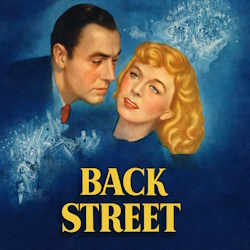
BACK STREET – Frank Skinner
 GREATEST SCORES OF THE TWENTIETH CENTURY
Original Review by Craig Lysy
In 1932 Universal Pictures adapted the 1931 novel “Back Street” by Fannie Hurst. In 1940 the studio decided to remake the film as a way to showcase their star, Margaret Sullavan. Bruce Manning was assigned production with a budget of $675,000, Robert Stevenson was tasked with directing, and the team of Bruce Manning and Felix Jackson would write the screenplay drawing from the script of the 1932 film, and the original novel. Margaret Sullavan would star and play Ray Smith. She insisted that the studio hire Charles Boyer, whom she always wanted to work with, and managed to induce him to accept by agreeing to surrender her top billing to him. He would play Walter Louis Saxel, and joining them would be Richard Carlson as Curt Stanton, Frank McHugh as Ed Porter, and Samuel S. Hinds as Felix Darren. Read more…
THE PIANO – Michael Nyman
 THROWBACK THIRTY
Original Review by Jonathan Broxton
One of the most critically acclaimed films of 1993, The Piano is a period romantic drama directed by Jane Campion. The story is set in the mid-19th century and follows a mute Scottish woman named Ada McGrath (Holly Hunter), who has been sold into an arranged marriage to a New Zealand frontiersman, Alisdair Stewart (Sam Neill), and shipped off to the other side of the world. Ada communicates her feelings and emotions mainly by signing and playing her beloved piano, with her young daughter Flora (Anna Paquin) serving as her sign language interpreter. Ada’s new life on the edge of civilization is full of struggles and hardships – not least because her husband treats her cruelly – but things begin to change when she meets and develops a growing attraction for Baines (Harvey Keitel), a local laborer who desires her piano. As Ada becomes increasingly drawn to Baines, a complex and forbidden romantic relationship develops between them, which threatens the lives of all involved. Read more…
DR. JEKYLL AND MR. HYDE – Franz Waxman
 GREATEST SCORES OF THE TWENTIETH CENTURY
Original Review by Craig Lysy
Director Victor Fleming wanted to retell the classic 1886 Robert Louis Stevenson tale The Strange Case of Dr. Jekyll and Mr. Hyde. He purchased the film rights from Paramount Pictures, which had made a 1931 film version starring Fredric March and sold his vision to MGM executives. Victor Saville was placed in charge of production with a $1.1 million budget, Fleming would direct, and John Lee Mahin would adapt the 1931 film screenplay by Percy Heath and Samuel Hoffenstein. A stellar cast was assembled, including Spencer Tracy as Dr. Henry Jekyll/Mr. Edward Hyde, Ingrid Bergman as Ivy Pearson, Lana Turner as Beatrix Emery and Donald Crisp as Sir Charles Emery. Read more…
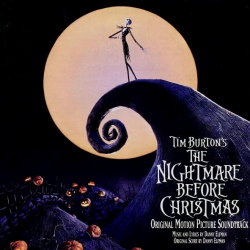
THE NIGHTMARE BEFORE CHRISTMAS – Danny Elfman
 THROWBACK THIRTY
Original Review by Jonathan Broxton
If any film project perfectly encapsulates the professional relationship between director Tim Burton and composer Danny Elfman, it is their 1993 stop-motion animated fantasy musical The Nightmare Before Christmas. It tells the story of Jack Skellington, the ‘Pumpkin King’ of Halloweentown, the fantasy world charged with organizing the annual Halloween holiday. Despite being enormously successful, Jack has grown disillusioned of the same annual routine and wants something new; while wandering in the woods the next morning, he accidentally finds a door to Christmastown – the parallel land which organizes Christmas – and is enchanted by what he finds. Wanting to bring the Christmas spirit to Halloweentown, and despite the warnings of his unrequited love Sally, Jack decides that he will kidnap ‘Sandy Claws’ and take over Christmastown for himself – with predictably disastrous results. Read more…
THE FALL OF THE HOUSE OF USHER – The Newton Brothers
 Original Review by Jonathan Broxton
The latest TV mini-series horror effort from director Mike Flanagan is The Fall of the House of Usher, which is ostensibly a modern-day adaptation of Edgar Allan Poe’s 1839 work of the same name, but which also draws inspiration from and makes reference to numerous other Poe works, including The Raven, The Masque of the Red Death, The Murders in the Rue Morgue, The Black Cat, The Tell-Tale Heart, The Gold-Bug, and The Pit and the Pendulum, among many others. The show stars Bruce Greenwood as Roderick Usher, the corrupt elderly billionaire CEO of a pharmaceutical company, whose six children – heir Frederick, entrepreneur Tamerlane, surgeon Victorine, gaming mogul Leo, PR head Camille, and socialite Perry – have all died in a span of two weeks. Fearing that his own death is imminent, Usher invites Assistant US Attorney Auguste Dupin – who has been trying to prosecute him for decades – to his crumbling childhood home to finally confess his crimes, reveal how his children died, and so much more. The show is an excellent exploration of power, corruption, and greed, filtered through the deliciously macabre lens of Poe’s horror stories, and was one of the most popular successes of Netflix’s 2023 fall lineup. Read more…
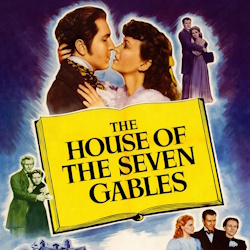
THE HOUSE OF THE SEVEN GABLES – Frank Skinner
 GREATEST SCORES OF THE TWENTIETH CENTURY
Original Review by Craig Lysy
The 1851 novel The House of the Seven Gables by Nathaniel Hawthorne was first adapted to the screen in 1910 by Universal Studios. In 1939 studio executives decided to remake the film, believing a retelling of its gothic tale of a self-destructive family consumed by greed would be well-received by the public. It was conceived to be a B-film offering and so Universal assigned one of its B-film producers, Burt Kelly, to oversee production with a small budget of $178,000. Joe May was tasked with directing and Lester Cole was hired to write the screenplay. Despite its small budget, a fine cast was assembled, including; George Sanders as Jaffrey Pyncheon, Margaret Lindsay as Hepzibah Pyncheon, Vincent Price as Clifford Pyncheon, Nan Grey as Phoebe Pyncheon, Dick Foran as Matthew Holgrave, and Gilbert Emery as Gerald Pyncheon. Read more…
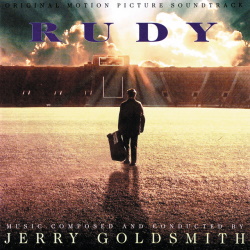
RUDY – Jerry Goldsmith
 THROWBACK THIRTY
Original Review by Jonathan Broxton
Arguably one of the most inspiring and beloved sporting drama films ever made, Rudy tells the story of Daniel “Rudy” Ruettiger, a working class kid from Chicago who harbors dreams of playing American football at the University of Notre Dame despite significant obstacles – notably, his lack of good academic grades, his family’s financial struggles, and his diminutive stature. However, Ruettiger’s persistence and positive nature eventually results in him making the team, earning the respect of his college teammates, and even being interviewed for the college newspaper, which makes him a cult figure in South Bend. Eventually Rudy convinces the stubborn head coach to put him on the field for the last ten seconds of the final game of his final year at the college – his first and last appearance – whereupon he sacks the opposition quarterback, and is carried from the field in glory while the stadium chants his name. Much of the story is apocryphal and embellished for dramatic purposes, but it’s a feelgood tale nevertheless. The film is directed by David Anspaugh from a screenplay by Angelo Pizzo, and stars Sean Astin as Rudy, along with Ned Beatty, Jason Miller, Robert Prosky, and Charles S. Dutton in supporting roles, as well as Jon Favreau and Vince Vaughn making their acting debuts. Read more…
KILLERS OF THE FLOWER MOON – Robbie Robertson
 Original Review by Jonathan Broxton
Killers of the Flower Moon is the latest film from revered director Martin Scorsese. It tells the true, but mostly unknown, story of the so-called ‘Osage Indian Murders,’ which happened in Oklahoma over the course of many years in the 1910s and 20s. The Osage Native American tribe, having forcibly been removed from their ancestral homeland to a dusty, barren area of Oklahoma, became fabulously wealthy almost overnight when oil was discovered on their land. Naturally, the white men of the time couldn’t just let the Osage be rich and live in peace – the concept of ‘manifest destiny’ and racism against the ‘redskins’ has a lot to answer for – and so they started moving into the area, trying to think of ways to take control of the oil for themselves. The most evil and twisted plot they concocted was the one cooked up by cattle baron Bill ‘King’ Hale that forms the core of this film: he and his nephews Ernest Burkhart and Byron Burkhart would insidiously earn the trust of the Osage elders, seduce and marry the women of one of the wealthiest families, and then over time murder the women so that the oil rights eventually passed to the white men. The film stars Robert De Niro as Hale, Leonardo Di Caprio as Ernest, and the brilliant Lily Gladstone as Ernest’s Osage wife Millie, with Tantoo Cardinal, John Lithgow, and Brendan Fraser in supporting roles, Jesse Plemons as the FBI man sent in to solve the crime, and many real members of the current Osage nation playing their own ancestors. Read more…
THE BLUE BIRD – Alfred Newman
 GREATEST SCORES OF THE TWENTIETH CENTURY
Original Review by Craig Lysy
Following the enormous success of The Wizard of Oz in 1939, Darryl F. Zanuck, the Vice-President of Production at 20th Century Fox, decided to cash in on the children’s fantasy genre to showcase their child star Shirley Temple. Film rights to the 1908 fantasy play “The Blue Bird” by Maurice Maeterlinck were purchased. Gene Markey was assigned production with a budget of $2.0 million, Walter Lang was tasked with directing, and Ernest Pascal was hired to write the screenplay. Heading the cast was megastar Shirley Temple as Mytyl, Spring Byington as Mummy Tyl, Nigel Bruce as Mr. Luxury, Gale Sondergaard as Tylette, Eddie Collins as Tylo, Sybil Jason as Angela Berlingot, Jessie Ralph as Fairy Berylune, Helen Ericson as Light, Johnny Russel as Tyltyl and Laura Hope Crews as Mrs. Luxury. Read more…

Shop at the Movie Music UK Store

Member of the

 MOVIE MUSIC UK