THE BOURNE SUPREMACY – John Powell
 Original Review by Jonathan Broxton
When The Bourne Identity, the first film based upon Robert Ludlum’s massively successful spy novels, grossed almost $122 million at the US box office, a sequel was inevitable. The Bourne Supremacy sees Matt Damon returning as the eponymous Jason Bourne, the former CIA assassin who, following the exploits of the last film, has settled down with a new identity in a tropical paradise with his girlfriend Marie (Franka Potente). However, when the CIA comes knocking on Bourne’s door once more, trying to frame him for a bungled operation, Bourne decides to fight back and clear his name. The film is directed by Englishman Paul Greengrass, making his Hollywood debut following years of sterling work creating top-notch dramas for British TV, and co-stars Joan Allen, Brian Cox, Julia Stiles and Karl Urban. Read more…
Jerry Goldsmith, 1929-2004
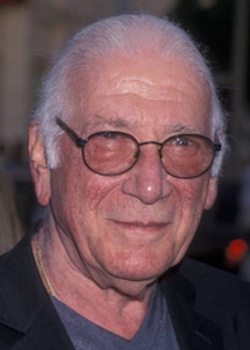 Composer Jerry Goldsmith died on July 21, 2004 at his home in Beverly Hills, California, after a battle with cancer. He was 75.
Jerrald King Goldsmith was born in Pasadena, California, in February 1929, and started playing piano at an early age, before later being tutored by pianist Jakob Gimpel and composer Mario Castelnuovo-Tedesco. He studied music at both the University of Southern California – where he attended classes given by Miklós Rózsa – and Los Angeles City College, before securing a job as a clerk-typist in the music department of TV network CBS under music director Lud Gluskin. He began writing music as early as 1951, for radio shows and live television (one of his first gigs was the first ever James Bond story, Casino Royale, produced as part of the Climax! series), and quickly became a television mainstay, contributing scores to such series as The Lineup, Black Saddle, Playhouse 90, Perry Mason and The Twilight Zone.
Goldsmith scored his first feature film, the western Black Patch, in 1957 at the age of 28, and spent much of the 1950s and 60s scoring both feature films and television projects: he worked on hit TV shows such as Gunsmoke, Wagon Train, Rawhide, Cain’s Hundred, Dr Kildare, The Man from U.N.C.L.E., The Loner, Room 222 and The Waltons, while scoring such popular films as Freud (1962), for which he received his first Oscar nomination, The List of Adrian Messenger (1963), Seven Days in May (1964), A Patch of Blue (1965), In Harm’s Way (1965), The Blue Max (1966), The Sand Pebbles (1966), the groundbreaking and avant-garde Planet of the Apes (1968), and numerous revisionist Westerns, which seemed to be his forte for much of the first two decades of his career. Read more…
I, ROBOT – Marco Beltrami
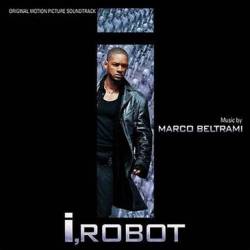 Original Review by Jonathan Broxton
Marco Beltrami was a late addition to the creative team of I Robot, following the dismissal of original composer Trevor Jones by director Alex Proyas. Beltrami had just nineteen days to write and record his replacement score – no mean feat to accomplish in such a short space of time, and with the added pressure of knowing that the film was one of 2004’s most anticipated summer releases. His success is nothing short of remarkable, and it’s quality is testament to his increasing stature as one of film music’s true emerging talents. Read more…
KING ARTHUR – Hans Zimmer
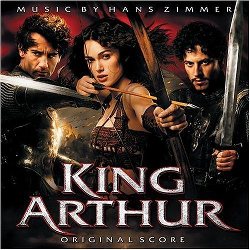 Original Review by Jonathan Broxton
I was going to open this review by saying something along the lines of “Can Media Ventures sink any lower than this, yet another tepid regurgitation of past scores?”, but in actual fact, the more I have listened to King Arthur, it seems less terrible than it did on that first spin. It’s certainly not a great score: it’s unoriginal, clichéd, and at times quite laughably predictable in its construction and execution. But, mixed in with all the familiarity, there’s a great score trying to break out. Zimmer only lets it shine in brief, so-near-and-yet-so-far snippets, which tantalise the listener into wondering what this score could have been, if only… Read more…
THE CLEARING – Craig Armstrong
 Original Review by Jonathan Broxton
I’ve been a big admirer of the work of Scottish composer Craig Armstrong throughout his relatively short career. From his early work on William Shakespeare’s Romeo and Juliet, through great scores such as Plunkett & Macleane, The Bone Collector, The Quiet American, Moulin Rouge and Love Actually, Armstrong has continually displayed a mastery of the orchestra, superb use of electronics, and an aptitude for powerful and memorable themes. It comes as something of a shock, therefore, to discover that The Clearing is a quite horribly boring score, easily one of the worst for a mainstream release in 2004. Read more…
AROUND THE WORLD IN 80 DAYS – Trevor Jones
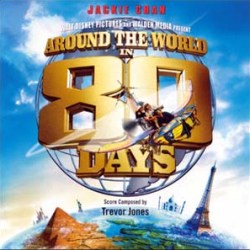 Original Review by Peter Simons
Based on Jules Verne’s classic novel, Around The World In 80 Days is not quite the adventure film fans were hoping for. With Steve Coogan and Jackie Chan in the lead roles, the classic adventure with a touch of science fiction – at least, it was sci fi when Verne wrote it – has been reduced to a comedy; and not a very funny one. Coogan, a British comedian, stars as inventor Phileas Fogg who wages his life to prove he can travel around the globe in eighty days. Chan plays Fogg’s assistant Passepartout, who is on a mission of his own to return a sacred sculpture that was stolen from his hometown in China. Needless to say, the film’s plot serves merely as a vehicle for Chan’s martial arts choreography. Read more…
Remembering Henry Mancini, 1924-1994
 Composer Henry Mancini died ten years ago today, on June 14, 1994, at his home in Los Angeles, California, after a battle with pancreatic cancer. He was 70 years old.
Enrico Nicola Mancini, nicknamed Henry or Hank, was born in April 1924 in Cleveland, Ohio, the son of Italian immigrants, and raised in a rural steelworking town in nearby Pennsylvania. He showed early musical promise and studied at the Juilliard School, but his education was interrupted by World War II, during which he served in the Army and worked with the Glenn Miller Air Force Band. After the war, Mancini joined Universal-International’s music department, where he gained experience scoring dozens of B-movies, including classics such as Creature from the Black Lagoon (1954).
Mancini’s big break came in 1958 when he collaborated with director Blake Edwards on the television series Peter Gunn, which featured a groundbreaking jazz score that became a hit in its own right. Their partnership continued through numerous films, with Mancini’s music often becoming as iconic as the films themselves. He won an Oscar for scoring Edwards’s film Breakfast at Tiffany’s in 1961, and co-wrote the iconic song “Moon River” for lead actress Audrey Hepburn. He won another Oscar in 1962 for the title song for Edwards’s film Days of Wine and Roses, received an Oscar nomination for timeless slinky jazzy main theme from The Pink Panther in 1964, and earned critical acclaim for his work on several other Edwards-directed films including The Great Race (1965), Darling Lili (1970), 10 (1979), and Victor/Victoria (1982), among many others.
Mancini had a rare ability to blend classical technique with contemporary popular styles, from swing and jazz to lush romantic ballads. Throughout the 1960s and 70s Mancini combined his scoring career with an equally successful parallel career as a songwriter, recording artist, touring conductor, and media personality, which made him one the most famous and popular American classical musicians of his era. His songs were recorded by the most popular vocalists of the day – Andy Williams, Frank Sinatra, Perry Como, Johnny Mathis, Tony Bennett, dozens of others – and many of them topped the charts. Read more…
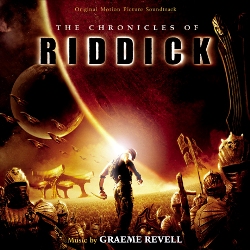
THE CHRONICLES OF RIDDICK – Graeme Revell
 Original Review by Jonathan Broxton
David Twohy’s 2000 film Pitch Black was an unexpected success, both critically and commercially. Having had his career restricted to bit parts in the likes Saving Private Ryan , and voice-over work on The Iron Giant, its star Vin Diesel was suddenly an action hero, and it even inspired Kiwi composer Graeme Revell to write one of his most widely-praised scores of the 1990s. The Chronicles of Riddick is a sequel, set five years after the conclusion of Pitch Black, and with the eponymous Riddick (Diesel) on the run from bounty hunters. Riddick meets up with his old friend Imam (Keith David), who has been told of a prophecy that a man will save his home planet from being laid to waste by the warmongering Necromongers and their near-invincible Lord Marshall (Colm Feore) – and he believes that Riddick may be that man. However, Riddick is unable to prevent the Lord Marshal from attacking Helion, and instead he finds himself thrown in a brutal subterranean prison where he encounters Jack, now known as Kyra (Alexa Davalos), the other survivor of Riddick’s time on the Pitch Black planet. Together, Riddick and Kyra plan to escape from the prison and overthrow the Lord Marshal and the Necromongers once and for all… Read more…
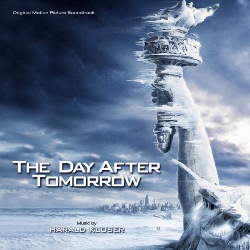
THE DAY AFTER TOMORROW – Harald Kloser
 Original Review by Jonathan Broxton
2004 has proved to be a year where several composers have been given their “shot at the big time”. Among these was Austrian composer Harald Kloser, best known to date for his occasional forays into the North American market on films such as The Thirteenth Floor and the critically acclaimed TV movies such as RFK and Rudy: The Rudy Giuliani Story. That he was hired to score The Day After Tomorrow was surprising in that no-one expected him to be scoring this high-profile a movie without achieving some kind of success beforehand. On the other hand, director Roland Emmerich has often gambled on young, relatively unknown composers before, with great effect – he is the man who ‘discovered’ David Arnold after all. Read more…
SHREK 2 – Harry Gregson-Williams
 Original Review by Peter Simons
Considering the enormous success of the original Shrek in 2001, there was never any doubt that a sequel would follow. Shrek was always going to be a tough act to follow, but somehow but the filmmakers succeeded – in fact, the results even outdo the first film. Shrek 2 has better animation, is a lot funnier, has Puss in Boots, and made a lot more money at the box office. Most of the cast returned for this sequel, with Mike Myers doing the voice of the ogre Shrek, Eddie Murphy voicing Donkey and Cameron Diaz providing the voice for the Princess Fiona. New to the sequel are Antonio Banderas as the hilarious feline Puss in Boots, Jennifer Saunders as the Fairy Godmother and John Cleese and Julie Andrews as the King and Queen of Far Far Away. Read more…
TROY (REJECTED SCORE) – Gabriel Yared
 Original Review by Jonathan Broxton
Gabriel Yared began work on Wolfgang Petersen’s Troy during the first phases of production, in early 2003. He was certainly an unexpected choice to score a film of this type, having spent much of his Hollywood career scoring sentimental romantic dramas such as The English Patient, City of Angels, Message in a Bottle, Possession and Cold Mountain, and scoring them well. Nevertheless, Yared threw himself into the project, exploring ancient and modern musical techniques, integrating Bulgarian choirs and Macedonian soloists into his work, and much more besides. For over a year, Yared immersed himself in the music of Trojans and Spartans and Greeks, having been afforded the luxury of time, something not often given to film music composers these days. The score was recorded in February 2004, and everyone, from Wolfgang Petersen to the studio execs at Warner Brothers, loved Yared’s work. Then, the film was screened for a test audience in Sacramento, California, and everything changed. The focus group at the test decided Yared’s music was “overpowering and too big, old fashioned and dated the film” and, sensing potential trouble, Warner Brothers unceremoniously threw out Yared’s work. Overnight, a year’s worth of research and planning was discarded by a group of studio executives who believed that the Sacramento focus group had better taste in film music than a director of Petersen’s caliber, and a composer of Yared’s standing. Read more…
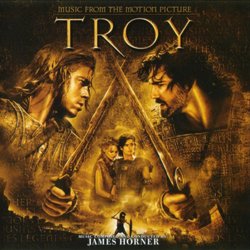
TROY – James Horner
 Original Review by Peter Simons
In what was one of this years most upsetting events in film music, Gabriel Yared’s powerful score for Troy got rejected and was replaced by one from James Horner. After Yared had been fine-tuning his work for almost a year, it was suddenly up to Horner to write ‘something better’, i.e. something better fitting the studio’s wishes, in a mere two weeks. Such a task is nearly impossible and, needless to say, Horner’s work sounds less inspired and thought-through than Yared’s does. That doesn’t mean it isn’t a good score. On the contrary, it’s a surprisingly fine effort featuring some of Horner’s most rousing material since Enemy at the Gates. One would just wish that the composer was given more time to explore and elaborate on his ideas. Read more…
VAN HELSING: THE LONDON ASSIGNMENT – John van Tongeren
 Original Review by Jonathan Broxton
One of the recent phenomenons in the world of motion pictures are straight-to-video animated spin-offs based on major feature films. Virtually every Disney animated classic has its own straight-to-video sequel, the recent Chronicles of Riddick has been given Dark Fury as a bridge-gap between it and the original Pitch Black, and the 2004 summer blockbuster Van Helsing has Van Helsing: The London Assignment. Essentially a prequel telling of Gabriel Van Helsing’s first encounter with the Dr. Jekyll and Mr. Hyde character who appears at the beginning of the cinematic film, it is directed by Sharon Bridgeman and features the voices of many of the same actors who played in the live-action movie, including Hugh Jackman, Robbie Coltrane and David Wenham. Read more…
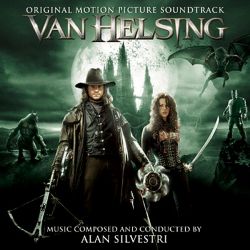
VAN HELSING – Alan Silvestri
 Original Review by Peter Simons
We’ve said it several times now: 2004 was the year of big drums. Large percussion has dominated most of this year’s blockbusters, from Harry Potter and the Prisoner of Azkaban to King Arthur. Never one to buck a trend, Alan Silvestri was all too happy to jump on the bandwagon and deliver what may be the loudest score of the year: Van Helsing. Brass fanfares, chanting choruses and thundering drums dominate the score and its movie. What separates Silvestri from his lesser contemporaries is that, in spite of everything, he makes this kind of music sound good. As loud and overblown as it may be, the composer infuses the score with a textural richness and compositional quality that is quite rare these days. Read more…
BOBBY JONES: STROKE OF GENIUS – James Horner
 Original Review by Jonathan Broxton
American golfer Bobby Jones was one of the pioneers of the game; the winner of thirteen major tournaments, including the 1923 US Open at Inwood, the 1926 British Open, the 1926 US Open at Scioto, the 1927 British Open, the 1929 US Open at Winged Foot, and the “grand slam”– all four majors in a season – in 1930, he is regarded as one of the all-time greats, and stands in second place behind Jack Nicklaus in the list of champions. Jones retired from golf after this incredible feat to concentrate on a career in law, but not before helping design the world famous Augusta gold course in his home state of Georgia. Jones died in 1971 aged 69. Rowdy Herrington’s film Bobby Jones: Stroke of Genius is a straightforward biopic starring Jim Caviezel (hot from The Passion of the Christ) as Jones, Claire Forlani as his wife Mary, Jeremy Northam as fellow golfer Walter Hagen, and Malcolm McDowell as O.B. Keeler, the man who would eventually go on to write Jones’s biography. Read more…

Shop at the Movie Music UK Store

Member of the

 MOVIE MUSIC UK