Archive
BRIDGE OF SPIES – Thomas Newman
 Original Review by Jonathan Broxton
Steven Spielberg’s latest film, Bridge of Spies, is a cold war thriller set in 1957 starring Tom Hanks as James Donovan, an insurance lawyer who is unexpectedly hired by the US Government to represent Rudolf Abel (Mark Rylance), an unassuming middle-aged artist accused of being a Russian spy. Although the evidence against Abel is overwhelming – and even though Abel himself does not deny the charges – Donovan mounts a spirited defense, arguing that the US constitution affords everyone due process to a fair trial. Months later, Donovan is called upon once again when a U-2 spy plane operating over Russia is shot down, and its young pilot is arrested by the Soviets. Realizing that Abel can be used as a bargaining chip, the CIA sends Donovan to East Berlin, just as the Wall is being erected, to negotiate a trade. The screenplay, by Matt Charman, Ethan Coen and Joel Coen, is based on real events, and allows the narrative to unfold at a measured pace. This is a film about conversations, negotiations, political ideologies, and ethical dilemmas, and there is nary an action sequence in the entire film, which will alienate those who need more ‘stuff happening’, but which drew me into its intricacies. Tom Hanks is superb in the lead role, serious and honorable, while Mark Rylance is relaxed and unexpectedly funny in his role as the accused spy with an artistic flair. The film is also notable for another reason: it’s the first Steven Spielberg film in 30 years not to feature a John Williams score. Read more…
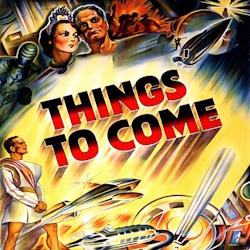
THINGS TO COME – Arthur Bliss
 GREATEST SCORES OF THE TWENTIETH CENTURY
Original Review by Craig Lysy
H. G. Wells published his novel The Shape Of Things To Come in 1933 and it immediately resonated with the public. Producer Alexander Korda was coming off the success of his last film, The Private Lives of Henry VIII, and recognized an opportunity to cash in on the popularity of Wells’s latest book. He purchased the film rights, but Wells imposed significant contractual constraints, which ensured he maintained creative control and wrote the screenplay. Korda tasked William Cameron Menzies with directing and brought in a stellar cast, which included Raymond Massey as John and Oswald Cabal, Edward Chapman as Pippa and Raymond Passworthy, Ralph Richardson as Rudolf – the Boss, Margaretta Scott as Roxana Black and Rowena Cabal, Cedric Hardwicke as Theotocopulos, Naurice Braddell as Dr. Edward Harding, Pearl Argyle as Catherine Cabal, and Sophie Stewart as Mrs. Cabal. The story paints a grim tale of a catastrophic World War, which commences in 1940 and rages for decades. After a plague pandemic in 1966 wipes out most of the populace, civilization collapses and people return to an agrarian life in small towns. It comes to pass that one day an advanced aircraft lands in one of the communities and brings news that an organization is restoring civilization to communities such as this. Civilization is reborn and an advanced society re-emerges with humanity living in grand underground cities. Yet there are those that remember the Great War, and on the eve of the first manned spaceflight to the Moon, these Luddites rebel against the new social order. The film had only modest commercial success and in the end did not cover its production costs of 260,000 pounds. Critics, however, hailed it as a masterpiece and it has served as an iconic example of thoughtful and provocative and science fiction. Read more…
SUFFRAGETTE – Alexandre Desplat
 Original Review by Jonathan Broxton
Women in the United Kingdom did not receive the right to vote until 1928. The issue of universal suffrage had been a parliamentary hot potato since at least 1872, and had dominated the political lives of several of the country’s leaders at the time, most notably King George V, and prime ministers David Lloyd George and Herbert Henry Asquith, all of whom were vehemently opposed to it. Things came to a head following the formation of the influential Women’s Social and Political Union, which had shifted sentiments in favor of women’s suffrage by 1906, but was equally criticized for its militant and sometimes violent campaign. Most commentators credit two women with changing the minds of British politicians: Emmeline Pankhurst, the leader of the WSPU (and the British equivalent of Susan B. Anthony), and Emily Davison, who intentionally walked in front of, and was subsequently trampled and killed by, the King’s horse Anmer during the running of the 1913 Epsom Derby horse race. Director Sarah Gavron’s film Suffragette tells the story of the movement from the point of view of the fictional Maud Watts, who joins the WSPU at the height of its influence, and becomes deeply involved in its activities. It stars Carey Mulligan, Helena Bonham-Carter, and Meryl Streep as Pankhurst, and is the first real ‘Oscar bait’ film of 2015. Read more…
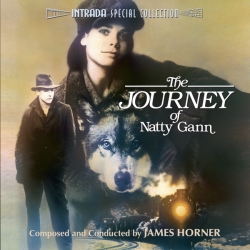
THE JOURNEY OF NATTY GANN – James Horner
 THROWBACK THIRTY
Original Review by Jonathan Broxton
Following his breakout year in 1982, when he wrote music for the box-office smashes Star Trek II and 48 HRS., James Horner spent the next several years solidly entrenched as one of the newest, most exciting young members of the Hollywood studio system, scoring several successful and popular features. After he proved his reliability when asked to replace Georges Delerue on Something Wicked This Way Comes in 1983, the executives at Walt Disney turned to Horner again in the fall of 1985, when they asked him to write a last-minute replacement for Elmer Bernstein’ score for the film The Journey of Natty Gann. Directed by Jeremy Kagan from an original screenplay by Jeanne Rosenberg, and set during the darkest days of the Great Depression in 1935, the film starred 12-year old Meredith Salenger as the eponymous Natty, a tomboy who sets off on a cross-country trek to find her father Sol (Ray Wise) after he leaves their Pacific Northwest home for Chicago in a desperate attempt to find work. En route she is befriended by a wolf, who travels with and protects her for much of her voyage, and even has a brief, innocent romance with another young traveler named Harry, played by a young John Cusack. Read more…
PAN – John Powell
 Original Review by Jonathan Broxton
Pan is, by my count, the 1,875th cinematic take on the classic J. M. Barrie story of Peter Pan, which by this stage is starting to look a little well-worn and ragged around the edges. This film is a prequel of sorts, telling the story of how Peter Pan and Captain James Hook first met, with the young orphan boy Peter (Levi Miller) and the twenty-something Hook (Garrett Hedlund) teaming up to fight against the dastardly pirate Blackbeard (Hugh Jackman) for the fate of Neverland, and its inhabitants of lost boys, natives, and fairies. The film was directed by Atonement’s Joe Wright from a screenplay by Jason Fuchs, and had all the pedigree to be a success – but, unfortunately, the film has been a critical and commercial flop, with many commentators criticizing its poor narrative coherence, unfortunate anachronisms, and overall lack of the magic necessary in any good Peter Pan story. Read more…
KING KONG – Max Steiner
 GREATEST SCORES OF THE TWENTIETH CENTURY
Original Review by Craig Lysy
Director and screenwriter Merian Cooper awoke one night from a nightmare of a giant gorilla terrorizing New York City. The nightmare served as the catalyst for conceiving a film, which would pit the giant gorilla against a Komodo dragon and other beasts. He pitched his idea to R.K.O. executive David Selznick who saw opportunity to lift the struggling studio out of debt and tasked Cooper with both producing and directing the film. To save money he would use stop-motion animation, as well as the huge jungle stage that had been built for The Most Dangerous Ground (1932) rather than shooting on location. A screenplay was crafted by Cooper, James Creelman and Ruth Rose, which secured Selznick’s blessing. The cast would include Fay Wray as Ann Darrow, Robert Armstrong as Carl Denham, Bruce Cabot as John Driscoll, Frank Reicher as Captain Englehorn, and Noble Johnson as the native chief. The story offers a classic “Beauty and the Beast” tale, which takes place in 1932 and is set in New York City. Famed filmmaker Carl Denham has conceived his most audacious film yet, which will be shot on an isle of legend – the uncharted Skull Island where resides an enormous best of unfathomable power. He finds Ann Darrow, a young actress down on her luck and offers her a role of a lifetime, starring in his new film to be shot on an exotic South Seas island. She jumps at the opportunity and they set sail on the Venture for Skull Island. Read more…
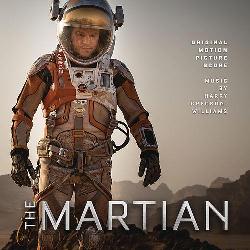
THE MARTIAN – Harry Gregson-Williams
 Original Review by Jonathan Broxton
Ridley Scott has been in something of a career slump of late. The once-revered director of classics like Alien, Blade Runner, and, more recently, Gladiator, did not receive many good reviews for his last few films, which have included Prometheus, The Counselor, and Exodus: Gods and Kings. His new film, The Martian, may set things back in the right direction. Based on the acclaimed debut novel by Andy Weir, the film is a space adventure that plays as a cross between Castaway, Gravity, and Apollo 13; it stars Matt Damon as Mark Watney, an astronaut on the latest successful NASA mission to make a manned trip to Mars. Unfortunately disaster strikes and the other members of his team – including Jessica Chastain, Kate Mara, and Michael Peña – are forced to blast off the planet, leaving Mark behind, presumed dead. NASA officials Jeff Daniels, Sean Bean, Kristin Wiig, and Chiwetel Ejiofor announce Mark’s death to a shocked world – but, back on Mars, Mark has somehow survived the accident, and is now faced with a terrible double dilemma: how to survive on Mars with dwindling food and water supplies, and how to contact Earth so that they can come and rescue him. The film is a superb combination of high action-adventure and intelligent application of real science, and will surely appeal to those with any interest in the realities of space exploration and the possibilities and problems it holds for those bold enough to do it. The film is anchored by Matt Damon’s excellent lead performance as Watney, which is at times surprisingly funny as he muses ironically at his situation and the bizarre things he has to do to survive, and is at other times spectacularly beautiful, taking every possible opportunity to present the barren Martian landscapes in all their austere glory. Read more…
SID MEIER’S CIVILIZATION: BEYOND EARTH – RISING TIDE – Geoff Knorr, Griffin Cohen, Grant Kirkhope
 GAME ZONE REVIEW
Original Review by Jonathan Broxton
Civilization: Beyond Earth – Rising Tide is an expansion pack which builds on the first Beyond Earth installment of Sid Meier’s extremely popular Civilization video game series, which was released to general acclaim last year. The expansion allows players to embark on new quests on new ‘biome’ planets – including a water planet and an ice planet – as they try to create and maintain civilizations in outer space. One of the most notable aspects of the game was its IFMCA Award-winning, BMI Award-nominated score by Geoff Knorr, Griffin Cohen, Michael Curran, and Grant Kirkhope, which was roundly praised as being one of the most impressive orchestral game scores in many years. For Rising Tide, three of the four composers are back (Curran left development company Firaxis for another company, Stardock Entertainment, earlier this year), and their music builds on the sound of the first game, but adds in new textures, and new ideas. The result is very, very impressive. Read more…
EVEREST – Dario Marianelli
 Original Review by Jonathan Broxton
Although more than 4,000 people have scaled the summit of Mount Everest since Sir Edmund Hilary and Tenzing Norgay first conquered the mountain in 1953, hundreds have also perished on its treacherous slopes. Director Baltasar Kormákur’s film Everest tells the story of one of the mountain’s most deadly incidents, when eight people died trying to reach the summit in May 1996, including experienced guides Rob Hall and Scott Fischer, both of whom ran ‘adventure vacation’ companies that specialized in taking tourists to the top of the world. It’s an exciting, dramatic, harrowing, visually beautiful film, made all the more tragic through the knowledge that (by and large) it depicts true events. The film stars Australian actor Jason Clarke as Hall – getting to use his native accent for once! – and Jake Gyllenhaal as his American counterpart Fischer, and features Josh Brolin, John Hawkes, Robin Wright, Emily Watson, Keira Knightley, Michael Kelly, and Sam Worthington in supporting roles. Read more…
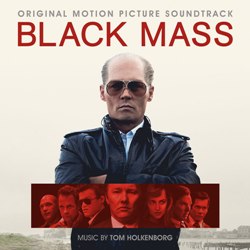
BLACK MASS – Tom Holkenborg
 Original Review by Jonathan Broxton
James “Whitey” Bulger was a notorious and violent mobster who, basically, was the leading figure in organized crime on the south side of Boston, Massachusetts, throughout the 1970s and 80s, allegedly personally committing dozens of murders and being involved in everything from drug smuggling and racketeering to illegally exporting arms for the IRA. Throughout this time, however, Bulger was also an informant for the FBI, which turned a blind eye to Bulger’s own criminal activities, in exchange for the information he provided about other organized crime families in the area. This all changed in 1994, when a new district attorney decided to go after Bulger, who then fled the city. For the next 16 years Bulger remained in hiding, until he was finally captured in 2011 outside his apartment in Santa Monica, California, and was subsequently sentenced to life imprisonment. The movie Black Mass, directed by Scott Cooper, tells Bulger’s life story; it stars Johnny Depp in a return-to-form performance as Bulger, Joel Edgerton as his FBI contact John Connelly, Benedict Cumberbatch as Bulger’s brother William, the former president of the Massachusetts State Senate, and has a superb supporting cast including Kevin Bacon, Dakota Johnson, Corey Stoll, Peter Sarsgaard, and Jesse Plemons from Breaking Bad. Read more…
RAMBO: FIRST BLOOD PART II – Jerry Goldsmith
 THROWBACK THIRTY
Original Review by Jonathan Broxton
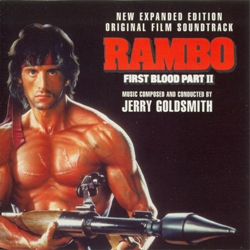
Following the massive success of the original First Blood movie in 1982, it was inevitable that a sequel would be forthcoming. Rambo: First Blood Part II once again saw Sylvester Stallone returning to one of his most iconic roles as former United States Special Forces commando John Rambo. Having spent a year in prison as punishment for his part in the events of the first film, Rambo is visited by his old commanding officer, Colonel Trautman (Richard Crenna), and offered a deal – in exchange for being pardoned by the government, Rambo must return to Vietnam and investigate reports of American soldiers still being held captive by the Viet Cong. However, as Rambo arrives in Southeast Asia, all hell breaks loose, and the one-man army finds himself waging war not only against the Vietnamese, but against a group of corrupt Soviets who are funding them. The film was directed by George P. Cosmatos from a screenplay by James Cameron, co-stars Charles Napier, Steven Berkoff, and Julia Nickson as a local intelligence agent, and was an even greater commercial success than the original, becoming one of the most iconic action movies of the 1980s. Read more…
SICARIO – Jóhann Jóhannsson
 Original Review by Jonathan Broxton
The rise to power of the Mexican drug cartels has caused immeasurable damage to the cities of northern Mexico over the last couple of decades, as rival groups battle to control the distribution of illegal narcotics across the border and into the United States. Murder, extortion, kidnapping, and corruption are all becoming increasingly commonplace, leaving the good people of border cities like Tijuana, Mexicali, Nogales, and Nuevo Laredo fearful for their lives in the face of the deadly violence all around them. Most dangerous of all is the city of Juárez, across the border from El Paso, Texas, which in the past decade has become the headquarters of the Sinaloa cartel, who notoriously leave the headless corpses of their dead enemies dangling from bridges in the city. The new movie Sicario, directed by Denis Villeneuve, is an uncensored journey into that world from the point of view of FBI agent Kate Macer (Emily Blunt), who is asked to join a special team by mysterious government official Matt Graver (Josh Brolin), and his equally mysterious advisor Alejandro (Benicio Del Toro), with a view to apprehending one of Juárez’s most powerful and notorious bosses. Read more…
FIRST BLOOD – Jerry Goldsmith
 GREATEST SCORES OF THE TWENTIETH CENTURY
Original Review by Craig Lysy
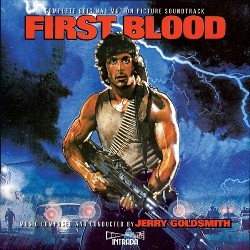
First Blood was adapted from the David Morrell in 1972 novel of the same name, although an alternative ending was shot that preserved the story’s protagonist for future tales. Sylvester Stallone plays John J. Rambo, a Vietnam War veteran who gained honor and distinction serving as a member of the elite United States Special Forces, for which he was awarded the Congressional Medal of Honor. Yet all is not well as he is haunted by the horrors of war and cannot find inner peace as he tries to adapt to civilian life. As Rambo hikes through Hope, Washington, to visit a friend he arouses the interests of the xenophobic local Sheriff, William Teasel (Brian Dennehy), who promptly escorts him out of town. Outraged as his treatment as he has not done anything wrong, Rambo returns to the town; Teasel takes his return as a personal affront and promptly arrests him on false charges. When Rambo is further disrespected and physically abused by Teasel’s minions he snaps and switches into his special forces combat mode with predictable and devastating consequences for his abusers. After pummeling his abusers, he escapes the jail and then flees on a motorcycle to the safety of the woods. Teasel, of course, organizes a hunting party to bring Rambo in “to face justice.” What follows is a rampage of killing and destruction as Rambo brings Teasel and his city to the brink of defeat. Thanks to the timely intervention of his commanding officer Colonel Trautman (Richard Crenna), Rambo’s release and free passage is negotiated to save the town further carnage. The movie served as a potent commentary on the alienation and estrangement felt by many of our soldiers as they returned from a deeply unpopular war and attempted to re-assimilate into society. Read more…
AGNES OF GOD – Georges Delerue
 THROWBACK THIRTY
GREATEST SCORES OF THE TWENTIETH CENTURY
Original Review by Jonathan Broxton
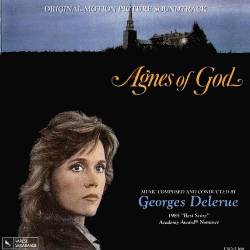
After he won the Oscar for Best Original Score in 1979 for A Little Romance, it appeared that the great French composer Georges Delerue would make the leap from the prestigious European films for which he was known, and begin a career scoring prestigious Hollywood fare. After all, Delerue was the musical voice of the French New Wave, the composer of choice for directors like François Truffaut, Jean-Luc Godard, and Alain Resnais, whose collaborations included such landmark works as Hiroshima Mon Amour in 1959, Shoot the Piano Player in 1960, Jules et Jim in 1962, Le Mépris in 1963, Les Deux Anglaises et le Continent in 1971, Une Belle Fille Comme Moi in 1972, and La Nuit Américaine in 1973. Unfortunately, that’s not what happened at all. Hollywood seemed to be completely at a loss with what to do to with Delerue, and instead of him being asked to score serious, worthy films, he ended up writing music for films that were, to put it mildly, deeply beneath him. Between 1980 and the summer of 1985 Delerue wrote music for such forgettable fare as Richard’s Things, Rich and Famous, and The Black Stallion Returns, and even had the ignominy of having his score for Something Wicked This Way Comes rejected by the studio. Thankfully, one person who appreciated his talent and knew what he could bring to the table was director Norman Jewison, who approached Delerue to score his serious religious drama, Agnes of God, in 1985. Read more…
NO ESCAPE – Marco Beltrami, Buck Sanders
 Original Review by Jonathan Broxton
No Escape is an action/thriller/drama directed by John Erik Dowdle, starring Owen Wilson as American businessman Jack Dwyer, who arrives in Southeast Asia to begin a new life with his wife Annie (Lake Bell) and their two young daughters. As his company plans to improve the region’s water quality, the family quickly learns that they’re right in the middle of a political uprising, a situation which reaches boiling point when armed rebels attack the hotel where they’re staying, ordered to kill any foreigners that they encounter. Desperate to survive amid the utter chaos, Jack must find a way to save himself and his loved ones from the violence erupting all around them. The film, which also stars Pierce Brosnan, has unfortunately opened to largely negative reviews, many of which call the film “xenophobic,” “borderline offensive,” and “unpleasant” – the latter of which could also apply to Marco Beltrami and Buck Sanders’s difficult original score. Read more…

Shop at the Movie Music UK Store

Member of the

 MOVIE MUSIC UK