Archive
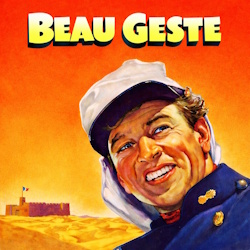
BEAU GESTE – Alfred Newman
 GREATEST SCORES OF THE TWENTIETH CENTURY
Original Review by Craig Lysy
Paramount Pictures executives decided that they wanted to remake their 1926 silent film “Beau Geste”, which starred Ronald Coleman. William Wellman was assigned production, he would also direct, and Robert Carson was tasked with writing the screenplay. The 1926 film was based on the novel “Beau Geste” (1924) by P. C. Wren and the creative team ultimately decided to adopt the screenplay of the 1926 film almost verbatim. For the cast, Gary Cooper would star in the titular role, joined by Ray Milland as John Geste, Robert Preston as Digby Geste, J. Carrol Naish as Rasinoff, Susan Hayward as Isobel Rivers, and Brian Donlevy as Sergeant Markoff. Read more…
JUDGE DREDD – Alan Silvestri
 THROWBACK THIRTY
Original Review by Jonathan Broxton
The character Judge Dredd was well-known to British comic book fans for almost 20 years prior to him debuting on film. Created by writer John Wagner and artist Carlos Ezquerra, he first appeared in the second issue of the British science fiction comic magazine 2000 AD in 1977, and quickly became the most iconic character of the anthology, known for his authoritarian demeanor, brutal sense of justice, and unwavering loyalty to the law. Set in a post-apocalyptic future, the Dredd stories have strong satirical and political overtones, exploring themes ranging from fascism to state surveillance, corporate corruption, and dystopia. Dredd himself is not the protagonist in a traditional sense – instead, he is a symbol of rigid, authoritarian justice, who has no personal ambition, rarely shows emotion, and sees mercy as weakness. Attempts to adapt Judge Dredd for the big screen began in the 1980s but the screenplay was stuck in development hell for years; the film eventually moved forward in 1994 with director Danny Cannon, a self-proclaimed fan of the comic, who was given the green light by the studio on the strength of his directorial debut The Young Americans in 1993. Unfortunately, subsequent interference and script re-writes heavily altered his intended vision, resulting in a film which disappointed long-time fans of the series. Read more…
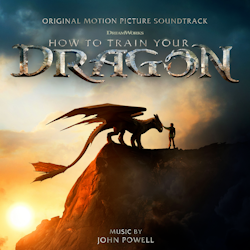
HOW TO TRAIN YOUR DRAGON – John Powell
 Original Review by Jonathan Broxton
In 2010 Dreamworks Pictures released an animated adventure film based on Cressida Cowell’s popular children’s novel How to Train Your Dragon. Set on the mythical Viking island of Berk, the film follows Hiccup, a skinny and awkward teenager, who is also the son of the village chief, Stoick the Vast. In Berk, dragon attacks are a regular hazard, and slaying them is a mark of honor; Hiccup desperately wants to prove himself to his father and the village but lacks the brute strength of the other Viking youths. Fearing that he will never earn his father’s respect, Hiccup resigns himself to the fact that he will never become a dragon slayer – until the day that Hiccup accidentally shoots down a rare and mysterious dragon known as a Night Fury, and in doing so upends everything he thinks he knows about dragons. Read more…
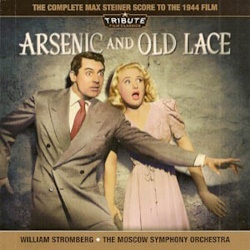
ARSENIC AND OLD LACE – Max Steiner
 GREATEST SCORES OF THE TWENTIETH CENTURY
Original Review by Craig Lysy
Renowned producer and director Frank Capra saw opportunity with the popular success of the Broadway play “Arsenic and Old Lace”, which was adapted from Joseph Kesserling’s novel of the same name. He purchased the film rights, however the contract stipulated that the film could not be released until the Broadway run had ended. Due to the enduring success of the play, the film debut was delayed by almost two years. Capra would manage production with a budget of $1.2 million, and also direct, with Julius J. Epstein and Philip G. Epstein writing the screenplay based on Joseph Kesselring’s novel. A fine cast was hired, with Cary Grant starring as Mortimer Brewster, Priscilla Lane as Elaine Brewster, Raymond Massey as Jonathan Brewster, Jack Carson as Officer Patrick O’Hara, and Peter Lorre as Dr, Herman Einstein. Read more…
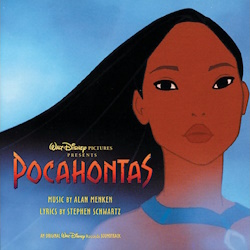
POCAHONTAS – Alan Menken, Stephen Schwartz
 THROWBACK THIRTY
Original Review by Jonathan Broxton
The idea to make a movie about the life of Pocahontas was first pitched to Walt Disney studios in 1990, shortly after the success of The Little Mermaid, and as Beauty and the Beast was in production. The studio was looking to diversify its slate with more mature, emotionally grounded stories, and chairman Jeffrey Katzenberg was eager to pursue more prestigious, award-caliber projects. He saw Pocahontas as a chance for Disney to do a “serious” animated film with Oscar potential, aimed at adults as much as children, and described the film as potentially Disney’s equivalent of West Side Story or Dances with Wolves – emotionally resonant, message-driven, and grounded in real-world conflict. Mike Gabriel and Eric Goldberg were hired as directors, and during development Pocahontas was considered the “prestige” project compared to another film in development simultaneously – The Lion King. Many animators reportedly lobbied to work on Pocahontas, which was expected to win awards, while The Lion King was seen as the “B project,” although ironically it was The Lion King that would become a much bigger global phenomenon, both critically and commercially. Read more…
THE LIFE OF CHUCK – The Newton Brothers
 Original Review by Jonathan Broxton
The Life of Chuck is an unusual, but ultimately warm-hearted and life-affirming story that touches on subjects no less important than the meaning of life itself, which it explores in a way that combines art, dance, poetry, music, mathematics, philosophy, existentialism, and a little bit of supernatural magic. It is based on a novella by Stephen King that was published in the 2020 anthology book ‘If It Bleeds’; similar to things like The Shawshank Redemption and Stand By Me, it is not a horror story, and instead is more of a rumination on the nature of reality. Told in reverse chronological order, it traces the life of a man named Charles “Chuck” Krantz, played by Tom Hiddleston as an adult. To reveal more of the plot would do it a disservice, so I’ll leave it at that, but at its core the story is a meditation on mortality, memory, and the idea that a single life contains a universe, as Walt Whitman once proposed. Rather than horror, it delivers awe – both for how fragile the world is, and how astonishingly rich a single human life can be if we take the time to make it so. Read more…
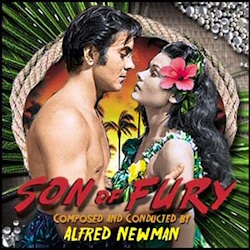
SON OF FURY – Alfred Newman
 GREATEST SCORES OF THE TWENTIETH CENTURY
Original Review by Craig Lysy
In 1941 20th Century Fox Studio Director Darryl F. Zanuck was seeking a new film to showcase his star, Tyrone Power. He came across the 1941 novel Benjamin Blake by Edison Marshall and purchased the film rights for $50,000 one month prior to its publication. Zanuck would manage production with a $2 million budget, John Cromwell would direct, and Philip Dunne was tasked with writing the screenplay. Tyrone Power would star in the titular role, joined by Gene Tierney as Eve, George Sanders a Sir Arthur Blake, Kay Johnson as Lady Helena Blake, Dudley Diggs as Pratt, Frances Farmer as Isabel, and Roddy McDowell as Benjamin as a boy. Read more…
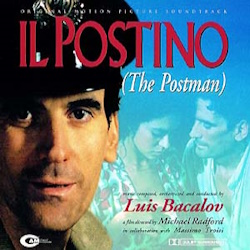
IL POSTINO – Luis Enríquez Bacalov
 THROWBACK THIRTY
Original Review by Jonathan Broxton
One of the most surprising global hits of the 1990s was Il Postino, The Postman, an Italian romantic drama film based on the novel Ardiente Paciencia by Antonio Skármeta, and directed by English filmmaker Michael Radford. The film is set in the early 1950s on a small, picturesque island off the coast of Italy and centers on Mario Ruoppolo, a shy and uneducated local man who takes a job as a postman. His only task is to deliver mail to Pablo Neruda, the famous Chilean poet, who has taken refuge on the island after fleeing Augusto Pinochet’s government and going into political exile. As Mario and Neruda begin to interact, Mario becomes fascinated by the poet’s charisma, politics, and especially his romantic use of language; eventually, Mario seeks Neruda’s guidance in learning how to express himself, particularly because he has fallen in love with Beatrice Russo, a beautiful but reserved woman who works at a local café. Read more…
PREDATOR: KILLER OF KILLERS – Benjamin Wallfisch
 Original Review by Jonathan Broxton
It’s been fascinating to watch the development of the Predator franchise over the years. Following their first appearance in the classic Arnold Schwarzenegger action movie in 1987, the Predators have gone on to feature in numerous sequels and prequels, crossovers with the Alien franchise, comic books, video games, and more, developing a whole back story and cultural history in the process, fleshing out what were initially presented as bloodthirsty killers into something much deeper. We now know the name of the species – they are the yautja – and we know that theirs is a warrior culture that has been sending their young adults to Earth for millennia, requiring them to trophy-hunt human warriors as a rite of passage. Previous films in the series have depicted them interacting with humans across time, helping ancient Egyptians build the pyramids in Alien vs. Predator, and hunting 16th century Comanche warriors in Prey. This new film, Predator: Killer of Killers, expands on this legacy even more. Read more…
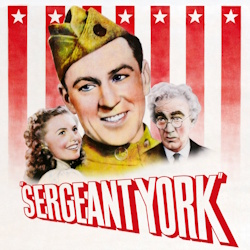
SERGEANT YORK – Max Steiner
 GREATEST SCORES OF THE TWENTIETH CENTURY
Original Review by Craig Lysy
Alvin C. York was an iconic American WWI Medal of Honor hero celebrated in the 1928 biography “Sergeant York: His Own Life Story and War Diary” by Tom Skeyhill and York himself. Producer Jesse L. Lasky approached York several times to allow a movie to be made of his life, but was repeatedly refused, declaring; “this uniform ain’t for sale.” Lasky eventually convinced York that, with war threatening in Europe, it was his patriotic duty to allow the film to proceed. York finally agreed, but only on three conditions. First, his share of the profits would be contributed to a Bible school he wanted to be built. Second, no cigarette-smoking actress could be chosen to play his wife. Third, only Gary Cooper could recreate his life on screen. Cooper at first turned down the role, but when Lasky sent him a letter with a personal plea that included York’s forged signature, Cooper agreed to do the picture. Lasky, Howard Hawks and Hal B. Wallis were placed in charge of production with a $1.7 million budget, Hawks would also direct, and the team of Harry Chandlee, Abem Finkel, John Huston and Howard Koch would adapt York’s biography. Gary Cooper would play the titular role supported by Walter Brennan as Pastor Rosier Pile, and Joan Leslie as Gracie Williams. Read more…
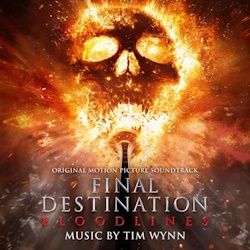
FINAL DESTINATION: BLOODLINES – Tim Wynn
 Original Review by Jonathan Broxton
The inexplicable longevity of the Final Destination horror movie franchise is such that the latest instalment, subtitled Bloodlines, is the sixth in the series that began some 25 years ago, in the year 2000. I remember seeing the first film in the theater, and my notes tell me that I saw at least some of the third film, Final Destination 3, from 2006, but beyond that my knowledge of them is limited to what I have read over years. Broadly, the core idea of the films is that you can’t cheat death. Each film follows a similar structure; someone has a vision of a deadly disaster – maybe a plane crash, or a highway pile – prevents it, and then the survivors start dying in the exact order they would have originally. The deaths are not caused by a villain per se, but by “death” itself as an unseen force, correcting the disruption to its plan. Read more…
BATMAN FOREVER – Elliot Goldenthal
 THROWBACK THIRTY
Original Review by Jonathan Broxton
Batman Forever is the third installment in the original Warner Bros. Batman film series, following Batman in 1989 and Batman Returns in 1992, both of which were directed by Tim Burton. However, Burton left the Batman franchise during the development of the third film because Warner Bros. wanted to go in a lighter, more commercial, and family-friendly direction, which clashed with Burton’s increasingly dark, gothic depiction of Gotham City. The studio saw diminishing returns on the edgier tone and opted to reset the franchise’s style, paving the way for Joel Schumacher to come into replace him. Schumacher had directed a number of box-office hits in the decade prior, including St. Elmo’s Fire, The Lost Boys, The Client, and Falling Down, but his neon-soaked reinterpretation of the dark knight in Batman Forever was polarizing: some approved of the elaborate set designs, as well as the campier tone which more was reminiscent of the 1960s Adam West Batman TV series, while others missed Burton’s more introspective and visually dramatic approach. One person who certainly disapproved was Michael Keaton, who declined to return to the main role due to creative differences after Burton left; ultimately he was replaced by Val Kilmer underneath the mask and cowl. Read more…
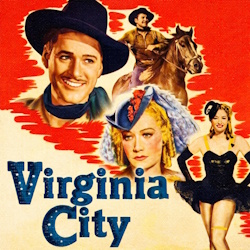
VIRGINIA CITY – Max Steiner
 GREATEST SCORES OF THE TWENTIETH CENTURY
Original Review by Craig Lysy
Following the commercial success of Dodge City in 1939, Warner Brothers decided to again showcase their marquee star Errol Flynn in another Western. A story by Robert Bruckner fit the bill, and Robert B. Fellows was placed in charge of production with a $1.179 million budget. Michael Curtiz would direct, with Bruckner writing the screenplay. For the cast Errol Flynn would star as Captain Kerry Bradford, again paired with Olivia de Haviland as Julia Hayne. However, after de Haviland dropped out, as did her replacement Brenda Marshall, Miriam Hopkins won the role. Joining them would be Randolph Scott as Captain Vance Irby, Humphrey Bogart as John Murrell, and Alan Hale as Olaf “Moose” Swenson. Read more…
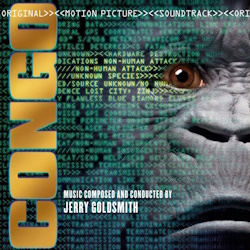
CONGO – Jerry Goldsmith
 THROWBACK THIRTY
Original Review by Jonathan Broxton
Following the success of Jurassic Park in 1993, screenplays adapted from the action/adventure novels of Michael Crichton were suddenly hot commodities; one such screenplay was Congo, which was adapted by John Patrick Shanley from the 1980 novel of the same name, and which had been kicking around Hollywood for more than a decade. The resulting film was directed by Frank Marshall and stars Dylan Walsh as Dr. Peter Elliot, a primatologist who is traveling to the Congo to return a gorilla named Amy – who he has taught to communicate using sign language via a special glove – to her home in the wild. Meanwhile, Dr. Karen Ross (Laura Linney) is sent to the Congo to find a missing research team led by her ex-fiancé Charles Travis, which was in the area on an expedition to find rare blue diamonds that could revolutionize laser communications, but which vanished after a violent, mysterious attack. Elliot and Ross end up on the same plane together, where they are joined by Herkimer Homolka (Tim Curry, sporting one of the weirdest accents in movie history), a mysterious Romanian treasure hunter who is obsessed with finding the mythical Lost City of Zinj, which is rumored to contain vast diamond reserves. Read more…
MISSION: IMPOSSIBLE – THE FINAL RECKONING – Max Aruj, Alfie Godfrey
 Original Review by Jonathan Broxton
It’s hard to believe that Tom Cruise has been making Mission: Impossible movies for almost 30 years. He was 34 when he first took on the role of IMF agent Ethan Hunt in the first franchise installment back in 1996, and here he is again, now aged 62, still fighting bad guys, hanging out of planes, and sprinting for all he’s worth. If the press reports are to be believed, The Final Reckoning will be the eighth and final Mission: Impossible movie, and Cruise and the gang clearly wanted to go out with a bang – almost literally. It continues the plot of the last film, Dead Reckoning, and again sees Ethan and his IMF colleagues battling with his nemesis Gabriel for control of an artificial intelligence system nicknamed ‘The Entity,’ which was designed to sabotage digital systems, but has since achieved sentience and ‘gone rogue’ with the capability to infiltrate all of the world’s major defense, military, and intelligence networks. It is the fourth M:I film written and directed by Christopher McQuarrie, and co-stars Hayley Atwell, Ving Rhames, Simon Pegg, Esai Morales, and Pom Klementieff, with Henry Czerny and Angela Bassett in major supporting roles. Read more…

Shop at the Movie Music UK Store

Member of the

 MOVIE MUSIC UK