Archive
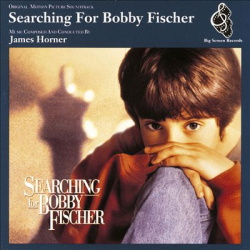
SEARCHING FOR BOBBY FISCHER – James Horner
 THROWBACK THIRTY
Original Review by Jonathan Broxton
Searching for Bobby Fischer is a chess-themed drama film directed by Steven Zaillian, which marked the directorial debut of the screenwriter of Schindler’s List. The film is based on the true story of Joshua Waitzkin, a 7-year-old boy with an exceptional talent for playing chess. After his skills are discovered, he starts receiving formal training from chess tutor Bruce Pandolfini. However, Josh’s natural ability for the game, as well as his fascination with the legendary chess player Bobby Fischer, creates a conflict within him. On one hand, he strives to excel in the game and becomes deeply involved in competitive chess tournaments. On the other hand, he battles with the pressure to balance his love for chess with a normal childhood. This dichotomy is further exacerbated by Josh’s parents, who have differing views on how to nurture their son’s talent: his father encourages his competitive side, while his mother wants him to enjoy a more well-rounded life. It’s a film about the pursuit of excellence, the complexities of talent and ambition, and the balance between nurturing a gift and maintaining a sense of innocence. It stars Ben Kingsley, Joe Mantegna, Joan Allen, Laurence Fishburne, and young Max Pomeranc as Josh, and I really enjoy it – it’s a slow burn, low-key movie that features some crackerjack dramatic performances and ends on an emotional high. Read more…
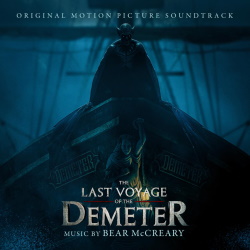
THE LAST VOYAGE OF THE DEMETER – Bear McCreary
 Original Review by Jonathan Broxton
When the Irish author Bram Stoker was writing his classic horror novel Dracula in 1897 he included a passage noting that a ship, the Demeter, ran aground in Whitby in North Yorkshire; all the crew on board were dead, and the only cargo were boxes of earth from a castle in Transylvania. This is, of course, the back story of how the evil vampire count came to be in England in the first place, and the fate of the Demeter is well known to those knowledgeable about Dracula lore – but there has never been a film about the Demeter before, and what terrible events transpired on the ship… until now. The film is essentially an extrapolation on the ’Captains Log’ chapter of Stoker’s original novel, and has been described by some critics as ‘Alien on a boat,’ as one by one the crew are picked off by the monster on board. The film stars Corey Hawkins, Aisling Franciosi, Liam Cunningham, and David Dastmalchian, and is directed by Norwegian filmmaker André Øvredal. Read more…
ALL THE BROTHERS WERE VALIANT – Miklós Rózsa
 GREATEST SCORES OF THE TWENTIETH CENTURY
Original Review by Craig Lysy
In response to the commercial success of Captains Courageous in 1936, MGM purchased the film rights to the 1919 seafaring adventure novel All the Brothers Were Valiant by Ben Ames Williams. Remarkably it would take the studio fifteen years to finally get the project off the ground. In November 1951 Pandro S. Berman was assigned production and provided a $1.816 million budget, Harry Brown was hired to write the screenplay, and Richard Thorpe was tasked with directing. A stellar cast was assembled including; Robert Taylor as Joel Shore, Stewart Granger as Mark Shore, Ann Blyth as Priscilla Holt (a replacement for the Elizabeth Taylor who was recovering from childbirth), Betta St. John as Native girl, Keenan Wynn as Silva and James Whitmore as Fetcher. Read more…
THE FUGITIVE – James Newton Howard
 THROWBACK THIRTY
Original Review by Jonathan Broxton
The Fugitive is one of the best action thriller movies of the 1990s. It’s a big screen remake of the massively popular 1963 TV series, and sees Harrison Ford taking over from David Janssen in the title role as Dr Richard Kimble, an acclaimed Chicago vascular surgeon. One night, after coming home from a fundraiser, Kimble finds his beloved wife Helen (Sela Ward) fatally wounded, having been attacked by a one-armed man, who escapes after a fight. However, a mountain of misinterpreted circumstantial evidence leads to Kimble being wrongfully arrested and convicted of the murder. While on his way to death row, his prison transport bus crashes, and Kimble is able to escape. Enter US Deputy Marshal Samuel Gerard (Tommy Lee Jones), a dogged and gruff but dedicated investigator, who is charged with re-capturing Kimble. So begins a terrific game of cat-and-mouse as Kimble tries to discover the identity of the real killer before Gerard catches up with him. The film was directed by Andrew Davis, and co-stars Joe Pantoliano, Andreas Katsulas, and Jeroen Krabbé, as well as Julianne Moore and Jane Lynch in early supporting roles. Read more…
Under-the-Radar Round Up 2023, Part 3
 Original Reviews by Jonathan Broxton
I’m pleased to present the latest instalment in my on-going series of articles looking at the best under-the-radar scores from around the world. This article, the third of 2023, covers five scores from independent British and American projects, films slightly off the mainstream beaten track, but which all contain outstanding music. The scores cover a variety of genres and mediums, from nature documentaries to sports dramas, animated short films to children’s fantasy adventures, and more!
FROM HERE TO ETERNITY – George Duning, Morris Stoloff
 GREATEST SCORES OF THE TWENTIETH CENTURY
Original Review by Craig Lysy
In 1952 Columbia Pictures was intent on producing a war romance as a vehicle for stars Burt Lancaster and Montgomery Clift. They found their story with the 1951 novel From Here to Eternity by James Jones. They purchased the film rights, assigned production to Buddy Adler and allocated a $2.5 million budget. Fred Zinnemann was given the reigns to direct with Daniel Taradash writing the screenplay. A stellar cast was assembled, including Lancaster as First Sergeant Milton Warden, Clift as Private Robert E. Lee “Prew” Pruwitt, Deborah Kerr as Karen Holmes, Donna Reed as Alma Burke, Frank Sinatra as Private Angelo Maggio, Philip Ober as Captain Dana “Dynamite” Holmes, and Ernest Borgnine as Staff Sergeant James R. “Fatso” Judson. Read more…
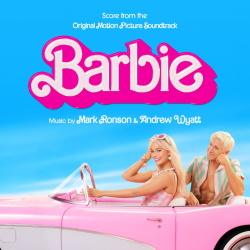
BARBIE – Mark Ronson, Andrew Wyatt
 Original Review by Jonathan Broxton
If you had told me a year ago that one of the most talked-about and controversial films of 2023 would be one based on a child’s toy from the 1950s I would have scarcely believed you, but here we are, and Barbie is probably going to be remembered as one of the cinematic cultural touchstones of the year. The film is, of course, inspired by the enormously popular line of dolls manufactured by American toy company Mattel, and usually something like this would not interest me in the slightest – there have been Barbie movies before, animated ones, soulless and vapid affairs – but in the hands of writer/director Greta Gerwig and her co-writer husband Noah Baumbach, this version of Barbie has become a feminist story aimed squarely at Millennials and members of Gen-Z, while also becoming a political football for both the left and right wings, with one half praising it for its progressiveness, and the other half accusing it of ruining everything with ‘wokeness’. Read more…
HAUNTED MANSION – Kris Bowers
 Original Review by Jonathan Broxton
The latest Disney theme park property to hit big screens, hot on the heels of five Pirates of the Caribbean films, Tomorrowland, and Jungle Cruise, is Haunted Mansion. It’s the second film to be based on the wonderfully ghoulish ride after the 2003 Eddie Murphy movie which was scored by Mark Mancina, but where the first film deviated considerably from the canonical Haunted Mansion story, this one seems to be much more rooted in Disney lore. The film stars Rosario Dawson as Gabbie, a single mother who moves into a long-abandoned mansion with her teenage son, with dreams of turning it into a bed-and-breakfast – only to discover that the mansion is overrun with ghosts! At her wit’s end, the skeptical Gabbie turns to a group of psychics (Lakeith Stanfield, Tiffany Haddish, Owen Wilson, Danny DeVito) to help exorcise their mansion and destroy the ghosts around them. The film was directed by Justin Simien from a screenplay by Katie Dippold, and had a lot of good pre-release buzz, but unfortunately the film has been something of a commercial flop, likely due to the peculiar decision Disney took to release it in July rather than the more logical late-October. Read more…
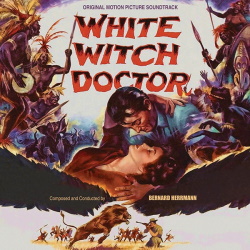
WHITE WITCH DOCTOR – Bernard Herrmann
 GREATEST SCORES OF THE TWENTIETH CENTURY
Original Review by Craig Lysy
20th Century Fox executive Darryl F. Zanuck was fond of adapting novels for the big screen and when he came across the 1950 work White Witch Doctor by Louise A Stinetorf he purchased the film rights and assigned Otto Land to production with a $2.02 million budget. Ivan Goff and Ben Roberts were hired to adapt the novel, but Zanuck instructed them to deviate from a literal retelling of the novel, insisting that they infuse the tale with romance, sex, physical excitement, and physical violence set against beautiful African vistas. Roy Ward Baker was tasked with directing, but was replaced by Henry Hathaway when he fell ill in Africa. A fine cast was assembled, including Robert Mitchum as Lonni Douglas, Susan Hayward as Ellen Burton, Walter Slezak as Huysman, Timothy Carey as Jarrett and Mashood Olabisi as Jacques. Read more…
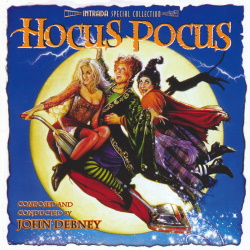
HOCUS POCUS – John Debney
 THROWBACK THIRTY
Original Review by Jonathan Broxton
One of the most enduringly popular films from 1993 is Hocus Pocus, a children’s fantasy comedy with a spooky edge. Directed by Kenny Ortega from a screenplay by Mick Garris and Neil Cuthbert and a story by David Kirschner, the film stars Bette Midler, Sarah Jessica Parker, and Kathy Najimy as Winifred, Sarah, and Mary, the Sanderson sisters of Salem, Massachusetts, who were executed 300 years previously for practicing dark magic and witchcraft. In modern day Salem Max, a teenager new to town, inadvertently brings the sisters back to life on Halloween Night when he lights a black-flame candle in the witches’ former house while out trick-or-treating. Now, with the help of his younger sister, his girlfriend, and a talking cat named Binx, Max must stop the witches from stealing the life force of the town’s children, and achieving immortality. The film co-starred Omri Katz, Thora Birch, and Vinessa Shaw and, despite it not being especially successful at the time, has since become a popular kid’s Halloween cult classic. Read more…
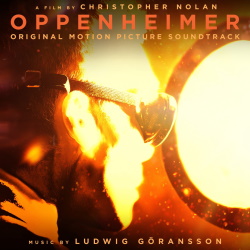
OPPENHEIMER – Ludwig Göransson
 Original Review by Jonathan Broxton
Now I am become death, the destroyer of worlds.
In lesser hands, a movie about the life of J. Robert Oppenheimer could have been a dusty, staid affair. Oppenheimer, for those who don’t know, was a theoretical physicist who, in 1942, was recruited by the US government to lead the Manhattan Project, a top-secret military program created with one goal: to design and build a nuclear weapon before Adolf Hitler and the Nazis did the same, so that they could bring about the end of World War II. Oppenheimer and his colleagues successfully built several bombs over the course of many years, culminating in the detonation of two such devices over the Japanese cities of Nagasaki and Hiroshima in 1945. However, despite his ‘success’ and initial celebrity, Oppenheimer was haunted by the ethical questions that surrounded his creation, and suffered a great deal of personal and political turmoil in the years that followed. This latter issue was compounded by the fact that, early in his life, Oppenheimer had pro-communist opinions, and was friendly with many members of the US Communist Party – something that certainly wouldn’t fly with the House Un-American Activities Committee and the McCarthy-era politics of the 1950s. Read more…
YOUNG BESS – Miklós Rózsa
 GREATEST SCORES OF THE TWENTIETH CENTURY
Original Review by Craig Lysy
In 1945 MGM Studios took notice of the best-selling 1944 novel Young Bess by Margaret Irwin and believed they could present a grand adaptation for the big screen. The film rights were purchased and Sidney Franklin was assigned production with a budget of $2.423 million. In 1946 Katherine Anne Porter, Jan Lustig and later Arthur Wimperis were hired to write the screenplay, and George Sidney was tasked with directing. Casting problems and production postponements delayed filming until October 1952. After considering Deborah Kerr, Janet Leigh and Elizabeth Taylor for the lead role, Jean Simmons was chosen to play Elizabeth. Joining her would be; Stewart Granger as Thomas Seymour, Deborah Kerr as Catherine Parr, and Charles Laughton as King Henry VIII. Read more…
MISSION: IMPOSSIBLE – DEAD RECKONING – Lorne Balfe
 Original Review by Jonathan Broxton
There aren’t many bonafide movie stars these days; actors or actresses who can will a film into production, attract top notch support, and get audiences flowing into cinemas, purely on the strength of their charisma and appeal. Tom Cruise is one of the few who can still do that in Hollywood, and his latest film – Mission: Impossible – Dead Reckoning, Part One – is an action blockbuster tailored to his unique blend of movie-making. Cruise returns for the seventh time as IMF Special Agent Ethan Hunt, the all-action leader of a team of spies saving the world from clandestine threats and evil super-villains. In this latest film, the threat is a piece of rogue artificial intelligence nicknamed ‘The Entity,’ which was designed to sabotage digital systems, but has since achieved sentience and ‘gone rogue’ with the capability to infiltrate all of the world’s major defense, military, and intelligence networks. Control of the Entity is obtained by way of a specific type of key, which various powers attempt to obtain, while Hunt and his team try to stop the key from falling into the wrong hands – one of whom is a shadowy figure from Hunt’s own past. Read more…
THE BAD AND THE BEAUTIFUL – David Raksin
 GREATEST SCORES OF THE TWENTIETH CENTURY
Original Review by Craig Lysy
MGM executives came across a magazine story “Of Good and Evil” by author George Bradshaw, which was expanded into a full story titled “Memorial to a Bad Man”. They believed this riveting character driven drama offered a potent narrative that would be perfect for the big screen. The studio purchased the film rights and assigned renown producer John Housman with production and a budget of $1.56 million. Charles Schnee was hired to write the screenplay and Vincente Minnelli was tasked with directing. A very talented cast was assembled, which included; Kirk Douglas as Jonathan Shields, Dick Powell as James Lee Bartlow, Walter Pidgeon as Harry Pebbel, Barry Sullivan as Fred Amiel, Lana Turner as Georgia Lorrison, Gloria Grahame as Rosemary Bartlow and Gilbert Roland as Victor “Gaucho” Ribera. Read more…
FREE WILLY – Basil Poledouris
 THROWBACK THIRTY
Original Review by Jonathan Broxton
When the movie Free Willy played in cinemas in the UK in the summer of 1993 the title elicited a great deal of snickering from the more childishly-minded among us, but in the end it turned out to be a very heartwarming film about the relationship between a troubled young boy and an orca killer whale. The film is directed by Simon Wincer and stars Jason James Richter as Jesse, a troubled orphan, who is assigned to do community service at a marine theme park after committing a minor crime. At the park he forms a deep connection with Willy, an intelligent and sensitive orca who has just been captured in the wild by unscrupulous whalers, and is now being held in captivity. As Jesse spends more time with Willy, he observes the orca’s miserable living conditions and the park’s exploitative practices, and with the help of his friends and a sympathetic park trainer named Rae (Lori Petty), devises a plan to release Willy back into the ocean. The film ended up being a popular success at the box office, and eventually spawned two sequels in 1995 and 1997. Read more…

Shop at the Movie Music UK Store

Member of the

 MOVIE MUSIC UK