Archive
Golden Globe Nominations 2002
 The Hollywood Foreign Press Association (HFPA) has announced the nominations for the 60th Golden Globe Awards, honoring the best in film and American television of 2002.
In the Best Original Score category, the nominees are:
- TERENCE BLANCHARD for 25th Hour
- ELMER BERNSTEIN for Far from Heaven
- PETER GABRIEL for Rabbit-Proof Fence
- PHILIP GLASS for The Hours
- ELLIOT GOLDENTHAL for Frida
This is the first nomination for Blanchard, the second nomination for Gabriel, the third nomination for Glass, the third nomination for Goldenthal, and the fifth nomination for Bernstein. Glass previously won for The Truman Show in 1998. Bernstein previously won for To Kill a Mockingbird in 1962 and Hawaii in 1966.
In the Best Original Song category, the nominees are:
- BRYAN ADAMS, HANS ZIMMER, and GRETCHEN PETERS for “Here I Am” from Spirit: Stallion of the Cimarron
- MADONNA CICCONE and MIRWAIS AHMADZAÏ for “Die Another Day” from Die Another Day
- PAUL HEWSON (BONO), ADAM CLAYTON, DAVID EVANS (THE EDGE), and LARRY MULLEN, JR. for “The Hands That Built America” from Gangs of New York
- MARSHALL MATHERS III (EMINEM), JEFF BASS, and LUIS RESTO for “Lose Yourself” from 8 Mile
- PAUL SIMON for “Father and Daughter” from The Wild Thornberrys Movie
The winners of the 60th Golden Globe Awards will be announced on January 19, 2003.
STAR TREK: NEMESIS – Jerry Goldsmith
 Original Review by Jonathan Broxton
Jerry Goldsmith’s involvement with Star Trek now stretches back almost 25 years. He is as associated with the franchise as the USS Enterprise, “Beam me up, Scotty” and “Make it so”, and with the possible exceptions of James Horner and Alexander Courage, is the only composer to truly get to the heart of the Star Trek universe – even though he himself has said that he does not fully understand the phenomenon, or why his work is so well-loved. Having written so much classic music over the years, it is therefore somewhat disappointing to report that his work on Star Trek: Nemesis is pretty standard, uninspiring stuff. A few snatches of thematic familiarity, some exciting action material, and echoes of Total Recall aside, it’s actually a rather predictable, albeit enjoyable, sci-fi score. Read more…
THE EMPEROR’S CLUB – James Newton Howard
 Original Review by Jonathan Broxton
Movies about inspirational teachers, while not exactly ten-a-penny, are certainly genre mainstays, with a cinematic language of their own. Robin Williams played one in Dead Poets Society, Richard Dreyfuss played one in Mr Holland’s Opus, and now Kevin Kline joins their league with his performance in director Michael Hoffman’s The Emperor’s Club as William Hundert, a enthusiastic, well-respected, if a little stuffy professor at a boy’s school in 1972. All is well, and Hundert is happy in his work, until a disruptive force arrives in the shape of young Sedgewick Bell (newcomer Emile Hirsch), who immediately throws the status quo into disarray. As Hundert and Bell lock horns, deep moral and ethical questions raise their heads, leading to a confrontation, the repercussions of which could last a lifetime… Read more…
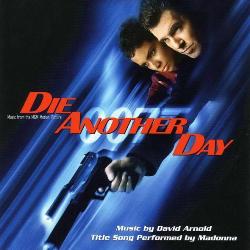
DIE ANOTHER DAY – David Arnold
 Original Review by Jonathan Broxton
You know, I’m beginning to think that David Arnold is running out of ideas. When he burst onto the film music scene in 1996/97 with Stargate, Independence Day and so on, he was a breath of fresh air, bringing new life and orchestral acumen to a genre which generally suffers from a lack of emerging talent. When he took over from Eric Serra after the lamentable GoldenEye as the composer of choice for the Bond movies, it was heralded as a step in the right direction, and he has proved himself to be the only composer to “get” the series in the way John Barry did. Die Another Day is Arnold’s third Bond movie score. It is also, by a long way, his weakest. Read more…
ARARAT – Mychael Danna
 Original Review by Jonathan Broxton
In many ways, Ararat is Canadian director Atom Egoyan’s Schindler’s List: an intensely personal film which tackles a little-known cultural tragedy with the same depth and sensitivity Steven Spielberg lent his account of the Holocaust. Egoyan, whose parents were born in Armenia, is best known as an art-house auteur who, occasionally, directs a crossover mainstream hit, such as Exotica or the Oscar-nominated The Sweet Hereafter. It is difficult to know whether this film will follow in their footsteps, especially given its difficult subject matter and unusual structuring, but one thing is for sure: the accompanying music CD is well worth a listen. Read more…
HARRY POTTER AND THE CHAMBER OF SECRETS – John Williams, William Ross
 Original Review by Jonathan Broxton
It’s funny how John Williams always manages to get himself attached to supremely successful movie franchises: whether through skill and good judgement, or simply because of his vast reputation, the man still regarded as Hollywood’s premier composer has lucked out in being involved with the Star Wars movies, Indiana Jones and now Harry Potter, the series of movies based on J.K. Rowling’s enormously popular tales of witchcraft and wizardry. The Chamber of Secrets is the second in the series of films, following Harry Potter and the Philosopher’s Stone and is, in every conceivable way, both in terms of movie AND music, a more pleasing experience. Read more…
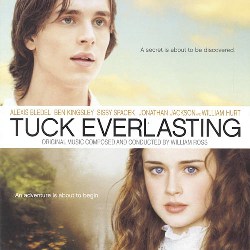
TUCK EVERLASTING – William Ross
 Original Review by Jonathan Broxton
William Ross has had a busy 2002. As well as assisting John Williams in writing and adapting the score for Harry Potter and the Chamber of Secrets, he was afforded scoring duties on the sweet and sentimental Disney movie Tuck Everlasting. Adapted from the popular novel by Natalie Babbitt, and directed by Jay Russell, the film stars young Alexis Bledel as Winnie Foster, a privileged young woman in 1900’s upstate New York who, after running away from home, meets and falls in love with Jesse Tuck (Jonathan Jackson), the youngest son of the reclusive Tuck family, headed by mother and father Mae and Angus (Sissy Spacek and William Hurt). However, the Tucks harbor a secret – one hundred years previously, they unknowingly drank from a fountain of youth and attained immortality, leaving them blessed (or cursed?) to remain at their current ages until the end of time. Read more…
WHITE OLEANDER – Thomas Newman
 Original Review by Jonathan Broxton
I’m getting rather frustrated with Thomas Newman. How many times is he going to rehash the American Beauty sound before it becomes even more tired than it already is? In many ways, Thomas Newman is becoming the James Horner of the 2000s; a supremely talented composer whose work in the full orchestral arena is as good as anything being written today (The Shawshank Redemption, Little Women, Meet Joe Black). But, and at the risk of sounding cruel, he seems to be getting lazy, and is quite prepared to rehash his old works, whether it is at his director’s behest, or because of his own current obsession with sound design over melody. To paraphrase the Old Testament of the bible, American Beauty beget Erin Brockovich, beget Pay It Forward, beget In The Bedroom, and now beget White Oleander. Read more…
SECRETARY – Angelo Badalamenti
 Original Review by Jonathan Broxton
There are two distinct sides to Angelo Badalamenti. Firstly (and most famously), there’s the side that embraces and provides the soundscape for the dark, twisted, and occasionally horrifying cinematic visions of director David Lynch, through films such as Blue Velvet, Wild at Heart, Lost Highway, Mulholland Drive and, most famously, Twin Peaks. And then there is the composer who has brought his not inconsiderable talent to bear on a number of surprising films, and with a great deal of versatility: Italianate pastiche for Cousins, Hollywood comedy scoring for National Lampoon’s Christmas Vacation, and lush full-orchestra work for The Comfort of Strangers and The Beach. It is with more than a little disappointment to find that his work on Secretary is actually rather bland and inconsequential. Written primarily for a small jazz combo with piano and synthesizer, Secretary is a predominantly low-key and ambient affair, a world away from the thematic beauty of The Beach or The Straight Story (still his best work), but with just enough energetic hits to stop it being an insomnia cure. Read more…
POSSESSION – Gabriel Yared
 Original Review by Jonathan Broxton
Occasionally, I write a highly personal soundtrack review, and I make no apologies for this review of Possession being one of them. I saw this film for the first time in November 2002, with the woman who is shortly to become my wife. It was the first movie we ever saw together, on a cold winter night in London’s Leicester Square, and for some reason both film – and music – weaved a magical spell on us. The poetic language and vivid imagery, beautiful locations and inherent passion and romance of Neil La Bute’s movie was electric, and contained a great deal of personal resonance for the two of us. As a result, Possession has become an enduring favorite of ours, with the music easily ranking as one of the best “sleeper” scores of 2002. Read more…
THE TOUCH – Basil Poledouris
 Original Review by Jonathan Broxton
It’s been a long time to wait for Basil Poledouris to get back into the scoring saddle. A couple of TV movies, a couple of flops, and the lamentable Crocodile Dundee in Los Angeles not withstanding, it’s been almost four years since his last major score, Les Misérables. His sabbatical has largely been self-imposed, choosing instead to concentrate on building up his Blowtorch Flats media organization, and supporting his daughter Zoë on her quest to enter the film music fray. With The Touch, however, it seems like the man behind epics as great as Conan the Barbarian and Starship Troopers is back with a vengeance – and, if I may say so, not before time. Read more…
K-19: THE WIDOWMAKER – Klaus Badelt
 Original Review by Jonathan Broxton
It may be a slightly early in a composer’s career to be making statements such as this, but I would be willing to bet that, within five years, Klaus Badelt is the most successful and respected Media Ventures graduate Hollywood has yet seen. This may seem like faint praise, forever lumping him in with the MV crew and making him guilty by association, but when you consider the career free-fall of composers such as Mark Mancina and Nick Glennie-Smith in recent years, the two 2002 scores by the young German promise excellent things. The second of his two scores, after The Time Machine, is K-19: The Widowmaker, a serious and somber submarine thriller starring Harrison Ford and Liam Neeson and directed by Kathryn Bigelow. The film is set in a tense 1961, the time at which the cold war between the USA the former Soviet Union was at its worst, on board the pride of the Soviet Navy’s submarine division: warship K-19. Hoping to nullify the American threat of nuclear attack, K-19 is placed strategically off the coast of America under a new commander, Alexi Vostrikov (Ford), who replaced the ship’s popular former captain Polenin (Neeson). However, when the K-19’s nuclear reactor malfunctions, tensions begin to surface – not just because of the threat of a meltdown onboard, but because crew members still loyal to Polenin threaten to mutiny. Read more…
ROAD TO PERDITION – Thomas Newman
 Original Review by Jonathan Broxton
One thing that cannot be taken away from Thomas Newman is the fact that (with the possible exception of Elliot Goldenthal) he is, by far, the most original voice working in film music today. Newman has, literally, created a style of writing that no-one has heard before, and through recent films like American Beauty and Erin Brockovich and In the Bedroom, given Hollywood a unique musical perspective on modern life. Imitators follow his lead, but Newman’s unique brand of quirky rhythmic techniques and innovative orchestrations remain as one of today’s truly distinctive voices. What people tend to forget, though, is that for all his marimbas and sazes and funky monkeys, Newman is equally excellent at the “big orchestral thing”. Road to Perdition, his latest work, reaffirms that. Read more…
MEN IN BLACK II – Danny Elfman
 Original Review by Jonathan Broxton
It’s nice to see Danny Elfman being silly again. I don’t mean Pee-Wee Herman silly; God forbid, the music was great but if he ever scores another movie like that something very wrong will have happened to the world. It’s just that, for the last few years, Elfman seems to have become a very serious man, scoring dark and weighty films such as Proof of Life and Sleepy Hollow and Planet of the Apes. Returning to the sci-fi chaos of the Men in Black universe has allowed Elfman to metaphorically let his hair down and go a bit wacky. He’s probably at his best when he does. Read more…
MINORITY REPORT – John Williams
 Original Review by Jonathan Broxton
Is it sacrilege to say that a new John Williams score is a slight disappointment? The 70-year old composer has been at the top of his game for over 25 years now, and the list of near-legendary scores he has written is almost incomprehensible. His collaboration with director Steven Spielberg is also the stuff of fable – how can two men come up with so much brilliance and genius between them? Minority Report, as a movie, is a marvelous amalgam of science fiction and morality gone wrong. But whereas Spielberg seems to still be at the height of creative talents, Williams seems to be flagging just a tad. A.I., his last Spielberg film, was enjoyable but failed to tread any new ground. Minority Report, which covers similar thematic ground by tackling deep intellectual issues in a science fiction setting, seems to have had the a similar effect on Williams – without wanting to sound unkind, its almost as though “thinking” films don’t provide him with the same seeds of musical inspirational as the popcorn adventure flicks that seem to be more and more his forte. Read more…

Shop at the Movie Music UK Store

Member of the

 MOVIE MUSIC UK