ALIEN – Jerry Goldsmith
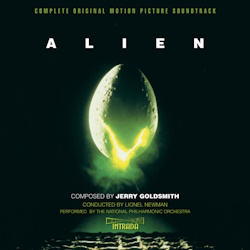 GREATEST SCORES OF THE TWENTIETH CENTURY
Original Review by Craig Lysy
In space, no one can hear you scream.
The genesis of Alien came from writer Dan O’Bannon who, having co-written the film Dark Star in 1974, wanted to make a more serious and horrific sci-fi movie. Later, while working on the failed effort by director Alejandro Jodorowsky to bring Frank Herbert’s Dune to life, O’Bannon discovered the work of Swiss artist H. R. Giger, whose ‘disturbing but beautiful’ work further influenced O’Bannon’s ideas for the creature at the center of his story. O’Bannon collaborated with fellow writer Ronald Shusett on the story; they drew inspiration from many works of science fiction and horror, but eventually pitched the idea to studio heads as “Jaws in space,” with the central monster being a diabolical alien that would rape a human to allow its offspring to gestate and, when mature, burst out of the host. Propriety and rating concerns led them to tone down this initial idea and make it a non-sexual implantation, but it was still implicitly a rape, with a male host to make it more repugnant; however, their story was repeatedly turned down by the Hollywood studio establishment, which deemed it too violent and gory.
The massive commercial success of Star Wars in 1977, and the advocacy of producers Roger Corman and Walter Hill, eventually opened the door, and 20th Century Fox reconsidered and agreed to make the movie, with the proviso that the violence was toned down even more. Gordon Carroll, David Giler, and Walter Hill were assigned production with a $4.2 million budget, which eventually doubled to $8.4 million. Englishman Ridley Scott was hired to direct on the strength of his work on The Duellists in 1977. Sigourney Weaver won the lead role of Warrant Officer Ripley over first choice Meryl Streep, who was unavailable due to the recent death of her partner John Cazale. Joining her would be Tom Skerritt as Captain Dallas, John Hurt as Executive Officer Kane, Veronica Cartwright as Navigator Lambert, Yaphet Kotto as Chief Engineer Parker, Harry Dean Stanton as Engineering Technician Brett, and Ian Holm as Science Officer Ash.
The story is set in deep space during the year 2087 aboard the commercial space tug Nostromo. The seven-member crew is awakened out of stasis by the ship’s main computer, which has detected a transmission from a nearby planet. Company policy mandates investigation and the crew shuttles down to the planet’s surface. They encounter an apparently derelict alien vessel, within which they discover, in its hold, a nursery full of alien eggs. Kane, while investigating the eggs, is assaulted by a hatchling alien, which envelops his head with tentacles. They return to the ship over Ripley’s objection and in violation of quarantine protocols. The alien falls off Kane and apparently dies; however, unknown to the crew, an alien embryo has been implanted in Kane and is growing rapidly. Days later at dinner it bursts out through his chest and escapes into the bowels of the ship where it rapidly grows and matures into a horrific predator. One by one the crew is killed until only Ripley remains. She sets the Nostromo’s auto-destruct and departs in an escape shuttle only to discover the sleeping alien inside. She manages to surreptitiously put on her space suit, wakes the alien, and then opens the shuttle door with the alien being propelled out as the shuttle’s atmosphere is vented. The film was a massive commercial success, earning $187 million dollars and launching a franchise that now includes seven films. Critical reception at the time was mixed, however today it is recognized as one of the most influential science fiction films of all time. The film received two Academy Award Nominations for Best Art-Set Direction, winning one for Best Visual Effects.
Director Scott had originally wanted the film to be scored by Isao Tomita, a Japanese composer renowned as one of the pioneers of electronic music. However, 20th Century Fox president Alan Ladd Jr. overruled the choice as he wanted a more familiar and proven composer. Lionel Newman, Fox’s Director of Music, introduced Scott to Jerry Goldsmith, who was given the assignment. Creative differences with Scott quickly became apparent when Goldsmith completely disregarded the temp tracks of his music that Scott and his editor Terry Rawlings had selected. As Goldsmith related in an interview for 2004 DVD documentary “The Beast Within”: “I always think of space as being the great unknown, sort of an air of romance about it. And I approached ‘Alien’ that way … I thought ‘well, let me play the whole opening very romantically and very lyrically and then let the shock come as the story evolves.’ It didn’t go over too well.”
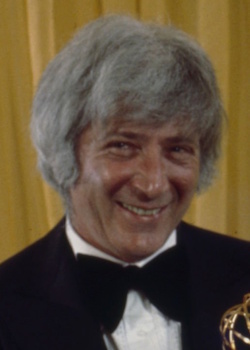 His original main title music offered classic romanticism, a grand testament to the mystery and awesome wonder of outer space. This juxtaposition would contrast and intensify the subsequent horror and terror that would unfold. However, Scott ordered him to change it, and Goldsmith did so, relating that he rewrote it as “the obvious thing: weird and strange, and which everybody loved.” He composed and recorded 64 minutes of music across 23 cues, but was called back to rescore seven of the, not including the End Credits, which Scott had already decided would already use Howard Hanson’s Symphony No. 2. Even after rescoring these cues Rawlings and Scott were dissatisfied and so they re-worked them further, eventually replacing much of Goldsmith’s handiwork with sound effects and music from his 1962 score for Freud. Jeff Bond, the renowned author, magazine editor, freelance writer and Jerry Goldsmith aficionado states, that scenes containing music from Freud are: the scene of the face hugger’s acid blood dripping down through the Nostromo decks; the preparation for Dallas’ search of the air shafts and his search up to when he’s nabbed by the alien; and Ripley searching for the cat on the Nostromo bridge just before Parker and Lambert are killed.
Even Goldsmith’s End Credits, which brought together all the elements of his score in fine style, were replaced with the adagio from Hanson’s Symphony. Later, when viewing the finished film, Goldsmith was aggrieved and appalled by how Scott and Rawlings had mutilated his score, sewing together a musical Frankenstein’s monster. Indeed, he harbored a grudge against Scott and Rawlings for some time, retrospectively stating that “you can see that I was sort of like going at opposite ends of the pole with the filmmakers.” Some speculate that his very vocal dissatisfaction and insistence that his work on Alien not be considered for any awards allegedly cost him an Oscar for his score for Star Trek: The Motion Picture.
In terms of his soundscape, Goldsmith understood that the story was a horror film set in a science fiction setting. For such films, sowing unease, tension, apprehension, and fear is required, and when demanded, abject terror and horror. To that end, during much of the film where the alien is not present, but instead lurking with an occult menace, Goldsmith offers unsettling textural writing. These interludes of mystery and unease make the audience edgy and nervous, thus serving to make scenes where the alien strikes more frightening. As such, Goldsmith, who was always an innovator, used a variety of instrumental effects to juxtapose the xenomorph from the human crew, including using a conch shell to emote an eerie, low register blowing sound, thus evoking the otherworldly howling winds of the planet on which the alien spacecraft crashed. A grotesque musical signature borne of serpent horns, didgeridoo and Shawm woodwinds were used to empower the frightening appearance of the xenomorph. To sow unease as the crew explores the cavernous alien ship, the Echoplex, a tape delay system used to simulate an echo effect, channeled strummed violins and basses. For the egg nursery scene, pitch-shifting created an electronic effect used on strummed muted harp and violin. Lastly, aleatoric violins playing in their highest register create an eerie hissing noise. The aural result of these techniques served to frighten, evoke terror, and make your skin crawl.
Goldsmith employed four motifs to support the film’s storytelling; the Main Theme speaks to the awesome vastness and wonder of outer space, which Goldsmith evokes with romanticism lead by three rising notes on a solo trumpet. For me it serves as a questing melody for humanity. The Space Motif offers a misterioso borne by repeating two-note phrasing by upper register woodwinds, which never achieve resolution. It speaks to the intangible, the imperceptible, and unfathomable, which impinges on our senses yet remains elusive. The Alien Motif supports the xenomorph and consists of a quartet of non-traditional instruments, which join in a diabolical synergy of terror. First, we have the Conch shell, which offers an eerie low register blowing sound. A wind instrument, the Didgeridoo, emits a droning sound, while the Serpent, a wooden horn with a brass mouthpiece, emits a low register guttural sound. Lastly, we have the Alien “rattle”, which offers a terrifying rattling effect. This monstrous synergy evokes terror and supports scenes when the xenomorph attacks. Lastly, we have the Stalking Motif, which is kindred to the Alien Motif and speaks the lurking menace of the xenomorph. Voiced by low register horns sinistri it unnerves, unsettles and evokes terror.
For this review, I will describe the scene for film context, and then review Goldsmith’s original version, rescored version, and finally director Ridley Scott and editor Terry Rawlings final film version. (*) “20th Century Fox Logo” offers Alfred Newman’s iconic studio fanfare. “Main Title” (Rejected Original Version) opens with a low register mechanistic effect set against the vast emptiness and blackness of outer space. At 0:13 an ascent by strings animato shifts to a tremolo perpetuo joined by metallic chords misterioso. The roll of the opening credits unfolds and at 0:35 we feel loneliness as a solitary trumpet triste sounds the vast blackness of space joined by an ascending woodwind figure crowned at 1:05 by horn declarations of the Alien Motif grounded by grim low register bass, from which is unleashed a crescendo grottesco a dissonant surge of by woodwinds and winds with dire horn chords over which slowly emerge the film title letter by letter to display “A L I E N”. At 2:02 the trumpet declared Main Theme heralds the entry on screen of the massive commercial towing vessel Nostromo traversing space on autopilot. At 2:25 a grand declaration of the Alien Motif resounds, and afterwards at 2:44 the camera enters the lifeless bridge. Goldsmith supports with a misterioso borne by an abyssal bass rumbling effect, from which arises the repeating ethereal two-note Space Motif by flutes. This pattern repeats four times as the bridge is scanned. Music ends when the autopilot receives and processes a coded transmission. For the (Rescored Film Version), the music is much less structured and more textural, creating an unsettling ambiance using an echoed conch shell and aleatoric high violin noises under which play foreboding bass. I discern subtle, and almost intangible fragments of the Alien Motif borne by an alto flute, as weird underwater suction effects join. At 1:15 menacing chords, skin-crawling string figures and the moaning conch shell effect join. At 1:49 a milieu of metallic chords, a now perceptible Alien motif in strings, an echo effect of strummed bass and the conch moaning effect is heard. The track from 2:17-2:42 is unused. At 2:43 unease is sowed using an array of string effects, the two-note Space Motif borne by flute. We close with textural sound design, which effectively sow mystery, unease and tension. (Assessment) I prefer the original score, which introduces three of Goldsmith’s motifs and provides a musical narrative that offers romanticism, lyricism, mystery, while sowing portentous menace. However, the film version is also effective in establishing a darker, more menacing and foreboding ambiance, which better aligns with Scott’s vision.
“Hyper Sleep” (Rejected Original Version) reveals that “Mother” (the main computer), has initiated the crew waking from stasis. Lights illuminate the stasis chamber with the flute borne Space Motif repeating over a string sustain. At 0:41 crew’s stasis chambers begin to open empowered by an accelerando of the Space Motif. A string empowered crescendo dramatico follows, joined by the woodwind declared Alien Motif, and crowned with the trumpet declared Main Theme. At 1:46 horns, then muted trumpets, take up the Alien Motif. We close at 2:01 with a scene shift of the crew eating breakfast with a portentous reprise of the Alien Motif by woodwinds, played over grim bass pulses. Goldsmith continues his storytelling, and further development of his primary motifs, with the portentous use of the Alien Motif. (Rescored Film Version) for the most part mirrors the original described above with two main changes; the Main Theme is excised as is the concluding woodwind borne Alien Motif. I believe the original was more effective, but it is clear that Scott just will not abide Goldsmith’s trumpet led Main Theme.
“The Landing” (Partially used Original Version from 1:34 – 2:57). We open with the crew listening to the alien transmission and locate the source. Strings and woodwinds sow a misterioso joined at 0:15 by the Main Theme emoted first with trumpet calls, and reprised on strings. Eerie string figures and the flute borne Space Motif join. At 1:16 the crew begins command module detachment and launch procedures supported by detach procedure empowered by tremolo strings with Main Theme shifted to a bleak oboe draped with eerie string figures. At 1:34 a string empowered crescendo dramatico. At 2:02 trumpet declarations of the Main Theme empower the command module detachment, shifting to a more lyrical iteration by strings and trumpet as the shuttle descends to the planet’s surface. At 2:53, to support the command module’s descent through the dense and shrouded atmosphere, Goldsmith weaves an intricate musical narrative of bass pulses, a clock-like Space Motif as well as an embellished of Space Motif in winds. We close at 3:51 a whirlwind of strings, both howling and piercing horns, and the Space Motif shifted to horns, which support the Nostromo command module’s landing. I believe that the cue from 0:00 – 1:33, which was rejected, was effective and well-conceived.
“The Terrain” (Rejected Original Version) opens with an eerie surreal chord that supports sunrise, a scene that was deleted. At 0:07 the crew journeys to the alien ship supported by an eerie pulsing musical narrative with a portentous Alien Motif voiced by clarinet and horns, and a myriad of percussion accents. At 1:09 a derelict ship is sighted supported by eerie string glissandi, echoing drum strikes, foreboding horns, and unsettling woodwind and celli figures as Ash returns to his console, as the team reaches the ship. (Rejected Rescored Version) uses sound design droning for the deleted sunrise scene. At 0:07 an eerie pulsing musical narrative joins with Goldsmith replacing the clarinet with a flute, and an elusive Alien Motif attended by flute, horns and bass clarinet. In both versions Goldsmith effectively sows anxiety reflecting the rising fear of the team. (Film Version by Scott and Rawlings) reveals the howling winds subsiding with sunrise and music entering eerily with the Mystery Theme joined by conch shell moans. A textural musical narrative unfolds with a multiplicity of odd sounds, which contribute to a rising anxiety, joined by the Alien Motif in high strings. A dark, foreboding bass sustain is joined by a grim pulsing cadence and a repeating Space Motif. I prefer Goldsmith’s original composition, but believe that Scott’s musical narrative for the scene is also effective in sowing mystery, and anxiety.
“The Craft” (Rejected Original Version) reveals Dallas, Kane and Lambert pausing, with obvious anxiety before entering the derelict ship with Goldsmith reprising much of his previous track’s musical narrative with a more radiant, higher register expression. A repeating Alien Motif joins with more prominence borne by low register woodwinds, a prominent English horn, trumpets and a weird violin echoing effect. In the (Film Version by Scott and Rawlings), they weave together sections of their textural Main Title, creating an unsettling ambiance using an echoed conch shell and aleatoric high violin noises under which play foreboding bass, along with music from the following track “The Passage”, which reprises aspects of the Main Title. I believe Goldsmith’s is compositionally superior and quite effective supporting the scene, however Scott’s, while more textural, maintains the cohesion of his soundscape by reprising music from his Main Title. “The Passage” (Original Version partially used through 1:19) reveals the team slowly, and with caution, exploring the long ship corridors supported by the conch shell moaning, and skin crawling aleatoric violins, within which are embedded elusive fragments of the Alien Motif by alto flute. At 1:27 a woodwind borne Alien motif is draped by eerie violins and grim, pizzicato bass strikes. I believe Goldsmith’s composition was spot on and would not have dialed it out after 1:19.
“The Skeleton” (Partially used Original Version) reveals the team finding massive alien long dead in a reclined command chair. Goldsmith offers a revolting and grotesque musical narrative using chaotic strings textures, within which is embedded the Alien Motif on flutes with harp adornment, and echoing pizzicato bass plucks. An examination of the skeleton reveals that something burst out through the alien’s rib cage, as the ribs are ruptured outwardly. A rising fear elicits them to move on and at 1:43: Kane discovers entrance to the ship’s hold, supported by an eerie ascending flight of flutes, which unleash a dissonant crescendo. We close at 2:09 as the team set up a device to lower Kane into the pit supported by a surging horrific, textural, and dissonant musical narrative of terror. In (Rejected Rescored Version). Goldsmith again offers a revolting and grotesque musical narrative using chaotic strings textures, within which is embedded the Alien Motif now on tuba and bassoon, steel drum strikes and echoing pizzicato bass plucks. At 1:43 an eerie ascending flight of flutes climax and are joined by a drum and flute echoing effect. We close at 2:09 supported by the foreboding plucked echoing effect. I believe the Goldsmith original was a superior composition that sustained the development of his motifs, which he applied masterfully. However, Scott’s handiwork also sustained his soundscape vision and musical approach.
“A New Face” (Rejected Original Version) reveal Kane being lowered into the ship’s hold through an illuminated plane, an atmospheric thermocline. Goldsmith uses a strange echoing effect by harp and pizzicato bass to support the descent, which intensifies as he passes through the thermocline, lands and begins to explore. He discovers a vast number of leather encased Ovomorphs, which he advises may be eggs. One of the Ovomorphs opens, he looks down and at 1:26 a parasitic face hugger jumps on Kane’s face empowered by a grotesque stinger. A fear evoking Alien Motif borne by an otherworldly serpent horn, answered by skin-crawling harp and strings figures supports a deleted scene in which Kane is retrieved from the ship’s hold with the gruesome discovery of the face hugger. We close at 2:14 with an eerie and foreboding statement of the Alien motif on trumpet. (Film Version by Scott and Rawlings) transplants music from “The Terrain” 0:52- 2:17 offering a textural musical narrative that unfolds with a multiplicity of odd sounds, which contribute to a rising anxiety. I believe original Goldsmith’s composition was superior in supporting the scene, with Scott’s less effective.
“Hanging On” (Rejected Original Version) reveals that Ash violated Ripley’s insistence on quarantine protocol and lets the team back into the ship. In sickbay Kane’s helmet is sawed off and he and the face hugger are examined. Goldsmith offers a horrific musical narrative, which expresses the grotesque nature of the face hugger using surges of the serpent horn, moaning conch effect, horn call crowned with the didgeridoo woodwind rattling effect. The initial horror dissipates into a misterioso that uses a strange string and woodwind figure. At 0:53 a horrific surge empowers the face hugger’s death grip around Kane’s neck. To better assess Kane initiates a CAT scan, after which Dallas orders Ash to cut the face hugger off. Goldsmith again expresses the horror of this alien life form texturally, using forlorn horn calls of the Main Theme, slithering strings, and the grotesque joining of the serpent horn, didgeridoo and snake like rattling effect. At 3:03 Ash slices through one of the creature’s legs, which bleeds out a molecular acid. To their horror, it begins burning through the sickbay floor and into the deck below. A desperate crew chases the acid’s path, deck by deck fearful that is may burn through the Nostromo’s outer hull. Goldsmith supports with a frantic musical narrative using the Stalking Motif, emoted by low register horns sinistri, which unnerves, unsettles, and evokes terror. In the (Rescored, Partially Rejected Film Version) Goldsmith offers an eerie musical narrative, which speaks to the fear of the crew using the moaning conch shell effect, a high register violin sustain, strange descending string and woodwind figures joined by a weird whistling effect. At 0:53 a monstrous surge empowered by the conch shell moan is heard. Music from 0:58 – 1:08, which continued the Conch and string motif was rejected. At 1:09 Goldsmith sow suspense and anxiety with an eerie musical narrative of violin, woodwinds, foreboding bass, intangible textures and the whistling effect, which surges on string borne crescendo terrore. At this point (molecular acid), a decision was made to transplant the Main Title 0:00 – 1:20 from Goldsmith’s “Freud” score, a decision which I believe worked remarkably well. Atonal and textural in construct, it offers a disturbing, twinkling musical narrative empowered by pizzicato strings, woodwind figures, and metallic effects that sow fear, desperation, and a rising panic. I believe both Goldsmith’s original and his rescored track with the transplanted “Freud” Main Title are equally effective.
“The Lab” (Partially used Original Version). The opening 0:00 – 0:12 offers an opening oscillating bass clarinet motif was rejected. We see for the second time, suspicious behavior by Ash as he examines face hugger. Goldsmith speaks to its alien nature again using the serpent horn, low woodwinds, flute, saxophone steel drum echoes, plucked piano strings, and an oscillating bass clarinet motif. “Drop Out” (Rejected Original Version with no replacement) reveals a perplexed and anxious crew searching for the face hugger, which detached from Kane and is nowhere to be found. Goldsmith sow anxiety with the conch shell effect, droning strings, the Alien Motif on serpent horn and flutes, joined by clicking and horn popping effects. 0:40 a grotesque stinger supports the face hugger dropping suddenly from the ceiling onto Ripley’s shoulder. Ash determines its dead, and Dallas overrides Ripley’s desire to destroy it, agreeing with Ash that they take it back to Earth to examine. (*) “Return to the Ship) reprises the string empowered crescendo dramatico (1:34 -2:53) from the track “The Landing”. As the Nostromo command module lifts off and takes a happy and relieved crew back to the main ship. (*) “Kane Wakes Up” the crew is relieved that Kane is awake and seems fine, yet the music offers a different perspective, with a repeating conch shell moaning effect, which informs us that all is not as it seems. Kane says he is hungry and would like to eat before they return to stasis, and the crew happily heads to the mess room. In an unscored scene, as Kane is eating, he begins to wretch, with each spasm becoming more violent until a grotesque cracking noise supports the bursting of the xenomorph through his rib cage, which shrieks horrifically, and then escapes into the ship.
“Nothing To Say” (Partially Rejected Original Version: 0:00 – 0:34 and 1:22 – 1:52). In the aftermath of the horror of Kane’s death, Goldsmith sow fear of a lurking menace as the camera tracks through empty, darkly lite corridors using foreboding rumbling, the conch shell motif, and an array of percussive effects. At 0:35 reveals Kane’s funeral, which is supported with pulsing horns, an elegiac Main Theme borne by oboe, and religiosity voiced by ethereal strings. At 1:14 Kane’s coffin is launched into space supported by textural effects and a Japanese gong strike. The rejected score starting at 1:22 offers the Space Motif, which supports the Nostromo continuing its journey, its fate now uncertain. “Cat Nip” (Shifted to another scene scene when Ripley first gets readings tracking the Xenomorph) The team is looking for small lizard-like xenomorph with a scanning device that measures changes in air density. They are startled when Jones jumps out of a locker. The other-worldly oscillating motif used in “The Lab” supports joined by an eerie Space Motif, unsettling low register piano rhythms and grim rumbling. At 0:49 an eerie crescendo terrore supports a possible finding. I believe Goldsmith’s original was supremely effective in supporting these scenes and that the selective dialing out detracted from both the film and musical narratives.
“Here Kitty” (Original Version Partially Used from 0:00-0:55). While Brett looks for Jones, Goldsmith offers a lurking menace with a musical narrative that unsettles, using an oscillating wind and flute echo effects, which mimics a cat’s purring. However only the mechanistic cadence of the engines is heard. Jones is spooked and runs into an ante-room. As Brett follows, he picks up a molted skin casing shed by the alien, yet pushes on. At 1:32 a now mature and massive Xenomorph sneaks up on Brett, as we see Jones recoiling with fearful hissing. Goldsmith sow terror using the Alien “rattle” effect, oscillating effect, pizzicato violins and the unholy synergy of the serpent horn, conch shell and didgeridoo as Brett turns, and beholds the xenomorph, which strikes him down and caries him upwards in a large shaft. (*) “The Plan” reveals the crew meeting. They are terrified when Parker states that the creature is massive, larger than a man. They deduce that it is using the air shafts to traverse the ship and resolve to close down all exits, and drive it with fire into the main air lock so they can expel it into space. A dire rumbling and pulsing effect support an external of the Nostromo traversing space. Dallas consults Mother in the main computer bay and Scott reuses music starting at 0:35 from the “Nothing To Say” track, which offers an elegiac Main Theme borne by oboe, and religiosity voiced by ethereal strings. Grim portentous strings of doom support Mother’s response on how to terminate the Alien with “Unable to compute. Available data insufficient.” His request for options and procedures receives the same response, this time joined by the Space Motif. When he asks, “What are my chances?”, with Mother replying; “Does not compute”.
“The Shaft” (Rejected Original Version) reveals Dallas setting off to hunt the xenomorph in the air ducts, armed with a flamethrower. Goldsmith’s approach is to sow a lurking menace with a slow intensification using atonal and textural effects including eerie string figures, abyssal horns and the Stalking Motif. At 2:18 tension becomes palpable as tracking reveals that the Xenomorph is now hunting Dallas. With a rising tide of terror Goldsmith uses marimba and tuba effects, which join in evil synergy with the grotesque serpent horn and Stalking Motif, which begins to dominate as the xenomorph closes in. Dallas becomes alarmed when they lose track of the creature. Lambert panics and begins screaming “Get out of there!” and at 3:54 the Stalking Motif, now empowered by alternating phrasing by upper the lower register horns swells with menace as Dallas makes a futile effort to escape the xenomorph. He descends into a shaft where it waits and is killed before he can fire. (Film Version by Scott and Rawlings) transplants music from three “Freud” tracks; Main Title, Desperate Case, and Charcot’s Show. This version is completely atonal and creates tension, mystery and aural terror atmospherically. I believe both versions succeed, although by very different means, with Goldsmith’s more dramatic, motific, diabolical and orchestrally rich, and Scott’s also sowing terror, which is elusive, intangible, and quite potent in eliciting primal fear.
In an unscored scene Ripley takes command and overrides Lambert’s idea to flee in the shuttle, as it cannot support the four of them. She doubles down, with Parker’s support to resume the hunt in the air shaft, this time in teams of two. When Ash states that he has nothing to offer, Ripley dismisses him and as acting captain, decides to consult with Mother. She enters the main computer bay and begins a series of queries with no success until Mother states; “Special Order 937 for Science Officer’s eyes only.” As captain she orders an override and is stunned by the response, which states that the company ordered the diversion, to secure and transport back the life form for analysis, with the caveat that the crew is, expendable. Ash joins her, says there is an explanation, but Ripley will have none of it and pushes him away with angry revulsion. She departs, but as she searches for the crew, Ash seals, one by one the exit doors trapping them together.
“It’s A Droid” (Rejected Original Version) reveals that Ripley sees white lubricant running down Ash’s temple and realizes that he is an android. Goldsmith supports with an eerie passage full of menace using string and percussion effects, which explodes at 0:31 with a shrill stabbing thrust as Ash attacks and rips hair from her head. A violent and horrific musical narrative is unleashed as he uses his superior strength to repeated throw her hard into the bulkhead, with the third throw knocking her senseless. He rolls a thick magazine into a tube and begins thrusting it into her mouth to suffocate her. Surges by a serpent horn, joined by both frenetic strings and swirling buttress the horn empowered Alien Motif. At 2:25: Parker and Lambert return and attempt to save Ripley. Parker is injured, but manages to use an incendiary tank to knock Ash’s head off. Goldsmith creates a grotesque passage with frenetic upper register string effects, horn blares in a cacophonous narrative that dissipates when Ash’s head is detached. Ash, rotates wildly out of control hemorrhaging white solution, which terrifies Parker and Lambert. Yet Ash is not deactivated and at 2:53 violent sawing strings buttressed by horns bellicoso support his attack of Parker, as he leaps on him, and tries to strangle him. Lambert uses an electrical shock stick to finally deactivate him. (Partially Used Original Version) opens with dire music from “Here Kitty” from 0:13 -1:08. At 1:09 Goldsmith’s original version is used. I believe that Goldsmith’s original more astutely supported the scene’s menace, horror, and violence.
“Parker’s Death” (Partially Rejected Original Version) reveals that they reactivate Ash, who confirms that the company ordered the mission as priority one, that the crew was expendable, and that they cannot kill the xenomorph as it is the perfect organism in its physical structure, unrelenting hostility, and lethality. Ripley decides to destroy the ship with the three taking their chances in the escape shuttle. Parker and Lambert head off to collect supplies for the escape shuttle while Ripley searches for Jones. Goldsmith opens with a distant two-note “hunting call”, and then makes the Alien identity prominent with a monstrous synergy joining the didgeridoo, Alien rattle effect, primal serpent horn, tremolo strings and an abyssal horn cadence. At 0:34 the xenomorph arrives and Lambert freezes in terror, in Parker’s line of fire. Unable to fire, he attacks the xenomorph physically, but is pummeled and killed, with Lambert following. Goldsmith evokes stark horror using once again the grotesques synergy of a howling serpent horn, didgeridoo, conch shell, and tuba. Low register strings, usher in the Stalking Motif on abyssal horns draped by swirling strings of death. (Film Version by Scott and Rawlings) replaces Goldsmith’s music from 0:00 – 0:33 with transplanted music from the “Freud” track “The First Step”. This use of atonality does not sow terror as Goldsmith’s version did, but instead creates undercurrents of tension and unease. From 0:34 to the end however, Goldsmith’s music was retained. I believe I prefer Goldsmith’s version, as it is more dynamic, and frightening because it uses the synergy of the instruments that empower the frightening xenomorph to evoke terror and inform us, that Parker and Lambert are being hunted.
“The Eggs” (Unused as the scene was deleted). It reveals Ripley descending a ladder to the ship’s hold where she discovers to her horror a xenomorph nursery. Goldsmith sow a misterioso of unease and with pizzicato strings and an otherworldly echoing string effect. At 1:14 the music evokes a conflagration as Ripley torches the alien hive, and then sets off for the emergency destruct panel. Goldsmith evokes the musical signature of the xenomorph with a grotesque joining of string clusters, primal moaning, and the Stalking Motif by low register strings, dire low register horn pulsing, which suggests that now Ripley is being hunted. In an unscored scene Ripley runs to their rescue but is too late. She finds their bloodied dead bodies and flees in abject terror. She accesses the ship’s auto-destruct and primes it detonators. Claxons begin sounding that auto destruct is activated and after T-minus five minutes, cannot be aborted.
“Sleepy Alien” (Partially Used Original Version: 0:08 – 0:43). Reveals Ripley running in panic towards the shuttle. She picks up the caged Jones, yet finds her path blocked by the xenomorph. Music enters beginning 0:08 of the cue with a narrative of terror punctuated with the alien rattle fierce horn blares, which support Ripley fleeing in terror. The xenomorph does not pursue, as it seems fascinated by the caged Jones. The music propels her with ferocious surges as she returns to the auto-destruct to deactivate it but misses the five-minute abort cut-off. Mother announces that auto-destruct will occur in T-five minutes. She is now caught between a rock and a hard place and at 0:44 is forced to again try to reach the shuttle or be incinerated. Goldsmith evokes terror, propelling her return armed with a flamethrower with a horrific Stalking Motif. She retrieves Jones and frantically boards the shuttle as Mother declares detonation in T-one minute. She launches at T-26 seconds and we flow into “To Sleep” (Original Version), which reveals three massive explosions consuming the Nostromo. Music enters softly with a portentous three-note rendering of the Alien Motif with occult menace. She is relieved and mutters with satisfaction; “I got you, you son of a bitch.” The Main Theme borne by flutes slowly emerges as she prepares Jones in the stasis pod, eventually offering thankfulness when joined strings tranquilli, English horn and trumpet.
“The Cupboard” (Rejected Original Version) reveals Ripley discovers the Xenomorph asleep on the shuttle, and makes a panicked retreats to a locker. Goldsmith sow terror with surges by a fear-evoking synergy of a serpent horn and horns, and the Stalking Motif buttressed by the Alien rattle and other grotesque accents. As she hides in the locker, her terror is palpable, voiced by tremolo violins, panicked piccolo figures, and ambient string effects. At 1:00: Ripley puts on a spacesuit, as we see the Xenomorph yawning. A musical narrative of surging violence commences at 1:36, which is supported with the menacing synergy of textural percussive effects, nervous pizzicato strings, conch shell moaning, the Stalking Motif, the Alien rattle and a frightening array of ever shifting atmospherics. At 1:47 a diminuendo of trepidation supports Ripley sealing her suit with her helmet, loading a harpoon gun, followed by a slow stealth emergence from the locker. She straps herself in the command chair and uses gas venting to stir the xenomorph awake as she quivers saying “You are my lucky star…lucky lucky lucky Oh My God…”. (Partially Used Rescored Version). Open with grating strings, harsh horn surges and a panicked string ascent. Frightful ascent by strings with piccolo accents emotes panic. The music from 0:28 – 1:00, which offers eerie string effects, drum strikes, the serpent horn and Stalking Motif is dialed out of the film. At 1:01 conch shell moaning and an array of eerie, other-worldly textural effects is heard. The music from 1:30 – 1:52 was dialed out of the film. An aggressive and rhythmically surging Stalking Motif draped with atmospheric string textures swells. At 1:52 Goldsmith sow tension with the Stalking Motif borne by menacing low register strings, harp and tremolo strings wind effects, conch shell echoes, and howling sounds, draped in unsettling atmospherics. I believe Goldsmith’s original is superior in every way in supporting Ripley’s terror and the horror of the xenomorph. Scott for inexplicable reasons, dials out most of the music associated with xenomorph, instead focusing primarily on Ripley. This in my judgment, detracted from the scene.
“Out The Door” (Rejected Original Version) reveals Ripley panting in fear as the xenomorph sees her and moves in to strike. She screams, opens the air lock and the xenomorph is thrust out with the venting shuttle atmosphere. However, it grasps both door jams and begins pulling itself back in. Music enters as she fires her harpoon gun, whose force pierces the xenomorph’s thoracic shell and causes it to lose its grip and be thrust out of the shuttle. She closes the door, which snags the harpoon tether so the xenomorph dangles outside. Goldsmith sow terror using a fierce Stalking Motif, Alien Rattle, anvil strikes, with the motif surging atop horns and trumpets as she fires the engines and incinerates the xenomorph. At 1:32: Ripley makes her final log entry supported by strings tranquilly and at 1:59 an emerging Main theme, which blossoms and is joined at 2:21 by the Space motif by woodwinds tenero and strings of thankfulness. We end however with a coda of uncertainty as Ripley sleeps with Jones in the stasis chamber. (Rescored Version rejected after 0:30). Goldsmith supports with fanfare for the opening phrases of the Main Theme followed by horrific xenomorph aural identities of a defiant Stalking Motif, serpent horn, timpani strikes and eerie tremolo strings. A reprise of the Stalking Motif, buttressed by anvil strikes, churning strings, and a defiant Alien Motif by horns herald the end of the Alien. Goldsmith supports with an emerging Main Theme joined at 1:23 by an echo of the Alien Motif and a diminuendo of uncertainty, yet at 1:50 a Main Theme arises with hope and we end with tranquility with final reprise of the Space Motif. “Film Version by Scott and Rawlings). Only the first 30 seconds of the rescored version is used, which uses fanfare for the opening phrases of the Main Theme followed by horrific xenomorph aural identities of a defiant Stalking Motif, serpent horn, timpani strikes and eerie tremolo strings. We the flow into the Adagio of Howard Hanson’s Symphony #2, “The Romantic” (1930), to evoke a tranquil and hopeful ending to the film. I believe both the Goldsmith’s original and the Scott version work, in supporting the final scenes.
“End Title” (Original Version Rejected), offers a score highlight. It opens ominously with rumbling strings from which is launched at 0:12 an eerie, ascent crowned with otherworldly metallic chords. At 0:38 the Main Theme joins on a solitary, lonely trumpet, which sounds over low register strings. In an extended exposition, interplay with the Alien Theme unfolds. The Main Theme prevails and blossoms for a radiant and triumphant iteration, which concludes with splendor. (Film Version by Scott and Rawlings) sustains the tranquility, and hopefulness of the Adagio of Howard Hanson’s Symphony #2, “The Romantic” (1930) to conclude the credits. Goldsmith’s version masterfully brought his score to conclusion with a wonderful composition, however, once Scott and Rawlings made the decision to use the Hanson piece, there was no way Goldsmith’s piece could survive.
I commend the late Nick Redman and Mike Matessino for bringing the long-sought score, a Holy Grail for collectors, to fruition. Providing both the original score, the rescored tracks, as well as the final film version provides lovers of the art form an opportunity to finally assess and compare Jerry Goldsmith’s handiwork to the final score version fashioned by director Ridley Scott and his editor Terry Rawlings. The technical team did a superb job restoring, remixing and digitally mastering the music.
In assessing Goldsmith’s original score, I find it has a well-conceived and executed cogent musical narrative, with effective storytelling, and recurring themes and motifs perfectly attenuated to their scenes. There is also significant use of auraltography (using sounds to evoke emotion in a manner similar to a cinematographer’s use of light) and texturalism, which was used to sow mystery, unease, anxiety, and fear. The score on album is not an easy and enjoyable listening experience in totality, however in film context I believe it succeeds brilliantly in its mission, enhancing scene after scene, and achieving a masterful confluence with Scott’s handiwork.
In assessing Goldsmith’s rescored cues, I discern that instructions were given to shift his approach, with compositions that were less melodic and motific, and more auraltographic; simply stated, texturalism, atonalism, and sound design. But even this was insufficient and in the end Scott and Rawlings abandoned much of even the rescored scenes, instead transplanting music from three tracks of Goldsmith’s Freud score: “Main Title,” “Charcot’s Show,” and “Desperate Case”. The music from these cues is notable for Goldsmith’s unabashed embracement of atonality. This atonality is just what Scott and Rawlings sought and they wove it into the film’s musical narrative. I believe they succeeded in creating the raw emotions of unease, anxiety, and fear they wanted for this horror film. Lastly, since they rejected the romanticism of Goldsmith’s Main Title music, it was not unexpected that they would also reject the End Credits, which reprised the theme. Instead, they used the Adagio from Howard Hanson’s Symphony #2, “The Romantic,” to evoke a tranquil and hopeful ending to the film.
My final judgement is that I prefer Goldsmith’s original score, which stands as one of his most brilliantly conceived and executed in the horror genre. History will state that it is one of the greatest Hollywood film scores to suffer the indignity of rejection. Having said that, I must state that I believe that Scott and Rawling’s handiwork did succeed in its mission, allowing Scott to realize his vision in creating one of the finest horror films in cinematic history. Goldsmith stated with frustration that he had only three meetings with Scott. I surmise that Scott did not effectively communicate what he desired to Goldsmith, who was clearly talented and experienced enough to provide whatever was asked of him. Although Scott succeeded with this film, it demonstrated the onset of what I believe to be a recurring and frankly tragic flaw in his films; his inability to understand the role of music in his films, as well as the importance of musical storytelling. I surmise that he does not seem to grasp, that just as his film has a narrative, so too does the score, with its themes and motifs purposeful in their conception, application, and weaving together a cogent musical narrative that tells a story. My recommendation is that Intrada created an excellent album, which is only available at secondary markets for exorbitant prices. However, if you can obtain it, do so, as you will not be disappointed.
Buy the Alien soundtrack from the Movie Music UK Store
Track Listing:
- Main Title (4:12)
- Hyper Sleep (2:46)
- The Landing (4:31)
- The Terrain (2:21)
- The Craft (1:00)
- The Passage (1:49)
- The Skeleton (2:31)
- A New Face (2:34)
- Hanging On (3:39)
- The Lab (1:05)
- Drop Out (0:57)
- Nothing To Say (1:51)
- Cat Nip (1:01)
- Here Kitty (2:08)
- The Shaft (4:30)
- It’s A Droid (3:28)
- Parker’s Death (1:52)
- The Eggs (2:23)
- Sleepy Alien (1:04)
- To Sleep (1:56)
- The Cupboard (3:05)
- Out The Door (3:13)
- End Title (3:09)
- Main Title [Rescored Alternate Cue] (4:11)
- Hyper Sleep [Rescored Alternate Cue] (2:46)
- The Terrain [Rescored Alternate Cue] (0:58)
- The Skeleton [Rescored Alternate Cue] (2:30)
- Hanging On [Rescored Alternate Cue] (3:08)
- The Cupboard [Rescored Alternate Cue] (3:13)
- Out The Door [Rescored Alternate Cue] (3:02)
- Main Title (3:37) – original 1979 soundtrack album
- The Face Hugger (2:36) – original 1979 soundtrack album
- Breakaway (3:03) – original 1979 soundtrack album
- Acid Test (4:40) – original 1979 soundtrack album
- The Landing (4:31) – original 1979 soundtrack album
- The Droid (4:44) – original 1979 soundtrack album
- The Recovery (2:50) – original 1979 soundtrack album
- The Alien Planet (2:31) – original 1979 soundtrack album
- The Shaft (4:01) – original 1979 soundtrack album
- End Title (3:08) – original 1979 soundtrack album
- Main Title (Film Version) (3:44) BONUS
- The Skeleton (Alternate Take) (2:35) BONUS
- The Passage (Demonstration Excerpt) (1:54) BONUS
- Hanging On (Demonstration Excerpt) (1:08) BONUS
- Parker’s Death (Demonstration Excerpt) (1:08) BONUS
- It’s A Droid (Unused Inserts) (1:27) BONUS
- Eine Kleine Nachtmusik (Source) (written by Wolfgang Amadeus Mozart) (1:49)
Intrada MAF 7102 (1979/2007)
Running Time: 126 minutes 19 seconds
Music composed by Jerry Goldsmith. Conducted by Lionel Newman. Performed by The National Philharmonic Orchestra. Orchestrations by Arthur Morton. Recorded and mixed by Eric Tomlinson. Edited by Bob Hathaway. Score produced by Jerry Goldsmith. Album produced by Nick Redman and Mike Matessino.
Leave a reply to ghostof82 Cancel reply

Shop at the Movie Music UK Store

Member of the

 MOVIE MUSIC UK
Love this score, one of Goldsmith’s very best. Oddly works better in the movie though, with all Terry Rawling’s tinkering, in my opinion, with the Freud music etc. and the films haunting opening music (best title sequence of any film, far as I’m concerned; such a tremendous mood-setter).