Under-the-Radar Round Up 2023, Part 6
 Original Reviews by Jonathan Broxton
I’m pleased to present the latest instalment in my on-going series of articles looking at the best under-the-radar scores from around the world. This article, the sixth of 2023, covers five scores from five very different projects from Japanese film and television, plus a delightful Christmas score from Norway.
ABNORMAL DESIRE – Tarô Iwashiro
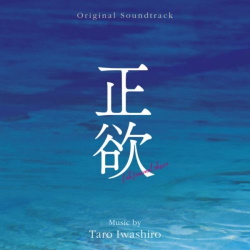 Abnormal Desire is a Japanese drama film, directed by Yoshiyuki Kishi and written by Takehito Minato, adapting Ryo Asai’s prize-winning novel Seiyoku. The film is a sensitive drama about outcasts on the edges of society, and follows three central characters, each of whom are trying to hide ‘abnormalities’ from the rest of the world: a prosecutor who is worried that his pubescent son is a shut-in, an introverted saleswoman with a peculiar habit, and a student tortured by feelings she can’t express.
The score for Abnormal Desire is by Japanese composer Tarô Iwashiro, who over the years has shown himself adept at tackling multiple genres of music with excellence, sensitivity, and intelligence. Abnormal Desire is more of the same; it’s a gentle, meditative, warmly appealing drama score with special emphasis on string, piano, and woodwinds, which captures the hearts and stories of the protagonists and allows their stories to emerge. Most of the cues follow a similar pattern by initially presenting a calm, romantic, tonally appealing central idea, but then Iwashiro adds in different musical colors and different harmonic textures to create subtle layers of tension. It’s very clever.
For example, the opening “Normality & Abnormality” uses some jazz-like chord progressions, and incorporates some light saxophones, to create a slight sense of unease within the lovely writing for strings and piano. A brief spoken word sequence halfway through the cue gives it a new-age vibe, almost like an ASMR voice, which is unexpected but likely makes sense in context. Later, “Unseen Window” makes use of shimmering electronic sounds and intimate acoustic guitars to excellent effect, while “Frustrating Feeling” builds out of that same sound and incorporates a mesmerizing, hypnotic cello idea that combines beautifully with the piano.
“Water Marks” is more abstract and unusual, a combination of wooden percussion, metallic percussion, and marimbas, while the subsequent “Water Rings” and “Circle to Circle” maintain a similar tone and approach, but feature more prominent pianos, with the second of these cues being especially touching. The conclusive “The Abyss of Loneliness,” is quietly devastating but emotionally rewarding, and again features some beautifully understated writing for piano and subtle electronic tonalities, as well as a more substantial and dramatic strings-based finale.
This is a good score by Iwashiro, complex and interesting, but it probably won’t have the same sort of audience that his more lavish and crowd-pleasing work on things like Red Cliff, Heroic Legend of Arslan, or Fukushima 50 did. This is more introspective and thoughtful, all in all, but it left me with a profound feeling that I deeply appreciated. The score is available to stream and download from most of the standard retailers, and as an import CD from Quartet Records.
Track Listing: 1. Normality & Abnormality (4:26), 2. Unseen Window (2:30), 3. Frustrating Feeling (8:06), 4. Water Marks (2:38), 5. Water Rings (3:41), 6. Here We Are (2:49), 7. Circle to Circle (2:31), 8. The Abyss of Loneliness (4:13). Quartet Records, 30 minutes 50 seconds.
IN LOVE AND DEEP WATER – Takatsugu Muramatsu
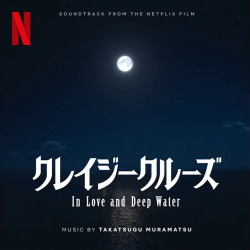 In Love and Deep Water is a Japanese murder-mystery comedy movie for Netflix, directed by Yusuke Taki. The film stars Ryo Yoshizawa as Suguru Ubukata, a butler who works on a gigantic luxury cruise ship, currently sailing on the Aegean Sea. However, when a murder takes place on the ship, Ubukata teams up with a mysterious passenger named Chizuru Banjaku (Aoi Miyazaki), and together they try to solve the case and unmask the killer.
The score for In Love and Deep Water is by Japanese composer Takatsugu Muramatsu, who some may remember for his excellent scores for the anime films When Marnie Was There in 2014, and Mary and the Witch’s Flower in 2017. Both those films had scored which were thematic, emotional, playful, and very rewarding, and In Love and Deep Water is cut from very much the same cloth, although this time around Muramatsu has added a new style to his oeuvre – a sort of jazzy, capery sound that fits in with the lightly comedic style of the film itself.
The main theme, as heard in the opening cue “In Love and Deep Water,” is a complete delight, a light and elegant fully orchestral waltz featuring a vocal performance by the Libera boy’s choir; unexpectedly it has a sort of whimsical, almost Christmassy feel, which is probably not what the composer intended contextually, but it is lovely nonetheless. A lot of the score is highly classical, as befits the opulence and luxury of the liner itself, but Muramatsu takes pains to allow different moods to emerge. “Ominous” and “Reality,” for example, are lush in their respective writing for strings ad piano, but are underpinned with moody mystery.
Other cues stand out too. “Welcome to the Cruise” and “Cruise Ship” are buoyant and optimistic, with a sense of size and grand purpose and a rousing central theme. “Maybe in Love” has a sumptuous romantic theme for piano and strings which will delight Marnie fans especially, and which is reprised with tenderness in “Hesitation,” with a wistful sentimentality in the gorgeous “Beyond the Horizon,” and accompanied by dreamy vocals in “Sailing into Love”. “Siren” is just what you expect it to be: a beckoning, enticing piece for solo vocals and harps that is just lovely.
There are a few contemporary action cues dotted around here and there – “Starboard,” “Silence” – which augment a livelier orchestral sound with clattering percussion, classical guitars, and light electronic beats that actually work really well, as the synth sounds complement rather than overwhelm the orchestra. And then the jazzy, capery sound I mentioned earlier plays all through cues like “The Family,” “The Will,” “Investigation,” and “Jealous Texts,” and blends the slick strings and electronic beats with a jovial accordions, creepy woodwinds, and even some Spanish boler0 rhythms complete with clacking castanets, as the scene dictates.
It’s all quite outstanding, an unexpected delight, and it will likely be considered one of the best comedy scores of the year – not because it’s inherently funny but because, like all the best comedy scores, it plays things completely straight. The score is available to stream and download from most of the standard retailers, and as an import CD from Japan. Takatsugu Muramatsu continues to impress.
Track Listing: 1. In Love and Deep Water (2:54), 2. Starboard (2:37), 3. Ominous (1:47), 4. Welcome to the Cruise (1:47), 5. The Family (1:55), 6. Maybe in Love (3:24), 7. Reality (2:38), 8. The Will (2:03), 9. Hesitation (2:47), 10. Silence (1:26), 11. Hatred (1:10), 12. Cruise Ship (2:54), 13. Scream (2:36), 14. Beyond the Horizon (3:05), 15. Investigation (2:24), 16. Jealous Texts (2:51), 17. Conclusive Evidence (2:43), 18. Sailing Into Love (2:59), 19. Siren (1:05), 20. Mystery in Deep Water (1:24), 21. Little Heart (2:15), 22. Closing Credits (4: 17). Netflix Music, 53 minutes 11 seconds.
KINGDOM: UNMEI NO HONO – Yutaka Yamada
 Kingdom: Unmei no Hono, or The Flame of Fate, is the third live-action film adaptation of Yasuhisa Hara’s historical adventure manga series Kingdom. The story is set in China during the Warring States Period between 475 BC and 221 BC, in which the powerful neighboring countries of Zhao and Qin are constantly at war with each other; specifically, it follows the personal and political conflict between two generals, Li Xin (Kento Yamazaki) and Wang Shin (Takao Osawa), on opposite sides of the battlefield. It’s an epic story filled with immense battle sequences; it’s directed by Shinsuke Sato and has a score by Japanese composer Yutaka Yamada. Yamada has been having an excellent 2023, having written several excellent scores including the second and third sequels in the Tokyo Revengers series, and the second season of the TV series Vinland Saga, but Kingdom: Unmei no Hono may be his best of the year.
The score begins with an enormous 14-minute suite, “Genesis – Kingdom,” which showcases everything the score has to offer and ranges in style and tone from intimate themes for piano to more expansive writing for a full symphony orchestra augmented by solo cello and electronic percussion. Some the action sequences in the suite have a sort of Japanese Hans Zimmer sound to them – I don’t mean it’s like The Last Samurai, but more that is the simple, open sound of Zimmer’s best action adventure work, filtered through the specific chord progressions and instrumental combinations that are often heard in Japanese film scores.
The rest of the score is mostly variations and extrapolations on the music heard in the opening suite, but it’s all very good, and worth exploring further for the specific details that Yamada brings to the music. For example, cues like “Two Souls Encounter” and the hauntingly lovely “Two Souls, One Future” explore the score’s more intimate and romantic side, and are especially notable for their gorgeous string and woodwind passages.
Elsewhere, cues like “Kingdom – Flames of Destiny,” “Transcending Limitations” and “United Front” (the latter two of which has more than a hint of Pirates of the Caribbean to it) are more action packed and energetic, underscoring many of the film’s epic battle sequences, and then cues like “Ou Ki: First Movement” have an epic grandeur which is very compelling. There are also some moments of unexpected dissonance and harshness, like the eerie ghostly textures, chaotic percussion patterns, unusual processed vocals, and industrial sound effects that run through “Inner Shadows” and “The Indomitable Warrior,” as well as moment of lightness and playfulness to counterbalance the drama, most notably in “Small Steps”.
This is excellent stuff, an impressive and enjoyable contemporary action score which will appeal to anyone who is a fan of modern Hans Zimmer-style power anthems, but also appreciates when they are tempered by more lyrical Japanese-style orchestral beauty. The score is available to stream and download from most of the standard retailers, and as an import CD from Japan on the VAP label.
Track Listing: 1. Genesis – Kingdom (14:11), 2. Two Souls Encounter (2:13), 3. Inner Shadows (4:52), 4. Small Steps (2:25), 5. Ou Ki: First Movement (4:40), 6. Kingdom – Flames of Destiny (2:33), 7. The Indomitable Warrior (4:42), 8. Two Souls, One Future (5:28), 9. The Strategist’s Game (3:18), 10. Transcending Limitations (4:33), 11. United Front (8:24), 12. A Twist of Fate (3:06), 13. The Light Within (11:33). Vap Inc., 71 minutes 54 seconds
RECORD OF RAGNAROK, SEASON 2 – Yasuharu Takanashi
 Record of Ragnarok is a Japanese animated TV series based on the manga comic books written by Shinya Umemura and Takumi Fukui, about a tournament featuring prominent historical figures fighting against gods from various mythologies, with the fate of mankind in the balance. The show premiered on Netflix in 2021, and it returned to screens for a second season in 2023.
One of the things that you might not know about me is the fact that, in addition to film music, one of my favorite genres of music is rock and metal, and one of my favorite sub-genres within that is speed metal. I was first introduced to the world of speed metal more than a decade ago by a friend, with my first experience coming from the song “Operation Ground and Pound” by British power metal band DragonForce. Speed metal, of power metal, is typified by extremely fast, abrasive, and technically demanding electric guitar solos, often backed by symphonic arrangements that give the whole thing an ‘epic’ sound. The score for Record of Ragnarok, which is by Japanese composer Yasuharu Takanashi, is basically a speed metal film score, and I absolutely love it.
The score is a crowd-pleasing explosion of energy, and once it kicks into high gear it never lets up. The opening cue, “Heroes Return,” is actually something of a misdirection as it is a regal, brass-and-choral march, and is much more classical and traditionally pretty than one might be expecting. The same can be said of he second cue, “Apocalypse,” which uses powerful religioso choral textures and subtle electronics to capture the majesty of the ‘gods’ in the story.
However, from “Ready to Duel” onwards, the true sound of the score emerges, and from then the score rocks. Takanashi uses howling electric guitars and a rock percussion drum kit in combination with the orchestra, organ, and choir to create a truly massive sound; it will be an acquired taste for many, I’m sure, but as I acquired this taste many years ago, it scratches a particular musical itch for me.
Several cues stand out as being especially epic, including “Open the Battlefield,” the thrilling and pulsating “Rush Forward,” the driving and melodic “Never Down, Never Back,” and the wonderful combination of metal, death metal growls, and folk music in “Deadly Blow”. “The First Man” is an indescribable combination of speed metal guitars, church organs and religioso choirs, and what sounds like a demon screaming the word ‘war’. This then continues on through numerous additional subsequent cues – notably “Fist to Fist,” the more traditionally orchestral “Sword Is My Soul,” the rock flutes of “Samurai Fight,” the enormous and ridiculously fast keyboard runs of “Heavy Clash,” and the almost Lord of the Rings-esque finale “Ragnarok”.
Conversely, “Rest in Peace” is unexpectedly emotional and lyrical, with a gorgeous central melody for strings and woodwinds, while “Air on the G-String” is a new arrangement of Bach’s timeless masterpiece featuring Takanashi’s guitars and drum set – it works unexpectedly well! One thing I should mention is that it’s not 100% clear whether this album is a standalone album for season one, a standalone album for season two, or a combination of both seasons, but either way the music in both seasons if of a similar style and standard, and I think I’m safe to review it in this way.
As I said, this is like to be very much a score that will only appeal to a certain demographic, and unless you already have an affinity for this type of hyper-aggressive metal, then this is unlikely to be the score for you. Personally, though, I loved it, and after hearing it Record of Ragnarok catapulted into my list of the best TV scores of 2023. The score is available to stream and download from most of the standard retailers, and as an import CD from Japan on the Warner Bros. Japan LLC label.
Track Listing: 1. Heroes Return (2:04), 2. Apocalypse (2:10), 3. Ready to Duel (2:11), 4. Open the Battlefield (2:12), 5. Rush Forward (1:51), 6. Never Down, Never Back (2:05), 7. Deadly Blow (2:06), 8. Rest in Peace (1:59), 9. Air on the G-String (Johann Sebastian Bach, arr. Yasuharu Takanashi) (2:58), 10. The First Man (2:15), 11. Amazing Impact (1:47), 12. Fist to Fist (2:24), 13. Valkyrie (1:48), 14. Tyrant of Ocean (2:16), 15. Sword is My Soul (2:05), 16. Samurai Fight (1:54), 17. Heavy Clash (2:06), 18. Call of Rivals (2:01), 19. Bless the Warriors (1:57), 20. Ragnarok (2:34). Warner Bros. Japan LLC, 42 minutes 32 seconds.
SNØFALL/SNOWFALL, SEASON 2 – Henrik Skram
 Every year, on the main Norwegian TV network NRK, there is a traditional show called the ‘julekalender’ (Christmas calendar), a drama series aimed at children, with one episode broadcast each day of December until Christmas Eve. The julekalender for 2016 was Snøfall, or Snowfall, a charming fairytale about a 9-year-old girl named Selma. Selma is an orphan who lives with her strict stepmother Ruth; however, one day while playing in the park, a magical bridge appears which transports Selma to the town of Snøfall, where she gets to meet the real Santa Claus. The show was originally intended to be just one season, but it proved to be immensely popular, and so Snøfall has returned for a second season in 2023; this time, the story follows Noah, a boy whose mother is very sick, and who hope to find what he is looking for across the Christmas bridge.
Returning to score Snøfall’s second season is IFMCA nominated Norwegian composer Henrik Skram and, just like the first season, it is a charming, whimsical, wintry tale for kids, just wonderful. The score is full of beautiful orchestral textures that offer a wonderfully festive sound, but which is also underpinned with a sense of mystery and magic; this especially comes through in the opening cue “Åpning Og Vignett,” and the curious waltz in “Luna,” among others.
Other cues embrace a welcoming, homely sound that feels like the musical equivalent of a cup of hot chocolate by the fire, and have a nostalgic quality that is just delightful; cues like “Ruth + Tore” and the sweeping “Noahs Reise” embrace this sound wholeheartedly, and Skram incorporates instrumental textures for solo pianos, accordions, and muted trumpets into the orchestra, to excellent effect. The central character, Noah, has a beautifully bittersweet piano theme of his own, representing his love for his mother and his aching desire to save her, and this comes across beautifully in the trio comprising “Noah,” “Noah Og Skyggene,” and “Noah Og Elise”.
“Dunkelsteinen” is the score’s one concession to darkness and drama, and it stands out in stark juxtaposition with its sense of menace and intense brass writing. On the other hand, some of the mid-album cues like “Biblioteket” are a little more child like and mickey mousey, more broadly comedic, and these parts – while important contextually – do have the potential to be a little on the annoying and overly-cutesy side, but this is a mild criticism of what is an otherwise outstanding work.
The score’s climax begins with the orchestrally rousing and expansive ‘Noahs Brevfugl,” which arranges Noah’s theme as a superb action motif, and continues on though the equally stimulating “Helter På Vidda,” the emotionally powerful “Julius Kommer Tilbake,” and the gorgeous, warm, sentimental “Godnatt Noah,” which again revisits Noah’s theme, but this time with an especially notable sense of deep poignancy.
Fans of the first Snøfall in particular, or of sentimental Christmas scores in general, will find the sequel to be of exceptional quality, and it comes with a strong recommendation from me as a perfect addition to your seasonal playlist. Henrik Skram and his Nordic compatriot Gaute Storaas are the reigning kings of Christmas music – julens konger! – and long may it continue. The score is available to stream and download from most good online retailers.
Track Listing: 1. Åpning Og Vignett (1:08), 2. Ruth + Tore (2:59), 3. Luna (2:54), 4. Noah (2:42), 5. Noah Og Skyggene (2:38), 6. Lunas Hemmelighet (2:17), 7. Nattens Dronning (2:28), 8. Biblioteket (3:30), 9. Noah Og Elise (2:29), 10. Elises Brev (2:59), 11. Noahs Reise (2:23), 12. Dunkelsteinen (2:40), 13. Noahs Brevfugl (2:40), 14. Helter På Vidda (2:43), 15. Julius Kommer Tilbake (2:13), 16. Godnatt Noah (3:28), 17. Mot Iys (performed by Inge Bremnes) (2:50). NRK Super/Egmont Kids Media AS, 45 minutes 11 seconds.
YURIA’S RED STRING OF FATE – Yugo Kanno
 Yuria’s Red String of Fate is a Japanese live-action TV series based on the manga comic books written and illustrated by Kiwa Irie. It is a romantic drama starring Miho Kanno as Yuria, who is married to novelist Goro (Tetsushi Tanaka). Goro is a warm-hearted person, but he is not successful as a novelist, and as Yuria ages she begins to find herself unfulfilled in her life – something that changes when she opens an embroidery class out of her home. One day Goro collapses and is rushed to the hospital – at which point Yuria’s life changes forever when she encounters young man in Goro’s room, crying, and he introduces himself as Goro’s lover.
The score for Yuria’s Red String of Fate is by Japanese composer Yugo Kanno, and it one of the loveliest and more traditionally romantic scores of the year. Kanno is an exceptionally versatile composer – he can score straight drama, epic action, frenetic anime, experimental electronics – but here Kanno gets right to the heart of the story with his music: Yuria’s love for Goro, Goro’s relationship with his young lover, the love triangle between them. He scores the beauty and the romance and the pain and the heartbreak of what that means with equal skill.
The 8-minute opening cue “Yuriasensei No Akai Ito” really offers a perfect encapsulation of what the score has to offer: elegant writing for strings, piano, and woodwinds augmented by magical harp glissandi and metallic chimes, romantic and tender emotional content, gentle lyricism underpinned with a touch of bittersweet melancholy. It reminds me a little of something Georges Delerue might write for a story like this, and as it progresses it reaches for some quite splendid crescendos. Like many scores originating from that country it has that unmistakable ‘Japanese’ sound that comes from the way the chord progressions work in Japanese classical music, and how that has filtered through into their film music. Fans of that style will adore it.
Much of the rest of the score is pitched with the same stylistics – cues like “Mukiawanakereba Naranai Mondai,” the effervescent and playful “Nakayoshi Kazoku,” “Jinsei Wa Okashimi No Renzokuda,” and the piano version of “Unmei Wo Kantanni Nagenaide” are especially lovely – but once or twice Kanno offers something different. “Minna Matomete Aishiteyaru” and “Namida Ga Koboreru” are more contemporary and energetic, with more prominent electronics, guitars, and occasional vocals. “Kinkyu Hansou” and “Konnano Yada” are lightly pulsating action tracks with a cool urban beat. “Taaimonai Nichijou” is a mischievous pizzicato variation on the main theme, again with a definite Delerue feel, while “Kimyouna Kyoudou Seikatsu” accentuates the pizzicato with a flourishing Spanish guitar and a cool 1970s vibe. “Heibon Na Onna No Suuki Na Jinsei” is heavy on the Thomas Newman marimbas.
This is really excellent stuff from Yugo Kanno – the variations in the tone and stylistics throughout the score showcase his versatility – but it is the sweeping romance that will linger in the memory the longest. The score is available to stream and download from most of the standard retailers, and as an import CD from Japan on the VAP label.
Track Listing: 1. Yuriasensei No Akai Ito (7:57), 2. Minna Matomete Aishiteyaru (4:20), 3. Karamiatta Ito (2:30), 4. Moyamoya (2:12), 5. Noshikakattekuru Kazoku (3:19), 6. Shinbou Zuyoku (2:32), 7. Kinkyu Hansou (2:37), 8. Mukiawanakereba Naranai Mondai (2:50), 9. Nakayoshi Kazoku (2:42), 10. Hontou Ni Uchinoto Tsukiattetandesuka? (2:34), 11. Taaimonai Nichijou (2:07), 12. Jinsei Wa Okashimi No Renzokuda (2:14), 13. Omoiyari Demo Ai Demo Nandemonai (2:16), 14. Namida Ga Koboreru (2:57), 15. Konnano Yada (2:33), 16. Unmei Wo Kantanni Nagenaide (3:00), 17. Kimyouna Kyoudou Seikatsu (2:05), 18. Joshi Talk (2:21), 19. Minna De Danna No Kaigo Wo Shiyou! (3:37), 20. Heibon Na Onna No Suuki Na Jinsei (2:14), 21. Kanzen Ni Korogasareteru (2:20), 22. Yuriasensei No Akai Ito (Ballad Version) (3:35), 23. Unmei Wo Kantanni Nagenaide (Piano Version) (2:53), 24. Odayaka Na Shiawase (2:26), 25. Silver Lining (4:50), 26. Mouichido Jibun No Jinsei Wo! (2:00). Vap Inc., 76 minutes 49 seconds.
-
February 2, 2024 at 8:01 amMovie Music UK Awards 2023 | MOVIE MUSIC UK

Shop at the Movie Music UK Store

Member of the

 MOVIE MUSIC UK