Archive
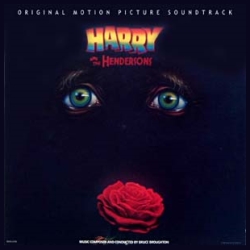
HARRY AND THE HENDERSONS – Bruce Broughton
 THROWBACK THIRTY
Original Review by Jonathan Broxton
Harry and the Hendersons – released as Bigfoot and the Hendersons in the UK – is a warm-hearted family comedy about the most famous mythological creature of North American folklore, the sasquatch, or bigfoot. The film stars John Lithgow as George Henderson, an average family man who, while traveling home with his wife and children after a camping vacation, accidentally hits and apparently kills a large animal with his car on a remote forest road. Upon investigation, George realizes that the animal is a real bigfoot, and decides to take the carcass home; unfortunately, once they arrive back in suburban Seattle, it quickly becomes clear that the animal is far from dead. Despite their initial shock, the Hendersons soon discover that the bigfoot – whom they name Harry – is kind, peaceful, and intelligent, and they resolve to take him back to the wilderness, but find opposition in the form of ruthless hunter LaFleur, who has been tracking Harry and his kind for years. The film, which was directed by William Dear and co-stars Don Ameche, David Suchet, and Melinda Dillon, was a modest commercial and popular hit in the early summer of 1987, but went on to win an Academy Award for Best Makeup for the astonishing bigfoot effects applied to 7’2″ actor Kevin Peter Hall. Read more…
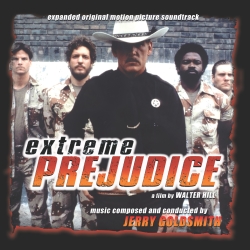
EXTREME PREJUDICE – Jerry Goldsmith
 THROWBACK THIRTY
Original Review by Jonathan Broxton
Extreme Prejudice is a western-flavored action thriller directed by Walter Hill, starring Nick Nolte as Jack Benteen, a grizzled Texas Ranger who teams up with a platoon of elite US Army commandos led by Major Hackett (Michael Ironside). Their mission is to take down a major trafficker running shipments of narcotics across the border from northern Mexico into El Paso; the only stumbling block, for Benteen at least, is the fact that the trafficker is Cash Bailey (Powers Boothe), Benteen’s childhood best friend. As the soldiers close in on Bailey’s compound, Benteen finds his loyalties tested, especially when a beautiful woman named Sarita (Maria Conchita Alonso) – both men’s ex-girlfriend – enters the fray. The film is a gritty, sweat-soaked, uncompromising thriller, and an homage to the great western The Wild Bunch, which received decent reviews when it opened in cinemas in May 1987. Read more…
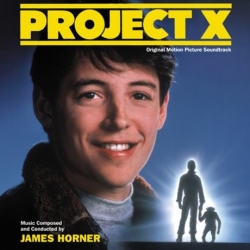
PROJECT X – James Horner
 THROWBACK THIRTY
Original Review by Jonathan Broxton
Project X was a genre-defying film – part action, part sci-fi, part-comedy, part drama – directed by Jonathan Kaplan from a screenplay by Lawrence Lasker and Stanley Weiser. Matthew Broderick starred as young US Air Force researcher Jimmy Garrett, who is assigned to a top secret project that involves teaching chimpanzees to fly planes. He bonds with one of the chimps, Virgil, after he discovers that it was taught sign language by its previous owner, graduate student Teri MacDonald (Helen Hunt). When Jimmy realizes that Virgil, along with all the other chimps, is supposed to die as part of the project’s research into the effects of radiation poisoning, he finds and contacts Teri; appalled by what the government is going to do to the animals, they agree to work together to rescue Virgil, and stop the project. The film co-stars William Sadler, Jonathan Stark, Stephen Lang, and Jean Smart, and was well received by critics at the time, who praised it as a ‘young person’s morality tale’ that tackles the important subject of animal welfare. Read more…
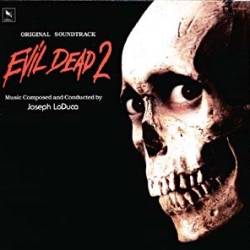
EVIL DEAD 2 – Joseph Lo Duca
 THROWBACK THIRTY
Original Review by Jonathan Broxton
In the wake of the unexpected success of the low-budget horror movie The Evil Dead in 1981, writer/director Sam Raimi was given $3.5 million by producer Dino Di Laurentiis to make a bigger-budget sequel, which both re-made the original film with better special effects and more professional production values, and continued the story. The result is 1987’s Evil Dead 2, in which the hapless hero Ash Williams (Bruce Campbell) continues to do battle with the terrifying ‘deadites,’ re-animated corpses possessed by the evil power of an ancient book who prevent him from escaping the ‘cabin in the woods’ and returning to civilization with all his extremities intact. With it’s spectacularly gory blood-splattered special effects, overblown humor, and frenetic visual style, Evil Dead 2 quickly became a cult hit, almost doubling its budget at the box office, and initiating a franchise that continues to this day. The film co-starred Sarah Berry, Dan Hicks, Kassie Wesley, and Richard Domeier, and had an original score by Michigan-born composer Joseph Lo Duca. Read more…
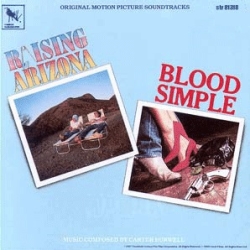
RAISING ARIZONA – Carter Burwell
 THROWBACK THIRTY
Original Review by Jonathan Broxton
Raising Arizona is the second film in the career of writer-director brothers Joel Coen and Ethan Coen, their sophomore feature film after Blood Simple in 1984. It’s a comedy crime caper starring Nicolas Cage and Holly Hunter as Hi and Ed McDunnough, an ex-con and an ex-cop who meet, fall in love, marry, and desperately long for a child of their own. However, when it is discovered that Hi is unable to have children, they decide to steal one of the ‘Arizona Quints,’ a set of five babies born to locally famous furniture magnate Nathan Arizona. Hi and Ed, wanting to raise their child in as normal an environment as possible, try to keep their crime a secret, but a parade of co-workers, ex-cons, and bounty hunters contrive to make their lives impossible. The film, which also stars John Goodman, William Forsythe, Trey Wilson, and Frances McDormand, has become something of a cult hit over the years, and is fondly regarded as being the film which introduced many of the Coens’s idiosyncratic filmmaking touches, although personally I don’t like the film at all – it’s just too ‘weird’ for my taste. Read more…
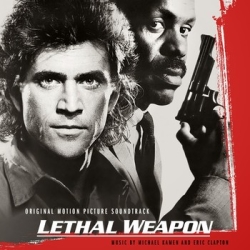
LETHAL WEAPON – Michael Kamen, Eric Clapton, David Sanborn
 THROWBACK THIRTY
Original Review by Jonathan Broxton
Although it was pre-dated by films like 48 HRS., Lethal Weapon is the film which for me best defines the 1980s buddy-cop movie sub-genre. It’s a thrilling, action-packed, funny, surprisingly moving film written by Shane Black and directed by Richard Donner, starring Mel Gibson as Martin Riggs, a loose-cannon LAPD cop and former Vietnam War sniper with a suicidal streak after the death of his wife. In an attempt to rein him in, Riggs is assigned a new partner in the shape of Roger Murtaugh (Danny Glover), a cranky, by-the-book homicide department veteran with a wife and three kids at home, and who doesn’t tolerate Riggs’s increasingly off-the-wall antics. However, things become more difficult for the new partners when they become embroiled in a plot which links the death of a woman who committed suicide by jumping from a high rise with a gang of vicious drug dealers, and which becomes personal when it is revealed that the drug dealers may be men from Riggs’s past. The film co-starred Mitchell Ryan, Gary Busey, Tom Atkins, Steve Kahan, and Darlene Love, and was an enormous box-office smash, grossing more than $65 million in the United States alone. Read more…
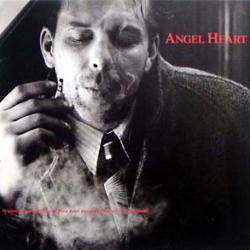
ANGEL HEART – Trevor Jones
 THROWBACK THIRTY
Original Review by Jonathan Broxton
Angel Heart is a neo-noir mystery-thriller with elements of psychological horror, written and directed by Alan Parker, based on the novel Falling Angel by William Hjortsberg. Set in the 1950s, the film stars Mickey Rourke as Harry Angel, a hard-boiled New York private detective who is hired by a mysterious businessman named Cyphre (Robert De Niro) to track down Johnny Favorite, a musician who Cyphre helped become successful before World War II, but who has been missing for more than a decade. The trail leads Angel from New York to New Orleans, where he becomes embroiled in a labyrinthine plot of sex, murder, betrayal, and occult voodoo symbolism, which leads him to question his own sanity. The film was not especially well-received when it was first released, and was more notorious at the time for the fact that it cast 19-year-old Lisa Bonet – best known as the wholesome Denise on The Cosby Show – as a sultry Cajun nymphomaniac named Epiphany who has a torrid love scene with Rourke. However, time has been kind to the movie, and it is well-respected today for its sweat-soaked Southern Gothic atmosphere, intelligent screenplay, compelling lead performances, and impressive visual style. Read more…
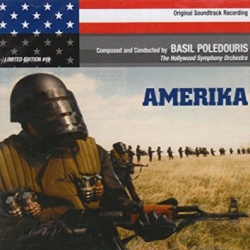
AMERIKA – Basil Poledouris
 THROWBACK THIRTY
Original Review by Jonathan Broxton
In the spring of 1987 viewers of the network TV channel ABC were treated to a 6-part mini-series imagining a horrific alternate reality for the United States where the country has been insidiously, but bloodlessly, overtaken by the Soviet Union. Amerika posits the country as being essentially a puppet state of Moscow, with the President and Congress mere figureheads for the Soviet regime; the population is kept under control by a UN peacekeeping force called the UNSSU, which is supposed to be multi-national but is in reality a Russian Communist military arm, which uses fear and intimidation tactics to suppress opposition. From out of this nightmare three heroes emerge: former politician Devin Mitford (Kris Kristofferson), who is released back into society after spending years in a labor camp for treason; administrator Peter Bradford (Robert Urich), who pretends to collaborate with the Soviets while working to bring down the regime from within; and Colonel Andrei Denisov (Sam Neill), a KGB agent becoming more and more disillusioned with his country’s politics. The series, which was written and directed by Donald Wrye, has been in the news of late after more than 20 years of relative obscurity, mainly due to the accusations of Russian influence in Donald Trump’s successful run for US President in 2016… this fiction couldn’t be happening in reality, could it? Read more…
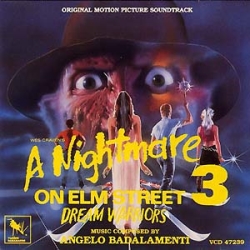
A NIGHTMARE ON ELM STREET 3: DREAM WARRIORS – Angelo Badalamenti
 THROWBACK THIRTY
Original Review by Jonathan Broxton
As a way of continuing to capitalize on the unexpected success and popularity of the first two films in the series, the producers of the Nightmare on Elm Street franchise continued the story of the maniacal mass murderer Freddy Krueger in 1987’s third film, A Nightmare on Elm Street 3: Dream Warriors. Directed by Chuck Russell, the film stars Patricia Arquette as Kristen, a young woman who dreams of Freddy (Robert Englund), and who is subsequently sent to a psychiatric hospital when the wounds from her encounter with Freddy are mistaken for a suicide attempt. At the hospital Kristen meets her fellow patients, a doctor named Gordon (Craig Wasson), and a trainee therapist, who turns out to be Nancy (Heather Langenkamp), from the original Nightmare on Elm Street movie. Gradually the patients begin to realize that they are the surviving children of the parents who killed Freddy in real life, and that he is now trying to finish off the job. Read more…
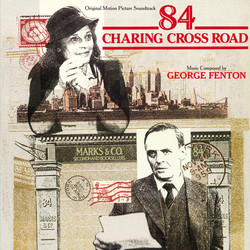
84 CHARING CROSS ROAD – George Fenton
 THROWBACK THIRTY
Original Review by Jonathan Broxton
84 Charing Cross Road is a genteel British period drama directed by David Hugh Jones, based on the semi-autobiographical novel by American author Helene Hanff. The film stars Anne Bancroft as Hanff, and tells the story of the long-distance friendship that develops between her and antiquarian bookseller Frank Doel (Anthony Hopkins), who manages a shop at the titular address in London in 1949. The film is little more than a quiet character study, a snapshot of life on opposite sides of the Atlantic in the period immediately after World War II, but the story has proved to be immensely popular: the original novel was a best seller, the subsequent Broadway stage play was a smash hit, and this screen adaptation was a critical darling in the UK; Anne Bancroft won a BAFTA for her leading role, and the film was BAFTA-nominated for its screenplay, and for Judi Dench’s supporting role as Frank’s wife, Nora. Read more…
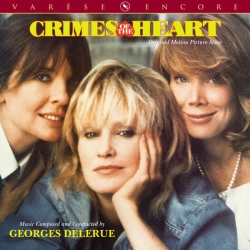
CRIMES OF THE HEART – Georges Delerue
 THROWBACK THIRTY
Original Review by Jonathan Broxton
Crimes of the Heart is a ‘southern gothic’ family comedy-drama based on the Pulitzer Prize-winning play by Beth Hanley. Directed by Bruce Beresford, it stars Diane Keaton, Jessica Lange, and Sissy Spacek as Lenny, Meg, and Babe, three adult sisters who move back into their childhood home in Mississippi after they suffer various personal tragedies and indiscretions, ranging from Lenny’s failed relationships to Meg’s stalled career. Back under the same roof after many years apart, it is not long before long-dormant resentments bubble to the surface once more, as the sisters are forced to deal not only with assorted relatives and past relationships, but also the aftermath of Babe’s latest incident in which she shot her abusive husband. The film co-stars Sam Shepard, Tess Harper, and old Hollywood character actor Hurd Hatfield as their Old Grandaddy, and was a critical success, receiving three Oscar nominations and two Golden Globe nominations, most notably for Spacek’s performance as the fiery Babe. Read more…
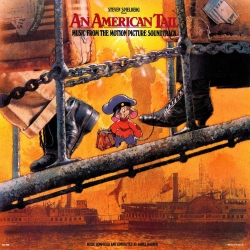
AN AMERICAN TAIL – James Horner
 THROWBACK THIRTY
Original Review by Jonathan Broxton
In the wake of the success of The Secret of NIMH in 1982, master animator Don Bluth began a collaboration with Steven Spielberg and Universal Pictures, who wanted to capitalize on NIMH’s popularity and produce their own animated film, the studio’s first since 1965. The result was An American Tail, the story of a family of Russian-Jewish mice who emigrate to the United States in the late 1800s, having been lured there on the promise of there being ‘no cats in America’. During their ocean crossing the family’s youngest son, Fievel Mousekewitz, is swept overboard and feared drowned; upon their arrival in New York, the remaining Mousekewitzes resign themselves to having lost their son, and sadly begin their new lives. However, Fievel has miraculously survived and makes his way to New York on his own, and the plucky young rodent embarks on a quest to reunite with his family, engaging in numerous adventures on the way. The film features the voices of Nehemiah Persoff, Erica Yohn, Dom DeLuise, Christopher Plummer, and the then-8-year-old Phillip Glasser as Fievel; it was a huge success at the box office, especially with children, who loved the film despite its dark tone. Read more…
HOOSIERS – Jerry Goldsmith
 THROWBACK THIRTY
Original Review by Jonathan Broxton
Hoosiers is generally considered one of the best sports films ever made. Directed by David Anspaugh and written by Angelo Pizzo (who would later collaborate again on Rudy in 1993), the film stars Gene Hackman as Norman Dale, a former elite basketball coach who, after suffering a personal humiliation, is forced to take a job as a teacher and basketball coach at a tiny high school in Indiana in 1951. Despite overwhelming odds – including a small student population to select a team from, opposition from parents, opposition from faculty members such as English teacher Myra Fleener (Barbara Hershey), and a hopelessly drunk assistant coach (Dennis Hopper) – Dale leads his team to the state championship game. Looking back on the film today, Hoosiers seems to be very clichéd, but the truth of the matter is that this film is the one that invented, or at least popularized, many of the sports movie clichés we take for granted today: the gruff coach with a heart of gold, the group of misfits who come together to form a winning team, the old-fashioned old-timers who don’t understand what the newcomer is doing, the last-second winning shot to clinch the championship. Hoosiers was a massively popular and successful film, and received two Oscar nominations: one for Hopper as Best Supporting Actor, and one for Jerry Goldsmith’s score. Read more…
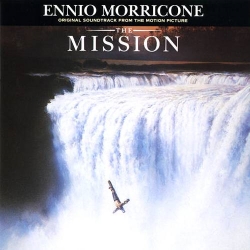
THE MISSION – Ennio Morricone
 THROWBACK THIRTY
GREATEST SCORES OF THE TWENTIETH CENTURY
Original Review by Jonathan Broxton
There are moments in film music history where you can listen to a score, and upon its conclusion sit back and be content in the knowledge that you have just experienced a genuine masterpiece. It doesn’t happen very often, because it has to be a perfect combination of everything that can possibly make a film score great. It has to fit the film, of course, carrying the story and enhancing the drama and elevating it to a point where the two seem inseparable, and where the film would be immeasurably diminished by it not being there. But then it also has to have all those things that make it excellent as pure music – everything from recurring themes that develop through the score, to orchestration, technique, and those intangibles of “beauty” and “memorability,” which of course are purely subjective, but nevertheless often affect a wide range of people in similar emotional ways. Ennio Morricone’s 1986 score for The Mission is, undoubtedly, one of those scores which ticks every box, a masterpiece on every conceivable level. Read more…
PEGGY SUE GOT MARRIED – John Barry
 THROWBACK THIRTY
Original Review by Jonathan Broxton
Although he is best known for his epic gangster Godfather trilogy, and for the classic war movie Apocalypse Now, Francis Ford Coppola has made many other movies in his career, and some of them are much less dramatic and shocking. One of those is the 1986 film Peggy Sue Got Married, a romantic comedy-drama wish fulfillment-fantasy written by husband and wife team Jerry Leichtling and Arlene Sarner. Kathleen Turner stars as Peggy Sue Bodell, who attends her 25-year high school reunion shortly after separating from her unfaithful husband Charlie (Nicolas Cage), her former high school sweetheart. Peggy Sue regrets many of the decisions she made in her life, such as getting pregnant by Charlie in high school, and feels that her circumstances would be different if she had the chance to do it over again. Peggy Sue faints at the reunion, and when she wakes up she magically finds herself in 1960, back in high school, and with the chance to right the wrongs of the past. The film, which co-starred Barry Miller, Catherine Hicks, Joan Allen, and a 24-year-old Jim Carrey, was both a commercial and a critical success, and was nominated for three Academy Awards, including one for Turner as Best Actress. The film also features an original score by the legendary John Barry, the second and last of his collaborations with Coppola after The Cotton Club in 1984. Read more…

Shop at the Movie Music UK Store

Member of the

 MOVIE MUSIC UK