Archive
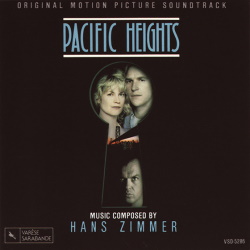
PACIFIC HEIGHTS – Hans Zimmer
 THROWBACK THIRTY
Original Review by Jonathan Broxton
One of a spate of Something-from-Hell movies in the early 1990s, Pacific Heights was a thriller which made everyone think twice about sub-letting their apartment to a stranger. The film stars Matthew Modine and Melanie Griffith as Drake and Patty, a young professional couple who own a large house in San Francisco’s upscale Pacific Heights neighborhood. Drake and Patty lease one of their empty apartments to Carter Hayes (Michael Keaton), a mysterious loner with a hidden past, who immediately sets about renovating the apartment, hammering and drilling at all hours of the night, angering the other tenants. Eventually Carter’s anti-social and disruptive behavior begins to take its toll on Drake and Patty’s relationship, to such an extent that the police become involved. Carter’s response to the legal threats is to make life even more miserable for Drake and Patty, eventually leading to recrimination, threats, and mounting violence. But what is Carter’s motivation? And why do events and women from his past keep coming back to haunt him? The film was directed by John Schlesinger from a screenplay by Daniel Pyne, and features Laurie Metcalfe, Beverly d’Angelo, and Tippi Hedren in supporting roles. Read more…
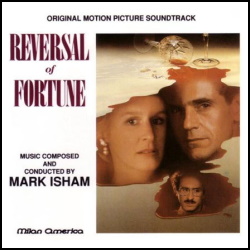
REVERSAL OF FORTUNE – Mark Isham
 THROWBACK THIRTY
Original Review by Jonathan Broxton
For quite a lot of the summer of 1990, the movie Reversal of Fortune was a hot topic of conversation. It tells the true story of European aristocrat Claus von Bülow, who in 1982 was arrested, tried, and convicted for the attempted murder of his wife, Sunny von Bülow, who went into a coma after an apparent insulin overdose and subsequently fell into a persistent vegetative state. Claus – who had a haughty and arrogant demeanor, and was estranged from Sunny – maintained his innocence, and launched an appeal, hiring Harvard law professor Alan Dershowitz to prepare his defense. Despite being initially convinced of Claus’s guilt, Dershowitz begins to find evidence that points to inconsistencies in the prosecution’s case, which could actually prove his client’s innocence. The popularity of the film led to a great deal of new media focus on the case, as well as a number of ‘did-he-or-didn’t-he’ articles in the press, and water cooler talk about Claus and his life. The film was written by Nicholas Kazan, adapting Dershowitz’s own book about the case, and was directed by Barbet Schroeder. It starred Jeremy Irons as Claus, Glenn Close as Sunny, and Ron Silver as Dershowitz, and was nominated for three Academy Awards, with Irons taking home the Oscar for Best Actor. Read more…
DARKMAN – Danny Elfman
 THROWBACK THIRTY
Original Review by Jonathan Broxton
Having gained cult popularity and success as a result of his influential horror movies The Evil Dead and Evil Dead II, writer-director Sam Raimi was given his first crack at a major studio feature towards the end of the 1980s. The project he chose was Darkman, based on a short story he wrote years earlier as an homage to Universal’s horror films of the 1930s. The film stars Liam Neeson, in what was essentially his first leading role after spending the 1980s putting in impressive supporting performances in films such as Excalibur, Krull, The Bounty, The Mission, Suspect, The Dead Pool, and others. Neeson plays Peyton Westlake, a scientist who is developing a new type of synthetic skin to help burn victims. Westlake’s life is changed forever when his girlfriend, attorney Julie Hastings (Frances McDormand), finds incriminating evidence against corrupt property developer Louis Strack (Colin Friels). Strack hires ruthless mobster Durant (Larry Drake) to ‘send a message’ to Julie, which results in Westlake’s lab being burned to the ground and Westlake himself being disfigured and left for dead. However, Westlake miraculously survives the attack, and uses his synthetic skin treatment to treat his own injuries – the only drawback being the unintended side-effects, which give him super-human abilities, but also render him mentally unstable, borderline psychotic, and bent on wreaking vengeance on those responsible for his disfigurement. Read more…
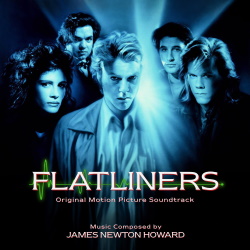
FLATLINERS – James Newton Howard
 THROWBACK THIRTY
Original Review by Jonathan Broxton
Flatliners was one of several films released in 1990 to deal with the topic of the afterlife and near-death experiences. Directed by Joel Schumacher from a screenplay by Peter Filardi, the film follows a group of young and ambitious medical students who, in an attempt to unlock some of the mysteries of life, start to experiment on each other with ‘near-death experiences.’ The students take turns with each other to stop each other’s hearts in a laboratory setting, trying to initiate visions of the ‘afterlife,’ and then hopefully bring each other back using defibrillators before death becomes permanent. One by one, the students volunteer to ‘flatline,’ but in the aftermath of their experiences they are each haunted by horrifying and disturbing visions of their respective pasts. The film starred Kiefer Sutherland, Julia Roberts, Kevin Bacon, William Baldwin, and Oliver Platt, as the five students; the film was a hit with audiences upon its release, grossing $61 million at the box office, and was nominated for an Oscar for its sound editing. Read more…
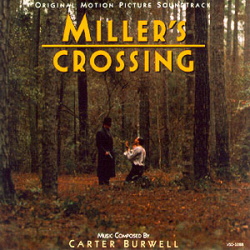
MILLER’S CROSSING – Carter Burwell
 THROWBACK THIRTY
Original Review by Jonathan Broxton
Miller’s Crossing was the third feature film directed by the Coen brothers, Ethan and Joel, following their debut Blood Simple in 1984, and their sophomore effort Raising Arizona in 1987. Like the others, it’s a crime thriller, but this one is a period piece, set amongst Irish gangsters during the American prohibition era in the 1920s. Gabriel Byrne plays Tom Reagan, the right hand man of ruthless mob boss Leo O’Bannon, played by Albert Finney. Problems arise when Leo finds himself in a territorial conflict with Italian gangster Johnny Caspar, an issue that is exacerbated by the fact that Tom is having an affair with Leo’s girlfriend Vera (Marcia Gay Harden), who is the sister of crooked bookmaker Bernie Bernbaum (John Turturro), on whose head Caspar has put a bounty. As the stakes rise, Tom sees an opportunity for some personal gain, and begins to play both sides against each other – with potentially deadly results. The film was generally well-received by critics at the time, who praised its noirish atmosphere, dense plot, and intentional references to the works of Dashiell Hammett. Read more…
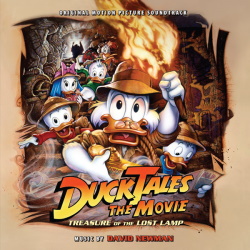
DUCKTALES – THE MOVIE: TREASURE OF THE LOST LAMP – David Newman
 THROWBACK THIRTY
Original Review by Jonathan Broxton
Created in 1947 by legendary Disney animator Carl Barks, the character Scrooge McDuck was popular for many years before finally being given his own animated TV series, Ducktales, in 1987. The show followed McDuck – Donald Duck’s Scottish uncle, the richest duck in the world – and his three grand-nephews (Huey, Dewey, and Louie) on a series of adventures, most of which either involved seeking out treasure, or thwarting the efforts of various assorted villains who were themselves seeking to steal Scrooge’s fortune. The show was a smash hit over its first three seasons, and paved the way for other new high quality Saturday morning series to be commissioned, including Chip ‘n Dale: Rescue Rangers, Darkwing Duck, and TaleSpin. Of course, a movie spin-off was inevitable, and so the summer of 1990 saw the premiere of Ducktales – The Movie: Treasure of the Lost Lamp. Read more…
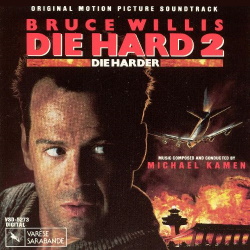
DIE HARD 2 – Michael Kamen
 THROWBACK THIRTY
Original Review by Jonathan Broxton
The career trajectory of sitcom star Bruce Willis was forever changed by the success of Die Hard in 1988. No longer was he the charmingly roguish detective David Addison from the hit TV show Moonlighting; now he was the all-action NYPD cop John McClane, who had single-handedly foiled the gang of international terrorists who had taken over a Los Angeles skyscraper. Demand for another Die Hard movie was high, and so in the summer of 1990 Willis returned as McClane in Die Hard 2, which was released with the suffix ‘Die Harder’ in some territories. The film was adapted from Walter Wager’s 1987 novel 58 Minutes and saw McClane getting caught up in an all-new terrorism plot at Washington DC’s Dulles Airport. A group of disgruntled former special forces soldiers have disabled the airport’s air traffic control system so they can rescue a drug lord, who is being extradited to the US to stand trial. To make matters worse, a number of commercial passenger planes are circulating above the airport, unable to land, all of which are quickly running out of fuel, and McClane’s wife Holly is on board one of them. The film co-starred Bonnie Bedelia, William Sadler, Franco Nero, John Amos, and Dennis Franz, and was directed by Finnish action movie specialist Renny Harlin. Read more…
PRESUMED INNOCENT – John Williams
 THROWBACK THIRTY
Original Review by Jonathan Broxton
Presumed Innocent is a terrific courtroom thriller of the type they just don’t make any more. Directed by Alan J. Pakula and written by Scott Turow, based on his own 1987 novel of the same name, it stars Harrison Ford as Rusty Sabich, a high-profile prosecutor working for the current district attorney, Raymond Horgan (Brian Dennehy). Rusty’s life is turned upside town when a former colleague, Carolyn Polhemus (Greta Scacchi), is found raped and murdered in her apartment; to make matters worse for Rusty, he previously had a brief affair with Carolyn, which resulted in domestic problems between Rusty and his wife Barbara (Bonnie Bedelia). The DA’s political rival, Nico Della Guardia, uses circumstantial evidence found at the crime scene to accuse Rusty of the murder, and soon Rusty is fighting not only to clear his name, but to identify the real killer. Presumed Innocent is one of the most entertaining and intelligent movies of its type, and one of my personal favorite courtroom thrillers; great films like this used to come out every year, from authors like Turow and John Grisham, but the over-saturation of TV shows in the Law and Order franchise have somewhat lessened their impact and public interest has waned in the genre as a whole. It’s a shame because I always loved them when they were done well, and this one is one of the best. Read more…
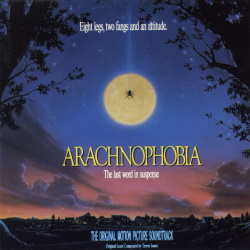
ARACHNOPHOBIA – Trevor Jones
 THROWBACK THIRTY
Original Review by Jonathan Broxton
Arachnophobia was one of the most fun comedy-horror films of the early 1990s, which played on one of the most prevalent human fears: spiders. Directed by Frank Marshall, the film starred Jeff Daniels as Ross Jennings, the town doctor in an idyllic California coastal community. Things begin to go awry in the town when the desiccated corpse of Jerry Manley (Mark L. Lester), a local nature photographer, is brought to the funeral home for autopsy; Jerry had died while on an assignment deep in the jungles of Venezuela, accompanying entomologist Dr James Atherton (Julian Sands) on a trip to discover and study rare spiders. It quickly becomes apparent that Jerry died of a spider bite, and that the venomous arachnid hitched a ride in his coffin. Before long the entire community is under siege from thousands of deadly eight-legged invaders, and it’s up to Jennings, his wife Molly (Harley Jane Kozak), and local exterminator Delbert McClintock (John Goodman), to stop the infestation. Read more…
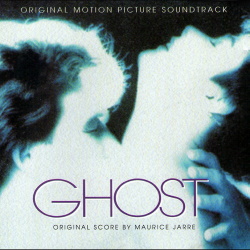
GHOST – Maurice Jarre
 THROWBACK THIRTY
Original Review by Jonathan Broxton
The unexpected box office smash hit of 1990, Ghost is a supernatural romantic drama-thriller about the power of love transcending death, which had millions of people weeping in cinemas across the world. Patrick Swayze stars as Sam Wheat, a successful banker in New York City, who has just moved into a new apartment with his beautiful girlfriend Molly (Demi Moore), and is renovating it with the help of his best friend and co-worker Carl (Tony Goldwyn). Life is perfect for Sam – until he is shot and killed on the street during a mugging gone wrong. Sam discovers he is now a ghost, invisible and unable to interact with the mortal world; after trying and failing multiple times to contact Molly from beyond the grave, Sam instead tries to solve his own murder – which leads him to a startling revelation, and renews his need to contact Molly. To this end, Sam begins to ‘haunt’ Oda Mae Brown (Whoopi Goldberg), a fake psychic medium, who is shocked to discover that she can really hear Sam; eventually, Sam convinces Oda Mae to talk to Molly on his behalf, to warn her that she too is in danger. The film was written by Bruce Joel Rubin and was directed by Jerry Zucker, making his solo directing debut after a decade of comedy work as part of the Zucker-Abrahams-Zucker trio. As I mentioned it was an enormous commercial success, grossing more than $500 million at the US box office; it was also critically successful, and went on to receive five Oscar nominations, winning for Best Original Screenplay and Best Supporting Actress for Goldberg. Read more…
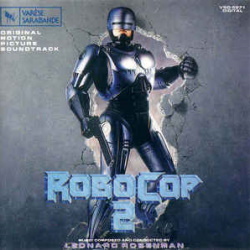
ROBOCOP 2 – Leonard Rosenman
 THROWBACK THIRTY
Original Review by Jonathan Broxton
After the unexpected critical and commercial success of Paul Verhoeven’s Robocop in 1987, it was inevitable that a sequel would be produced, and so in June 1990 Robocop 2 debuted in cinemas. Peter Weller returned to don the chrome armor for a second time as Alex Murphy, a detective in the futuristic Detroit Police Department who, after being murdered by criminals while on duty, is transformed into a half human-half machine cyborg crimefighter. The original movie was a violent action story that masked Verhoeven’s critiques of American hyper-consumerism and corporate corruption; Robocop 2 is a much more straightforward (although perhaps more graphically violent) story that sees Murphy trying to bring down a gang of drug dealers that are flooding the city with Nuke, a synthetic and highly addictive narcotic. Meanwhile, rampant corruption within the police department and its corporate owner, OCP, causes more issues with policing in the city, including mass strikes by cops. In order to address the problems city officials try to strike a deal with Cain, a vicious drug kingpin with a messiah complex. What could go wrong? The film co-stars Nancy Allen, Tom Noonan, and Belinda Bauer, was co-written by cult comic book creator Frank Miller, and was directed by The Empire Strikes Back’s Irvin Kershner, in what turned out to be his last film prior to his death. Read more…
DICK TRACY – Danny Elfman
 THROWBACK THIRTY
Original Review by Jonathan Broxton
One of the earliest comic strips ever created was Chester Gould’s Dick Tracy, which debuted in the Detroit Mirror in 1931, and subsequently gained immense popularity through syndication in newspapers in Chicago, New York, and elsewhere. It’s a crime story following the adventures of the titular hard-boiled detective, an Elliot Ness-style lawman taking on various gangsters and villains in the New York underworld, clad in his iconic yellow trench coat. There were several Dick Tracy movies made in the late 1930s and early 1940s, usually with Morgan Conway in the lead role, but the character was curiously ignored for more than 45 years until he was brought back in 1990 by director Warren Beatty, who played the title role himself. The plot saw Tracy locking horns with the vicious gangster Big Boy Caprice (Al Pacino), who Tracy had been investigating for years. When a young street urchin known only as ‘the Kid’ (Charlie Korsmo) witnesses Caprice committing a murder, Tracy takes the boy under his wing, both to protect him from retribution, and also to groom him as a potential protégé. Meanwhile, the seductive nightclub singer Breathless Mahoney (Madonna) also emerges as a witness to Caprice’s crimes, but her involvement in the case threatens to disrupt Tracy’s relationship with his long-term girlfriend Tess Trueheart (Glenne Headly). After all, sooner or later, she always gets her man… Read more…
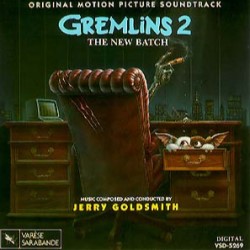
GREMLINS 2: THE NEW BATCH – Jerry Goldsmith
 THROWBACK THIRTY
Original Review by Jonathan Broxton
Gremlins, the film in which a whole host of nasty little creatures take over a small town at Christmas, was one of the most popular and successful films of 1984. It introduced the world to Gizmo, the cute and fuzzy little ‘mogwai’ who has some rather unfortunate traits – he multiplies if you get him wet, and terrible things happen if he eats after midnight. A somewhat belated sequel, subtitled ‘The New Batch,’ opened in cinemas in June 1990. Following the events of the first film, little Gizmo was re-united with his original elderly owner Mr. Wing, and the survivors of the carnage – Billy and Kate – are now a couple and have moved to the Big City. Both Billy and Kate work for a company owned by the eccentric multi-billionaire Daniel Clamp (a thinly veiled parody of Donald Trump), and are astonished when they find Gizmo in one of the company’s laboratories, being subjected to all manner of awful tests by the cruel researcher Dr Catheter. Billy and Kate break Gizmo out and plan to have him live with them but – of course – things go wrong, and before long there are dozens of Gremlins infesting the Clamp skyscraper, threatening to break out and overrun New York. The film is directed by Joe Dante, stars Zach Galligan and Phoebe Cates reprising their roles from the first film, and again features Howie Mandel as the voice of Gizmo; they are joined in the cast by John Glover, Christopher Lee, Robert Prosky, and Robert Picardo. Read more…
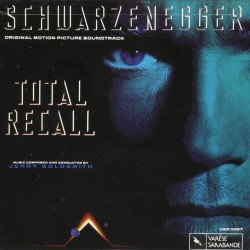
TOTAL RECALL – Jerry Goldsmith
 THROWBACK THIRTY
GREATEST SCORES OF THE TWENTIETH CENTURY
Original Review by Jonathan Broxton
Total Recall is one of my all-time favorite sci-fi action films, and is one of the best movies Arnold Schwarzenegger ever made. Adapted from the short story ‘We Can Remember It For You Wholesale’ by Philip K. Dick, it was the third English-language film from Dutch director Paul Verhoeven, following Flesh + Blood in 1985 and Robocop in 1987, and continued his explorations of American consumerism and capitalism through thinly-veiled satire, dressed up with large-scale action sequences. The film is set in a future time period where humans have colonized other planets, and have invented technology that allows ‘false memories’ to be implanted into the mind. Schwarzenegger plays Doug Quaid, a regular blue collar worker who has vivid recurring dreams of visiting Mars. One day Quaid decides to visit Rekall, a company which implants memories of vacations in people who have never been on them. However, the process goes wrong, and Quaid learns that he has already had his memory wiped; he is, in fact, a deep-cover elite secret agent with ties to Vilos Cohaagen, the corrupt and ruthless governor of the Mars Colony. Before long Quaid is knee deep in an inter-planetary adventure involving shady secret organizations and underground resistance movements seeking to overthrow the Martian government. The film co-stars Rachel Ticotin, Ronny Cox, Michael Ironside, and a pre-Basic Instinct Sharon Stone, and was a massive hit with both critics and audiences, who praised its clever story, vivid action sequences, impressive (if occasionally gory) special effects, and mind-bending distortions of what is real and what isn’t. Read more…
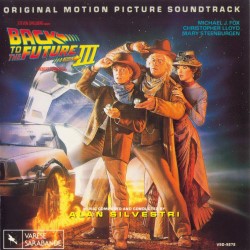
BACK TO THE FUTURE, PART III – Alan Silvestri
 THROWBACK THIRTY
Original Review by Jonathan Broxton
Following the massive success of Back to the Future in 1985, director Robert Zemeckis shot a pair of sequels back-to-back, both of which continued the time traveling exploits of Marty McFly, the suburban kid from 1980s California, and his eccentric inventor friend Doc Brown, who built a time machine out of a DeLorean. Back to the Future II was less of an icon than the original, but has since proven prescient with its vision of a dystopian alternate world where Marty’s nemesis Biff Tannen becomes a Donald Trump-like multi-billionaire. The ending of the second movie saw the 1985 version of Doc, and the DeLorean, being hit by lightning and sent back in time to Hill Valley in 1885, when it was a newly-build town in the Old West. However, Marty discovers some devastating news about his friend’s fate, and manages to convince the 1955 version of Doc to send him back in time too. Marty finds Doc happily working as a blacksmith, unaware of his future, but before long the pair starts getting into trouble, with Marty encountering both his own great-grandparents, and running afoul of one of Biff’s ancestors, the ruthless gunslinger Mad Dog Tannen. With time running out to save the day and finally return home, one final issue arises when Doc falls in love with Clara Clayton, a beautiful schoolteacher played by Mary Steenburgen. Read more…

Shop at the Movie Music UK Store

Member of the

 MOVIE MUSIC UK