Archive
LA LA LAND – Justin Hurwitz, Benj Pasek, Justin Paul
 Original Review by Jonathan Broxton
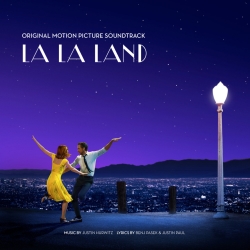
There has been so much cynicism and negativity in the news in 2016, that a film like La La Land is not so much a breath of fresh air, but a necessary antidote to the political and social upheaval that has swept across far too much of the world. It’s a sincere, optimistic love letter to the power of dreams and the joy of romance, an homage to classic Hollywood musicals, and a celebration of art and dance and music that wears its heart on its sleeve and looks you straight in the eye as it does so. Directed by Damien Chazelle, it stars Ryan Gosling and Emma Stone as Sebastian and Mia, two struggling artists trying to make it in contemporary Los Angeles. Sebastian is a jazz pianist frustrated by his lack of opportunities and the fact that no one seems to love the music he loves any more; Mia is an aspiring actress working in a coffee shop on a studio lot whose dreams are continually crushed by an endless parade of failed auditions. A series of chance meetings between the two slowly leads to a romantic relationship, and together the pair seeks to find a way through the perils and pitfalls of being young and creative in the City of Angels. Read more…
THE THIEF OF BAGDAD – Miklós Rózsa
 GREATEST SCORES OF THE TWENTIETH CENTURY
Original Review by Craig Lysy
Renowned director Alexander Korda had long envisioned embarking on a remake of the 1924 fantasy adventure The Thief of Bagdad. He set his plans into motion early in 1939, selecting German director Ludwig Berger to manage the project. Creative differences however led to Berger’s replacement as well as his composer Oscar Straus. British director Michael Powell was brought in, however when World War II began, he was transferred to the War Office to begin work on a morale-boosting documentary. Because of the Nazi Blitz, Korda was forced to move film production to Hollywood and American director Tim Whelan was tasked with salvaging the film. The original cast was retained, which included; Conrad Veidt as Jaffar, Sabu as Abu, June Duprez as the Princess, John Justin as Ahmed, Rex Ingram as Djinn, Miles Malleson as the Sultan. The story takes inspiration from the classic Arabian tale One Thousand and One Nights, as well as the novel The Tower and the Elephant by Robert Howard, and offers a classic villain, the love story of a handsome young prince and princess, a heroic young boy, magic, and adventure. Read more…
CRIMES OF THE HEART – Georges Delerue
 THROWBACK THIRTY
Original Review by Jonathan Broxton
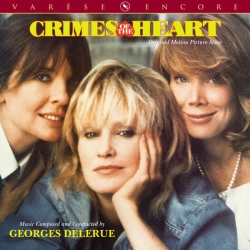
Crimes of the Heart is a ‘southern gothic’ family comedy-drama based on the Pulitzer Prize-winning play by Beth Hanley. Directed by Bruce Beresford, it stars Diane Keaton, Jessica Lange, and Sissy Spacek as Lenny, Meg, and Babe, three adult sisters who move back into their childhood home in Mississippi after they suffer various personal tragedies and indiscretions, ranging from Lenny’s failed relationships to Meg’s stalled career. Back under the same roof after many years apart, it is not long before long-dormant resentments bubble to the surface once more, as the sisters are forced to deal not only with assorted relatives and past relationships, but also the aftermath of Babe’s latest incident in which she shot her abusive husband. The film co-stars Sam Shepard, Tess Harper, and old Hollywood character actor Hurd Hatfield as their Old Grandaddy, and was a critical success, receiving three Oscar nominations and two Golden Globe nominations, most notably for Spacek’s performance as the fiery Babe. Read more…
MANCHESTER BY THE SEA – Lesley Barber
 Original Review by Jonathan Broxton
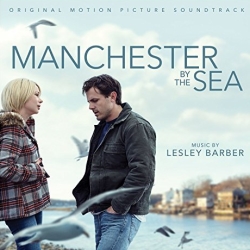
Manchester by the Sea is a contemporary drama, written and directed by Kenneth Lonergan, who was nominated for Academy Awards for writing You Can Count On Me in 2000, and Gangs of New York in 2002. The film stars Casey Affleck as Lee Chandler, an irritable loner with an ex-wife (Michelle Williams) and a ton of skeletons in his closet. Lee is forced to return to his hometown, the eponymous seaside city in Massachusetts, following the unexpected death of his older brother Joe (Kyle Chandler). Having finally returned home after many years away, Lee is not only forced to face the tragedies in his past, but is shocked to learn that he has been made the guardian of his teenage nephew Patrick (Lucas Hedges), a decision which brings him into conflict with the boy’s mother, Joe’s ex-wife Elise (Gretchen Mol). The film has been an enormous critical success, receiving nominations from dozens of awards bodies over the winter of 2016, and looks likely to be a major player at the Academy Awards. Read more…
THE TREASURE OF THE SIERRA MADRE – Max Steiner
 GREATEST SCORES OF THE TWENTIETH CENTURY
Original Review by Craig Lysy
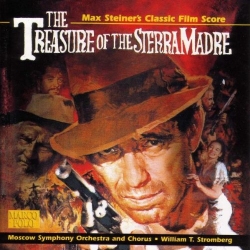
Writer-Director John Huston saw an opportunity with the novel Treasure of Sierra Madre (1935) by B. Traven to bring a timeless tale to the big screen. He convinced Warner Brothers studio executives of his vision and purchased the film rights for $6,500 from the reclusive author. He himself wrote the screenplay and he secured a first class cast for the project, which included; Humphrey Bogart as Fred Dobbs, Walter Huston as Howard, Tim Holt as Bob Curtin, Bruce Bennett as James Cody, Barton MacLane as Pat McCormick, Alfonso Bedoya as Gold Hat, and Arturo Soto Rangel as El Presidente. The theme of the story is as old as time itself – a study in human greed explored through the lives of three gold prospectors. Read more…
ALLIED – Alan Silvestri
 Original Review by Jonathan Broxton
Allied is a romantic drama/thriller set in World War II, directed by Robert Zemeckis, and starring Brad Pitt and Marion Cotillard. Pitt plays Max Vatan, a Canadian Air Force officer attached to the British military, who is sent undercover to French Morocco to carry out a dangerous mission among the Nazis stationed there. In Casablanca he meets his contact, French resistance operative Marianne Beauséjour (Cotillard), who is posing as his wife. However, during the course of their mission, they genuinely fall in love, and commit to moving to London together once their assignment is complete. Several years and one baby later, and despite the ongoing war in Europe, Max and Marianne seemingly have an otherwise idyllic life in suburban England, until Max receives some shocking news from his superior officers at the Special Operations Executive (Jared Harris, Simon McBurney): classified information has been leaked to the Germans, and they think that Marianne is the spy. Read more…
CAPTAIN FROM CASTILE – Alfred Newman
 GREATEST SCORES OF THE TWENTIETH CENTURY
Original Review by Craig Lysy
20th Century studio executive Darryl F. Zanuck came across the novel Captain From Castile (1945) by Samuel Shellabarger and was captivated by its love story and grand adventure. He paid an astounding $100,000 for the film rights and hired trusted director Henry King to manage the project. Lamar Trotti wrote the screenplay, which had to go through several incarnations to appease the Hayes Commission and the Catholic Church who objected to the novel’s critical portrayal of the Spanish Inquisition. King brought in a fine cast, which included; Tyrone Power as Pedro de Vargas, Jean Peters as Catana Pérez, Cesar Romero as Hernán Cortéz, Lee J. Cobb as Juan García, John Sutton as Diego de Silva, Antonio Moreno as Don Francisco de Vargas, and Thomas Gomez as Father Bartolomé de Olmedo. The story is set in Spain circa 1518 CE and offers a classic romance and adventure. Our hero Pedro de Vargas and his family are opposed to the Spanish Inquisition, which is directed by the diabolical Diego de Silva. Read more…
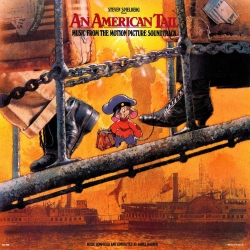
AN AMERICAN TAIL – James Horner
 THROWBACK THIRTY
Original Review by Jonathan Broxton
In the wake of the success of The Secret of NIMH in 1982, master animator Don Bluth began a collaboration with Steven Spielberg and Universal Pictures, who wanted to capitalize on NIMH’s popularity and produce their own animated film, the studio’s first since 1965. The result was An American Tail, the story of a family of Russian-Jewish mice who emigrate to the United States in the late 1800s, having been lured there on the promise of there being ‘no cats in America’. During their ocean crossing the family’s youngest son, Fievel Mousekewitz, is swept overboard and feared drowned; upon their arrival in New York, the remaining Mousekewitzes resign themselves to having lost their son, and sadly begin their new lives. However, Fievel has miraculously survived and makes his way to New York on his own, and the plucky young rodent embarks on a quest to reunite with his family, engaging in numerous adventures on the way. The film features the voices of Nehemiah Persoff, Erica Yohn, Dom DeLuise, Christopher Plummer, and the then-8-year-old Phillip Glasser as Fievel; it was a huge success at the box office, especially with children, who loved the film despite its dark tone. Read more…
FANTASTIC BEASTS AND WHERE TO FIND THEM – James Newton Howard
 Original Review by Jonathan Broxton
WARNING: THIS REVIEW CONTAINS PLOT SPOILERS. IF YOU HAVE NOT YET SEEN THE FILM, YOU MIGHT WANT TO CONSIDER WAITING UNTIL AFTER YOU HAVE DONE SO TO READ IT.
Back in 1997, in her book Harry Potter and the Philosopher’s Stone, author J. K. Rowling made an offhand reference to “Fantastic Beasts and Where to Find Them,” and its author Newt Scamander, when young Harry buys his textbooks prior to attending Hogwarts School of Witchcraft and Wizardry for the first time. Now, some 19 years later, we have the first spin-off story in the Harry Potter universe, which tells the life story of Newt Scamander, and how Fantastic Beasts and Where to Find Them came to be written. The year is 1926, and Scamander (Eddie Redmayne), a magical zoologist, has travelled to New York as part of his work with the Ministry of Magic in the Department for the Regulation and Control of Magical Creatures; however, upon his arrival in the Big Apple, the shy and nervous Scamander runs into an American ‘nomaj’ (a non-magical person, what Americans call ‘muggles’), and contrives to accidentally release several creatures from out of his magical suitcase and into the city. As Scamander desperately tries to retrieve the creatures, he simultaneously becomes embroiled in several inter-twined plots at MACUSA, the American Ministry of Magic: one involving a mysterious force terrorizing the city, one concerning a rabble-rousing anti-Witch group, and – perhaps most seriously – the disappearance of the dark wizard Gellert Grindlewald. The film is directed by David Yates, who also directed the last four Harry Potter films, and co-stars Katherine Waterston, Dan Fogler, Alison Sudol, and Colin Farrell. Read more…
HOOSIERS – Jerry Goldsmith
 THROWBACK THIRTY
Original Review by Jonathan Broxton
Hoosiers is generally considered one of the best sports films ever made. Directed by David Anspaugh and written by Angelo Pizzo (who would later collaborate again on Rudy in 1993), the film stars Gene Hackman as Norman Dale, a former elite basketball coach who, after suffering a personal humiliation, is forced to take a job as a teacher and basketball coach at a tiny high school in Indiana in 1951. Despite overwhelming odds – including a small student population to select a team from, opposition from parents, opposition from faculty members such as English teacher Myra Fleener (Barbara Hershey), and a hopelessly drunk assistant coach (Dennis Hopper) – Dale leads his team to the state championship game. Looking back on the film today, Hoosiers seems to be very clichéd, but the truth of the matter is that this film is the one that invented, or at least popularized, many of the sports movie clichés we take for granted today: the gruff coach with a heart of gold, the group of misfits who come together to form a winning team, the old-fashioned old-timers who don’t understand what the newcomer is doing, the last-second winning shot to clinch the championship. Hoosiers was a massively popular and successful film, and received two Oscar nominations: one for Hopper as Best Supporting Actor, and one for Jerry Goldsmith’s score. Read more…
ARRIVAL – Jóhann Jóhannsson
 Original Review by Jonathan Broxton
Serious science fiction, that eschews cheap thrills and pyrotechnics in favor of more thoughtful contemplation, is still comparatively rare in Hollywood these days, but it does seem that more and more filmmakers are willing to take the risk and explore deeper, more sophisticated philosophical topics against a fantastical background. Director Denis Villeneuve’s Arrival is one of those films, exploring one possible way the world may react when confronted with the real ramifications of a first contact with an alien species. I’m not going to give away much of the plot, except to say that it stars Amy Adams and Jeremy Renner as a language expert and a theoretical physicist, respectively, who are approached by the US military to help them make contact with one of the dozen or so alien spacecraft which have appeared over Earth. The film explores a number of weighty topics, including death, loss, destiny, time, and language, and explores them with a profound seriousness and respect for the genre; it’s a slow film, which takes time to reveal its layers, but it’s worth the wait. It’s also a very beautiful film; Villeneuve’s visual composition and sense of space is as much responsible for the film’s sense of grandeur as the screenplay, dialogue, and performances. Similarly, the sound design is a very important aspect of the film, including the unusual ambient score by Icelandic composer Jóhann Jóhannsson. Read more…
DOCTOR STRANGE – Michael Giacchino
 Original Review by Jonathan Broxton
Doctor Strange is the fourteenth entry in the Marvel Cinematic Universe series of super-hero films that includes the Iron Man, Captain America, and Avengers franchises, and is the first to depict the origin story of a completely new character since Ant-Man last year. Directed by Scott Derrickson, it stars Benedict Cumberbatch as Stephen Strange, a brilliant but arrogant neurosurgeon, whose life is shattered when he severely damages both his hands in a car accident. Seeking new and experimental procedures so that he can fix his hands and resume his career, Strange eventually finds his way to Nepal where he meets Mordo (Chiwetel Ejiofor), a student of the so-called Ancient One (Tilda Swinton); however, rather than simply fix his physical injuries, the Ancient One sees further potential in Strange, and begins to train him in various mystical arts which allow him to enter the astral plane, conjure objects out of pure energy, manipulate reality, and even bend time. Eventually, Strange’s proficiency in these new abilities bring him into conflict with Kaecilius (Mads Mikkelsen), a former student of the Ancient One, who now seeks to use his powers in the service of evil. Read more…
NOCTURNAL ANIMALS – Abel Korzeniowski
 Original Review by Jonathan Broxton
Nocturnal Animals is a film about violence, but not in the way you might expect. Amy Adams stars as Susan, the impossibly rich owner of an elite Los Angeles art gallery, who is trapped in an increasingly loveless marriage to the handsome but disinterested Hutton (Armie Hammer). One day her world is rocked when the manuscript of a soon-to-be-published novel is delivered to her home; the manuscript is from her first husband Edward (Jake Gyllenhaal), and as Hutton is away on business, Susan decides to read it. The manuscript – which is titled ‘Nocturnal Animals’ and is dedicated ‘for Susan’ – tells the story of Tony Hastings (also Gyllenhaal), who is driving through west Texas with his wife (Isla Fisher) and daughter (Ellie Bamber), and who is forced to undergo an experience of unimaginable horror when they are menaced on the highway by a gang of shit-kicking rednecks led by Ray Marcus (Aaron Taylor-Johnson). As Susan reads, she begins to interpret the story as a metaphor for her failed marriage to Edward, and is forced to come to terms with the consequences of her actions in the past. Read more…
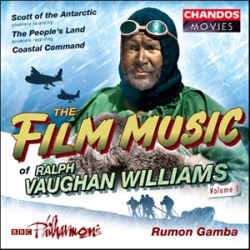
SCOTT OF THE ANTARCTIC – Ralph Vaughan-Williams
 GREATEST SCORES OF THE TWENTIETH CENTURY
Original Review by Craig Lysy
Producer Michael Balcon of Ealing Studios resolved to tell the story of the famous British explorer Robert Falcon Scott, and his ill-fated journey to discover the South Pole. Charles Frend was hired to direct and he brought in a splendid cast which included Sir John Mills as the titular character, James Robertson Justice as Petty Officer Taff Evans, Derek Bond as Captain Oates, Kenneth More as Lieutenant Teddy Evans, John Gregson as Petty Officer Crean, James McKechnie as Surgeon Lieutenant Atkinson, Barry Letts as Apsley Cherry-Garrard, and Christopher Lee as Bernard Day. The screenplay drew by Major Walter Meade and Ivor Montagu extensively from Scott’s personal diaries, while additional dialogue was adapted from novelist Mary Hayley Bell (John Mills’s wife). The expedition takes place in 1911–1912. Scott, who in 1904 initially explored Antarctica, resolved to organize an expedition to discover the South Pole. Initially he is unable to secure adequate funds for the expedition, as the British business class is skeptical. He ultimately manages to secure government funds after an appeal to British pride. Regretfully Scott chose to forgo the traditional method of relying exclusively on dogs, instead choosing to augment his dogs with ponies and motorized sleds. This decision would ultimately contribute to his demise. Read more…
HACKSAW RIDGE – Rupert Gregson-Williams
 Original Review by Jonathan Broxton
The island of Okinawa was one of the key battlegrounds during World War II, where Allied forces led by the United States Army and Navy fought against eight divisions of the Imperial Japanese Army for supremacy. It was also one of the bloodiest in the Pacific, with an estimated total of over 82,000 direct casualties on both sides. The battle lasted from April until June 1945, and ranged all over the island, including an area colloquially known as Hacksaw Ridge, a large and imposing cliff face with a plateau at the top. It was here that one of the most extraordinary acts of heroism in the entire war took place, when US Army medic Desmond Doss personally saved the lives of 75 wounded soldiers while under tremendous, relentless enemy fire. The most amazing aspect of this story, however, is that Doss was a conscientious objector and a member of the Seventh Day Adventist church, and as such refused to handle a firearm at any point in his military service; despite this, Doss was subsequently awarded the Medal of Honor, the United States’s highest military decoration, becoming the first conscientious objector to be so honored. Director Mel Gibson’s film Hacksaw Ridge tells Doss’s life story, all the way from his humble origins in rural Virginia; it stars Andrew Garfield as Doss, along with Vince Vaughan, Sam Worthington, Luke Bracey, Hugo Weaving, Rachel Griffiths, and Teresa Palmer in supporting roles. Read more…

Shop at the Movie Music UK Store

Member of the

 MOVIE MUSIC UK