Archive
HOW THE WEST WAS WON – Alfred Newman
 100 GREATEST SCORES OF ALL TIME
Original Review by Craig Lysy
MGM Studios, in an effort to regain its former glory, embarked on a sweeping multi-generational tale, an epic story so grand in its storytelling that three directors would be needed to shoot its five vignettes. The film drew inspiration from a Life magazine photo essay titled “How the West Was Won”. Producer Bernard Smith hired James R. Webb to write a screenplay with a massive canvass and Henry Hathaway was tasked with directing three of the vignettes; The Rivers (1839), The Plains (1851) and The Outlaws (1889). John Ford would direct The Civil War (1861–1865) segment, and George Marshall would direct The Railroad (1868). A massive stellar cast was hired, which many consider to be the greatest assembly of stars ever hired for a single project; Carroll Baker as Eve Prescott, Agnes Moorhead as Rebecca Prescott, Karl Malden as Zebulon Prescott, Debbie Reynolds as Lilith Prescott, Lee Cobb as Lou Ramsey, Henry Fonda as Jethro Stewart, Carolyn Jones as Julie Rawlings, Gregory Peck as Cleve Van Valen, George Peppard as Zeb Rawlings, Robert Preston as Roger Morgan, John Wayne as General William Tecumseh Sherman, Richard Widmark as Mike King, Walter Brennan as Colonel Jeb Hawkins, Raymond Massey as President Abraham Lincoln, and Harry Morgan as General Ulysses S. Grant. Read more…
PROFESSOR MARSTON AND THE WONDER WOMEN – Tom Howe
 Original Review by Jonathan Broxton
It seems appropriate that, in a year where the comic book super hero Wonder Woman made such an important and groundbreaking splash at the US box office, there should also be a small independent film about the creation of the character. While many are aware of Wonder Woman’s status as an iconic figure of female empowerment through the big and small screen portrayals of her by actresses Lynda Carter and Gal Gadot, it’s important to remember that she has been around since the 1940s, and that her origins are… shall we say, slightly unconventional. Wonder Woman was created by William Moulton Marston using the pen name Charles Moulton. In public, Moulton was an acclaimed psychologist and writer who, notably, invented the polygraph lie detector. In private, however, Moulton was in a long term consensual relationship with two women – Elizabeth Holloway and Olive Byrne – who were also in a lesbian relationship with each other. Not only that, both Holloway and Byrne were early pioneers of the feminism movement that began under Margaret Sanger, while Marston was an enthusiastic practitioner of sexual bondage, dominance and submission, the themes of which often crossed over into his writing. Director Angela Robinson’s film Professor Marston and the Wonder Women, which stars Luke Evans, Rebecca Hall, and Bella Heathcote, explores the relationship between Marston, Holloway and Byrne, and how their alternative dynamic resulted in the creation of a super-hero who endures to this day. Read more…
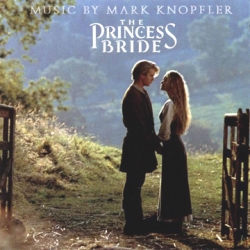
THE PRINCESS BRIDE – Mark Knopfler
 THROWBACK THIRTY
Original Review by Jonathan Broxton
Is there a more beloved, more quotable 1980s movie than The Princess Bride? If we’re talking about pop culture consciousness, then director Rob Reiner’s 1987 romantic-comedy-fantasy-adventure may be the cream of the crop. Based on the novel by William Goldman, the film is basically a story about a grandfather reading to his sick grandson, and the way in which great literature can inspire us, enthrall us, and move us in equal measure. In the film’s framing story, the grandfather (Peter Falk) reads the story of The Princess Bride to his computer game-obsessed grandson (Fred Savage), and the tale unfolds before us: it’s a classic adventure about a handsome and heroic stable boy named Wesley (Cary Elwes), who falls in love with the beautiful Buttercup (Robin Wright); years later, with Buttercup betrothed to be married to the odious Prince Humperdinck (Chris Sarandon), Westley must team up with a gang of adventurers to save her. Read more…
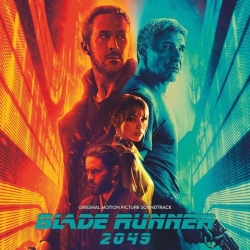
BLADE RUNNER 2049 – Benjamin Wallfisch and Hans Zimmer
 Original Review by Jonathan Broxton
The 1982 science fiction film Blade Runner is considered a landmark of the genre, a thoughtful and thought-provoking look at the nature of humanity, dressed up with groundbreaking visual effects and a revolutionary neo-noir style. Now, 35 years later, the film’s long-awaited sequel Blade Runner 2049 has finally arrived after what feels like an eternity in development, with a new director in the shape of Denis Villeneuve, and with original director Ridley Scott acting as executive producer. Without wanting to give too much of the plot away, the film stars Ryan Gosling as a ‘blade runner’ named K, a futuristic cop hunting down the last few old-model ‘replicants,’ incredibly lifelike synthetic humanoids who have been designed to work as slaves for real humans, and whose rebellion formed the plot of the first movie. Since then, newer-model replicants have become a stable part of society, but when K discovers a long-buried secret that has the potential to change the world, he finds himself trying to track down former blade runner Rick Deckard (Harrison Ford), the protagonist of the first film, who has been missing for decades. Read more…
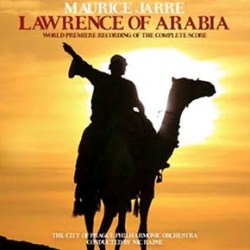
LAWRENCE OF ARABIA – Maurice Jarre
 100 GREATEST SCORES OF ALL TIME
Original Review by Craig Lysy
David Lean and Sam Spiegel purchased the film rights to T. E. Lawrence’s book “The Seven Pillars of Wisdom” and hired Robert Bolt to write the screenplay on the enigmatic war hero. A stellar cast was hired that included Peter O’Toole (T.E. Lawrence), Alec Guiness (Prince Feisal), Anthony Quinn (Auda Abu Tayi), Jack Hawkins (General Allenby) and Omar Sharif as Sherif Ali. The film centers on Thomas Edward Lawrence, a complex and insolent British Lieutenant assigned to Cairo during World War I. He is ordered to assess the possibility of recruiting Prince Feisal of Arabia as an ally in their struggle against the Ottoman Turks. On his own initiative he instead chooses to rally the recently defeated Arab army for an audacious trans desert assault against the port city of Aqaba. He succeeds and returns to Cairo in triumph where he is promoted and ordered to return and lead the Arab revolt. His guerrilla army harasses the Turks with surprise desert raids and train line assaults that disrupt their command and control. Along the way the war violence and his complicity in a massacre serves to plague his conscience and forever scar him. Eventually, he leads his army northward captures Damascus and helps end the control of the Ottoman Empire. With his mission complete, he is sent back to England only to die young at the age of 46 in a motorcycle accident. The film was a stunning success winning seven Academy Awards including Best Score for Maurice Jarre. Read more…
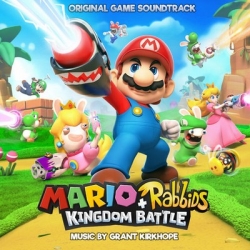
MARIO + RABBIDS: KINGDOM BATTLE – Grant Kirkhope
 GAME ZONE REVIEW
Original Review by Jonathan Broxton
I have a confession to make, and I’m not sure how well it’s going to go over. It may be OK, or it may cause me to lose some respect in the eyes of my readers, but it’s something I have to get off my chest. OK… here goes. My name is Jon Broxton and I have never played Donkey Kong. Or Super Mario Bros., or The Legend of Zelda, or any of those classic Nintendo games that are such a staple of contemporary popular culture. Growing up, I wasn’t a gamer at all, and while I was of course aware of all the various characters, I never had the experience of actually playing them, which meant that for most of my life they didn’t mean a whole lot to me. I have since become much more aware of their impact and legacy, which is how I know that Mario + Rabbids: Kingdom Battle is one of the most important game titles to be released in 2017. Read more…
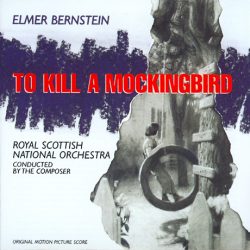
TO KILL A MOCKINGBIRD – Elmer Bernstein
 100 GREATEST SCORES OF ALL TIME
Original Review by Craig Lysy
Universal Studio executives saw the universal critical acclaim afforded Harper Lee’s Pulitzer Prize winning novel To Kill A Mockingbird, and purchased the film rights, determined to bring her poignant story to the big screen. The project however stalled creatively and did not gain momentum until a generous budget was allocated and producer Alan J. Pakula took the reigns. He was inspired by the project, hired Horton Foote to write the screenplay, and tasked Robert Mulligan to direct. They brought in Gregory Peck to play the leading role of Atticus Finch, and Robert Duvall secured his debut role as Boo Radley. For Atticus’ children, newcomers Mary Badham was chosen to play Scout, and Phillip Alford to play Jem. Rounding out the cast were Brock Peters as Tom Robinson, James Anderson as Bob Ewell, Cillin Wilcox as Mayella Ewell, and John Megna as Dill Harris. Read more…
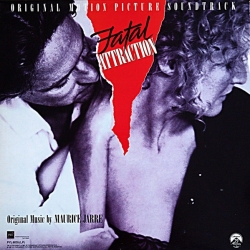
FATAL ATTRACTION – Maurice Jarre
 THROWBACK THIRTY
Original Review by Jonathan Broxton
One of the smash hit movies of 1987 was the thriller Fatal Attraction, the film which made a multitude of men think twice abut cheating on their wives, and which gave rise to the term ‘bunny boiler’. Directed by Adrian Lyne, and based on the 1980 British film ‘Diversion’ written by James Dearden, the film starred Michael Douglas as Dan Gallagher, a successful lawyer, happily married to his wife Beth (Anne Archer). One weekend, while his family is away, Dan has an unplanned one-night stand with Alex Forrest (Glenn Close), a publishing company executive. Immediately regretful of his infidelity, Dan insists that the night was a one-off and a mistake, and vows never to see Alex again, but she refuses to accept it, and continues to pressure Dan into a relationship. In the months that follow Alex becomes gradually more and more deranged, her obsession with Dan gradually turning to violence and murder. The film was nominated for six Academy Awards, including Best Picture, Director, and Best Actress, but failed to win any, although the legacy of the film is arguably greater than those to which it lost (notably The Last Emperor and Moonstruck). Read more…
BATTLE OF THE SEXES – Nicholas Britell
 Original Review by Jonathan Broxton
I’ve been a tennis fan for much of my life, both playing it and watching it. Since I began following the sport in earnest in the mid 1980s, men’s and women’s tennis has, over time, become more equal, with increasingly similar prize money, air time, and sponsorship deals for the elites in both games. Perhaps most importantly, the respect given to female tennis players has increased over time, such that they are for the most part seen as being on a par with their male counterparts. This was not always the case; back in 1973 55-year old Bobby Riggs, a genuinely great former champion who won both Wimbledon and the US Open in 1939, made a series of sexist and misogynist remarks about female tennis players of the era, and challenged the then world number one woman, 29-year-old Billie Jean King, to an exhibition game dubbed ‘the Battle of the Sexes’. This new film, directed by Jonathan Dayton and Valerie Faris and starring Emma Stone and Steve Carell, is the story of that game, and how its outcome changed the perception of women’s professional sport forever. Read more…
MUTINY ON THE BOUNTY – Bronislau Kaper
GREATEST SCORES OF THE TWENTIETH CENTURY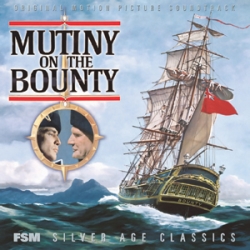
Original Review by Craig Lysy
Following the stunning success of the remake of the epic Ben-Hur in 1959, MGM studio executives decided to draw water from the same well, accepting director John Sturges’ suggestion of a remake of their classic 1935 film Mutiny on the Bounty. Producer Aaron Rosenberg was tasked with bringing the film to fruition, and on Sturges’ advice hired Marlon Brando to provide the necessary star power. Veteran director Carol Reed was chosen to manage the film and a fine cast was hired to support Brando in his role as Lieutenant Fletcher Christian, including the renown Trevor Howard as Captain Bligh, Richard Harris as seaman John Mills, Hugh Griffith as seaman Alexander Smith, Richard Haydn as Botanist William Brown and Tarita Teripaia as Princess Maimiti. The studio granted a truly massive budget of $14 million dollars that would include local filming on Tahiti and building a $750,000 replica of the Bounty. Trouble however arose quickly due to an ever-evolving script, which included six screenplays that were rejected by the mercurial Brando. The film was to be shot over one year, but thanks to Brando’s rewrites, reshoots and prima dona tirades, Reed quit and production ended up taking three years to film! Read more…
WOJCIECH KILAR REVIEWS – 1964-2007
In this latest installment of the new irregular series looking at the career of some film music’s most iconic composers, we travel to Poland to look at the work of one of film music’s most unsung geniuses, Wojciech Kilar.
Wojciech Kilar was born in Lvov, Ukraine, when it was still part of Poland, in July 1932, but moved to Katowice in Silesia in 1948 with his father, a gynecologist, and his mother, an actress. Kilar studied at the State Higher School of Music in Katowice under composer and pianist Władysława Markiewiczówna, at the State Higher School of Music in Kraków under composer and pianist Bolesław Woytowicz, and then in Paris with the legendary Nadia Boulanger in the late 1950s. Upon his return to Poland, Kilar and fellow composers Henryk Górecki and Krzysztof Penderecki led an avant-garde music movement in the 1960s, during which time he wrote several acclaimed classical works.
Kilar scored his first film in 1959, and went on to write music from some of Poland’s most acclaimed directors, including Krzysztof Kieślowski, Krzysztof Zanussi, Kazimierz Kutz, and Andrzej Wajda. He worked on over 100 titles in his home country, but he did not score an major English-language film until Francis Ford Coppola’s adaptation of Bram Stoker’s Dracula in 1992.
In addition to his film work, Kilar’s classical output includes such masterworks as Krzesany (1974), a symphonic poem for orchestra, inspired by the “highlander” music of the Tatra mountains region of southern Poland; Exodus (1979), a religious choral piece used in the trailers for Schindler’s List, and others such as Prelude and Christmas Carol (1972), Mount Kościelec 1909 (1976), Angelus (1984), Orawa (1986), and Choralvorspiel (1988). His third, fourth and fifth symphonies – the September Symphony (2003), the Symphony of Motion (2005) and the Advent Symphony (2007) – were among his last major completed works. Kilar died on December 29, 2013, at his home in Katowice, after a battle with cancer, aged 81. Read more…
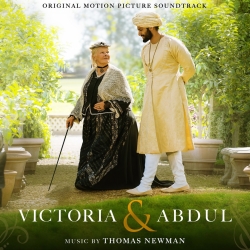
VICTORIA & ABDUL – Thomas Newman
 Original Review by Jonathan Broxton
There has long been a cinematic fascination with the life of Queen Victoria, who reigned in the United Kingdom from 1837 until 1901; numerous actresses have portrayed her, both on the big and the small screen, but for contemporary audiences the quintessential Victoria is the one played by Dame Judi Dench. She first played the role in 1997’s Mrs. Brown, which examined the controversial relationship between the long-widowed queen and her Scottish equerry John Brown, which ended with Brown’s death in 1883. This new film, directed by Stephen Frears, is essentially a sequel to Mrs. Brown, and again stars Dench as the much loved monarch. It picks up Victoria’s story in 1887, and focuses on another unusual relationship Victoria developed with a different manservant; however, rather than being a Scottish gamekeeper, her new confidante was an Indian Muslim named Abdul Karim, played by Ali Fazal. Cue the scandals in the palaces of London and the halls of Westminster. Read more…
TULIP FEVER – Danny Elfman
 Original Review by Jonathan Broxton
The tale of Tulip Fever is a long and sad one in terms of the way the film has been treated by its distributor. It’s an adaptation of the enormously popular novel by Deborah Moggach, directed by Justin Chadwick, and written by the great Tom Stoppard. Set in the Netherlands in the 17th century, during the period of the tulip mania (when the Dutch economy was almost ruined by the enormous inflation, then the sudden collapse, of the price of tulips), the film tells the story of an impoverished artist who falls in love with a young but unhappily married woman after he is commissioned to paint her portrait by her husband, a rich and powerful flower merchant. The film stars Dane De Haan, Alicia Vikander, and Christophe Waltz, and was originally scheduled for release in late 2015, in order to prime itself for a run at that’s year’s Academy Awards. However, for some reason, the film was delayed and delayed and delayed by the distributor, Harvey Weinstein. Release dates came and went until the film finally dragged itself into cinemas in a limited release in August 2017, almost two years after it was first scheduled to appear; virtually no-one went to see it, and it was a critical disaster, with one writer memorably describing it as ‘a floral-scented fiasco that is so lifeless you can barely feel a pulse.’ Read more…
BEN-HUR – Miklós Rózsa
 100 GREATEST SCORES OF ALL TIME
Original Review by Craig Lysy
As a new decade dawned, MGM studio executives began searching for a grand tale to bring to the screen. They decided in 1952 to cast their lot with a remake of their epic 1925 silent film, Ben-Hur. The film’s source material would again reference Lew Wallace’s 1880 novel Ben-Hur: A Tale of the Christ. It would take six years before producer Sam Zimbalist could bring the project to fruition. It required twelve versions of the script, from four different writers, to finally satisfy the demands of director William Wyler. Casting was also challenging as over 5,000 people needed to be hired for minor roles and extras. The studio spared no expense, ultimately providing Wyler with an astounding $15 million budget. Charlton Heston secured the titular role of Judah Ben-Hur and was supported by a fine cast, which included Stephen Boyd as Messala, Jack Hawkins as Quintus Arius, Haya Harareet as Esther, Martha Scott as Miriam, Sam Jaffe as Simonides, Hugh Griffith as Sheik Ilderim, Cathy O’Donnell as Tirzah, Frank Thring as Pontius Pilate, and Finlay Currie as Balthazar narrator. Read more…
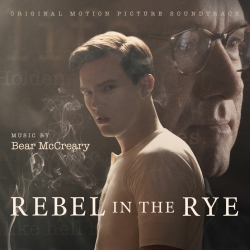
REBEL IN THE RYE – Bear McCreary
 Original Review by Jonathan Broxton
Rebel in the Rye is a biopic about the life of J. D. Salinger, the reclusive author of the classic 1951 novel about teenage angst and social alienation, Catcher in the Rye. It looks mainly at Salinger’s life as a young man, charting the time he spent serving on the front lines in World War II, following the creation and publication of Catcher, examining his relationships with his girlfriend Oona O’Neill, his mentor Whit Burnett, and his supportive publisher Dorothy Olding, and lamenting the subsequent unwanted fame and notoriety Salinger suffered through, which led him to withdraw from public view for most of the rest of his life. The film was written and directed by Danny Strong, and stars Nicholas Hoult as Salinger, with Zoey Deutsch, Kevin Spacey, and Sarah Paulson in supporting roles. Read more…

Shop at the Movie Music UK Store

Member of the

 MOVIE MUSIC UK