Archive
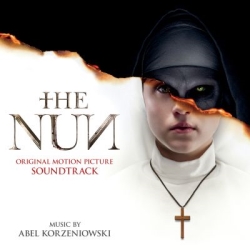
THE NUN – Abel Korzeniowski
 Original Review by Jonathan Broxton
One of the constant battles I have as a film music reviewer is between music I like and music that is good. Sometimes it’s easy, because the two are the same thing. Often I listen to a score and there are great memorable themes and big sweeping orchestras and powerful lush arrangements; there is a gorgeous love theme, and sometimes bold and exciting action music. This is the stuff I like. Then you get into the meat of it and it’s filled with really cool compositional ideas and contrapuntal writing and rhythmic devices, interesting ways of using the instruments through the orchestrations and via extended performance techniques, clever thematic interplay, and so on. This is when you know it’s good in purely musical terms – and that’s before you even get into things like in-film effectiveness. The problem arises when there’s a conflict, when the music is undeniably superb from a technical and compositional point of view, but it’s something I don’t particularly like listening to, and for me that arises most often in music for horror films. The latest score to give me that problem is The Nun, which is by the outrageously talented Polish composer Abel Korzeniowski. Read more…
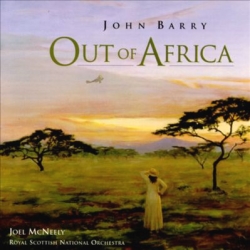
OUT OF AFRICA – John Barry
 GREATEST SCORES OF THE TWENTIETH CENTURY
Original Review by Craig Lysy
Notable directors such as Orson Welles, David Lean and Nicolas Roeg had long sought to bring to the big screen the 1937 novel Out of Africa by Isak Dinesan (Karen Blixen). None were successful in adapting the story into a cogent screenplay. Sydney Pollack however was determined to succeed, and after two years of struggle managed with the assistance of screenwriter Kurt Luedtke to fashion a screenplay drawing from Blixen’s “Out of Africa”, but also her novel “Shadows on the Grass” and Elsbeth Huxley’s novel, “The Flame Trees of Thika”. Mirage Enterprises agreed to fund the project, which would be produced by Kim Jurgensen and Sydney Pollack, who would also direct. A fine cast was assembled, which included the dashing Robert Redford as Denys Hatton, Meryl Streep as Karen Blixen, and Klaus Maria Brandauer as Baron Bror von Blixen. The story offers a sad testament to the life of a wealthy Danish woman Karen Blixen, and the love of her life, Denys Hatton. After she is spurned by her Swedish lover, Karen relocates to British East Africa and enters into a loveless marriage of convenience with his brother, Baron Bror Blixen. They plan to start a dairy cattle farm, but on the wedding day Bror informs her that he plans to instead start a coffee plantation. His infidelity leads to her contracting syphilis, which requires that she return to Denmark for treatment. She returns to find Bror more interested in Safaris than her and they separate. Read more…
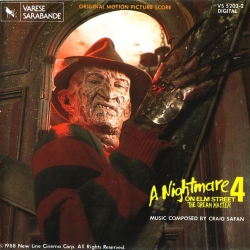
A NIGHTMARE ON ELM STREET 4: THE DREAM MASTER – Craig Safan
 THROWBACK THIRTY
Original Review by Jonathan Broxton
The fourth movie in the massively successful Nightmare on Elm Street horror franchise was A Nightmare on Elm Street 4: The Dream Master; it’s a direct continuation of the story from 1987’s Nightmare on Elm Street 3, in which the survivors of that film have been released from the psychiatric hospital, but still find themselves being stalked by the horribly disfigured child killer Freddy Krueger, who has the ability to murder people in their dreams. The film stars Lisa Wilcox, Danny Hassel, Tuesday Knight, and Robert Englund in his iconic role as Krueger, and was directed by Renny Harlin, who was helming his first major studio feature film following the success of his 1987 English-language debut, the low-budget horror movie Prison. The film was actually one of the best reviewed films of the series, with special praise being given to the surprisingly insightful screenplay by Brian Helgeland, and especially the special effects and design; the critic in the Los Angeles Times wrote at the time that the film was ‘by far the best of the series, a superior horror picture that balances wit and gore with imagination and intelligence’. Read more…
BLACKKKLANSMAN – Terence Blanchard
 Original Review by Jonathan Broxton
Spike Lee doesn’t make subtle movies. He never has. He makes films about race and politics and social injustices and relationships and American life, and then hammers the point home, so that even the most culturally unaware viewer will be left with no doubt as to what his film is saying and – more importantly – why we need to listen. Films like Do the Right Thing, Malcolm X, and Jungle Fever established his credentials as an important filmmaker, while films like Inside Man, 25th Hour, and He Got Game cemented his box office potential. His latest film, Blackkklansman, is the first Spike Lee joint in quite some time to combine commercial success with a major cultural statement, and it has become a significant talking point in a year where race and politics have become vitally important in American society. The film tells the embellished but mostly true story of Ron Stallworth, a black cop in the Colorado Springs Police Department in the early 1970s, who successfully leads an investigation to infiltrate a local chapter of the Ku Klux Klan by posing as a white supremacist – at least on the phone – while a white Jewish colleague, Flip Zimmerman, stands in for him when the time comes for Ron to meet the Klan in person. The film stars John David Washington and Adam Driver as the cops leading the charge; they are ably supported by Laura Harrier as Ron’s student activity girlfriend Patrice, Topher Grace as KKK Grand Wizard David Duke, and Ryan Eggold and Jasper Pääkkönen as local Klan members, with powerful cameos from Corey Hawkins, Alec Baldwin, and Harry Belafonte. Read more…
RAN – Tôru Takemitsu
 GREATEST SCORES OF THE TWENTIETH CENTURY
Original Review by Craig Lysy
Ran, which translates as Chaos, was a passion project for the legendary Japanese director Akira Kurosawa, and most critics believe it to be his last great film. He had envisioned the film for many years, and he even made detailed paintings of the castles and sets he hoped to one day construct. He began writing the screenplay in 1976 but production was delayed by Tōhō Studios executives who balked at the estimated $5 million price tag, which would have made it the most expensive Japanese film ever made. The fact that his last film, Dodes’kaden, was a box office flop also served to harden studio resistance. Fortunately the great success of his film Kagemusha restored studio confidence in Kurosawa, and he was able to forge a partnership, securing funds from French producer Serge Silberman. There are recognizable parallels between Ran and Shakespeare’s King Lear, although Kurosawa related that the similarities did not become apparent to him until after he had conceived his script. Ran was Kurosawa’s last great epic film, one that offers a classic morality play, which affirms the truism that the road to Hell is paved with good intentions. We are offered an excruciating tragedy, which reveals deception, envy, treachery, betrayal and hubris. Read more…
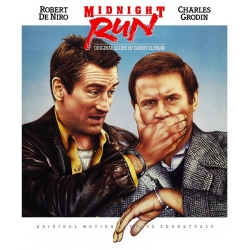
MIDNIGHT RUN – Danny Elfman
 THROWBACK THIRTY
Original Review by Jonathan Broxton
Midnight Run was one of the best buddy action comedies of the 1980s, and was one of the first films to showcase the hitherto untapped comedy potential of the great dramatic actor Robert De Niro. De Niro plays Jack Walsh, a bounty hunter working for bail bondsman Eddie Moscone (Joe Pantoliano), who is hired to find mob accountant Jonathan Mardukas (Charles Grodin) in New York and bring him back to Los Angeles; Mardukas had embezzled $15 million from Chicago mob boss Jimmy Serrano (Dennis Farina) before skipping on the bail Moscone had posted for him. What initially appears to be an easy task – Mardukas is annoying but generally compliant – quickly turns into a nightmare when Serrano’s henchmen, FBI agent Alonso Mosley (Yaphet Kotto), and rival bounty hunter Marvin Dorfler (John Ashton) all converge on Walsh, wanting Mardukas for themselves. Thinking on his feet, Walsh finds himself taking Mardukas on an epic road trip, trying to stay one step ahead of his pursuers, while keeping ‘The Duke’ under control. The film was written by George Gallo and directed by Martin Brest, and was a critical and commercial success, with special praise being given to the chemistry between De Niro and Grodin. Read more…
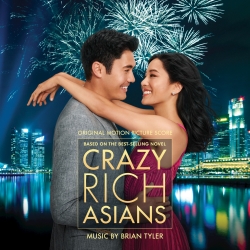
CRAZY RICH ASIANS – Brian Tyler
 Original Review by Jonathan Broxton
In 1993 director Wayne Wang’s film The Joy Luck Club, based on the popular novel by Amy Tan, was released in cinemas. It was a groundbreaking film as it was one of the first mainstream American films to feature an almost exclusively East Asian cast – mostly from China, Japan, Macau, and Vietnam – and at the time it was a seen as a major step forward for Asian-American cinema. It has taken until this year, 25 years later, for this feat to be repeated, with the release of Crazy Rich Asians, directed by Jon Chu from the best-selling novel by Kevin Kwan. The film is a fairly conventional romantic comedy-drama which stars Constance Wu as Rachel, an economics professor living in New York with a handsome long-term boyfriend named Nick (Henry Golding). Nick is invited to a family wedding back home in Singapore, and asks Rachel to go with him; to her shock and amazement, she discovers that Nick comes from an immensely wealthy family of real estate developers. Overwhelmed by her new surroundings, and the revelations about Nick’s family, she immediately embarrasses herself in front of Nick’s domineering mother Eleanor (Michelle Yeoh), and sets off a chain of events which threatens to derail her relationship forever. Read more…
THE NATURAL – Randy Newman
 GREATEST SCORES OF THE TWENTIETH CENTURY
Original Review by Craig Lysy
In 1982 Columbia Pictures studio executive Victor Kaufman created a joint venture, TriStar Pictures, with CBS and HBO. The goal was to pool their resources given the ever-escalating costs of making movies. For their first film they chose to celebrate America’s national pastime by adapting The Natural, a baseball biopic novel by Bernard Malamud. The film offered classic Americana and Kaufman believed it was the perfect vehicle for launching TriStar Pictures. Mark Johnson was given the reigns to produce the film, and Barry Levinson was tasked with directing. Roger Towne and Phil Dusenberry were brought in to write the screenplay, which would be loosely based on the life of Roy Hobbs, a man of incredible “natural” baseball talent. Robert Redford, whose good looks and leading man talents were ascendant, was cast for the titular role. Joining him would be Robert Duvall as Max Mercy, Glenn Close as Iris Gaines, Kim Basinger as Memo Paris, Barbara Hershey as Harriet Bird, Wilford Brimley as Pop Fischer, Darren McGavin as Gus Sands, and Robert Prosky as the Judge. Read more…
CHRISTOPHER ROBIN – Geoff Zanelli, Jon Brion
 Original Review by Jonathan Broxton
Winnie the Pooh has been a character beloved to millions of children all over the world since author A. A. Milne first created him in 1926. The honey-loving bear of ‘very little brain’ has been a part of the Disney stable of characters since the 1960s, and has gone on to appear in multiple animated films. This new film, Christopher Robin, is somewhat different. Directed by Marc Forster and starring Ewan McGregor, it is the first ever live action Pooh film, and the first one ever to explore the lives of the characters after the books and stories ended. McGregor plays the adult Christopher Robin, now all grown up and living in post-war London with his wife Evelyn and young daughter Madeline. As a manager at a struggling luggage company, Christopher Robin spends far too much time at work, neglecting his family; he has also seemingly forgotten all about his beloved childhood friends, and lost the gift for playful imagination that he had in abundance as a youth. During one particularly stressful weekend, having been forced to work by his superior instead of going to the countryside with his family, Christopher Robin is visited by Winnie the Pooh; Pooh tells him that all his friends in the Hundred Acre Wood – Piglet, Eeyore, and the rest – have vanished and he needs Christopher Robin’s help to find them. The film co-stars Hayley Atwell, Mark Gatiss, and Bronte Carmichael, as well as the voices of Jim Cummings and Brad Garrett. Read more…
DIE HARD – Michael Kamen
 THROWBACK THIRTY
Original Review by Jonathan Broxton
Die Hard is one of the most iconic, enduring, and ground-breaking action films ever made; it made an action star of former TV leading man Bruce Willis, launched the cinematic career of the late great Alan Rickman, and set the high benchmark for all the action movies that would follow it. The film is directed by John McTiernan and written by Steven de Souza and Jeb Stuart, based on the novel ‘Nothing Lasts Forever’ by Roderick Thorp. Willis plays John McClane, a New York cop who has travelled to Los Angeles for his Christmas vacation, where he intends to try to reconcile with his estranged wife Holly (Bonnie Bedelia). He arrives at his wife’s office skyscraper building, Nakatomi Plaza, where a Christmas party is underway. The party is disrupted by the arrival of a German terrorist group led by the suave but ruthless Hans Gruber (Rickman), which takes all the party-goers hostage – except for McClane, who escapes undetected onto a different floor. After Gruber brutally executes the company CEO, McClane becomes involved in a game of cat-and-mouse with the terrorists, picking them off one by one in an attempt to rescue the hostages. The film co-stars Alexander Godunov, Reginald Veljohnson, and Hart Bochner, and remains to this day one of my all-time favorite action movies. Read more…
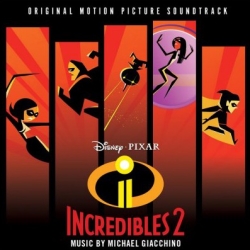
THE INCREDIBLES 2 – Michael Giacchino
 Original Review by Jonathan Broxton
14 years ago, in 2004, Michael Giacchino became the first composer to successfully make the transition from video games to movies when he was asked to score a Disney-Pixar animated action adventure super hero film called The Incredibles. Giacchino’s career to that point had been filled with high quality scores for games such as The Lost World, Call of Duty, Secret Weapons Over Normandy, and several entries in the groundbreaking Medal of Honor series, plus work on TV shows like Alias, but The Incredibles was his first film work of any significance. It was a sensation – the combination of jazzy John Barry-style big band arrangements and broad, exciting action music was a breath of fresh air, and essentially launched a career which has seen him become one of the most in-demand and well-loved composers in Hollywood, with his musical fingers in multiple franchise pies comprising Star Wars, Star Trek, Mission Impossible, Planet of the Apes, Jurassic Park, several Marvel super hero movies, and many other Pixar films, including the Oscar-winning Up. Now, after all this time, Giacchino is returning to the place it all started, with his score for the long-awaited sequel The Incredibles 2. Read more…
CONAN THE BARBARIAN – Basil Poledouris
 GREATEST SCORES OF THE TWENTIETH CENTURY
Original Review by Craig Lysy
Conan The Barbarian is based on the Conan stories penned by author Robert E. Howard. The movie adaptation tells the story of a young Conan who lives in the mythic Hyborean Age and suffers grievously at the hands of an evil ruler of the Snake Cult, Thulsa Doom, who kills his parents and sells him into slavery. Eventually after much suffering he gains his freedom and trains to become a mighty warrior. He then sets out to solve the riddle of steel and avenge his parent’s death. As such, this is a classic morality tale with an unambiguous hero and villain. The film was a commercial success, which spawned a sequel and served to reinvigorate the fantasy genre. Read more…
DEATH OF A NATION – Dennis McCarthy, John Beal
 Original Review by Jonathan Broxton
The world is in a strange place, politically. The rise of Donald Trump to the office of President of the United States has forced the country into a sort of ideological schism between Republicans and Democrats, red states and blue states, right wing and left wing. Across the world authoritarian leaders are flexing their muscles, from Vladimir Putin in Russia to Recep Tayyip Erdoğan in Turkey. In Europe, Britain’s still-controversial Brexit is causing discord in the European Union. There remains political turmoil in the Middle East, while in places like China people like Xi Jinping are looking to consolidate their power in increasingly draconian ways. I’m not going to get into the meat of any of those thorny issues in this review, but I will ask this: where does art fall into this equation? Does art and music have a role to play? If so, what is it? Read more…
A FISH CALLED WANDA – John Du Prez
 THROWBACK THIRTY
Original Review by Jonathan Broxton
A Fish Called Wanda is one of the best comedies of the 1980s – one part romance, one part crime caper, one part English farce – which teams several members of the classic Monty Python comedy troupe with several popular American stars. Jamie Lee Curtis and Kevin Kline play Wanda and Otto, American jewel thieves in London who, along with stuttering getaway driver Ken (Michael Palin) and East End gangster George (Tom Georgeson), plan an elaborate diamond heist. However, in-fighting and double-crossing within the gang leads to George being arrested, which proves to be a problem for everyone else as he is the only one who knows where the loot has been stashed. In order to get information about the location of the diamonds, Wanda decides to seduce George’s barrister, Archie Leach (the irrepressible John Cleese), a repressed middle-class Englishman stuck in a loveless marriage. Archie, flattered by the attention, immediately falls for Wanda, but shockingly Wanda also finds herself genuinely attracted in return – which causes more friction within the gang, not least because Otto and Wanda are also secretly lovers themselves. Read more…
MISSION: IMPOSSIBLE – FALLOUT – Lorne Balfe
 Original Review by Jonathan Broxton
When actor/producer Tom Cruise got together with director Brian De Palma in 1996 to make a brand new big-screen version of the classic 1960s spy TV series Mission: Impossible, I doubt that even he expected that he would still be playing the role of action hero Ethan Hunt 22 years later – yet, here we are. We’ve gone through multiple director changes in the intervening two decades – John Woo, J. J. Abrams, Brad Bird – but for the time being the series appears to have settled on Christopher McQuarrie, who with this film becomes the first director to make two Mission: Impossible films. Fallout is, in many ways, a continuation of the story established during Rogue Nation in 2015, as it sees Hunt and his IMF compatriots again locking horns with the shadowy villain Solomon Lane, whose sinister Syndicate organization continues to be a threat to the stability of the world. The globetrotting adventure sees the action moving from Berlin to Paris to London to the foothills of the Himalayas – and what action it is! The staggering set-pieces in the film include a HALO jump over Paris which Cruise did for real, a brutal three-way fight sequence in a bathroom, a high-speed motorbike chase around the Arc de Triomphe and beyond, an epic foot chase through the streets of Britain’s capital that contains a scene where Cruise smashed his ankle – for real – jumping from one building to another, and an exhilarating helicopter dogfight weaving between the towering peaks of the Kashmir. The film co-stars Henry Cavill, Ving Rhames, Simon Pegg, Rebecca Ferguson, Sean Harris, Angela Bassett, and Alec Baldwin, and has been widely acclaimed as one of the best action movies in recent years. Read more…

Shop at the Movie Music UK Store

Member of the

 MOVIE MUSIC UK