Archive
Under-the-Radar Round Up 2023, Part 6
 Original Reviews by Jonathan Broxton
I’m pleased to present the latest instalment in my on-going series of articles looking at the best under-the-radar scores from around the world. This article, the sixth of 2023, covers five scores from five very different projects from Japanese film and television, plus a delightful Christmas score from Norway.
TOMBSTONE – Bruce Broughton
 THROWBACK THIRTY
GREATEST SCORES OF THE TWENTIETH CENTURY
Original Review by Jonathan Broxton
Very few events in the colorful and sometimes fanciful history of the American West capture the imagination like the Gunfight at the O.K. Corral. The event did take place, in the boom town of Tombstone, Arizona, on October 26, 1881, and it did see the brothers Virgil, Morgan, and Wyatt Earp, plus their friend Doc Holliday, shooting it out with a loosely organized group of outlaws called the Cowboys, led by Ike Clanton. The real gunfight lasted just seconds, resulted in the deaths of three Cowboys, and was probably no different from many of the other gunfights that were regular occurrences in the old west. However, for some reason, the Gunfight, the story of the Earp family, and the subsequent Earp Vendetta Ride, have become near-mythical events in the romantic history of the period. Tombstone was at least the eighth film to depict these events on the silver screen, after such legendary western movies like 1946’s My Darling Clementine starring Henry Fonda, 1957’s Gunfight at the O.K. Corral starring Burt Lancaster and Kirk Douglas, and 1967’s Hour of the Gun starring James Garner. Read more…
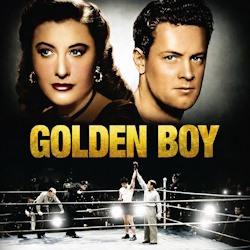
GOLDEN BOY – Victor Young
 GREATEST SCORES OF THE TWENTIETH CENTURY
Original Review by Craig Lysy
In 1938 Columbia Pictures bought the film rights to the play Golden Boy by Clifford Odets for $100,000, intending to showcase their star Jean Arthur with Frank Capra directing. However, when Capra was unavailable, Rouben Mamoulian was tasked with directing, which resulted in cast changes. William Perlberg was assigned production and the team of Lewis Meltzer, Daniel Taradash, Sarah Mason and Victor Heerman wrote the screenplay. Barbara Stanwyck was cast to star in the film as Lorna Moon, with Adolphe Menjou as Tom Moody, Joseph Calleia as Eddie Fuseli, and Lee J. Cobb as Papa Bonaparte. In an audacious decision, Mamoulian decided against studio wishes, to cast the young William Holden (21 years old) in his first acting role as Joe Bonaparte, a decision that ended up launching his career as a young heart throb. Read more…
LA SOCIEDAD DE LA NIEVE/SOCIETY OF THE SNOW – Michael Giacchino
 Original Review by Jonathan Broxton
In October 1972 a plane carrying a rugby team from Montevideo, Uruguay, who were on their way to play a game in Santiago, Chile, crashed high in the Andes mountains. 15 of the 45 passengers and crew died on impact but the others – some of whom were badly injured – quickly had to figure out how to survive. During the following 72 days, the survivors suffered extreme hardships, including exposure, starvation, and an avalanche, which led to the deaths of thirteen more passengers; famously, but reluctantly, they were forced to resort to cannibalism to stave off death due to lack of food. Eventually two of the rugby players – Nando Parrado and Roberto Canessa – decided to strike out for help. They climbed a 15,000 foot mountain without gear, and then hiked almost 50 miles. It took them almost 10 days, but they finally stumbled into a remote village, where they could obtain help and call for the Chilean Army to rescue the other survivors. This incredible story was turned into a book, Alive: The Story of the Andes Survivors by Piers Paul Read, and then into an acclaimed film, Alive, in 1993. This new film – La Sociedad de la Nieve, or Society of the Snow – is the first Spanish-language film version of the story, and is directed by acclaimed filmmaker Juan Antonio Bayona. Read more…
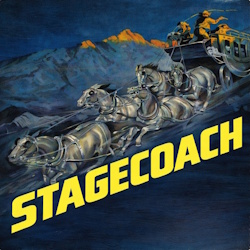
STAGECOACH – Richard Hageman
 GREATEST SCORES OF THE TWENTIETH CENTURY
Original Review by Craig Lysy
Director John Ford came upon a short story, “The Stage to Lordsburg” by Dudley Nichols, which inspired him for his next film project, and whose film rights he purchased for $2,500. Yet he had difficulty securing financial backing as the studios believed “A” western pictures were out of vogue, and they had no confidence that John Wayne could carry the film. Ford was insistent on retaining Wayne and eventually hammered out a deal with independent producer Walter Wanger who would manage production with a $531,374 budget. Ford would direct and Dudley Nichols was hired to write the screenplay. A fine cast was assembled, including Claire Trevor as Dallas, John Wayne as Ringo Kid, Andy Devine as Buck, John Carridine as Hatfield, Thomas Mitchell as Doc Boone, Louise Platt as Lucy Mallory, George Bancroft as Marshall Curley Wilcox, Donald Meek as Samuel Peacock, Berton Churchill as Henry Gatewood, and Time Holt as Lieutenant Blanchard. Read more…
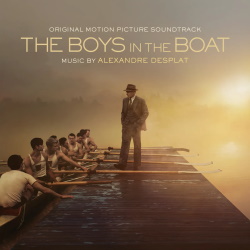
THE BOYS IN THE BOAT – Alexandre Desplat
 Original Review by Jonathan Broxton
The Boys in the Boat is an inspirational real life sports drama which tells the story of the University of Washington’s eight-oared rowing crew, who overcame enormous physical and social obstacles – not least the impact of the Great Depression – to represent the United States at the 1936 Summer Olympics in Berlin, and win the gold medal ahead of the heavily fancied and Hitler-backed German crew. The film focuses specifically on Joe Rantz, a kid from a poor background who was essentially homeless before he went to university, and initially saw his rowing career as a means to an end to put food on the table more than he did a chance to achieve sporting greatness. The film stars Callum Turner as Rantz, and Joel Edgerton as the college’s rowing coach Al Ulbrickson; it was written by Mark L. Smith, adapting the non-fiction novel of the same name by Daniel James Brown, and is directed by global movie star and filmmaker George Clooney. Read more…
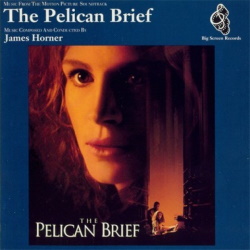
THE PELICAN BRIEF – James Horner
 THROWBACK THIRTY
Original Review by Jonathan Broxton
The Pelican Brief is a legal thriller directed by Alan J. Pakula, adapted from the best-selling novel by John Grisham. The film stars Julia Roberts as Darby Shaw, a law student at Tulane University, who becomes romantically involved with her professor, Thomas Callahan (Sam Shepard). After two Supreme Court justices are assassinated, Darby writes a legal brief speculating about the possible motives behind the murders. In this document – which she calls the Pelican Brief – she suggests a theory involving an intricate plot to control the balance of power in the United States Supreme Court; however, after it is published, it quickly becomes apparent that Darby’s speculations are very close to the actual truth, and before long she finds herself targeted by assassins hired by the perpetrators, who are determined to eliminate anyone who may know about their plans. With nowhere else to turn, Darby contacts Gray Grantham (Denzel Washington), an investigative journalist, and together they race against time to uncover the identity of the people behind the murders and bring the conspiracy to light. Read more…
POOR THINGS – Jerskin Fendrix
 Original Review by Jonathan Broxton
The latest film from the unconventional cinematic mind of director Yorgos Lanthimos is Poor Things, which if you were to distill it down to its core could be best described as a feminist take on the Frankenstein story. The film is set in Victorian London and stars Emma Stone as Bella Baxter, a child-like young woman in the care of Godwin Baxter, an eminent surgeon with horrific facial scars (played by Willem Defoe, doing an excellent Edinburgh accent). It is revealed to Godwin’s student Max McCandles (Rami Youssef) that Bella is actually a resurrected suicide victim whom Godwin revived by transplanting her brain with that of her unborn child, resulting in her literally being a baby in a woman’s body. Initially Godwin and McCandles teach Bella as one would an infant, and McCandles falls in love with her and asks for her hand in marriage; however, as Bella matures, she starts to desire more freedom, and eventually leaves on a grand tour of Europe with Godwin’s lawyer Duncan Wedderburn (Mark Ruffalo). This leads Bella on a journey of philosophical and sexual self-discovery – a journey which is interrupted when her past begins to catch up with her. Read more…
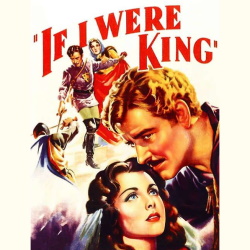
IF I WERE KING – Richard Hageman
 GREATEST SCORES OF THE TWENTIETH CENTURY
Original Review by Craig Lysy
In 1937 Paramount Pictures studio executives were seeking a period piece as a vehicle to showcase studio star Ronald Coleman. They found their story with the 1901 biographical novel and play titled “If I Were King” by Justin Huntly McCarthy. Frank Lloyd was placed in charge of production with a $1 million budget, would also direct, and Preston Sturges was hired to write the screenplay. Ronald Coleman would star as Francois Villon, joined by Basil Rathborne as King Louis XI, Frances Dee as Katherine DeVaucelles, Ellen Drew as Huguette, Bruce Lester as Noel le Jolys, and C. V. France as Father Villon. Read more…
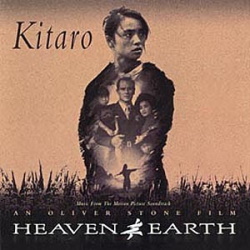
HEAVEN & EARTH – Kitaro
 THROWBACK THIRTY
Original Review by Jonathan Broxton
Heaven & Earth is the third in director Oliver Stone’s trilogy of films looking at the Vietnam War. 1986’s Platoon followed the exploits of the young soldiers who were shipped off far from home and forced to endure the most horrific conditions. 1989’s Born on the Fourth of July looked at what happened to those same young men when they returned home to America, maimed and traumatized by what they had seen and done. Heaven & Earth looks at the same events from the point of view of the Vietnamese themselves. Stone’s sprawling, sometimes confusing, sometimes compelling movie stars débutante Hiep Thi Le as a simple Vietnamese woman, Le Ly Hayslip, who finds herself caught up in the violent upheaval of the Vietnam war and, inexplicably, falling in love with a kindly American soldier played by Tommy Lee Jones, who eventually takes her home with him to San Diego. Unfortunately, the film was not as well-received as its two predecessors, and today has mostly fallen into obscurity, which is a shame, especially from the point of view of its music. Read more…
Under-the-Radar Round Up 2023, Part 5
Original Reviews by Jonathan Broxton
I’m pleased to present the latest instalment in my on-going series of articles looking at the best under-the-radar scores from around the world. This article, the fifth of 2023, covers five scores for projects from across the film music globe, and includes music from a groundbreaking Polish animated film, a Swedish Christmas animated film, an epic Japanese animated film, a Vietnamese period romantic drama, and a Polish period drama based on a classic novel.
THE JAZZ SINGER – Louis Silvers
 GREATEST SCORES OF THE TWENTIETH CENTURY
Original Review by Craig Lysy
The genesis of The Jazz Singer film lay with writer Samson Raphaelson, who after seeing 30-year-old Al Jolson perform decided to wrote a short story called “Day of Atonement” about a Jew named Jackie Rabinowitz, based on Jolson’s life. He then adapted the story into a successful play titled “The Jazz Singer”, which became a sensation in 1925. Warner Brothers executives rolled the dice and bought the film rights; along with the Vitaphone Corporation they would finance the film with a $422,000 budget, Darryl F. Zanuck would manage production, Alan Crosland would direct, and Alfred A. Cohn would write the screenplay. Sam Warner, nicknamed “Father of the Talkies,” made the creative decision to synchronize the film’s music. Later, he insisted that Al Jolson’s ad-libbed speech (about two minutes) also be included in the movie. Tragically Warner did not live to see his pioneering efforts come to fruition as he died the day before opening night. For the cast, Al Jolson would star as Jakie Rabinowitz, joined by Warner Oland as Canto Rabinowitz, Eugenie Besserer as Sara Rabinowitz, and May McAvoy as Mary Dale. Read more…
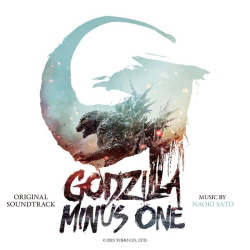
GODZILLA MINUS ONE – Naoki Sato
 Original Review by Jonathan Broxton
Back in 1954 director Ishiro Honda and Toho Pictures introduced the world to Godzilla. While on the surface Godzilla was ostensibly about a giant monster lizard attacking and destroying Tokyo, and ranges from sensible to desperately silly in terms of tone and sophistication, the film was an enormous success, and the subsequent franchise became enormous – it now comprises 33 Japanese films, five American ones, and innumerable TV shows, comic books, and more. This latest one, Godzilla Minus One, is the first live-action Japanese Godzilla film in many years, and in many ways it is returning to its roots with its 1940s setting. It stars Ryunosuke Kamiki as Kōichi Shikishima, a former kamikaze pilot who encounters but fails to kill a large lizard on an isolated Pacific island, and who years later becomes part of the team charged with stopping the same lizard – which has since mutated to enormous size as a result of the United States’s nuclear tests on Bikini Atoll – when it emerges from the ocean and begins to attack Japan. Read more…
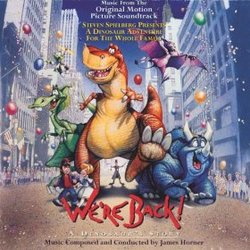
WE’RE BACK! A DINOSAUR’S STORY – James Horner
 THROWBACK THIRTY
Original Review by Jonathan Broxton
One of the sillier animated films that James Horner scored in his career was the 1993 effort We’re Back! A Dinosaur’s Story, which was adapted by Moonstruck screenwriter John Patrick Shanley from a children’s book by Hudson Talbott. The story follows four dinosaurs who are transformed into sentient beings by a time-travelling scientist named Captain Neweyes; the dinosaurs are then brought by him to modern-day New York where, inevitably, they get lost, and have to rely on their new friends (a pair of runaway children) to help them – all while also trying to avoid the clutches of Professor Screweyes, Captain Neweyes’s evil twin brother, who runs a demented circus, and wants the dinosaurs to be his star attraction. The plot doesn’t really matter as the film is largely forgotten today, despite the fact that it has the most bafflingly eccentric voice cast of any animated film I have ever come across – actor John Goodman, British sitcom star Felicity Kendal, legendary newsman Walter Cronkite, chef Julia Child, and chat show host Jay Leno, among others. It was produced by Steven Spielberg – who had a slightly more successful dinosaur movie come out in 1993 – and had four directors, including animation specialist Phil Nibbelink, and his compatriot Simon Wells, who would later go on to direct movies such as Balto and The Prince of Egypt. Read more…
NAPOLEON – Martin Phipps
 Original Review by Jonathan Broxton
Considering what a major figure in world history he was, I don’t remember ever seeing a proper biopic of Napoleon Bonaparte before. Most people know the basics of Napoleon’s life – he was born in Corsica in 1769, and rapidly ascended the ranks of the French army, showcasing his tactical brilliance in various campaigns. In 1799 he seized power in France in a coup, and later in 1804 crowned himself Emperor. Napoleon had a fractious political relationship with England – and indeed with most of the rest of Europe – for most of his life, and he subsequently engaged in many battles during what became known as the Napoleonic Wars. His victory at Austerlitz in 1805 established him as a military genius, but his ambition for European dominance led to a costly and disastrous invasion of Russia in 1812, which eventually resulted in his abdication and exile to the island of Elba in 1814. He briefly returned to power later that year, but suffered a final defeat by the Duke of Wellington at the Battle of Waterloo in 1815 and he was ultimately exiled to the remote island of Saint Helena, where he died in 1821. During this time Napoleon also engaged in a torrid love affair with the aristocratic widow Josephine de Beauharnais, who eventually became his wife. Read more…

Shop at the Movie Music UK Store

Member of the

 MOVIE MUSIC UK