Archive
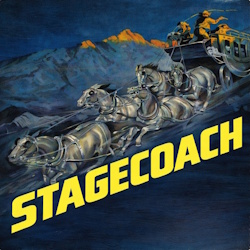
STAGECOACH – Richard Hageman
 GREATEST SCORES OF THE TWENTIETH CENTURY
Original Review by Craig Lysy
Director John Ford came upon a short story, “The Stage to Lordsburg” by Dudley Nichols, which inspired him for his next film project, and whose film rights he purchased for $2,500. Yet he had difficulty securing financial backing as the studios believed “A” western pictures were out of vogue, and they had no confidence that John Wayne could carry the film. Ford was insistent on retaining Wayne and eventually hammered out a deal with independent producer Walter Wanger who would manage production with a $531,374 budget. Ford would direct and Dudley Nichols was hired to write the screenplay. A fine cast was assembled, including Claire Trevor as Dallas, John Wayne as Ringo Kid, Andy Devine as Buck, John Carridine as Hatfield, Thomas Mitchell as Doc Boone, Louise Platt as Lucy Mallory, George Bancroft as Marshall Curley Wilcox, Donald Meek as Samuel Peacock, Berton Churchill as Henry Gatewood, and Time Holt as Lieutenant Blanchard. Read more…
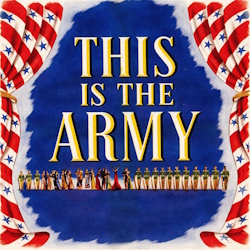
THIS IS THE ARMY – Irving Berlin, Ray Heindorf
 GREATEST SCORES OF THE TWENTIETH CENTURY
Original Review by Craig Lysy
The Broadway play “This Is The Army” by James Coll and Irving Berlin was very successful, and Warner Brothers Studio executive Jack L. Warner decided to bring the story to the big screen in a patriotic effort to boost public morale during World War II. Warner and Hal B. Wallis purchased the film rights, would oversee production with a $1.87 million budget, Michael Curtiz was tasked with directing, and Casey Robinson and Claude Binyon would write the screenplay. A cast for the ages was assembled, including, as themselves: Irving Berlin, Frances Langford, Joe Louis, Kate Smith, and Ezra Stone. Joining them would be George Murphy as Jerry Jones, Joan Leslie as Eileen Dibble, George Tobias as Maxie Twardofsky, Alan Hale as Sergeant McGee, and Ronald Reagan as Corporal Johnny Jones. Read more…
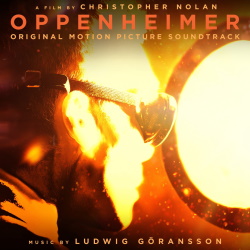
OPPENHEIMER – Ludwig Göransson
 Original Review by Jonathan Broxton
Now I am become death, the destroyer of worlds.
In lesser hands, a movie about the life of J. Robert Oppenheimer could have been a dusty, staid affair. Oppenheimer, for those who don’t know, was a theoretical physicist who, in 1942, was recruited by the US government to lead the Manhattan Project, a top-secret military program created with one goal: to design and build a nuclear weapon before Adolf Hitler and the Nazis did the same, so that they could bring about the end of World War II. Oppenheimer and his colleagues successfully built several bombs over the course of many years, culminating in the detonation of two such devices over the Japanese cities of Nagasaki and Hiroshima in 1945. However, despite his ‘success’ and initial celebrity, Oppenheimer was haunted by the ethical questions that surrounded his creation, and suffered a great deal of personal and political turmoil in the years that followed. This latter issue was compounded by the fact that, early in his life, Oppenheimer had pro-communist opinions, and was friendly with many members of the US Communist Party – something that certainly wouldn’t fly with the House Un-American Activities Committee and the McCarthy-era politics of the 1950s. Read more…
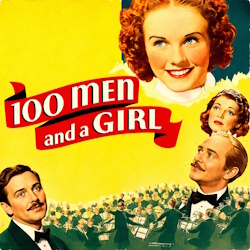
ONE HUNDRED MEN AND A GIRL – Charles Previn
 GREATEST SCORES OF THE TWENTIETH CENTURY
Original Review by Craig Lysy
In 1937 Universal Pictures decided to embark on a new musical comedy based on an original story by writer Hans Kraly. Joe Pasternak and Charles R. Rogers were assigned production with a $762,000 budget, Henry Koster was tasked with directing, and Kraly was hired to adapt his story and write the screenplay. For their cast, the studios premiere star Deanna Durbin, who was also a vocally trained soprano, would star as Patsy Cardwell. Joining her would be Adolphe Menjou as John Cardell, renown conductor Leopold Stokowski as himself, Eugene Pallette as John R, Frost, and Alice Brady as Mrs. Frost. Read more…
ONE NIGHT OF LOVE – Victor Schertzinger, Gus Kahn, Louis Silvers
 GREATEST SCORES OF THE TWENTIETH CENTURY
Original Review by Craig Lysy
Columbia Pictures was seeking a romantic musical set in the world of opera. Director Victor Schertzinger brought them a story “One Night of Love” by Charles Beahan and Dorothy Speare that seemed to fit the bill. Columbia executives were impressed and Schertzinger was given the green light to proceed with the project as director, Harry Cohn tasked with overseeing production with a budget of $500,000, and James Gow, S.K. Lauren, and Edmund H. North were hired to write the screenplay. A fine cast was assembled, which included Grace Moore as Mary Barrett, Tullio Carminati as Giulio Monteverdi, Lyle Talbot as Bill Houston, and Mona Barie as Lally. Read more…
ANCHORS AWEIGH – Jule Styne, Sammy Cahn, Georgie Stoll
 GREATEST SCORES OF THE TWENTIETH CENTURY
Original Review by Craig Lysy
Gene Kelly caught the eye of Hollywood studios who were impressed by his athletic American style of dancing, as well as his talent as a choreographer. Seeking to capitalize on his talent, MGM studios offered him a contract. This led them to task him to choreograph, dance and star in the studio’s next planned musical – “Anchors Aweigh”. The film was yet another one of MGM Studios penchant for musicals. It would be the first of three “Buddy” films, which teamed Gene Kelly with Frank Sinatra. Production was assigned to Joe Pasternak with a budget of $2.6 million, Natalie Marcin was hired to write the story, with Isobel Lennart writing the screenplay, and George Sidney was tasked with directing. For the cast, Frank Sinatra would star as Clarence “Brooklyn” Doolittle, Gene Kelly as Joe Brady and Kathryn Grayson as Susan Abbott. Read more…
IM WESTEN NICHTS NEUES/ALL QUIET ON THE WESTERN FRONT – Volker Bertelmann
 Original Review by Jonathan Broxton
The 1929 German-language novel Im Westen Nichts Neues – known in English as All Quiet on the Western Front – by Erich Maria Remarque is one of the most important anti-war novels ever written. It tells the semi-autobiographical story of Remarque’s own experiences fighting in the trenches of western Europe during World War I, and follows a young soldier named Paul Bäumer, who over the course of the book is transformed from an eager and enthusiastic patriot fighting for the glory of the vaterland, into a bitter, broken shell of a man, utterly devastated by the physical and mental anguish of war. It touches on several important themes, ranging from explorations of nationalism and blind patriotism, to the futility of war itself, especially the trench warfare of WWI where literally millions of soldiers, on both sides of the conflict, were slaughtered while trying to gain little more than a few yards of ground. The book was banned and burned in Nazi Germany, naturally, but has since become regarded as a modern classic, and is now one of the most revered pieces of German-language literature. Read more…
AN AMERICAN IN PARIS – George Gershwin, Ira Gershwin, Saul Chaplin, Johnny Green
 GREATEST SCORES OF THE TWENTIETH CENTURY
Original Review by Craig Lysy
Producer Arthur Freed took in a Hollywood Bowl performance of George Gershwin’s music from the Jazz Age and was inspired by the show’s “An American in Paris” number. For the next three years he sought support in bringing his film version to fruition. He found a partner in Gene Kelly who sold MGM executives on the concept of a dance film by screening the film “The Red Shoes” (1948). Arthur Freed was assigned production with a $2.7 million budget, Alan Jay Lerner was hired to write the screenplay, Gene Kelly would manage the choreography, and Vincente tasked with directing, with assistance from Gene Kelly. Kelly had seen Leslie Caron performing a ballet in Paris and he personally recruited her for the role of Lise Bouvier. Joining her would be Gene Kelly as Jerry Mulligan, Oscar Levant as Adam Cook, George Guétary as Hank Baurel, Nina Foch as Milo Roberts and Eugene Borden as Georges Mattieu. Read more…
ALEXANDER’S RAGTIME BAND – Irving Berlin, Alfred Newman
 GREATEST SCORES OF THE TWENTIETH CENTURY
Original Review by Craig Lysy
In 1937 composer Irving Berlin was solicited by 20th Century Fox studio executive Darryl F. Zanuck to write a biopic about his life to be called “Alexander’s Ragtime Band, which would showcase some of his greatest songs. Berlin balked, believing such a story would be too intrusive. Zanuck pivoted and asked him if he could instead write a story, which could feature his greatest songs. He agreed, collaborated with screen writer Richard Sherman, and their story was accepted. Zanuck took personal charge of production, hired Kathryn Scola and Lamar Trotti to write the screenplay, and tasked Henry King with directing. The cast would be anchored by singers Ethel Merman as Jerry Allen, and Alice Faye as Stella Kirby. Joining them would be Tyrone Power as Alexander, Don Ameche as Charlie Dwyer and Jack Haley as Davey Lane. Read more…
ANNIE GET YOUR GUN – Irving Berlin, Adolph Deutsch, Roger Edens
 GREATEST SCORES OF THE TWENTIETH CENTURY
Original Review by Craig Lysy
The Broadway musical “Annie Get Your Gun”, which was based on the legendary Annie Oakley, stared Ethel Merman and had a very successful theatrical run of 1,147 performances. MGM studios took notice and decided that they would continue their parade of musicals with a new one based on Annie Oakley for their marquee star Judy Garland. They purchased the film rights, assigned production to Arthur Freed and Roger Edens with a $3.73 million budget. Sidney Sheldon was hired to write the screenplay adaptation of the novel “Annie Get Your Gun” (1946) by Herbert Fields. Filming conflicts with Garland led to the director being replaced twice, with Busby Berkeley and Charles Walters exiting and George Sidney finally taking up the reins. For the cast Judy Garland would star as Annie Oakley, however clashes with Berkeley exacerbated her health and insecurity problems and she was ultimately fired. Betty Hutton was hired as her replacement and joined by; Howard Keel and Frank Butler, Louis Calhern as Colonel William F. “Buffalo Bill” Cody, Keenan Wynn as Charlie Davenport, Benay Venuta as Dolly Tate, and J. Carrol Naish as Chief Sitting Bull. Read more…
ALADDIN – Alan Menken, Howard Ashman, Tim Rice
 THROWBACK THIRTY
Original Review by Jonathan Broxton
The enormous success of Beauty and the Beast in 1991 ushered in what is now commonly known as the Disney Renaissance, which brought to an end a period of comparative creative and commercial failure for mouse house, and initiated what was quicky became a decade of constant growth and acclaim. Lyricist Howard Ashman, who had been a major part of Beauty and the Beast’s success alongside his composing partner Alan Menken, had also been working on a draft treatment for a potential Aladdin movie, based on the Arabic folktale of the same name from the One Thousand and One Nights, and the screenplay went through three drafts before then-Disney Studios president Jeffrey Katzenberg agreed to its production. The finished film is now one of the most beloved animated films of all time; it tells the story of street urchin Aladdin, who finds a magical lamp hidden in a cave and inadvertently releases from it a powerful genie who can grant him three wishes. Aladdin wishes to be a rich prince to that he can court the beautiful Princess Jasmine, the daughter of the sultan, but in doing so falls foul of Jafar, the sultan’s vizier advisor, who covets the power of the lamp for himself. Read more…
THE JOLSON STORY – Morris Stoloff
 GREATEST SCORES OF THE TWENTIETH CENTURY
Original Review by Craig Lysy
Following the huge success of MGM’s musical Meet Me In St. Louis in 1944, Columbia Pictures decided to cash in on the genre. They chose to film a fictionalized biopic of the renowned singer, comedian, actor and vaudevillian Al Jolson, who in the 1920s self-billed himself as “The World’s Greatest Entertainer”. A team consisting of Stephen Longstreet, Sidney Buchman, Harry Chandlee and Andrew Solt were hired to create the screenplay, Sidney Skolsky was tasked with production with a budget of $2 million, and Alfred E. Green given the reins to direct. A fine cast was assembled, including Larry Parks as Al Jolson, Evelyn Keys as Julie Benson, William Demarest as Steve Martin, and Bill Goodwin as Tom Baron. Read more…
YANKEE DOODLE DANDY – George M. Cohan, Ray Heindorf, Heinz Roemheld
 GREATEST SCORES OF THE TWENTIETH CENTURY
Original Review by Craig Lysy
In 1941 Warner Brothers Studios was seeking ideas for a new musical production. They finally conceived of a musical biopic film about the legendary American entertainer, playwright, composer, lyricist, actor, singer, dancer and theatrical producer George M. Cohan. They secured Cohan’s blessing and studio executives Jack L. Warner and Hal B. Wallis would manage production with a $1.5 million budget. Robert Buckner and Edmund Joseph were hired to write the screenplay and Michael Curtiz took the reins to direct. The cast included James Cagney as George M. Cohan, Joan Leslie as Mary Cohan, Walter Huston as Jerry Cohan, Richard Whorf as Sam Harris, Rosemary DeCamo as Nellie Cohan, and Irene Manning as Fay Templeton. Read more…
DUMBO – Oliver Wallace, Frank Churchill
 GREATEST SCORES OF THE TWENTIETH CENTURY
Original Review by Craig Lysy
The children’s story of Dumbo, written by Helen Aberson-Mayer in 1939, was presented to studio executive Walt Disney, who was inspired and so tasked screenplay writers Joe Grant and Dick Huemer, to adapt it for the big screen. After suffering loses with Pinocchio and Fantasia in 1940 Disney managed production, but was tight-fisted with company financial resources and so only budgeted $813,000, which as expected expanded ultimately to $950,000. The screenplay was written by Joe Grant, Dick Huemer and Otto Englander, while Supervising Director was assigned to Ben Sharpsteen. The voice cast would consist of Edward Brophy as Timothy Q. Mouse, Verna Felton as the Elephant Matriarch, Cliff Edwards as Dandy Crow, Herman Bing as the Ringmaster, and Sterling Holloway as Mr. Stork. Read more…
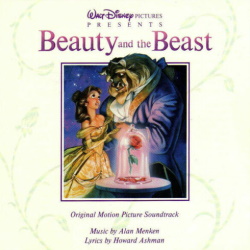
BEAUTY AND THE BEAST – Alan Menken, Howard Ashman
 THROWBACK THIRTY
Original Review by Jonathan Broxton
When looking back at the period now, considering their enormous success and influence, it’s easy to forget that Disney was a film studio in trouble in the 1980s. Their first four animated films during the decade – The Fox and the Hound, The Black Cauldron, The Great Mouse Detective, and Oliver & Company – had not been particularly well-received, while the success of the fifth, The Little Mermaid in 1989, was certainly not seen as a guarantor of future achievement. Everything changed with the 1991 release of Beauty and the Beast, which became the first animated film ever to be nominated for an Oscar for Best Picture, and subsequently set in motion a decade of almost unparalleled cinematic dominance for the house that Walt built. Read more…

Shop at the Movie Music UK Store

Member of the

 MOVIE MUSIC UK