Archive
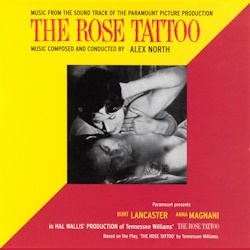
THE ROSE TATTOO – Alex North
 GREATEST SCORES OF THE TWENTIETH CENTURY
Original Review by Craig Lysy
Renowned director Hal Wallis saw opportunity with the Broadway production of “The Rose Tattoo” by Tennessee Williams, which opened at the Martin Beck Theater in New York on February 3, 1951, ran for 306 performances, and won four Tony Awards. He stated in his memoirs that he saw its premiere and “knew at once that I had to buy it. It was sure to be a great success. Audiences would identify with its earthiness, its sexuality, its deeply felt emotions and naturalistic dialogue.” He purchased the film rights, and sold his vision to Paramount Pictures, who placed him in charge of production. Daniel Mann was hired to direct, and author Tennessee Williams would write the screenplay. For the cast, Williams was insistent on Italian actress Anna Magnani playing Serafina Delle Rose, and this would be her first English speaking role. Joining her would be Burt Lancaster as Alvaro Mangiacavallo, Marissa Pava as Rosa Delle Rose, and Ben Cooper as Jack Hunter. Read more…
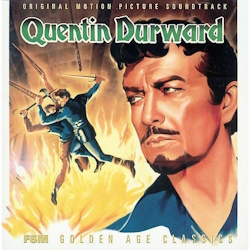
QUENTIN DURWARD – Bronislau Kaper
 GREATEST SCORES OF THE TWENTIETH CENTURY
Original Review by Craig Lysy
In 1951 MGM sought to capitalize on the huge commercial success of Robert Taylor in “Ivanhoe” with him starring in another period piece. To that end they chose to adapt the 1823 novel “Quentin Durward” by Sir Walter Scott. Pandro S. Berman was again assigned production with a $2.47 million budget, Robert Ardey and George Frooeschel were hired to write the screenplay, and Richard Thorpe was tasked with directing. For the cast, Robert Taylor would star in the titular role as the hero Quentin Durward, with Kay Kendall as Isabelle, Countess of Macroy, Robert Morley as King Louis XI, George Cole as Hayraddin, Alec Clunes as Charles the Bold, Duke of Burgundy and Duncan Lamont as Count Philip De Creville. Read more…
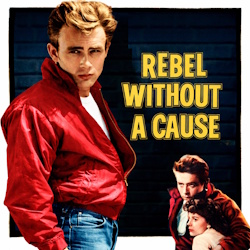
REBEL WITHOUT A CAUSE – Leonard Rosenman
 GREATEST SCORES OF THE TWENTIETH CENTURY
Original Review by Craig Lysy
Warner Brothers Pictures was looking for a vehicle to showcase their new, young contract actor James Dean. In 1954 they decided that they had finally found it with a 1944 novel by Robert M. Lindner, “Rebel Without A Cause: The Hypnoanalysis of a Criminal Psychopath”. They purchased the film rights, David Weisbart was assigned production with a $1.5 million budget, Stewart Stern was hired to write the screenplay, and Nicholas Ray was tasked with directing. For the cast, James Dean would star as Jim Stark, and joining him would be Natalie Wood as Judy, Sal Mineo as John “Plato” Crawford, Jim Backus as Frank Stark, Ann Doran as Carol Stark, Corey Allen as Buzz Gunderson, and William Hopper as Judy’s father. Read more…
OKLAHOMA! – Richard Rodgers, Oscar Hammerstein II, Adolph Deutsch, Robert Russell Bennett, Jay Blackton
 GREATEST SCORES OF THE TWENTIETH CENTURY
Original Review by Craig Lysy
In 1943 Richard Rodgers and Oscar Hammerstein II’s “Oklahoma!” opened on Broadway and ran for an unprecedented 2,212 performances. Studios began a bidding war to acquire the film rights in hope of capitalizing on the play’s phenomenal success. Eventually Magna Theatre Corporation prevailed, purchasing the rights for an astounding $1 million. It would take eleven years to get the project off the ground as the company insisted on using a new widescreen filming process called “Todd-AO”. Arthur Hornblow Jr. was assigned production with a $6.8 million budget, Sonya Levien and William Ludwig were hired to write the screenplay, Agnes de Mille would stage the choreography, and Fred Zinneman would direct his first, and only musical of his career. A fine cast was assembled, which included Gordon MacRae as Curly McLain, Shirley Jones as Laurey Williams, Gloria Grahame as Ado Annie Carnes, Charlotte Greenwood as Aunt Eller, Rod Steiger as Jud Fry, Gene Nelson as Will Parker, and Eddie Albert as Ali Hakim. Read more…
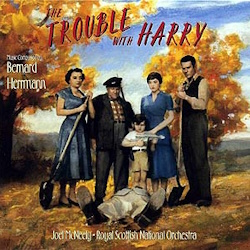
THE TROUBLE WITH HARRY – Bernard Herrmann
 GREATEST SCORES OF THE TWENTIETH CENTURY
Original Review by Craig Lysy
Director Alfred Hitchcock took a liking to the 1950 black comedy novel “The Trouble With Harry” by Jack Trevor Story and purchased the film rights for $11,000. Hitchcock used his own production company to finance the film, with him overseeing production with a $1.2 million budget. He would also direct and hired John Michael Hayes to write the screenplay. For casting, Hitchcock embarked on an experiment – not hiring any established stars as he believed that many times a big star can hinder the narrative flow of his movie. As such, the cast included; Edmund Gwenn as Captain Albert Weiss, John Forsythe as Sam Marlowe, Shirley MacLaine in her acting debut as Jennifer Rogers, Mildred Natwick as Miss Ivy Gravely, Mildred Dunnock as Mrs. Wiggs, James Mathers as Arnie Rogers, and Royal Dano as Deputy Sheriff Calvin Wiggs. Read more…
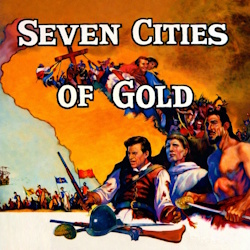
SEVEN CITIES OF GOLD – Hugo Friedhofer
 GREATEST SCORES OF THE TWENTIETH CENTURY
Original Review by Craig Lysy
In 1951 the New York Times declared the novel “The Nine Days of Father Sierra” (1951) by Isabelle Gibson Ziegler a “brief, tender and impressive novel”. Sensing opportunity to 20th Century Fox Studios purchased the film rights and prepared for production in 1952. The project however stalled and in 1955 was reassigned for production to Robert D. Webb and his wife Barbara McLean with a $1.5 million budget. Webb would also take on directing duties, and he hired Richard L. Breen to write the screenplay. Webb brought in a fine cast, which included Richard Egan as Lieutenant José Mendoza, Anthony Quinn as Captain Gaspar de Portolà, Michael Rennie as Father Junipero Serra, Jeffrey Hunter as Matuwir, and Rita Moreno as Ula. Read more…
MURDER IN THE FIRST – Christopher Young
 THROWBACK THIRTY
GREATEST SCORES OF THE TWENTIETH CENTURY
Original Review by Jonathan Broxton
Every person who develops a liking for film music has a score, or group of scores, which are special to them on a personal level. They are the ones which first piqued their interest, first caught their attention, maybe inspired them to go out and buy a physical album for the first time, and eventually led them down the path to full-blown film music fandom. I have a few of them myself: Star Wars, of course, Raiders of the Lost Ark, and E.T. by John Williams. Dances With Wolves, and the James Bond scores of John Barry. Several James Horner scores, including the significant mid-1990s trio comprising Legends of the Fall, Braveheart, and Apollo 13. However, perhaps my most unexpected ‘keystone score’ is this one: Murder in the First by Christopher Young. The film opened in cinemas in England in December 1995, almost a year after it premiered in the United States, and I went to see it at the old Warner Village Cinema in Meadowhall Shopping Centre in Sheffield. I have a vivid memory of coming out of the cinema, meeting up with my mum in the foyer, and barely being able to speak because I had been so emotionally overwhelmed by the film, and especially its music. Read more…
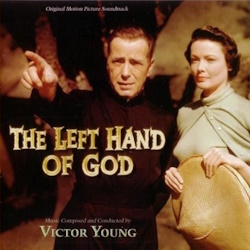
THE LEFT HAND OF GOD – Victor Young
 GREATEST SCORES OF THE TWENTIETH CENTURY
Original Review by Craig Lysy
Renowned 20th Century Fox producer Buddy Adler had a penchant for making films full of conflict, forbidden love, that were often set in exotic Asian locales. He saw opportunity after reading the 1951 novel “The Left Hand of God” by William Edmund Barrett and decided its story would translate well to the big screen. He sold his vision to CEO Darryl F. Zanuck and secured his blessing. Adler would oversee production with a $1.785 million budget, Edward Dmytryk was tasked with directing, and Alfred Hayes would adapt the novel and write the screenplay. A fine cast was assembled, with Humphrey Bogart as James Carmody, Gene Tierney as Anne Scott, Lee J. Cobb as Mieh Yang, Agnes Moorehead as Beryl Sigman, and E. G. Marshall as Dr. David Sigman. Read more…
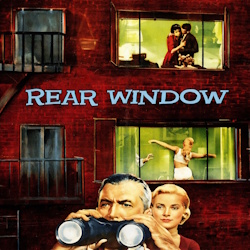
REAR WINDOW – Franz Waxman
 GREATEST SCORES OF THE TWENTIETH CENTURY
Original Review by Craig Lysy
Following the success of his film Dial M For Murder in 1954, director Alfred Hitchcock embarked on his next project that would be based on a 1942 short story mystery thriller “It Had To Be Murder” by Cornell Woolrich. It offered him a perfect ‘Hitchcock’ story to bring to the big screen and he secured financial support for Paramount pictures and Patron Incorporated to purchase the film rights. Hitchcock would personally manage production with a $1 million budget, direct, and John Michael Hayes was hired to write the screenplay. A stellar cast was assembled, including; James Stewart as Jeff Jeffries, Grace Kelly as Lisa Carol Fremont, Wendell Corey as Detective Tom J. Doyle, Thelma Ritter as Stella, and Raymond Burr as Lars Thorwald. Read more…
THE KENTUCKIAN – Bernard Herrmann
 GREATEST SCORES OF THE TWENTIETH CENTURY
Original Review by Craig Lysy
Actor Burt Lancaster was approaching forty years of age in 1952 and decided that he wanted to expand his career options. He came across the 1953 novel The Gabriel Horn by Felix Holt and decided it would be an excellent vehicle to showcase his talent. He formed a production company Hecht-Lancaster Productions with friend and producer Harold Hecht, purchased the film rights, hired A. B. Guthrie Jr. to write the screenplay, and for the first time in his career, personally took the reins to direct. Lancaster’s application to the Director’s Guild was rejected due to his past public criticism of the profession, however they granted him a waiver so he could make the film. For the cast, Burt Lancaster would play the lead role of Elias Wakefield, joined by Diane Foster as Hannah Bolen, Diana Lynn as Susie Spann, Donald MacDonald as “Little Eli” Wakefield, and Walter Matthau as Stan Bodine. Read more…
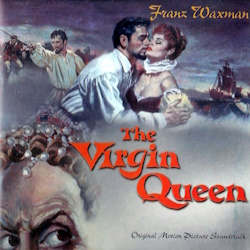
THE VIRGIN QUEEN – Franz Waxman
 GREATEST SCORES OF THE TWENTIETH CENTURY
Original Review by Craig Lysy
In 1954 20th Century Fox executive Daryl F. Zanuck conceived of a film to be titled “Sir Walter Raleigh” set during the reign of Queen Elizabeth I. He offered Bette Davis the role of Elizabeth, yet she bristled at the film title, which made no reference to her. The title was changed to “The Virgin Queen” and she agreed to reprise her portrayal of Queen Elizabeth, first performed in 1939 with “The Private Lives of Elizabeth and Essex”. Charles Brackett was assigned production with a budget of $1.6 million, Henry Koster was tasked with directing, and Mildret Lord would write the screenplay. For the cast, joining Davis would be Richard Todd as Sir Walter Raleigh, Joan Collins as Elizabeth “Beth” Throckmorton, Jay Robinson as Chadwick, Herbert Marshall as Robert Dudly, Earl of Leicester, Dan O’Herlihy as Lord Derry, and Robert Douglas as Sir Christopher Hatton. Read more…
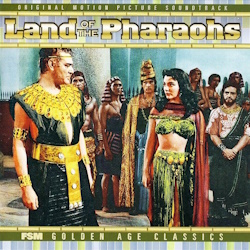
LAND OF THE PHARAOHS – Dimitri Tiomkin
 GREATEST SCORES OF THE TWENTIETH CENTURY
Original Review by Craig Lysy
Director Howard Hawks had long been fascinated by the magnitude of one of the architectural wonders of the world, the Great Pyramid of Giza, as well as its mastermind, the great Pharaoh Khufu. He pitched his idea of filming a grand, and lavish epic that explored this great feat of engineering and secured support from MGM. For Hawks this was a passion project and he decided to personally manage production with a massive $3.15 million budget, which included on site filming in Egypt using Cinemascope and Warner Color. Novelist William Faulkner, Harold Jack Bloom and Harry Kurnitz were hired to write the screenplay, and Hawks would also personally direct. Hawks made the audacious decision to not utilize a top tier star for the film, a decision which most critics believe contributed to the film’s poor reception. The cast would include; Jack Hawkins as Pharaoh Khufu, Joan Collins as Princess Nellifer, Dewey Martin as Senta, and Alex Minotis as Hamar. Read more…
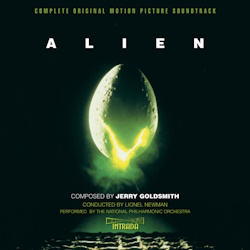
ALIEN – Jerry Goldsmith
 GREATEST SCORES OF THE TWENTIETH CENTURY
Original Review by Craig Lysy
In space, no one can hear you scream.
The genesis of Alien came from writer Dan O’Bannon who, having co-written the film Dark Star in 1974, wanted to make a more serious and horrific sci-fi movie. Later, while working on the failed effort by director Alejandro Jodorowsky to bring Frank Herbert’s Dune to life, O’Bannon discovered the work of Swiss artist H. R. Giger, whose ‘disturbing but beautiful’ work further influenced O’Bannon’s ideas for the creature at the center of his story. O’Bannon collaborated with fellow writer Ronald Shusett on the story; they drew inspiration from many works of science fiction and horror, but eventually pitched the idea to studio heads as “Jaws in space,” with the central monster being a diabolical alien that would rape a human to allow its offspring to gestate and, when mature, burst out of the host. Propriety and rating concerns led them to tone down this initial idea and make it a non-sexual implantation, but it was still implicitly a rape, with a male host to make it more repugnant; however, their story was repeatedly turned down by the Hollywood studio establishment, which deemed it too violent and gory. Read more…
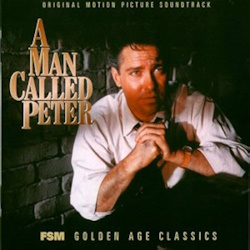
A MAN CALLED PETER – Alfred Newman
 GREATEST SCORES OF THE TWENTIETH CENTURY
Original Review by Craig Lysy
The genesis of this film lay with the book A Man Named Peter, a biography of preacher Peter Marshall, who served as Chaplin of the United States Senate from 1947 to 1949. 20th Century Fox believed that the inspirational life of this well-respected preacher would translate well to the big screen. Samuel G. Engel was placed in charge of production with a $1.74 million budget, Henry Koster was tasked with directing, and Eleanore Griffin was hired to adapt the novel and write the screenplay. A fine cast was assembled, including Richard Todd as the Reverend Peter Marshall, Jean Peters as his wife Catherine Marshall, Marjorie Rambeau as Miss Laura Fowler, and Jill Esmond as Mrs. Findlay. Read more…
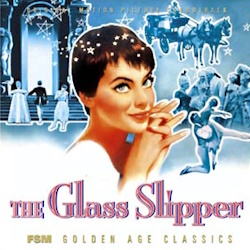
THE GLASS SLIPPER – Bronislau Kaper
 GREATEST SCORES OF THE TWENTIETH CENTURY
Original Review by Craig Lysy
After the stunning commercial and critical success of Lili in 1953, MGM began searching for another vehicle to showcase French dance star Leslie Caron. Well, they finally found one, a 1944 play about Cinderella called “The Glass Slipper” by Eleanor and Herbert Farjeon. They purchased the film rights assigned Edwin H. Knopf, who had produced Lili, to production with a budget of $1.998 million. Charles Walters was tasked with directing, and Anatole de Grunwald was hired to write the screenplay, however he was eventually replaced by Helen Deutsch who had written Lili. Leslie Caron would play Ella, and joining her would be Michael Wilding as Prince Charles, Elsa Lanchester as Widow Sonder, Amanda Blake as Birdena, Lisa Daniels as Serafina, Barry Jones as the Duke, and Estelle Winwood as Mrs. Toquet, the fairy godmother. Read more…

Shop at the Movie Music UK Store

Member of the

 MOVIE MUSIC UK