Archive
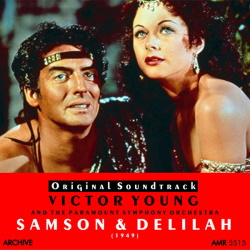
SAMSON AND DELILAH – Victor Young
 GREATEST SCORES OF THE TWENTIETH CENTURY
Original Review by Craig Lysy
The genesis of the film began in 1934 when Paramount Studios announced that it would follow-up its lavish 1934 production of Cleopatra with the biblical romance tale of Samson and Delilah. Film rights to the libretto of the 1877 opera Samson and Delila by Camille Saint-Saëns was purchased. It would however take twelve years for renowned producer-director Cecil B. DeMille to finally get the project off the ground. He secured a budget of $3.0 million and hired Jesse L. Lasky Jr., Fredric M. Frank, and Harold Lamb to write the screenplay drawing upon biblical references as well as the 1926 novel Samson the Nazarite by Ze’ve Jabotinsky. DeMille would also direct and after some casting drama finally secured Victor Mature to star as Samson. Joining him would be a fine cast, including Hedy Lamarr as Delilah, George Sanders as The Saran of Gaza, Angela Lansbury as Semadar, and Henry Wilcoxon as Ahtur. Read more…
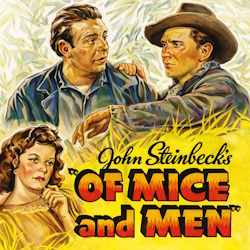
OF MICE AND MEN – Aaron Copland
 GREATEST SCORES OF THE TWENTIETH CENTURY
Original Review by Craig Lysy
In 1938 producer Lewis Milestone saw opportunity after witnessing John Steinbeck’s play Of Mice and Men achieve a milestone of 207 Broadway theatrical performances, and win the prestigious New York Drama Critics’ Circle award in 1938. He convinced Hal Roach Studios and United Artists Studios to fund and distribute the film. Milestone would also direct the and tasked screenwriter Eugene Solow in adapting the play and original novella for the big screen. A fine cast was assembled, which included Burgess Meredith as George, Betty Field as Mae, Lon Chaney Jr. as Lennie, Charles Bickford as Slim, Noah Beery Jr. as Whit, and Bob Steele as Curley. Read more…
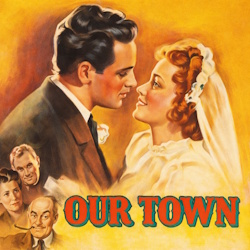
OUR TOWN – Aaron Copland
 GREATEST SCORES OF THE TWENTIETH CENTURY
Original Review by Craig Lysy
Renowned producer Sol Lester was impressed by the run of 338 Broadway theatrical performances of the 1938 Pulitzer Prize winning play Our Town by Thornton Wilder. He believed its poignant story could be successfully adapted to the big screen and decided to oversee production with his company Sol Lester Productions. Screenwriters Harry Chandlee and Frank Craven were hired to collaborate with author Thornton Wilder in adapting the play, which presented challenges given that it was performed on a nearly empty stage, and the main character dies. To adapt the play, they made the creative decision to add indoor and outdoor scenery, narration, and the third Act was altered to have a dream sequence, which would allow the main character Emily to live. Sam Wood was tasked with directing and a fine cast was assembled, which included William Holden as George Gibbs, Martha Scott as Emily Webb, Thomas Mitchell as Dr. Frank Gibbs, and Fay Bainter as Mrs. Julia Gibbs. Read more…
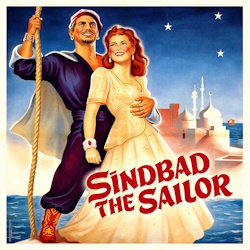
SINBAD THE SAILOR – Roy Webb
 GREATEST SCORES OF THE TWENTIETH CENTURY
Original Review by Craig Lysy
In March of 1944 RKO Studios producer William Pereira proposed to studio executives to follow-up on the success of their swashbuckler film The Spanish Main (1945) with a new effort in the genre. Douglas Fairbanks Jr., who had just returned from a five-year WWII stint in the US Navy, would star in the titular role. Stephen Ames who produced “The Spanish Main” was assigned to produce the film, and he hired John Twist and George Worthing Yates to write an original screenplay based on the eighth voyage of Sinbad. A budget of $2.5 million dollars was provided and Richard Wallace was tasked with directing. A fine cast was assembled to join Fairbanks including Maureen O’Hara as Shireen, Walter Slezak as the villain Melik, Anthony Quinn as the Emir of Daibul, George Tobias as Abbu, and Mike Mazurki as Yusuf. The story draws inspiration from the 8th Voyage of Sinbad, which is set in the early 9th century C.E. and involves the search for the lost treasure of Alexander the Great. Sinbad secures a ship but must forge an uneasy alliance of convenience with villainous Melik who stole his map, memorized it, and then burnt it. After many adventures and overcoming Melik’s tracheary, Sinbad succeeds with his quest to secure the treasure, and wins the hand of the beautiful Shireen. The film was a modest success earning a profit of $300,000. critical success was tepid and it secured no Academy Award nominations. The film’s poor performance pretty much ended the viability of the swashbuckling genre. Read more…
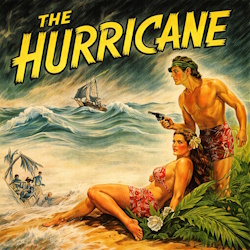
THE HURRICANE – Alfred Newman
 GREATEST SCORES OF THE TWENTIETH CENTURY
Original Review by Craig Lysy
Actor James Hall’s uncle James Norman Hall co-wrote the 1936 novel The Hurricane, which he felt would provide an exiting romantic adventure set in the South Seas. He sold director John Ford on the idea, and financial backing for production was provided by Samuel Goldwyn Productions. A massive $2.0 million budget was provided with $450,000 allocated to special effects specialist James Basevi, who spent $150,000 building a native village and lagoon, and $250,000 destroying it! Screenwriters Dudley Nichols and Oliver H. P. Garrett were hired to adapt Hall’s novel, and Ford assembled a stellar cast, which included Dorothy Lamour as Marama, John Hall as Terangi, Mary Astor as Madame Germaine De Laage, Raymond Massey as Governor Eugene De Laage, C. Aubrey Smith as Father Paul, John Carradine as the Warden, Thomas Mitchell as Dr. Kersaint, and Jerome Cowan as Captain Nagle. Read more…
THE LOST WEEKEND – Miklós Rózsa
 GREATEST SCORES OF THE TWENTIETH CENTURY
Original Review by Craig Lysy
The genesis of the film arose as director Billy Wilder was directing his previous movie, Double Indemnity. His screenwriter Raymond Chandler was a recovering alcoholic, who returned to drinking during the stress of collaborating with Wilder. Wilder related that he made the film, in part, as an attempt to better understand Chandler. Wilder sold his story idea to Paramount executives who assigned production to Charles Brackett with a budget of $1.25 million. Brackett and Wilder collaborated in writing the screenplay, by adapting the novel The Lost Weekend by Charles R. Jackson. Notable was their excising of the novel’s homosexual overtones, which portrayed Don Birnam as a closeted homosexual. Wilder himself would direct and he assembled a fine cast, which included Ray Milland as Don Birnam, Jane Wyman as Helen St. James and Phillip Terry as Wick Brinam. Controversy arose from the liquor industry, which was willing to offer $5 million to kill the project as they feared it would reignite political efforts to restore prohibition. Most interesting is that Wilder later related that he would have accepted the offer and burned the negatives himself had they presented it to him personally. Groundbreaking is film’s uncompromising depiction of the pathos of personal destruction precipitated by alcoholism. Today the film is seen as catalyzing a paradigmal change in how Hollywood portrayed drunks, which up to this film had always been portrayed them comedically. Read more…
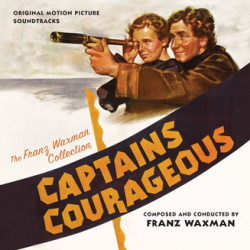
CAPTAINS COURAGEOUS – Franz Waxman
 GREATEST SCORES OF THE TWENTIETH CENTURY
Original Review by Craig Lysy
In 1936 MGM Studios decided to adapt the Rudyard Kipling’s 1897 coming of age novel Captains Courageous to the big screen. They purchased the screen rights, and management of the project was assigned to producer Louis D. Lighton who was provided a budget of $1.65 million. Screenwriters John Lee Mahin, Marc Connelly and Dale Van Every were hired to adapt the novel, and Victor Fleming was tasked with directing. For casting, of prime importance was finding the right boy to play the Harvey Cheyne role. The creative team hired Freddie Batholomew, an English-American actor who many regards as one of the greatest child actors in cinematic history. Joining him would be Spencer Tracy as Manuel Fidello, Lionel Barrymore as Captain Disko Troop, Melvyn Douglas as Frank Burton Cheyne, and Mickey Rooney as Dan Troop. Read more…
JUNGLE BOOK – Miklòs Ròzsa
 GREATEST SCORES OF THE TWENTIETH CENTURY
Original Review by Craig Lysy
In 1938 producer-director Alexander Korda decided to cash in on the commercial success realized by films based on novels by the famous English writer Rudyard Kipling. He purchased the film rights to his 1894 classic Jungle Book, with production slated to commence in 1939. The onset of WWII and Nazi Blitz forced him due to safety concerns, to relocate his company to Hollywood, which pushed production back to 1941. His own company, Alexander Korda Films would produce he film and he secured financial backing from United Artist who provided a $300,000 budget, which included filming in technicolor. Alexander Korda would produce the film, his brother Zoltan was tasked with directing, while his other brother Vincent was production designer. Screenwriter Laurence Stallings was hired to create a script derived from the nine Mowgli stories and drew inspiration from five of them: “Mowgli’s Brothers”, “Tiger! Tiger!”, “How Fear Came”, “Letting in the Jungle”, and “The King’s Ankus”. A fine cast was hired, which included Sabu as Mowgli, Joseph Calleia as Buldeo, John Qualen as the barber, Frank Puglia as the pundit, and Rosemary DeCamp as Messua. Filming was challenging due to creative differences between Alexander who wanted a fantasy adventure, and Zoltan who wanted a more realistic story. In the end, Alexander’s vision prevailed. Read more…
A DOUBLE LIFE – Miklós Rózsa
 GREATEST SCORES OF THE TWENTIETH CENTURY
Original Review by Craig Lysy
In 1946 producer Michael Kanin decided to collaborate with his brother Garson Kanin and his wife Ruth Gordon for his next project; a film noir with a Shakespearean twist. The husband-and-wife team crafted a fine screenplay and Michael Kanin used his own Kanin Productions company to fund the project, with Universal Studios agreeing to distribute the film. George Cukor was tasked with directing, and a fine cast was eventually assembled. Laurence Olivier was originally sought for the lead, but was unavailable, so a reluctant Ronald Colman was given the role of Anthony “Tony” John. He would be supported by a coach to refine his Shakespearean diction and delivery. Joining him would be Signe Hasso as Brita, Edmund O’Brien as Bill Friend, and Shelley Winters as Pat Kroll. Read more…
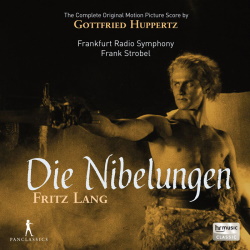
DIE NIBELUNGEN, PART II: KRIEMHILD’S REVENGE – Gottfried Huppertz
 GREATEST SCORES OF THE TWENTIETH CENTURY
Original Review by Craig Lysy
Austrian director and screenwriter Fritz Lang had long desired to bring a grand fantasy adventure film to the big screen. He eventually found inspiration in the epic 12th century Germanic poem Die Nibelungenlied. He collaborated with his wife Thea von Harbou in writing the screenplays for a two-part series that would be titled Die Nibelungen: Siegfried and Die Nibelungen: Kriemhild’s Revenge. The German production company Decla-Bioscop agreed to produce and fund the film, with UFA overseeing distribution. For Lang this was a passion project, and he assembled one of the finest casts ever assembled, which included; Paul Richter as King Siegfried of Xanten, Margarete Schon as Kriemhild of Burgund, Hanna Ralph as Queen Brunhild of Isenland, Bernhard Goetzke as Volker of Alzey, Theodor Loos as King Gunther of Burgund, Rudolf Klein-Rogge as King Etzel, Rudolf Rittner as Margave Rüdiger of Bechlam, Hans Adalbert Schelettow as Hagen of Tronje, Georg August Koch as Hildebtandt, Georg John as Mime the Goldsmith/Albert the Dwarf/Blaodel, Getrud Arnold as Queen Ute of Burgund, Hans Carl Müller as Gerenot of Burgund, Erwin Biswanger as Giselher of Burgund, Fritz Alberti as Dietrich of Bern, and Annie Röttegen as Dietlind of Bechlam. Read more…
DIE NIBELUNGEN, PART I: SIEGFRIED – Gottfried Huppertz
GREATEST SCORES OF THE TWENTIETH CENTURY
Original Review by Craig Lysy
Austrian director and screenwriter Fritz Lang had long desired to bring a grand fantasy adventure film to the big screen. He eventually found inspiration in the epic 12th century Germanic poem Die Nibelungenlied. He collaborated with his wife Thea von Harbou in writing the screenplays for a two-part series that would be titled Die Nibelungen: Siegfried and Die Nibelungen: Kriemhild’s Revenge. The German production company Decla-Bioscop agreed to produce and fund the film, with UFA overseeing distribution. For Lang this was a passion project, and he assembled one of the finest casts ever assembled, which included; Paul Richter as King Siegfried of Xanten, Margarete Schon as Kriemhild of Burgund, Hanna Ralph as Queen Brunhild of Isenland, Bernhard Goetzke as Volker of Alzey, Theodor Loos as King Gunther of Burgund, Rudolf Klein-Rogge as King Etzel, Rudolf Rittner as Margave Rüdiger of Bechlam, Hans Adalbert Schelettow as Hagen of Tronje, Georg August Koch as Hildebtandt, Georg John as Mime the Goldsmith/Albert the Dwarf/Blaodel, Getrud Arnold as Queen Ute of Burgund, Hans Carl Müller as Gerenot of Burgund, Erwin Biswanger as Giselher of Burgund, Fritz Alberti as Dietrich of Bern, and Annie Röttegen as Dietlind of Bechlam. Read more…
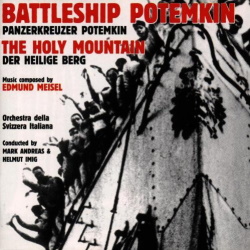
BATTLESHIP POTEMKIN – Edmund Meisel
 GREATEST SCORES OF THE TWENTIETH CENTURY
Original Review by Craig Lysy
In 1925 the Soviet Central Executive Committee directed the People’s Commissariat for Education to organize a celebration to commemorate the 20th anniversary the first Russian Revolution of 1905. A patriotic film that revealed the corruptness of the former Tsarist regime while espousing the ideals of Socialism was envisioned to be integral to the celebration. As such Nina Agadzhanova was tasked with writing the screenplay, Sergei Eisenstein was assigned to direct, and Mosfilm would oversee its production. Agadshanova’s original script explored a broad narrative comprising several topics, which covered the totality of the uprising, however Eisenstein significantly narrowed the scope of the film, focusing its narrative on the now legendary mutiny aboard the battleship Potemkin. The film would star Aleksandr Antonov as Grigory Vakulinchuk, Vladimir Barksy as Captain Evegeny Golilov, and Grigori Aleksandrov as Chief Officer Giliarovsky. Read more…
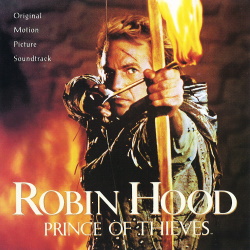
ROBIN HOOD: PRINCE OF THIEVES – Michael Kamen
 THROWBACK THIRTY
GREATEST SCORES OF THE TWENTIETH CENTURY
Original Review by Jonathan Broxton
One of the biggest blockbusters of 1991 was Robin Hood: Prince of Thieves, a big-budget historical action epic directed by Kevin Reynolds, based on the classic legends of the medieval English outlaw Robin Hood. Somewhat astonishingly, the producers cast Hollywood star Kevin Costner in the title role, and he made no attempt to do anything approaching an English accent, and in the end sounded less than he was from Sherwood Forest and more like he was from Malibu Canyon, going to “sup with his father in Notting-HAM”. Despite this, and despite some terrible lapses in geographic specificity (Robin walks from Dover to Loxley via Hadrian’s Wall in a single day, a trip of roughly 470 miles), the film is nevertheless a terrifically entertaining romp. It features some rousing action sequences, Morgan Freeman dispenses sage wisdom wherever he goes as the Moorish warrior Azeem, there’s a lovely Maid Marian in the shape of Mary Elizabeth Mastrantonio, and – best of all – we have Alan Rickman hamming it up, chewing the scenery, and having a ball as a Sheriff of Nottingham whose tongue is as cutting as his blade. Read more…
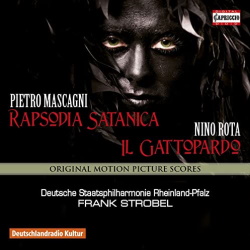
RAPSODIA SATANICA – Pietro Mascagni
 GREATEST SCORES OF THE TWENTIETH CENTURY
Original Review by Craig Lysy
Italian playwright, screenwriter and film director Nino Oxilia found inspiration for his next film in legendary character Faust, for which he would provide a twist – retelling the story with Faust cast as a woman. He chose to utilize poems by Fausto Maria Martini who was a member of ‘Crepusscolari”, the ‘Poets of Twilight’. The works of these artists were tragedies, which spoke of the decline of the shallow bourgeois culture. Oxilia purchased the film rights, and Società Italiana Cines agreed to produce and fund the film with a budget that allowed Oxilia to realize his vision. Oxilia spared no expense for his passion project, hiring the leading actress of her generation, prima diva Lyda Borelli who was beloved by Italians, to star in the film. He tasked poet Fausto Maria Martini to provide the film’s closed captions, used elaborate costumes and jewelry, and lastly, added color, both tinted and toned, as well as stenciling to create film imagery that expanded beyond the limited confines of black and white. Read more…
THE ROCKETEER – James Horner
 THROWBACK THIRTY
GREATEST SCORES OF THE TWENTIETH CENTURY
Original Review by Jonathan Broxton
The Rocketeer is an early entry into the annals of Disney comic book action movies, and is based on a character created by Dave Stevens for Pacific Comics in 1982. The film is set in Los Angeles in 1938 and stars Billy Campbell as Cliff Secord, a stunt pilot working for Howard Hughes in the early years of Hollywood. A pair of mafia gangsters steal a prototype jetpack from Hughes, and events lead to the jetpack coming into Secord’s possession; seeing a chance to further his career, Secord re-invents himself as the high-flying Rocketeer, and he wows the crowds at a local airshow, but his antics bring him to the attention of both the police and the FBI, and get him mixed up with the sinister forces who arranged for the initial theft, and who have plans for the jet pack that stretch way beyond Hollywood. The film was directed by Joe Johnston, and has a wonderful supporting cast that includes Alan Arkin as Cliff’s gruff friend Peevy, Jennifer Connelly as Cliff’s sensationally sexy nightclub singer/actress girlfriend Jenny, Terry O’Quinn as Howard Hughes, and Timothy Dalton as the devilishly handsome matinee idol actor Neville Sinclair, to whom there is more than meets the eye. The whole movie is awash in stylish art-deco production design that glamorizes the Hollywood of the 1930s, and is capped off by a sensational score from James Horner. Read more…

Shop at the Movie Music UK Store

Member of the

 MOVIE MUSIC UK