Archive
THE NAME OF THE ROSE – James Horner
 THROWBACK THIRTY
Original Review by Jonathan Broxton
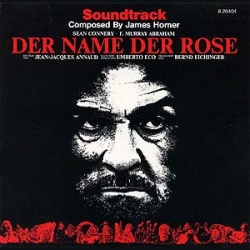
The Name of the Rose is a murder mystery with a difference. Directed by Jean-Jacques Annaud, and adapted from the enormously popular 1980 novel by Umberto Eco, it stars Sean Connery as William, a 14th century monk who journeys to a Benedictine monastery in northern Italy to attend a religious conference with other scholars. However, the conference is disturbed by several unexplained deaths, and the monastery’s abbot (Michael Lonsdale) assigns William to investigate them. With the help of his young student Adso (Christian Slater), William quickly uncovers a hotbed of secrets, hidden desires, and political and religious skullduggery among the monks, leading to more murders as the perpetrator seeks to maintain hidden. The film, which co-stars F. Murray Abraham, Helmut Qualtinger, Feodor Chaliapin, and Ron Perlman, was unfortunately not a successful one in financial terms, but it has gone on to be something of a cult film in some circles, with critics likening Connery to a medieval Sherlock Holmes who uses ingenuity and intellect to uncover the truth, in stark comparison to Abraham’s fiery and superstitious bishop, who as a member of the Spanish inquisition sees witchcraft and devilishness under around every corner. Read more…
HELL OR HIGH WATER – Nick Cave, Warren Ellis
 Original Review by Jonathan Broxton
As an Englishman who grew up in that country’s verdant landscape, the first time I drove through eastern New Mexico and western Texas was an eye-opening experience. The stretches of road between Amarillo and Albuquerque, and between El Paso and Midland-Odessa, cut through some of the most inhospitable landscapes I have ever seen; miles and miles of semi-arid desert, flat as a pancake, dotted with creosote bushes, yucca plants, cholla cactuses, and the occasional corpse of an armadillo, but not much else. It’s a place rich in oil and other natural resources, but some of the smaller towns in that area look like the apocalypse has blown through, leaving behind abandoned buildings, dusty streets, and little in the way of money or opportunity for the hardy people who continue to eke out a living there. It is against this backdrop of deprivation that Scottish director David Mackenzie’s film Hell or High Water is set. Chris Pine and Ben Foster star as two brothers who begin a crime spree, robbing local banks; Jeff Bridges plays the dogged Texas Ranger sent to stop them. The film looks like a fairly straightforward crime thriller from the outside, but it is actually much deeper than that, and tackles some rather weighty subjects, offering a searing criticism of aspects of the American banking system, looking at the plight of the poor in rural communities, and examining the relationship between two brothers who have reached a breaking point and have nothing left to lose. Read more…
DOUBLE INDEMNITY – Miklós Rózsa
 GREATEST SCORES OF THE TWENTIETH CENTURY
Original Review by Craig Lysy
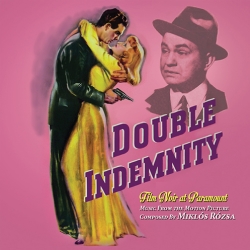
James Cain’s story “Double Indemnity” was first published in 1935 as an eight part serial in Liberty Magazine, but because of its sordid narrative studios were loathe buying the film rights, fearful of censoring by the Hayes Commission. When it was released as a successful novel in 1943, director Billy Wilder convinced Paramount to let him take on the project. Raymond Chandler was hired to collaborate with Wilder in writing the screenplay. Yet they clashed and Chandler stormed off the project, refusing to return unless his demands were met. The Studio agreed and work continued, although the two men detested each other. Casting was challenging as many actors were loathe to take on such reprehensible roles. Yet Wilder was persistent and eventfully secured a stellar cast, which included Fred McMurray as Walter Neff, Barbara Stanwyck as Phyllis Dietrichson, Edgar G. Robinson as Barton Keyes, Porter Hall as Mr. Jackson, Jean Heather as Lola Dietrichson, Tom Powers as Mr. Dietrichson and Byron Barr as Nino Zachetti. Read more…
SWALLOWS AND AMAZONS – Ilan Eshkeri
 Original Review by Jonathan Broxton
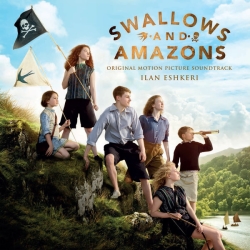
Swallows and Amazons is one of the most beloved of all English children’s adventure stories. Written by Arthur Ransome and published in 1930, it chronicles a summer in the lives of the Walker family, who are holidaying on Lake Windermere. One day, while sailing a boat named Swallow on the lake, the Walker children meet and befriend the Blackett sisters, who have a boat of their own called Amazon, and are staying with their uncle, a crotchety author named Turner. As the summer unfolds the children concoct a series of wonderful imaginary adventures, involving great sea battles, pirates, and more. The whole story is a love letter to an idealized England of a time gone by: the innocent adventures of the children, the wholesomeness of their relationships with each other and the adults, and the beauty of the English countryside, where carefree sun-dappled days melt into vivid sunsets and sparkling twilights. The book has been filmed several times; first as a popular 1963 BBC TV mini-series starring Susan George, and then as a 1974 feature film starring Virginia McKenna, Ronald Fraser, and Suzanna Hamilton. This latest cinematic retelling is directed by Philippa Lowthorpe, and stars Andrew Scott, Rafe Spall, Kelly Macdonald, Jessica Hynes, and Harry Enfield. Read more…
VALHALLA – Ron Goodwin
 THROWBACK THIRTY
Original Review by Jonathan Broxton
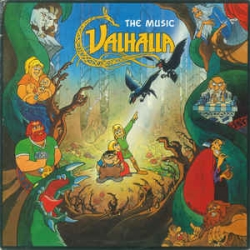
Valhalla was a Danish animated film based on a series of popular comic books, which were in turn based on the ancient Norse mythologies. The story focuses on two human children, brother and sister Tjalfe and Røskva, whose farm is visited by the gods Thor and Loki during one of their many visits to Earth. However, when Loki tricks the children into breaking a golden rule, Thor – not knowing that Loki was responsible – decides to punish the children by taking them home with him to Asgård to be his servants. Once in Asgård, the children find their new life among the gods is surprisingly dull and so, with the help of a strange creature named Quark whom Loki has adopted, the children escape from Thor’s home, and begin a series of adventures where they meet giants in a magical forest, and even encounter Odin, the king of the gods himself. The film was directed by Peter Madsen and Jeffrey Farab, and at the time was the most expensive Danish film ever made, having cost around 40 million kroner. It was also popular with audiences across Scandinavia, but the production company failed to regain the cost of production and, as a result, the film became a financial flop at the box office, scuppering the chances of sequels based on other comic books in the series. Read more…
THE LIGHT BETWEEN OCEANS – Alexandre Desplat
 Original Review by Jonathan Broxton
The Light Between Oceans is a romantic drama set in Australia in the 1920s. Based on the novel by M. L. Stedman and directed by Derek Cianfrance, it stars Michael Fassbender as Tom Sherborne, a veteran of World War I, now working as a lighthouse keeper off the western coast of the country with his wife, Isabel (Alicia Vikander). One day, Tom rescues a baby girl, who he finds washed up in a rowboat on the rocks near his home; assuming she is the only survivor of a shipwreck, Tom and Isabel decide to informally adopt the baby – whom they name Lucy – as their own. However, years later, when they return to the Australian mainland for a brief time, the once-happy family discovers that their decision to keep Lucy on that fateful day may result in terrible repercussions for all. The film also stars Rachel Weisz and Bryan Brown, and has been the recipient of a great deal of critical acclaim in the period leading up to its release. Read more…
PARIS BRÛLE-T-IL?/IS PARIS BURNING? – Maurice Jarre
 MOVIE MUSIC UK CLASSICS
Original Review by Craig Lysy
Is Paris Burning? is based on the bestselling novel Paris brûle-t-il? by Larry Collins and Dominique Lapierre. Producer Paul Graetz liked the novel and secured film rights as he felt the story had to be brought to the big screen. For his passion project he hired a remarkable team to write the screenplay, which included Gore Vidal, Francis Ford Coppola, Claude Brulé, Jean Aurenche, and Pierre Bost. Graetz then brought in respected director René Clément to manage the project, and they assembled a stellar cast for the ages, which included Alain Delon as Jacques Chaba-Delmas, Jean-Paul Belmondo as Morandat/Pierrelot, Charles Boyer as Monod, Gert Fröbe as Gen. Dietrich von Choltitz, Leslie Caron as Francoise Labe, Orson Wells as Consul Raoul Nording, Kirk Douglas as General Patton, Anthony Perkins as Sergeant Warren, Simone Signoret as Café Owner, Glenn Ford as General Omar Bradley, Robert Stack as General Edwin Sibert, Billy Fick as Adolph Hitler and Yves Montand as Marcel Versini. Read more…
BEN-HUR – Marco Beltrami
 Original Review by Jonathan Broxton
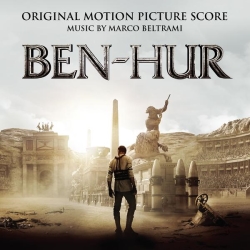
Lew Wallace’s 1880 novel Ben-Hur: A Tale of the Christ was, and remains, one of the most popular and successful novels in American literature. The story recounts the life of a fictional Jewish prince, Judah Ben-Hur, in 1st century Jerusalem. Ben-Hur grows up wealthy and privileged with his childhood friend, a Roman named Messala. Years later, Messala returns home from Rome as a newly-commissioned commander in the Roman army, and his new status and increasing prejudice against Jews causes a rift between the two former friends. Messala falsely accuses Ben-Hur of attempting to assassinate a Roman prefect, and conspires to have him sent away to serve as a galley slave, while simultaneously imprisoning his mother, Miriam, and sister, Tirzah. Ben-Hur vows revenge against Messala, and spends years training himself to be a warrior and charioteer, waiting until his opportunity to achieve redemption appears. To give it its strong religious undercurrent, Wallace’s story takes place simultaneously with the life of Jesus Christ, who was born and lived during the same time period, which allows Ben-Hur and Jesus to cross paths at several moments during the formation of Christianity. Read more…
SAUSAGE PARTY – Christopher Lennertz, Alan Menken
 Original Review by Jonathan Broxton
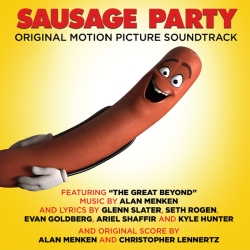
There hasn’t been a mainstream R-rated animated film in many years – at least since the South Park boys released Team America: World Police in 2004 – which, considering the success and popularity of shows like Archer and Bojack Horseman on television, seems to be something of an anomaly. Thankfully, that balance may be redressed with the success of Sausage Party, the brainchild of screenwriters Seth Rogen, Evan Goldberg, Jonah Hill, Kyle Hunter, and Ariel Shaffir, and directors Greg Tiernan and Conrad Vernon. The film follows the adventures of a sausage named Frank who lives in Shopwell’s supermarket. He is in love with Brenda, a hot dog bun, and together they dream of being taken to ‘the great beyond’ when they are bought by one of the supermarket’s patrons. Unfortunately, an unexpected incident leaves Frank and Brenda stranded on the wrong side of the supermarket, and they must team up with a Jewish bagel, a Muslim lavash, and a sexy taco named Teresa, in order to get home. Meanwhile, Frank’s friends Barry and Carl have been successfully taken to ‘the great beyond’, but quickly realize that all their preconceptions about supermarket heaven have been terribly, terribly wrong. Read more…
HENRY V – William Walton
 GREATEST SCORES OF THE TWENTIETH CENTURY
Original Review by Craig Lysy
It was WWII and Great Britain was in the midst of her greatest struggle as the Allies prepared for the 1944 Normandy invasion. Prime Minister Winston Churchill exhorted Laurence Olivier to fashion a film to rally and boost British morale for what he envisioned to be her finest moment – taking the offence to the Nazi’s and liberating France. For Olivier this became a passion project, which consumed him. After William Wyler turned down his offer to direct, Olivier took an unprecedented and audacious move – he would assume the roles of producer, director and actor! He cast himself in the titular role and surrounded himself with a fine cast, which included Renee Asherson as Princess Katherine, Robert Newton as Ancient Pistol, Leslie Banks as the Chorus, Felix Aylmer as the Archbishop of Canterbury, and Robert Helpmann as the Bishop of Ely. Olivier’s vision was clear from the very beginning; he would maintain fidelity to the original Shakespeare play although he would stylize it for the cinematic presentation. Read more…
PETE’S DRAGON – Daniel Hart
 Original Review by Jonathan Broxton
Pete’s Dragon is a new Disney remake of its own original 1977 film, a musical which starred Helen Reddy, Jim Dale, Mickey Rooney, and an entirely cartoon dragon, and which was nominated for an Oscar for its iconic original song, “Candle on the Water.” The new version, written and directed by David Lowery, is a very different, less comical take on the story. It follows the adventures of a young boy named Pete (Oakes Fegley), whose parents are killed in a car accident on a road trip, but who escapes without injury and flees into the woods. Pete spends the next six years living in the wild, where he is looked after by a huge, green, friendly dragon, a local legend in the area, whom Pete names Elliott. However, Pete’s idyllic life in the forest is interrupted when he is discovered by the young daughter of a forestry service ranger and taken back into civilization; meanwhile Elliott, who misses his young friend, ventures out of the woods and into town, where his existence risks being revealed to the townsfolk. It’s a lovely, sentimental, heartwarming film about childhood friendships, families, and respect of nature; it co-stars Bryce Dallas Howard, Wes Bentley, Karl Urban, Oona Laurence, and Robert Redford, and has been lauded by critics as a warm and appealing family film. Read more…
THE BOY WHO COULD FLY – Bruce Broughton
 THROWBACK THIRTY
Original Review by Jonathan Broxton
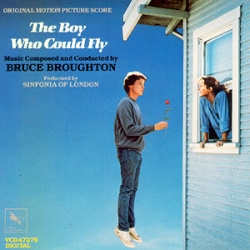
The Boy Who Could Fly was a popular family drama, written and directed by Nick Castle, about a friendship that helps two children overcome deep emotional wounds. Lucy Deakins stars as Millie, a 14-year old girl who makes friends with Eric (Jay Underwood), the similarly-aged boy next door, after the suicide of her terminally ill father. Eric has autism, and lives with his alcoholic uncle (Fred Gwynne), because both his parents were killed in a plane crash when he was much younger. Despite Eric’s verbal inability to communicate, the two teenagers nevertheless seem to help each other deal with their personal issues, but before long a series of unusual events lead Millie to think that, somehow, Eric has the ability to fly. The film was both a critical and popular success at the box office in the late summer of 1986 (it subsequently won the prestigious Saturn Award for Best Fantasy Film); it co-starred Bonnie Bedelia, Fred Savage, and Colleen Dewhurst, and had its sense of magic enhanced immeasurably by Bruce Broughton’s gorgeous score. Read more…
THE SONG OF BERNADETTE – Alfred Newman
 GREATEST SCORES OF THE TWENTIETH CENTURY
Original Review by Craig Lysy
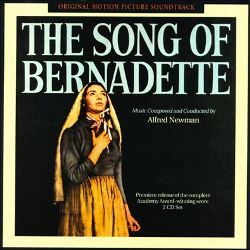
Producer William Perlberg of 20th Century Fox saw opportunity for the studio after reading the novel 1942 novel The Song of Bernadette by Franz Werfel, and so resolved to bring this inspired and miraculous story to the big screen. Henry King was hired to direct and veteran screenwriter George Seaton tasked with writing the screenplay. For the actors, a nationwide talent search found 24 year old Jennifer Jones, who was selected to play the title character of Bernadette Soubirous. Supporting actors included Vincent Price in perhaps his finest performance as (Prosecutor Vital Dutour), Aubrey Mather (Mayor Lacade), Charles Dingle (Chief of Police Jocomet), Charles Bickford (Dean of Lourdes) and Gladys Cooper (Sister Therese Vauzous). Read more…
HUNT FOR THE WILDERPEOPLE – Moniker
 Original Review by Jonathan Broxton
Hunt for the Wilderpeople is the latest film from Kiwi writer-director Taika Waititi, who enjoyed popular success with his previous films Boy and What We Do in the Shadows, and is now hard at work on his latest film, the marvel super hero sequel Thor Ragnarok. Based on the iconic 1986 book ‘Wild Pork and Watercress’ by bestselling New Zealand author Barry Crump, the film stars young Julian Dennison as Ricky Baker, a rebellious and delinquent teenage boy who has bounced around from foster home to foster home in New Zealand’s social services system, and has now found himself placed at a rural farm belonging to the kindly Bella (Rima te Wiata) and her grizzled, crotchety husband Hec (Sam Neill). Ricky, who is sarcastic and defiant and fancies himself as a gangster rapper, is initially reluctant to embrace his new life on the edge of the wilderness, but soon finds himself becoming happy in his new home. However, a tragic event forces Ricky and Hec to flee from the farm and into the bush, where Hec’s survival skills allow them to remain safe, despite Ricky’s near-constant complaining. Unfortunately, the police mistakenly believe that Hec – who has a mysterious past – has kidnapped Ricky, and soon the pair are on the lam, running from the authorities who don’t understand that the unlikely pair are changing each other for the better. Read more…
THE FLY – Howard Shore
 THROWBACK THIRTY
Original Review by Jonathan Broxton
The Fly is one of the greatest horror films ever made, a masterpiece of so-called ‘body horror’ and a cautionary tale about science gone wrong. Based on a short story by George Langelaan and directed by David Cronenberg, the film stars Jeff Goldblum as Seth Brundle, a brilliant but desperately eccentric scientist working on a teleportation device in an attempt to solve the world’s transportation problems. Brundle meets reporter Veronica Quaife (Geena Davis) when she comes to his laboratory to interview him, and the two develop a mutual attraction which blossoms into a romantic relationship. However, Brundle is frustrated with his lack of progress with the device, and rushes into trying new and increasingly dangerous experiments in order to speed up the process. One day, despite Veronica’s protestations, he tests the device on himself; after successfully jumping from one teleportation pod to another, he declares his machine a triumph – but, unknown to Brundle, a common house fly found its way into the machine with him. Now, having had his human DNA merged with that of the fly at a cellular level, Brundle begins to slowly, grotesquely, mutate, with terrible consequences for all. Read more…

Shop at the Movie Music UK Store

Member of the

 MOVIE MUSIC UK