HOOSIERS – Jerry Goldsmith
 THROWBACK THIRTY
Original Review by Jonathan Broxton
Hoosiers is generally considered one of the best sports films ever made. Directed by David Anspaugh and written by Angelo Pizzo (who would later collaborate again on Rudy in 1993), the film stars Gene Hackman as Norman Dale, a former elite basketball coach who, after suffering a personal humiliation, is forced to take a job as a teacher and basketball coach at a tiny high school in Indiana in 1951. Despite overwhelming odds – including a small student population to select a team from, opposition from parents, opposition from faculty members such as English teacher Myra Fleener (Barbara Hershey), and a hopelessly drunk assistant coach (Dennis Hopper) – Dale leads his team to the state championship game. Looking back on the film today, Hoosiers seems to be very clichéd, but the truth of the matter is that this film is the one that invented, or at least popularized, many of the sports movie clichés we take for granted today: the gruff coach with a heart of gold, the group of misfits who come together to form a winning team, the old-fashioned old-timers who don’t understand what the newcomer is doing, the last-second winning shot to clinch the championship. Hoosiers was a massively popular and successful film, and received two Oscar nominations: one for Hopper as Best Supporting Actor, and one for Jerry Goldsmith’s score. Read more…
ARRIVAL – Jóhann Jóhannsson
 Original Review by Jonathan Broxton
Serious science fiction, that eschews cheap thrills and pyrotechnics in favor of more thoughtful contemplation, is still comparatively rare in Hollywood these days, but it does seem that more and more filmmakers are willing to take the risk and explore deeper, more sophisticated philosophical topics against a fantastical background. Director Denis Villeneuve’s Arrival is one of those films, exploring one possible way the world may react when confronted with the real ramifications of a first contact with an alien species. I’m not going to give away much of the plot, except to say that it stars Amy Adams and Jeremy Renner as a language expert and a theoretical physicist, respectively, who are approached by the US military to help them make contact with one of the dozen or so alien spacecraft which have appeared over Earth. The film explores a number of weighty topics, including death, loss, destiny, time, and language, and explores them with a profound seriousness and respect for the genre; it’s a slow film, which takes time to reveal its layers, but it’s worth the wait. It’s also a very beautiful film; Villeneuve’s visual composition and sense of space is as much responsible for the film’s sense of grandeur as the screenplay, dialogue, and performances. Similarly, the sound design is a very important aspect of the film, including the unusual ambient score by Icelandic composer Jóhann Jóhannsson. Read more…
DOCTOR STRANGE – Michael Giacchino
 Original Review by Jonathan Broxton
Doctor Strange is the fourteenth entry in the Marvel Cinematic Universe series of super-hero films that includes the Iron Man, Captain America, and Avengers franchises, and is the first to depict the origin story of a completely new character since Ant-Man last year. Directed by Scott Derrickson, it stars Benedict Cumberbatch as Stephen Strange, a brilliant but arrogant neurosurgeon, whose life is shattered when he severely damages both his hands in a car accident. Seeking new and experimental procedures so that he can fix his hands and resume his career, Strange eventually finds his way to Nepal where he meets Mordo (Chiwetel Ejiofor), a student of the so-called Ancient One (Tilda Swinton); however, rather than simply fix his physical injuries, the Ancient One sees further potential in Strange, and begins to train him in various mystical arts which allow him to enter the astral plane, conjure objects out of pure energy, manipulate reality, and even bend time. Eventually, Strange’s proficiency in these new abilities bring him into conflict with Kaecilius (Mads Mikkelsen), a former student of the Ancient One, who now seeks to use his powers in the service of evil. Read more…
NOCTURNAL ANIMALS – Abel Korzeniowski
 Original Review by Jonathan Broxton
Nocturnal Animals is a film about violence, but not in the way you might expect. Amy Adams stars as Susan, the impossibly rich owner of an elite Los Angeles art gallery, who is trapped in an increasingly loveless marriage to the handsome but disinterested Hutton (Armie Hammer). One day her world is rocked when the manuscript of a soon-to-be-published novel is delivered to her home; the manuscript is from her first husband Edward (Jake Gyllenhaal), and as Hutton is away on business, Susan decides to read it. The manuscript – which is titled ‘Nocturnal Animals’ and is dedicated ‘for Susan’ – tells the story of Tony Hastings (also Gyllenhaal), who is driving through west Texas with his wife (Isla Fisher) and daughter (Ellie Bamber), and who is forced to undergo an experience of unimaginable horror when they are menaced on the highway by a gang of shit-kicking rednecks led by Ray Marcus (Aaron Taylor-Johnson). As Susan reads, she begins to interpret the story as a metaphor for her failed marriage to Edward, and is forced to come to terms with the consequences of her actions in the past. Read more…
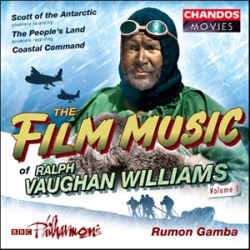
SCOTT OF THE ANTARCTIC – Ralph Vaughan-Williams
 GREATEST SCORES OF THE TWENTIETH CENTURY
Original Review by Craig Lysy
Producer Michael Balcon of Ealing Studios resolved to tell the story of the famous British explorer Robert Falcon Scott, and his ill-fated journey to discover the South Pole. Charles Frend was hired to direct and he brought in a splendid cast which included Sir John Mills as the titular character, James Robertson Justice as Petty Officer Taff Evans, Derek Bond as Captain Oates, Kenneth More as Lieutenant Teddy Evans, John Gregson as Petty Officer Crean, James McKechnie as Surgeon Lieutenant Atkinson, Barry Letts as Apsley Cherry-Garrard, and Christopher Lee as Bernard Day. The screenplay drew by Major Walter Meade and Ivor Montagu extensively from Scott’s personal diaries, while additional dialogue was adapted from novelist Mary Hayley Bell (John Mills’s wife). The expedition takes place in 1911–1912. Scott, who in 1904 initially explored Antarctica, resolved to organize an expedition to discover the South Pole. Initially he is unable to secure adequate funds for the expedition, as the British business class is skeptical. He ultimately manages to secure government funds after an appeal to British pride. Regretfully Scott chose to forgo the traditional method of relying exclusively on dogs, instead choosing to augment his dogs with ponies and motorized sleds. This decision would ultimately contribute to his demise. Read more…
HACKSAW RIDGE – Rupert Gregson-Williams
 Original Review by Jonathan Broxton
The island of Okinawa was one of the key battlegrounds during World War II, where Allied forces led by the United States Army and Navy fought against eight divisions of the Imperial Japanese Army for supremacy. It was also one of the bloodiest in the Pacific, with an estimated total of over 82,000 direct casualties on both sides. The battle lasted from April until June 1945, and ranged all over the island, including an area colloquially known as Hacksaw Ridge, a large and imposing cliff face with a plateau at the top. It was here that one of the most extraordinary acts of heroism in the entire war took place, when US Army medic Desmond Doss personally saved the lives of 75 wounded soldiers while under tremendous, relentless enemy fire. The most amazing aspect of this story, however, is that Doss was a conscientious objector and a member of the Seventh Day Adventist church, and as such refused to handle a firearm at any point in his military service; despite this, Doss was subsequently awarded the Medal of Honor, the United States’s highest military decoration, becoming the first conscientious objector to be so honored. Director Mel Gibson’s film Hacksaw Ridge tells Doss’s life story, all the way from his humble origins in rural Virginia; it stars Andrew Garfield as Doss, along with Vince Vaughan, Sam Worthington, Luke Bracey, Hugo Weaving, Rachel Griffiths, and Teresa Palmer in supporting roles. Read more…
THE GHOST AND MRS. MUIR – Bernard Herrmann
 GREATEST SCORES OF THE TWENTIETH CENTURY
Original Review by Craig Lysy
20th Century Fox studio executive Darryl F. Zanuck was taken in by R. A. Dick’s 1945 romance novel A Ghost and Mrs. Muir, bought the screen rights, and commissioned Philip Dunne to adapt it for the big screen. Fred Kohlmar was assigned to produce the film and Joseph Mankiewitcz was tasked with directing. An exceptional cast was assembled, which included Gene Tierney as Lucy Muir, Rex Harrison as Captain Daniel Gregg, George Sanders as Miles Fairley, Edna Best as Martha Higgins and Venessa Brown as Anna Muir. The film offers a classic romance with powerful themes, which explore the yearning, pain and devastation of unrequited love, the sad sanctuary of solitude, and the romantic promise of spiritual liberation and transcendence through death. Mankiewicz’s biographer Bernard Dick relates that “Essentially Lucy was in love with Death; it was a love that could only be satisfied in myth, or in a dreamlike relationship with a visitor from Death’s kingdom. But mythic roles are difficult to sustain; dreams are evanescent; and art without an artist is impossible. To regain what she had with the captain, she must die.” Read more…
INFERNO – Hans Zimmer
 Original Review by Jonathan Broxton
Inferno is the latest in the series of films based on Dan Brown’s immensely popular Robert Langdon novels, after The Da Vinci Code in 2006, and Angels & Demons in 2009. Tom Hanks returns to the leading role as the genius Harvard University professor of religious iconology and symbology; in this story, Langdon finds himself racing around ancient historical sites in Florence and Venice, as he attempts to uncover the truth behind the suicide of a billionaire scientist, and how it relates to a missing biological weapon, and the various writings and artworks of Dante Aligheri and Sandro Botticelli that define our modern concept of hell. The film is directed by Ron Howard, and co-stars Felicity Jones, Omar Sy, Ben Foster, Sidse Babett Knudsen, and Irrfan Khan; also returning to the team is composer Hans Zimmer, whose scores for The Da Vinci Code and Angels & Demons are amongst his most popular of the last ten years. Read more…
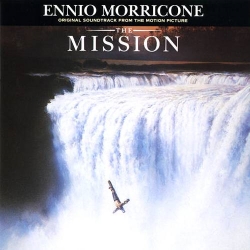
THE MISSION – Ennio Morricone
 THROWBACK THIRTY
GREATEST SCORES OF THE TWENTIETH CENTURY
Original Review by Jonathan Broxton
There are moments in film music history where you can listen to a score, and upon its conclusion sit back and be content in the knowledge that you have just experienced a genuine masterpiece. It doesn’t happen very often, because it has to be a perfect combination of everything that can possibly make a film score great. It has to fit the film, of course, carrying the story and enhancing the drama and elevating it to a point where the two seem inseparable, and where the film would be immeasurably diminished by it not being there. But then it also has to have all those things that make it excellent as pure music – everything from recurring themes that develop through the score, to orchestration, technique, and those intangibles of “beauty” and “memorability,” which of course are purely subjective, but nevertheless often affect a wide range of people in similar emotional ways. Ennio Morricone’s 1986 score for The Mission is, undoubtedly, one of those scores which ticks every box, a masterpiece on every conceivable level. Read more…
THE BEST YEARS OF OUR LIVES – Hugo Friedhofer
 GREATEST SCORES OF THE TWENTIETH CENTURY
Original Review by Craig Lysy
In making The Best Years of Our Lives, Famous producer Samuel Goldwyn became inspired to make a film that spoke to challenges facing our returning servicemen after reading an article in Time magazine, which described the difficulty experienced by Marines returning to civilian life. He hired war correspondent MacKinlay Kanto to write the story; a novella titled “Glory for Me”, and then brought in director William Wyler and Robert Sherwood, his go to playwright, to adapt it for the big screen. They assembled a first class ensemble of actors, which included Fredric March (Al Stephenson), Myrna Loy (Milly Stephenson), Dana Andrews (Fred Derry), Virginia Mayo (Marie Derry), Cathy O’Donnell (Wilma Cameron), and for authenticity, newcomer Harold Russell (Homer Parrish), a real life serviceman who had lost both his hands in the war. The story follows the reintegration struggles of three soldiers into civilian life. Read more…
PEGGY SUE GOT MARRIED – John Barry
 THROWBACK THIRTY
Original Review by Jonathan Broxton
Although he is best known for his epic gangster Godfather trilogy, and for the classic war movie Apocalypse Now, Francis Ford Coppola has made many other movies in his career, and some of them are much less dramatic and shocking. One of those is the 1986 film Peggy Sue Got Married, a romantic comedy-drama wish fulfillment-fantasy written by husband and wife team Jerry Leichtling and Arlene Sarner. Kathleen Turner stars as Peggy Sue Bodell, who attends her 25-year high school reunion shortly after separating from her unfaithful husband Charlie (Nicolas Cage), her former high school sweetheart. Peggy Sue regrets many of the decisions she made in her life, such as getting pregnant by Charlie in high school, and feels that her circumstances would be different if she had the chance to do it over again. Peggy Sue faints at the reunion, and when she wakes up she magically finds herself in 1960, back in high school, and with the chance to right the wrongs of the past. The film, which co-starred Barry Miller, Catherine Hicks, Joan Allen, and a 24-year-old Jim Carrey, was both a commercial and a critical success, and was nominated for three Academy Awards, including one for Turner as Best Actress. The film also features an original score by the legendary John Barry, the second and last of his collaborations with Coppola after The Cotton Club in 1984. Read more…
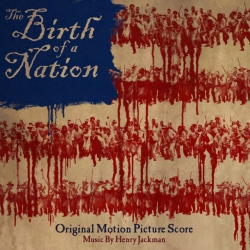
THE BIRTH OF A NATION – Henry Jackman
 Original Review by Jonathan Broxton
In 1915 the pioneering film director D. W. Griffith released The Birth of a Nation, which he had adapted from the novel The Clansman by T. F. Dixon Jr. Looking back on it now, it is clearly one of the most groundbreaking and important films ever made, but at the same time it is one of the most abhorrent too. Despite being a silent film shot in black and white, it broke ground in terms of cinematic artistry; Griffith essentially invented many of the filmmaking tools we take for granted today, including pans and zooms, close-ups, cross-cut editing in order to tell parallel stories simultaneously, and choreographed action sequences. It also featured one of the first ever commissioned film scores, written by composer Joseph Carl Breil. As a technological achievement, the original Birth of a Nation is an absolute masterpiece. Unfortunately, it’s also one of the most racist films in the history of cinema. To boil it down to its nuts and bolts, it’s a heroic tale about the Ku Klux Klan, who become righteous freedom fighters in the aftermath of the Civil War, saving the noble white folk in the south from the “insolent niggers” from the north, most of whom were played by white actors in eye-rolling, mugging blackface. Time has not been kind to Griffith’s film, and rightfully so; today most film scholars praise its technological achievements, but utterly denounce its content, although Roger Ebert did write of it: “The Birth of a Nation is not a bad film because it argues for evil. Like Riefenstahl’s Triumph of the Will, it is a great film that argues for evil. To understand how it does so is to learn a great deal about film, and even something about evil”. Read more…
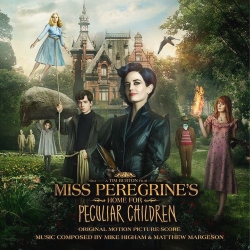
MISS PEREGRINE’S HOME FOR PECULIAR CHILDREN – Mike Higham, Matthew Margeson
 Original Review by Jonathan Broxton
Miss Peregrine’s Home for Peculiar Children is the latest fantasy film from director Tim Burton. The film was adapted by Jane Goldman from the 2011 novel by Ransom Riggs, and stars Asa Butterfield as Jacob, a young man who, throughout his life, has been regaled with tall tales about his grandfather’s childhood at a home for “special children”. After his grandfather is killed by a mysterious monstrous creature, Jacob is compelled to visit Wales and seek out the home; eventually, Jacob discovers the house, its owner Miss Peregrine (Eva Green), and the children who still reside there – all of whom have mutations or abilities which make them unique. Gradually, Jacob learns the secrets of the house and its inhabitants, and the constant dangers they face from outside forces who want to obtain the powers of the ‘peculiars’ for their own ends. The film co-stars Ella Purnell, Samuel L. Jackson, and Judi Dench, and has been a popular success at the box-office, where audiences have responded well to Tim Burton’s eye-popping visual style. Read more…
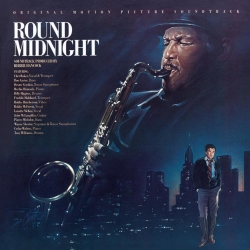
ROUND MIDNIGHT – Herbie Hancock
 THROWBACK THIRTY
Original Review by Jonathan Broxton
During the 1980s the Academy of Motion Picture Arts and Sciences made some truly baffling decisions with regard to the Oscar for Best Original Score. In 1980 Michael Gore’s light pop score for Fame beat out The Empire Strikes Back. In 1981 Vangelis’s one-theme electronic noodling on Chariots of Fire somehow defeated Raiders of the Lost Ark. In 1988 Dave Grusin won for The Milagro Beanfield War – a film and score which, at least amongst my casual acquaintances, virtually no-one has seen or heard. Perhaps the strangest decision, however, came in 1986 when jazz composer and musician Herbie Hancock won for his score for Round Midnight, beating composers of such eminence as James Horner, Jerry Goldsmith, and Ennio Morricone, whose losing score for The Mission was not only the best score of 1986, but is on the list of the best scores ever written. Read more…
THE GIRL ON THE TRAIN – Danny Elfman
 Original Review by Jonathan Broxton
The Girl on the Train was one of the best-selling and most controversial novels of 2015, a psychological thriller about the murder of a beautiful young woman, and the mystery surrounding her death; the inevitable film version stars Emily Blunt in the lead role as Rachel Watson, whose life fell apart when she separated from her husband Tom (Justin Theroux), due to a combination of his infidelity, their inability to conceive a child, and her increasing alcoholism. A year later, Tom is happily re-married to Anna (Rebecca Ferguson), and has a young daughter; Rachel, however, is unable to let go, and repeatedly turns up at her old house, which she passes every day on the train during her morning commute. Rachel also fantasizes about Megan and Scott (Haley Bennett and Luke Evans), a seemingly perfect couple who live two houses away from Tom and Anna, and who she also sees from her train carriage. Things come to a head when Megan disappears and Rachel, who blacked out from drinking on the day of her disappearance, genuinely believes she may have had something to do with it. The film was directed by Tate Taylor, written by Erin Cressida Wilson from Paula Hawkins’s novel, and has an original score by Danny Elfman. Read more…

Shop at the Movie Music UK Store

Member of the

 MOVIE MUSIC UK