André Previn, 1929-2019
 Composer André Previn died on February 28, 2019, at home in Manhattan, New York, after a short illness. He was 89.
André George Previn was born in April 1929, in Berlin, Germany, and he showed early musical talent and began studying piano and composition as a child. Fleeing Nazi persecution, Previn’s family emigrated to Los Angeles in 1938, where his uncle Charles Previn, a music director at Universal Studios, introduced him to Hollywood’s burgeoning film industry. He graduated from Beverly Hills High School – where he was a classmate of Richard M. Sherman – and he went to work at MGM Studios as a teenager in the 1940s, where he quickly became a key figure in their music department. Over two decades, he composed, arranged, and conducted music for over 50 films. His film scores displayed a sophisticated blend of lush orchestration and accessibility, contributing significantly to the Golden Age of Hollywood.
His first scores were written when he was still in his early 20s, and he worked on a wide range of films, from westerns like Bad Day at Black Rock (1954) and The Fastest Gun Alive (1956) to dramatic epics like Elmer Gantry (1960) and The Four Horsemen of the Apocalypse (1961), and lighthearted comedies like The Music Lovers (1970). His scores often reflected his classical training, jazz influences, and innate ability to capture the emotional essence of a story. Read more…
DANGEROUS LIAISONS – George Fenton
 THROWBACK THIRTY
Original Review by Jonathan Broxton
Dangerous Liaisons was originally a stage play by British playwright Christopher Hampton, whose work was an ambitious attempt to adapt Pierre Choderlos de Laclos’s classic 1782 novel Les Liaisons Dangereuses for modern audiences through the Royal Shakespeare Company. It is a dark drama about seduction and revenge set in France in the years immediately preceding the Revolution. Two aristocrats, the Marquise de Merteuil and the Vicomte de Valmont, conspire together to ruin the lives of various former lovers for no other reason than to satisfy their own amusement and petty jealousies; eventually, they fixate on the virginal Cécile de Volanges, who is engaged to Merteuil’s former lover, and Madame de Tourvel, the devoutly religious wife of one of Valmont’s supposed friends. What transpires is a damning exposé of the insouciance of the rich, who use wealth and sexuality as weapons, and indulge in selfish whims and fancies with no regard for the destruction it causes to those around them. Hampton re-wrote his play for the big screen in 1988, where it was directed with lavish decadence by Stephen Frears. Glenn Close starred as the merciless Merteuil, John Malkovich was suave as the predatory Valmont, and Michelle Pfeiffer and Uma Thurman suffered as the unwitting subjects of their ploy. Both Close and Pfeiffer received Oscar nominations for their performances, and the film was a critical success, winning three Academy Awards, picking up two more nominations, and inspiring an updated version – Cruel Intentions – set in New York in 1999. Read more…
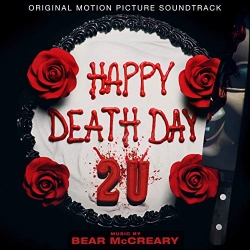
HAPPY DEATH DAY 2U – Bear McCreary
 Original Review by Jonathan Broxton
Blumhouse’s low-budget comedy horror slasher film Happy Death Day was an unexpected critical and commercial success in 2017. Audiences really connected with it’s appealing cast, knowing and witty sense of humor, plentiful scares, and clever mix of genres – perhaps the best description of the film was ‘Groundhog Day meets Scream’. The film starred Jessica Rothe as Tree, a university student who is stalked around campus and eventually murdered by someone wearing a ‘baby mask’ similar to those worn by her school’s mascot. The twist comes by way of the fact that Tree is caught in a time loop, and every time she dies she wakes up again that same morning in her dorm room, fated to continue this cycle of being murdered again and again until she finds out who the killer is. In this sequel, which is again directed by Christopher Landon, Tree finds herself caught in the time loop for a second time – despite her having solved her own murder at the end of the first film – but this time is required to team up with a group of experimental science students who appear to have created a parallel universe where Tree’s killer still exists. The film co-stars Israel Broussard, Phi Vu, Ruby Modine, and Suraj Sharma from Life of Pi. Read more…
JURASSIC PARK – John Williams
 GREATEST SCORES OF THE TWENTIETH CENTURY
Original Review by Craig Lysy
Steven Spielberg became aware of Michael Crichton’s novel Jurassic Park as the two collaborated on the television series E.R. A bidding war for the rights ensued, with Spielberg and Universal Pictures prevailing over Warner Brothers and Tim Burton, Columbia Pictures and Richard Donner, James Cameron and Joe Dante. Kathleen Kennedy and Gerald Molen would produce the film with Spielberg directing. Spielberg understood the challenges he faced bring the dinosaurs to life and sought at all costs to not repeat the technical nightmare he experienced in Jaws. He turned to George Lucas’ Industrial Light and Magic Company to create groundbreaking computer –generated imagery and ended up making history. Crichton was hired to adapt his novel to the screen but Spielberg was unsatisfied with the violence. Malia Scotch Marmo was tasked with the rewrite in late 1991, but she also did not satisfy Spielberg’s vision. Universal executives brought in Casey Silver and David Koepp who ultimately crafted the script used in the film. A fine cast was assembled with Sam Neill securing the role of Alan Grant after William Hurt and Harrison Ford both declined. Joining him would be Laura Dern as Ellie Sattler, Jeff Goldblum as Ian Malcolm, Richard Attenborough as John Hammond, Bob Peck as Robert Muldoon, Samuel Jackson as Ray Arnold, B.D. Wong as Henry Wu, and Ariana Richards and Joseph Mazzello as Hammond’s niece and nephew Lex and Tim. Read more…
Academy Award Winners 2018
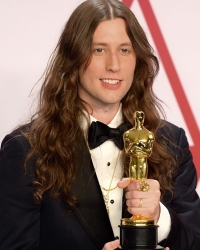 The Academy of Motion Picture Arts and Sciences (AMPAS) have announced the winners of the 91st Academy Awards, honoring the best in film in 2018.
In the Best Original Score category composer Ludwig Göransson won the award for his score for the box office blockbuster Marvel super hero movie Black Panther. In accepting his award, Göransson said:
“Um, wow. Thank you, Ryan Coogler. Ryan… Ryan, working with you has been an incredible honor. I remember twelve years ago we were sitting in our dorm at USC writing the score for your first short film, and we’re here twelve years later, you know, celebrating one of the most important cinematic moments in history. I want to share this award with all the incredible African artists I worked with on the score – Baba Maal, Massamba Diop, Magatte Saw – and all the classical musicians in London that recorded on the score. And everyone… I also want to share this award with my mom, and dad, and sister – they insisted I play guitar- and my wife Serena, I love you so much. Thank you!”
The other nominees were Terence Blanchard for Blackkklansman, Nicholas Britell for If Beale Street Could Talk, Alexandre Desplat for Isle of Dogs, and Marc Shaiman for Mary Poppins Returns.
In the Best Original Song category, the winners were Stefani Germanotta (Lady Gaga), Mark Ronson, Anthony Rossomando, and Andrew Wyatt for “Shallow” from A Star is Born.
The other nominees were Kendrick Lamar Duckworth, Mark Spears (Sounwave), Anthony Tiffith, and Solana Rowe (SZA) for “All the Stars” from Black Panther; David Rawlings and Gillian Welch for “When a Cowboy Trades His Spurs for Wings” from The Ballad of Buster Scruggs; Marc Shaiman and Scott Wittman for “The Place Where Lost Things Go” from Mary Poppins Returns; and Diane Warren for “I’ll Fight” from RGB.
THE ACCIDENTAL TOURIST – John Williams
 THROWBACK THIRTY
Original Review by Jonathan Broxton
The Accidental Tourist is a romantic drama film directed by Lawrence Kasdan, adapted from the acclaimed novel by Anne Tyler. It stars William Hurt as Macon Leary, an introverted travel writer whose relationship with his wife Sarah (Kathleen Turner) begins to break down after the death of their son. Sarah eventually leaves him and moves out, pending a divorce, and when Macon breaks his leg after tripping over his disobedient dog and falling down the stairs, he moves back into his childhood home with his eccentric siblings to recuperate. After a while, Macon hires the quirky Muriel Pritchett (Geena Davis) as a dog obedience trainer; despite the enormous differences in their personalities, a spark of attraction develops between the two, and they begin a relationship. However, Macon’s new life is thrown into turmoil when Sarah returns, wanting to re-kindle their marriage, forcing Macon to make some difficult decisions. The film was an enormous critical success, earning Academy Award nominations for Best Picture and Best Adapted Screenplay, and winning Geena Davis an Oscar for Best Supporting Actress. Read more…
IFMCA Award Winners 2018
 INTERNATIONAL FILM MUSIC CRITICS ASSOCIATION ANNOUNCES WINNERS OF 2018 IFMCA AWARDS; “SOLO” TAKES SCORE OF THE YEAR, MULTIPLE WINS FOR JOHN POWELL, JAMES NEWTON HOWARD
The International Film Music Critics Association (IFMCA) announces its list of winners for excellence in musical scoring in 2018, in the 2018 IFMCA Awards.
The award for Score of the Year goes to British composer John Powell for his score for the Star Wars spin-off story “Solo,” which looked at the early life of the legendary rogue and intergalactic smuggler Han Solo. The film was directed by Ron Howard, and starred Alden Ehrenreich, Emilia Clarke, and Donald Glover. In describing the score, IFMCA members Asier Senarriaga and Óscar Giménez called Solo “a spectacular score that combines the classic ideas of Williams with the talent of Powell,” and proclaimed it “the score of the year,” while IFMCA member Jon Broxton – speaking about the score’s multitude of recurring character themes – said that the way Powell “incorporates all the thematic complexity into his score is masterful, but best of all is the way he allows them to develop organically; this is not just a rigid leitmotif score where mathematics trumps emotion. Instead, Powell engages in sensible and appropriate development, meaning that when the emotional outbursts do come, they pack a real wallop, and satisfy both the heart and the brain in equal measure.” Read more…
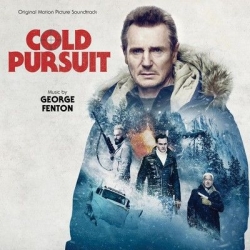
COLD PURSUIT – George Fenton
 Original Review by Jonathan Broxton
In the late 1990s – which, to my shock and dismay, is now almost 20 years ago – I truly thought George Fenton was on the verge of becoming one of the truly great Hollywood A-lister composers. He had already picked up a handful of Oscar nominations for scores like Gandhi and Cry Freedom, Dangerous Liaisons and The Fisher King; he scored a string of popular successes, like Groundhog Day, Final Analysis, and You’ve Got Mail; and then he unleashed a 1-2-3 punch of magnificent romantic drama scores with Ever After, Dangerous Beauty, and Anna and the King at the very end of the millennium. This, coupled with his small-screen success scoring acclaimed nature documentaries for the BBC such as Blue Planet, seemed to indicate that he would be a major player for years to come. However, inexplicably, and despite and occasional sporadic box office hit, the prestige assignments began to dry up. He is still working, of course, but the level of acclaim and visibility he once enjoyed has diminished enormously, and I am at a loss to explain why, because he clearly still has the talent and creativity he always had. Read more…
SCHINDLER’S LIST – John Williams
 GREATEST SCORES OF THE TWENTIETH CENTURY
Original Review by Craig Lysy
The genesis of Schindler’s List lay with holocaust survivor Leopold Pfefferberg, whose tale of Oskar Schindler inspired Thomas Keneally to write his Booker Prize winning novel, Schindler’s Ark, in 1982. It came to pass that studio president Sid Sheinberg saw opportunity in the story and mailed Steven Spielberg a review of the book by the New York Times. Spielberg was deeply moved by the narrative and secured financial backing from Universal Pictures, which purchased the screen rights. Yet the then 37-year-old hesitated and ultimately delayed production ten years as he felt himself too young to take on the pathos of the Holocaust. When the time eventually came to begin production, he tasked Steven Zaillian with writing the screenplay, and the struggled to hire a director, soliciting several including Roman Polanski, Sydney Pollack, Billy Wilder and Martin Scorsese. Ultimately Spielberg took Wilder’s counsel to direct the film himself. For the cast he brought in an outstanding ensemble, which included Liam Neeson as Oskar Schindler, Ben Kingsley as Itzhak Stern, Ralph Fiennes as Captain Amon Göth, Caroline Goodall as Emilie Schindler, Jonathan Sagalle as Poldek Pfefferberg, and Embeth Davidtz as Helen Hirsch. Read more…
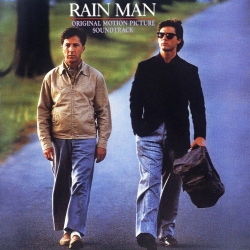
RAIN MAN – Hans Zimmer
 THROWBACK THIRTY
Original Review by Jonathan Broxton
There is a great serendipity in how Hans Zimmer became the film music megastar he is. Back in 1985 Zimmer co-scored the film My Beautiful Launderette with his mentor, Stanley Myers, when he was still a fresh-faced youngster working in London. That film was produced by Sarah Radclyffe, the co-founder of Working Title Pictures, who in 1988 produced A World Apart, the directorial debut feature of acclaimed cinematographer Chris Menges. That film was the first significant solo project of Zimmer’s career, and it just so happens that the film was seen by Diana Rhodes, the wife of director Barry Levinson, just as Levinson was working on his latest film, Rain Man. Rhodes recommended Zimmer to Levinson, and Zimmer received what he now refers to as ‘the call,’ which secured him the job, took him to Los Angeles, and utterly changed his life. Read more…
IF BEALE STREET COULD TALK – Nicholas Britell
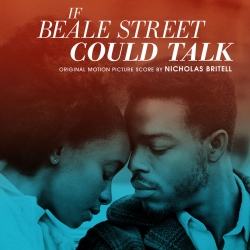 Original Review by Jonathan Broxton
If Beale Street Could Talk is the latest film from critically acclaimed director Barry Jenkins, whose previous effort Moonlight was the winner of the Best Picture Academy Award in 2016. The film is adapted from the novel by James Baldwin, and is a romantic drama charting the relationship between an African-American couple, Fonny and Tish, in New York in the 1970s. At its heart it is the story of two people deeply in love, and how that love endures despite all manner of difficulties – notably the casual racism towards black people in that era, the systemic corruption of the criminal justice system, and their own familial problems. Specifically, as it relates to Tish and Fonny, the core issue is the impending birth of their child, and how Fonny’s arrest for a crime he did not commit affects Tish and the rest of the family on the outside. The film stars Kiki Layne and Stephan James as the protagonist couple, and Regina King in a critically acclaimed supporting role as Tish’s mother. Read more…
BRAM STOKER’S DRACULA – Wojciech Kilar
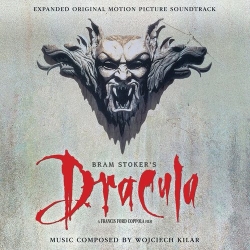 GREATEST SCORES OF THE TWENTIETH CENTURY
Original Review by Craig Lysy
The genesis of the film lay with actress Winona Ryder, who wished to make amends with director Francis Ford Coppola after her late withdrawal from The Godfather Part III. She brought him a script written by James V. Hart, which provided an adaptation of the famous 1897 novel Dracula by Irish author Bram Stoker. Coppola was intrigued by the sensuality and eroticism of Hart’s retelling and immediately moved forward to bring it to the big screen. He would produce the film with Fred Fuchs and Charles Mulvehill using his own production company of American Zoetrope. Coppola had an uncompromising conception of the film and went to great lengths to create his cinematic vision. Indeed, the film shattered the traditional mythos and caricature of the black caped Dracula with a new, stylish, and significantly more erotic rendering. He assembled a fine, but controversial cast with Gary Oldman playing the titular role. Supporting him would be Winona Ryder as Mina, Anthony Hopkins as Professor Abraham Van Helsing, Keanu Reeves as Jonathan Harker, Richard E. Grant as Dr. Jack Seward, Cary Elwes as Lord Arthur Holmwood, Billy Campbell as Quincy Morris, Tom Waits as Renfield, and Sadie Frost as Lucy Westenra. Read more…
BAFTA Winners 2018
 The British Academy of Film and Television Arts (BAFTA) have announced the winners of the 72nd British Academy Film Awards, honoring the best in film in 2018.
In the Best Original Music category, the winners were Bradley Cooper, Stefani Germanotta (Lady Gaga), and Lukas Nelson, for their collection of original songs written for the musical drama film A Star is Born. BAFTA is different from other awards bodies, in that their music award specifically includes song scores, adaptation scores, and expert use of classical music alongside original scores, and the award is for in an overarching ‘best use of music in film.’ Cooper, who also co-wrote, directed, produced, and co-starred in the film, accepted the award, saying:
“Thank you BAFTA. Wow, I got to fulfill a dream that I never thought would ever happen, to compose and arrange music, and I got to do it with the greatest musicians in the world – Lady Gaga and Lukas Nelson, who I share this with tonight. This music was the heartbeat of the film, and we had so much help from people all over the country. Brandi Carlisle, Mark Ronson, Hillary Lindsey, Jason Ruder and the whole sound team, Steve Morrow, Alan Murray, it wouldn’t have sounded like that without you. Ben Rice at the Village Studios in Santa Monica. The engineers. Most of all I have to thank Irina [Shayk], for putting up with me, for all the music I was trying to make in our basement for a year. Thank you very much, thank you.”
The other nominees were Terence Blanchard for Blackkklansman, Nicholas Britell for If Beale Street Could Talk, Alexandre Desplat for Isle of Dogs, and Marc Shaiman for Mary Poppins Returns.
IFMCA Award Nominations 2018
 INTERNATIONAL FILM MUSIC CRITICS ASSOCIATION AWARD NOMINATIONS ANNOUNCED; JAMES NEWTON HOWARD LEADS THE FIELD WITH FOUR NOMINATIONS
FEBRUARY 7, 2019. The International Film Music Critics Association (IFMCA) announces its list of nominees for excellence in musical scoring in 2018, for the 15th annual IFMCA Awards. In one of the most open fields in IFMCA history, composer James Newton Howard received the most nominations with four, closely followed by Nicholas Britell, Alexandre Desplat, Ludwig Göransson, Justin Hurwitz, and John Powell, who each received three.
67-year-old American composer James Newton Howard is nominated for his work on two scores – “Fantastic Beasts: The Crimes of Grindelwald,” the second film in the Harry Potter spinoff series, and the controversial Jennifer Lawrence Cold War spy thriller “Red Sparrow” – and is one of the five nominees for Composer of the Year. IFMCA member Christian Clemmensen called Fantastic Beasts an “accomplished and mature fantasy score” which “sits comfortably with Howard’s accomplished genre works and competes favorably for a place amongst 2018’s best scores,” while IFMCA member Mihnea Manduteanu described Red Sparrow as “beautiful and passionate” and “melodic and furious”. Howard previously received IFMCA Score of the Year honors in 2006 for “The Lady in the Water”. His other major score in 2018 was for the lavish fantasy “The Nutcracker and the Four Realms,” which was inspired by Tchaikovsky’s seminal ballet. Read more…
RAISE THE RED LANTERN – Zhao Jiping
 MOVIE MUSIC UK CLASSICS
Original Review by Craig Lysy
Following the enormous international critical success of his film Ju Dou in 1990, director Zhang Yimou sought a new collaboration with its beautiful star Gong Li. He was intrigued by the 1990 novel Wives and Concubines by Su Tong, and hired screenwriter Ni Zhen to adapt it to the big screen. Zhang’s vision was to provide a stunning visual beauty, which bathed the viewer with crimson auras, graced with Gong Li as the film’s focal point. He submitted the finished screenplay, entitled Dahong Denglong Gaogao Gua or Raise the Red Lantern, to Chinese censors, which gave the project the green light without edits. Zhang proceeded to assemble a splendid cast anchored by the gorgeous Gong Li as Fourth Mistress Songlian, and who, after this film, would rise to become China’s leading film star. Read more…

Shop at the Movie Music UK Store

Member of the

 MOVIE MUSIC UK