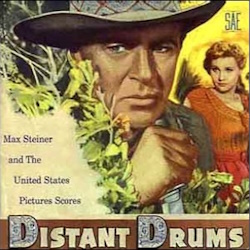
DISTANT DRUMS – Max Steiner
 GREATEST SCORES OF THE TWENTIETH CENTURY
Original Review by Craig Lysy
United States Pictures served as a production company for Warner Brothers. For their next project they were assigned production for a film that would showcase Warner Brothers marquee star Gary Cooper. A screenplay was tasked to writers Niven Busch and Martine Rackin, who decided to use the backdrop of the Second Seminole War for their story. Milton Sperling was placed in charge of production, and Raoul Walsh would direct. Cooper would star as Captain Quincy Wyatt, joined by Richard Webb as Lieutenant Tufts, Mari Andon as Judy Becket, Arthur Hunnicutt as Monk, Carl Harbaugh as Duprez, Robert Barrat as General Zachary Taylor, and Larry Carper as Chief Ocala. Read more…
LONG DISTANCE – Steven Price
 Original Review by Jonathan Broxton
Long Distance is a science fiction action-adventure movie directed by Josh Gordon and Will Speck, starring Anthony Ramos, Naomi Scott, Kristofer Hivju, and the voice of Zachary Quinto. Ramos and Scott play Ramirez and Calloway, a pair of astronauts who crash-land on different sides of a remote planet after an asteroid destroys their space mining vessel; the pair try to find each other and await rescue, but in order to do so they have to survive the harsh environment of the planet, while avoiding the deadly spider-like alien creatures who roam its surface. Read more…
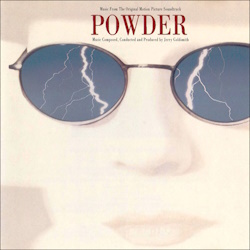
POWDER – Jerry Goldsmith
 THROWBACK THIRTY
Original Review by Jonathan Broxton
Powder is a science fiction-drama film written and directed by Victor Salva, starring Jeff Goldblum, Mary Steenburgen, Lance Henriksen, and Sean Patrick Flanery in the title role as Jeremy “Powder” Reed, a reclusive young man with albinism and extraordinary intellectual and psychic abilities. Jeremy was raised in isolation by his grandparents after his mother was struck by lightning while pregnant with him, but after their deaths Jeremy is brought into the wider world by the kind local sheriff Barnum (Henriksen), school counselor Jessie (Steenburgen), and science teacher Ripley (Goldblum), who recognizes Jeremy’s genius-level intellect and apparently paranormal abilities, which include reading minds, sensing emotions, and even manipulating electrical energy. However, despite their efforts to help him adjust, Jeremy faces alienation, ridicule, and even violence from his peers due to his appearance and strange powers. Read more…
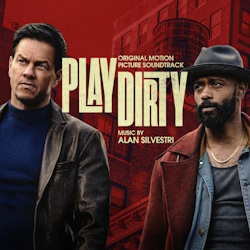
PLAY DIRTY – Alan Silvestri
 Original Review by Jonathan Broxton
A fun action-thriller crime caper from writer-director Shane Black, Play Dirty is the seventh film based on the ‘Parker’ series of novels by author Donald E. Westlake, writing under the pseudonym Richard Stark. In this film Mark Wahlberg steps into the cinematic shoes previously occupied by notables such as Lee Marvin (Point Blank, 1967), Robert Duvall (The Outfit, 1973), and Mel Gibson (Payback, 1999) as the titular hard-boiled professional thief. In this story Parker gets a shot at a major heist, but to pull it off he and his team must outsmart a South American dictator, the New York mob, and the world’s richest man. The film co-stars LaKeith Stanfield, Rosa Salazar, Keegan-Michael Key, Gretchen Mol, Thomas Jane, and Tony Shalhoub, and premiered on Amazon Prime Video in October 2025, to mostly positive reviews. Read more…
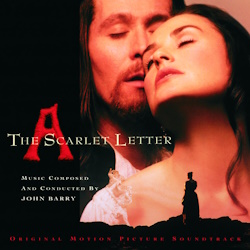
THE SCARLET LETTER – John Barry
 THROWBACK THIRTY
Original Review by Jonathan Broxton
Nathaniel Hawthorne’s 1850 work The Scarlet Letter is widely considered one of the greatest American novels, blending psychological depth, historical setting, and moral allegory into a story of sin, adultery and redemption. Set in 17th-century Puritan Boston, the story follows Hester Prynne who, while estranged from her cruel husband Roger, had an affair, conceived out of wedlock, and ultimately gave birth to a daughter, Pearl. Convicted of adultery, Hester is punished and forced wear a scarlet letter “A” sewn onto her clothing as a constant reminder of her sin. Hester refuses to publicly reveal the identity of Pearl’s father, but the reader eventually learns that the father is Reverend Arthur Dimmesdale, a young and respected local minister. Dimmesdale is consumed by guilt over what happened to Hester but lacks the courage to confess; things are then made worse when Roger returns to Boston and vows to uncover and torment the man responsible for what happened to Hester. Read more…
DOWNTON ABBEY: THE GRAND FINALE – John Lunn
 Original Review by Jonathan Broxton
After 15 years, 52 TV episodes, and two theatrical movies, the Downton Abbey saga comes to a close with this third and final film, Downton Abbey: The Grand Finale. For those who don’t know, Downton Abbey is a sprawling British period drama set in the early 20th century, following the lives of the aristocratic Crawley family and their household staff at the grand Yorkshire estate of Downton Abbey. The series begins in 1912 with the sinking of the Titanic, which disrupts the line of inheritance for the Crawley estate. From there, it traces the interplay between the family’s upstairs world of privilege and the downstairs world of the servants, showing how their lives are deeply intertwined. Across its six seasons the story spans major historical events – the First World War, the Spanish flu pandemic, the decline of the British aristocracy, women’s suffrage – and looks at how everyone at Downton adjusts to these social changes. The Grand Finale is set in 1930, is directed by Simon Curtis from a screenplay by the ubiquitous Julian Fellowes, and sees Hugh Bonneville, Jim Carter, and Michelle Dockery all returning to their famous roles. Read more…
THE AMERICAN SOUTHWEST – Noah Sorota
 Original Review by Jonathan Broxton
Nature documentaries have always provided fertile ground for film composers. From the epic scores by Elmer Bernstein and Jerome Moross for National Geographic in the 1960s, to Georges Delerue and John Scott’s work for Jacques Cousteau; from the groundbreaking work by composers like Edward Williams and George Fenton for the BBC Natural History Unit, to more recent international works by composers like Panu Aaltio, the world and its wonders have inspired some truly compelling orchestral music. The latest title to join this list is The American Southwest; directed by Ben Masters and narrated by indigenous environmentalist Quannah Chasinghorse, the film examines the astonishing beauty and biodiversity of the Colorado River as it flows through the U.S. states of Arizona, Nevada, and Utah. It looks at the uncertain future the river faces as is it threatened by environmental destruction from dams, and features never-before-seen wildlife sequences such as beavers building wetlands, condors recovering from the brink of extinction, and jaguars returning to American soil. Read more…
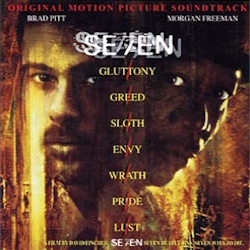
SEVEN – Howard Shore
 THROWBACK THIRTY
Original Review by Jonathan Broxton
The world is a fine place and worth fighting for. I agree with the second part. — Ernest Hemingway.
What’s in the box?!? — Detective David Mills.
Seven – usually stylized as ‘Se7en’ – is a dark psychological crime thriller written by Andrew Kevin Walker and directed by David Fincher, in what was his second feature film after his 1992 debut Alien 3. The film follows two homicide detectives – weary veteran William Somerset (Morgan Freeman), who is on the verge of retirement, and impulsive newcomer David Mills (Brad Pitt), who has recently transferred to the city with his wife Tracy (Gwyneth Paltrow) – as they investigate a string of grisly murders staged around the seven deadly sins: gluttony, greed, sloth, lust, pride, envy, and wrath. Each crime scene is meticulously designed by the killer to reflect the sin being punished, and the murders grow increasingly disturbing. The investigation eventually leads the detectives to a deranged but calculating serial killer known only as John Doe (Kevin Spacey), who sees himself as a moral avenger exposing society’s corruption through his crimes, and whose final murder is directly targeted at the detectives investigating him. Read more…
AMERICANA – David Fleming
 Original Review by Jonathan Broxton
Americana is a modern western crime thriller written and directed by Tony Tost, starring Sydney Sweeney, Paul Walter Hauser, Eric Dane, Zahn McClarnon, and Halsey. The film centers on a rare Native American artifact that falls into the black market, sparking an increasingly violent conflict between various characters including a waitress, a US military veteran, a hardened criminal, and an indigenous leader. The film was shot in 2022 in New Mexico and premiered at the South by Southwest Film & TV Festival in 2023, but then it languished in distribution hell for a couple of years, before finally receiving a belated theatrical release in August 2025. Unfortunately, despite decent critical reviews, the film was an enormous commercial flop and disappeared from cinemas after just a couple of weeks, with some people suggesting that a backlash to Sweeney’s recent controversial American Eagle jeans commercial may have contributed to its failure. Read more…
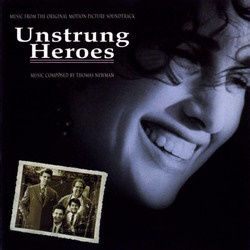
UNSTRUNG HEROES – Thomas Newman
 THROWBACK THIRTY
Original Review by Jonathan Broxton
Unstrung Heroes is a coming-of-age comedy-drama directed by Diane Keaton, adapted from journalist Franz Lidz’s memoir of the same name. The story is set in the 1960s and follows twelve-year-old Steven Lidz (Nathan Watt), a sensitive and imaginative boy growing up in Los Angeles. Steven’s father Sid (John Turturro) is a brilliant but eccentric inventor who is emotionally distant, while his mother, Selma (Andie MacDowell), is warm, loving, and supportive. However, when Selma is diagnosed with terminal cancer, the family is shaken; struggling to cope with his mother’s illness and his father’s inability to express vulnerability, Steven decides to leave home and live with his two eccentric uncles, Arthur (Michael Richards) a paranoid conspiracy theorist, and Danny (Maury Chaykin), a gentle, childlike dreamer. Though unconventional, the uncles provide Steven with comfort, eccentric wisdom, and a sense of belonging, and through their unconventional guidance, Steven learns to process grief, embrace imagination, and find resilience in the face of loss. Read more…
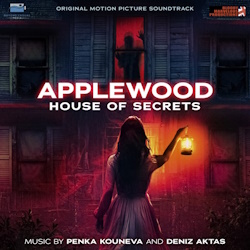
APPLEWOOD – Penka Kouneva, Deniz Aktaş
 Original Review by Jonathan Broxton
It’s not often than I feel compelled to write about the music for low-budget straight-to-streaming horror movies because, frankly, they are not usually very good. More often than not they are little more than basic string and keyboard textures punctuated with stingers and musical jump-scares. Unsophisticated, disappointing, just barely functional, with very little to recommend and even less to like out of context. They are often the domain of young up-and-coming composers still finding their feet, and although many of today’s top film music names cut their teeth in the genre, there remain dozens and dozens of others toiling away down there, writing music that nobody hears for films that few people see. Applewood is different. It’s certainly a low-profile and low-budget film, but what it lacks in prestige it more than makes up for in terms of talent and impact. Read more…
SANDS OF IWO JIMA – Victor Young
 GREATEST SCORES OF THE TWENTIETH CENTURY
Original Review by Craig Lysy
Writer Harry Brown wrote a story that offered an account of the epic battle by the Marines to take the island of Iwo Jima during WWII. He then teamed with fellow writer Edward Grant to adapt it and write a screenplay, which they presented to Republic Pictures. Republic Pictures management thought the story of one of America’s greatest achievements in the war would resonate with the public. As such they purchased the film rights, placed Herbert Yates in charge of production with a $1.4 million budget, and tasked Allan Dwan with directing. An outstanding cast was assembled, which included John Wayne in the starring role of Sergeant John Stryker. He was joined by John Agar as PFC Pete Conway, Forest Tucker as PFC Al Thomas, Adele Mara as Allison Bromley, and Arthur Franz as Corporal Robert Dunne, and the narrator. Read more…
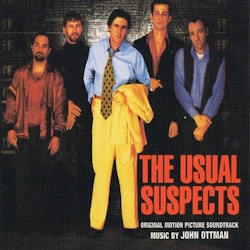
THE USUAL SUSPECTS – John Ottman
 THROWBACK THIRTY
Original Review by Jonathan Broxton
The greatest trick the devil ever pulled was convincing the world he didn’t exist.
This famous quote from the writings of 19th century French poet Charles Baudelaire is at the heart of the story of The Usual Suspects, the film which marked the mainstream debuts of director Bryan Singer and screenwriter Christopher McQuarrie. It is a neo-noir crime thriller that unfolds as a story within a story, as told to federal agent Dave Kujan (Chazz Palminteri) by Verbal Kint (Kevin Spacey), a small-time con artist with cerebral palsy; Kint is one of two survivors of an explosion on a ship docked in San Pedro harbor in Los Angeles. Kint recounts the events leading up to the explosion, telling Kujan that five criminals – himself, plus Michael McManus (Stephen Baldwin), Fred Fenster (Benicio del Toro), Dean Keaton (Gabriel Byrne), and Todd Hockney (Kevin Pollak) – met during a police lineup in New York, and began committing heists together. Eventually, they are drawn into the orbit of the mysterious, almost mythical crime lord Keyser Söze, a figure so feared that most refuse to speak his name. Söze coerces the group into attacking the ship in San Pedro in order to eliminate witnesses who can identify him, and eventually Kujan comes to believe that Keaton – a former corrupt cop apparently trying to go straight – must have been Söze. Read more…
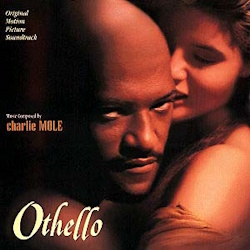
OTHELLO – Charlie Mole
 THROWBACK THIRTY
Original Review by Jonathan Broxton
O, beware, my lord, of jealousy, it is the green-eyed monster which doth mock the meat it feeds on.
One of William Shakespeare’s most enduring and celebrated plays, Othello is a classic tale of jealousy, manipulation, and betrayal, with hint of racism thrown in for good measure. In the story Othello, a respected Moorish general in Venice, secretly marries Desdemona, the daughter of a nobleman. His ensign, Iago, jealous of Othello’s success and resentful at being passed over for promotion, schemes to destroy him. Iago tricks Othello into believing that Desdemona has been unfaithful with his lieutenant, Cassio. Consumed by jealousy, Othello murders Desdemona – only to discover too late that she was innocent and that Iago deceived him. Overcome with grief and guilt, Othello takes his own life, while Iago is exposed and punished. Read more…
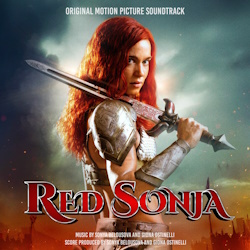
RED SONJA – Sonya Belousova, Giona Ostinelli
 Original Review by Jonathan Broxton
The character Red Sonja was created for Marvel comics in 1973 by writer Roy Thomas and artist Barry Windsor-Smith as a companion to their already-established Conan the Barbarian character, who was himself created by the groundbreaking writer Robert Howard in the 1930s. A flame-haired female warrior in a savage world, she used her sexuality as a weapon as much as her sword, and she accompanied Conan on many comic book adventures; when Conan got his own movie franchise starring Arnold Schwarzenegger in 1982, Sonja quickly followed suit in 1985, with Danish supermodel Brigitte Nielson in the title role. Now, almost 40 years later, a new version of Red Sonja has emerged, directed by M. J. Bassett, and starring Italian actress Matilda Lutz in the title role. The film follows the adventures of Sonja, who unites with a group of unlikely warriors to face off against the evil emperor Dragan and his cruel sorceress wife Annisia, who slaughtered her family when she was a child. Read more…

Shop at the Movie Music UK Store

Member of the

 MOVIE MUSIC UK