LA DOUBLE VIE DE VÉRONIQUE/THE DOUBLE LIFE OF VERONIKA – Zbigniew Preisner
 THROWBACK THIRTY
Original Review by Jonathan Broxton
The Double Life of Veronika, or La Double Vie de Véronique, is a French-Polish drama film written and directed by the late great auteur Krzysztof Kieślowski. It tells the story of two nearly identical women, one living in Poland, the other in France, who do not know each other, but whose lives are nevertheless profoundly connected. Irène Jacob plays both women; Weronika, a Polish choir soprano, and her double, Véronique, a French music teacher, who embarks on an unusual romance with Alexandre (Philippe Volter), a puppeteer who may be able to help her with her existential issues. The Criterion Collection DVD of the film calls it “a ravishing, mysterious rumination on identity, love, and human intuition,” and there’s really nothing more I can add to that. It’s a visual tone poem, an enigmatic exploration of these two women’s lives, in which music plays an important part. Read more…
MORTAL KOMBAT – Benjamin Wallfisch
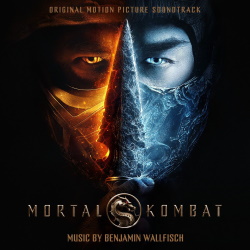 Original Review by Jonathan Broxton
The video game Mortal Kombat, originally created and developed by the American video game developer Midway Games in 1992, is one of the most popular and successful fighting games in the history of the industry. Originally conceived as a video game spinoff of Jean-Claude Van Damme movies such as Kickboxer and Bloodsport, it eventually morphed into a fantasy setting in which human warriors, chosen by the gods, face off against assorted demons and monsters in a fighting tournament, the victors of which would go on to control the universe. The game is notorious for its incredibly gruesome and graphic in-game ‘fatalities,’ the realism of which eventually led to the creation of the Entertainment Software Rating Board and its age-based rating system, but this has not stopped it from becoming an expanding franchise that now comprises several spinoff games, comic books, an animated TV series, and several movies. Read more…
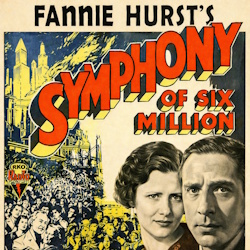
SYMPHONY OF SIX MILLION – Max Steiner
 GREATEST SCORES OF THE TWENTIETH CENTURY
Original Review by Craig Lysy
In late 1931 legendary David O. Selznick became RKO Studio’s Production Chief. He decided that his inaugural film would be the melodrama “Night Bell”, which would be adapted from the story of the same name by Fannie Hurst. He first changed the film title to “Symphony of Six Million” – a reference to the population of New York City – and then rejected the first screenplay, demanding that it reclaim the cultural sensibilities offered in the original story. He wanted his film to offer a mirror to the life of Jewish immigrants in America and the challenges created by the cultural assimilation of their children. Selznick and Pandro S. Berman would produce the film, Gregory La Cava was hired to direct, and a budget of $270,000 was provided. The cast would include Ricardo Cortez as Dr. Felix Klauber, and his family, Gregory Ratoff as his father Meyer Klauber, Anna Appel as his mother Hannah Klauber, Noel Madison as his brother Magnus Klauber, and Lita Chevret as his sister Birdie Klauber. Irene Dunne would play love interest Jessica, and John St. Polis his colleague Dr. Schifflen. Read more…
HONEYDEW – John Mehrmann
 Original Review by Jonathan Broxton
Honeydew is a new low-budget horror drama written by Dan Kennedy and directed by Devereux Milburn. It tells the story of a young couple, Sam and Rylie (played by Sawyer Spielberg, the son of Steven, and Malin Barr), who seek shelter in the home of an aging farmer named Karen (Barbara Kingsley) and her peculiar near-mummified son Gunni (Jamie Bradley), and gradually begin to experience strange cravings and hallucinations. Roger Ebert’s website called it a “camping-trip-gone-wrong horror” and a “tribute to The Texas Chain Saw Massacre with some Hansel and Gretel mixed in,” and talked about the unnerving atmosphere the film creates, with its oddly orange-hued color filters, oddball characters, and atmosphere of encroaching dread. This latter element is increased enormously by the film’s score by composer John Mehrmann. Read more…
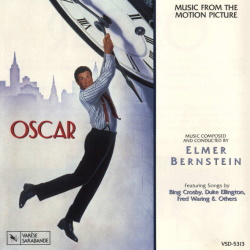
OSCAR – Elmer Bernstein
 THROWBACK THIRTY
Original Review by Jonathan Broxton
Oscar is a comedy film starring Sylvester Stallone, directed by John Landis, adapted from Édouard Molinaro’s 1967 French film of the same name. Stallone plays Angelo “Snaps” Provolone, a gangster in New York in the 1930s, who promises his dying father that he will give up a life of crime and go straight. However, no matter how hard he tries, he keeps getting pulled back into his old ways, and the local police refuse to believe that he has reformed. Not only that, Snaps has to deal with a series of comic misunderstandings involving his accountant, his wanderlust-stricken daughter, a case of mistaken identity, a fake pregnancy, and his former chauffeur Oscar, who unwittingly becomes the center of attention of everything. The film has an astonishing supporting cast – including Ornella Muti, Don Ameche, Tim Curry, Chazz Palminteri, Kirk Douglas, and Marisa Tomei in her mainstream screen debut – but unfortunately the film was a flop, mostly because people couldn’t see Stallone in a comedy role. As director Landis said later, “people couldn’t understand why he didn’t take his shirt off and kill anybody”. Read more…
THE FATHER and NOMADLAND – Ludovico Einaudi
 Original Review by Jonathan Broxton
Two of the most critically acclaimed films of the 2020-2021 Oscar season were The Father and Nomadland. The Father is a searing, emotionally devastating look at the effects of dementia; it’s directed by Florian Zeller and stars Anthony Hopkins as Anthony, an ageing man whose deteriorating mental faculties are brought into sharp relief through his interactions with four individuals – Olivia Colman, Rufus Sewell, Olivia Williams, and Mark Gatiss – all of whom appear as different members of his family, or not, at any given time. The way Zeller creates an atmosphere of disorientation and confusion for the audience, reflecting the disorientation and confusion felt by Anthony, is masterful and terribly moving, while Hopkins himself gives one of his career best performances. Nomadland, on the other hand, is a slow and naturalistic road movie directed by Chloe Zhao, starring Frances McDormand as a woman who seeks to escape from contemporary life by joining a community of people who live out of camper vans as modern-day nomads. Read more…
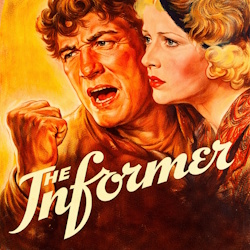
THE INFORMER – Max Steiner
 GREATEST SCORES OF THE TWENTIETH CENTURY
Original Review by Craig Lysy
Director John Ford came across a 1925 novel, The Informer by Liam O’Flaherty, which explored the dark underside of the Irish War of Independence. He felt that the story provided suspense, drama, betrayal, and tragedy, which would translate well to the big screen. RKO Studios however was reticent to proceed with the project due to its depressing subject matter and unsympathetic lead, but they relented following Ford’s great success with his prior film The Lost Patrol, which earned their trust and permission to proceed with a budget of $250,000. Dudley Nichols was hired to write the screenplay and a fine cast was assembled which included Victor McLaglen as Gypo Nolan, Heather Angel as Mary McPhillip, Preston Foster as Dan Gallagher, Margot Grahame as Katie Madden, Wallace Ford as Frankie McPhillip, and Una O’Connor as Mrs. McPhillip. Read more…
Academy Award Winners 2020
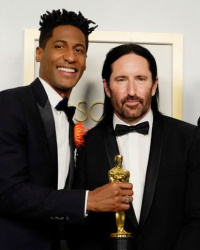 The Academy of Motion Picture Arts and Sciences (AMPAS) have announced the winners of the 93rd Academy Awards, honoring the best in film in 2020.
In the Best Original Score category composers Trent Reznor, Atticus Ross, and Jon Batiste won the award for their score for the Pixar existential animated film Soul. With this win Reznor and Ross double their Oscar tally, having previously won for The Social Network in 2010. Accepting the award for the trio, Batiste said:
“Hello! Hello! Man, you know what’s deep is that… God gave us twelve notes. It’s the same twelve notes Duke Ellington had. Bach had. It’s the same twelve, Nina Simone. And all the nominees. I just wanna first point out that every gift is special. Every contribution with music that comes from the divine, into the instruments, into the film, into the minds and hearts and souls of every person who hears it, the stories that happen when you listen to it and watch it, and the stories you share, the moments you create, the memories you make… man. It’s just so incredibly special, and I just want to first recognize the nominees and say that I’m incredibly – I speak for all of us – we are incredibly humbled and grateful to the Academy for this recognition, and I’m just thankful to God for those twelve notes, man. That’s so dope. Thank you to my parents, Sulaika for your support and love, for coming here with me, flew on a plane for the first time a year. My parents took me around clubs in New Orleans when I was ten years old, put me in piano lessons with Miss Shirley William. Hahaaa! The Vibe! Just so much, so much has happened, this moment is a culmination of a series of miracles, and I just can’t go into all of them, we don’t have that much time, but it’s just so incredibly powerful to be standing here in the lineage that we come from and the lineage in this film.
The collaborators on this film are the best that you could have ever asked for, the most generous, rigorously visionary collaborators. Pete Doctor is a… I love this man. Pete Doctor, he’s a genius and a visionary. Dana Murray, Kent Powers, Tom MacDougall at Disney, thank you for welcoming us to the family with open arms. This was so much of a true collaborative process. My team, thank you for just dealing with me because I get ideas all the time, I’m changing direction, y’all are holding me down. Michael, Chris, Adam, all the people. And thank you all for doing what y’all do, putting it on the line, putting yourself out there. It’s hard to put yourself out there, just thank you for putting yourself out there, I’m a fan of, like, everybody here. So, much love, much light to you, I love you even if I don’t know ya! Lay it on!”
Later, in comments made backstage, Reznor said “Well, I would like to thank my wife and my awesome kids, for providing the energy and the spirituality and the engine that allows me to tap in to… and just to be happy and alive. Thank you Academy for the recognition. It really means a lot, thank you”. Ross followed by saying “I’d like to thank the Academy, and most of all I’d like to thank my wife Claudia and my children. I love them, and thank you”.
The other nominees were Terence Blanchard for Da 5 Bloods, James Newton Howard for News of the World, Emile Mosseri for Minari, and Trent Reznor and Atticus Ross for Mank.
In the Best Original Song category, the winners were Dernst Emile II, Gabriella Wilson (H.E.R.), and Tiara Thomas for “Fight For You” from Judas and the Black Messiah, the biopic about the founder of the Black Panthers, Fred Hampton.
The other nominees were Savan Kotecha, Max Grahn (Fat Max Gsus), and Rickard Göransson for “Húsavík” from Eurovision Song Contest: The Story of Fire Saga; Leslie Odom Jr. and Sam Ashworth for “Speak Now” from One Night in Miami; Daniel Pemberton and Celeste Waite for “Hear My Voice” from The Trial of the Chicago 7; and Diane Warren and Laura Pausini for “Io Sì (Seen)” from The Life Ahead.
TOY SOLDIERS – Robert Folk
 THROWBACK THIRTY
Original Review by Jonathan Broxton
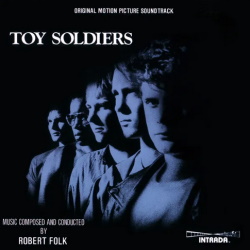
Toy Soldiers is an action drama directed by Daniel Petrie Jr., from a screenplay written by David Koepp. The plot concerns a Colombian terrorist, Luis Cali (Andrew Divoff), who launches a violent assault on an elite American prep school where the son of the judge who is prosecuting his drug lord father is a student. When his intended target cannot be found, Cali instead takes the entire school hostage, including the dean (Louis Gossett) and headmaster (Denholm Elliott), demanding that his father be released. However, Cali doesn’t count on a group of resourceful and rebellious students – Sean Astin and Wil Wheaton among them – who take steps to end the siege before the authorities can end it themselves. The film was a modest box office success back when it was released, but it has mostly been forgotten these days, which is quite unfortunate because it is not without its guilty pleasures. Read more…
MANIPULATED – Scott Glasgow
 Original Review by Jonathan Broxton
Manipulated is a new low-budget mystery thriller whodunit, written and directed by Matt Berman. The film stars Kelly Perine as Scott Keating, an experienced interrogator who works with law enforcement to track down serial killers. In the aftermath of a personal tragedy, Keating returns to his hometown, but soon becomes embroiled in a new murder case, and is enlisted to help the police solve a case mystery can’t crack, and figure out which of three women killed a man in cold blood. The film has a fun B-movie supporting cast including the likes of Traci Lords, Chase Masterson, Michael Paré, and John de Lancie, and recently premiered straight-to-streaming in the United States. Read more…
JUAREZ – Erich Wolfgang Korngold
 GREATEST SCORES OF THE TWENTIETH CENTURY
Original Review by Craig Lysy
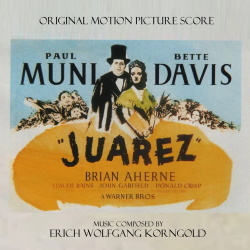
In 1935 producer Hal Wallis sought out director Max Reinhardt’s assistance in his next project; bringing the tale of Maximilian and Juárez to the big screen. He believed that Bertita Harding’s 1934 novel The Phantom Crown was a tragic tale, which needed its story told. Jack L. Warner agreed and purchased the film rights to the novel, as well as the play “Juárez and Maximilian” by Franz Werfel. He tasked Aeneas McKenzie in writing the screenplay, and to ensure historical accuracy three hundred books were acquired on the subject and two historians were hired to assist with the script. The initial script was too massive to present in a single film, so John Huston and Wolfgang Reinhardt were hired to make the necessary edits. Progress was made and in 1938 the studio gave the green light for production with William Dieterle was given the director reins. A stellar cast was hired, with Paul Muni as Benito Juárez, Bette Davis as Carlotta of Mexico, Brian Aherne as Maximilian I of Mexico, Claude Rains as Emperor Napoleon III of France, and John Garfield as Porfirio Diaz. Read more…
THUNDER FORCE – Fil Eisler
 Original Review by Jonathan Broxton
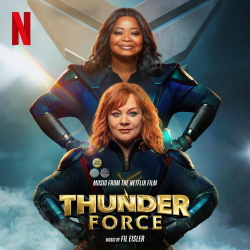
The latest high-concept comedy from husband-and-wife filmmaking team Ben Falcone and Melissa McCarthy is Thunder Force, a spoof of recent superhero movies. The film is set in a world almost 40 years after a ‘cosmic ray blast’ turned some of Chicago’s inhabitants into “miscreants,” lethal villains with superhero-like powers. Melissa McCarthy plays Lydia, a middle-aged woman whose former high school best friend Emily (Octavia Spencer) is now the CEO of a scientific research company. Despite the pair having been estranged for decades, Lydia shows up at Emily’s office complex one day to ask her to their school reunion; while there, Lydia inadvertently injects herself with a serum which gives her superpowers of her own. It turns out that Emily has been secretly developing a way to fight back against the Miscreants by inventing a way to turn regular people into superheroes – and now, with Lydia having taken the serum, she and Emily must join together as the crime-fighting duo Thunder Force. The film co-stars Bobby Cannavale, Pom Klementieff, and Jason Bateman wearing prosthetic crab claws, and much like last year’s Superintelligence was a fun, lightweight action-comedy that had way more laughs than it had any right to have. Read more…
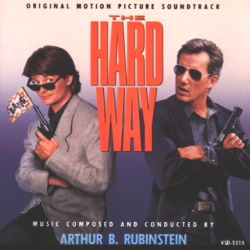
THE HARD WAY – Arthur B. Rubinstein
 THROWBACK THIRTY
Original Review by Jonathan Broxton
One of the first star vehicles written for Michael J. Fox to capitalize on his post-Back to the Future popularity was this film, the action-comedy The Hard Way, directed by John Badham. Fox plays Nick Lang, a popular movie star who is researching his next role, playing a tough on-screen detective. As part of his preparation Lang asks to observe a real life tough cop, and is partnered with John Moss, a hard-boiled NYPD veteran, played by James Woods. Moss is irritated by Lang’s superficiality and irritating cheerfulness, and initially grudgingly agrees to go along with things, but soon is trying everything in order to get Nick out of his life – until the pair of them get involved in the case of the so-called Party Crasher, a serial killer targeting women he finds in nightclubs. The film co-starred Stephen Lang and Annabella Sciorra, and featured a genuinely great score by the late Arthur B. Rubinstein. Read more…
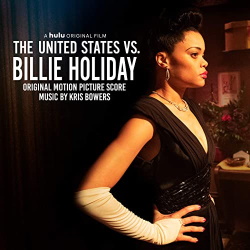
THE UNITED STATES VS. BILLIE HOLIDAY – Kris Bowers
 Original Review by Jonathan Broxton
There have been several films and plays made about the life and work of the great jazz singer Billie Holiday, who died in 1959 aged just 44. Lady Sings the Blues from 1972 earned Diana Ross an Academy Award nomination for Best Actress, while Audra McDonald received unanimous critical praise for her performance as her in Lady Day at Emerson’s Bar and Grill a few years ago. The latest actress to play her on screen is Andra Day in the Lee Daniels-directed The United States vs. Billie Holiday. The film follows Holiday at the height of her fame and explores two story strands that speak to the African American experience in the 1940s; the first concerns her role at the center of the ‘War on Drugs’ wherein Holiday – a long-time heroin addict – becomes a target for the federal government and is seduced by and has a long-term relationship with narcotics agent Jimmy Fletcher (Trevante Rhodes), who was taking part in an undercover sting operation against her. The second concerns the effort of similar authorities to stop her performing the controversial song “Strange Fruit,” an anti-racism song written in response to the lynchings of young black men in the 1930s. Read more…
BAFTA Winners 2020
 The British Academy of Film and Television Arts (BAFTA) have announced the winners of the 74th British Academy Film Awards, honoring the best in film in 2020.
In the Best Original Music category, the winners were Trent Reznor, Atticus Ross, and Jon Batiste, who won the award for their work on the Pixar animated film Soul. Accepting the award on behalf of the trio via Zoom, British composer Atticus Ross said:
“Wow, thank you BAFTA. First off I’d like to celebrate the incredible talent of my musical partners, Trent Reznor and Jon Batiste. For me, the message of Soul is to embrace the moment, so in this crazy moment I’d like to embrace everyone at Pixar, especially Pete Docter, Kent Powers, Dana Murray, and Tom McDougall. I know that Trent and Jon would want me to thank their families. I’d like to thank my wife Claudia. You endlessly amaze me. My children – come! – I love you! Thank you BAFTAs, this means so much to all of us.”
The other nominees were James Newton Howard for News of the World, Emile Mosseri for Minari, Trent Reznor and Atticus Ross for Mank, and Anthony Willis for Promising Young Woman.

Shop at the Movie Music UK Store

Member of the

 MOVIE MUSIC UK