LIFE ON OUR PLANET – Lorne Balfe
 Original Review by Jonathan Broxton
I don’t know whether it’s my imagination or not, but there seem to be more nature documentary series right now than ever before. When I was a kid, the only nature documentaries I saw were made by the BBC Natural History Unit, they were narrated by Sir David Attenborough, and they came out once every couple of years to great fanfare and acclaim. The first one I remember watching as it aired was The Living Planet in 1984, followed by The Trials of Life six years later in 1990. Now, everyone is getting in on the act; Attenborough and the BBC are still making them, of course, and they are doing them magnificently, but in recent years Netflix and National Geographic and Disney Nature and seemingly dozens of other companies are getting in on the act too, to the point where I wonder whether we might be getting a little over-saturated. What else is there really left to say about polar bears or blue whales? The latest such documentary to be released is Life On Our Planet, which will begin airing on Netflix at the end October 2023. It’s executive-produced by Steven Spielberg, is narrated by Morgan Freeman, and ambitiously attempts to look at the multi-billion year history of the world, from the time of the dinosaurs to the present day. It looks to feature some absolutely astonishing cinematography, and will include a hybrid of both computer-generated imagery and live-action film. Read more…
DEMOLITION MAN – Elliot Goldenthal
 THROWBACK THIRTY
Original Review by Jonathan Broxton
Mellow greetings. What seems to be your boggle?
One of my favorite action movies of the 1990s is Demolition Man, directed by Marco Brambilla from a screenplay by Peter Lenkov, Daniel Waters, and Robert Reneau (the latter of whom might be better known to readers as ‘Scott Bettencourt,’ a regular contributor to Film Score Monthly magazine). It’s a dystopian, futuristic sci-fi story with a heavy dose of satire and social commentary, interspersed with several outstanding action set pieces. The film stars Sylvester Stallone as John Spartan, a renegade LAPD cop from the 1990s known as the “demolition man” for his unorthodox and sometimes brutal law enforcement tactics, especially when it comes down to catching his arch-nemesis, violent criminal Simon Phoenix (Wesley Snipes). After one such confrontation Phoenix is captured and cryogenically frozen in a ‘cryo-prison’ as punishment – but Spartan is framed for a murder he did not commit, and is frozen alongside him. In 2032, Phoenix somehow breaks out of the prison and emerges into ‘San Angeles,’ a utopian, peaceful, politically correct society run by the benevolent yet controlling Dr. Raymond Cocteau (Nigel Hawthorne). However, when Phoenix resumes his life of crime in a city with a police force that is simply unable to deal with his violence, Spartan is thawed out too, and teams up with Lenina Huxley (Sandra Bullock), a 2030s police officer who idolizes 1990s culture, to stop him. Read more…
THE CREATOR – Hans Zimmer
 Original Review by Jonathan Broxton
The Creator is a science fiction epic from writer/director Gareth Edwards, set in a world where artificial intelligence has become wholly integrated into society, in the form of both robots and human/A.I. hybrids known as ‘sims’. However, after the A.I. detonates a nuclear warhead in Los Angeles, essentially destroying the city, the world descends into war and chaos. Years later, US army special forces agent Joshua is recruited to hunt down and kill ‘the creator,’ the elusive architect of a mysterious new type of advanced A.I. weapon that has the power to end the war and destroy humanity. However, things change for Joshua when he discovers that this ‘super weapon’ is actually a genetically modified child, who just wants humans and sims to live in peace. The film stars John David Washington, Gemma Chan, Ken Watanabe, Alison Janney, and newcomer Madeleine Yuna Voyles as the mysterious child, and it’s mostly good. It has been marketed as a cerebral, ambitious new science fiction story, and while it is certainly visually and technically impressive, I found it to be a weird conceptual mishmash derivative of other, better films: one part Blade Runner, one part Apocalypse Now, with some other Vietnam allegory thrown in for good measure. Unusually, the central relationship between Joshua and the mystical child actually kept reminding me of the one between Eddie Murphy and The Golden Child from the 1986 film of the same name, which I’m sure is not what the filmmakers envisioned. I liked it, but I wanted to like it more than I did. Read more…
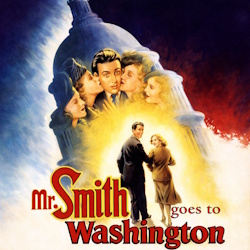
MR. SMITH GOES TO WASHINGTON – Dimitri Tiomkin
 GREATEST SCORES OF THE TWENTIETH CENTURY
Original Review by Craig Lysy
Columbia Pictures decided to purchase an unpublished story “The Gentleman From Montana” by Lewis R. Foster to adapt for a sequel to their film “Mr. Deeds Goes to Town (1936), which starred Gary Cooper and Jean Arthur. Frank Capra was placed in charge of production with a $1.5 million budget, would also direct, and Sidney Buchman and Myles Connolly were hired to write the screenplay. Gary Cooper was unavailable to reprise his role and so Capra decided to borrow James Stewart from MGM who he believed was perfectly suited to the role of Jefferson Smith. Joining him would be Jean Arthur as Clarissa Saunders, Claude Rains as Senator Joseph Harrison Paine, Edward Arnold as Jim Taylor, Guy Kibbee as Governor Hubert Hopper, Thomas Mitchell as Diz Moe and Beulah Bondi as Ma Smith. Read more…
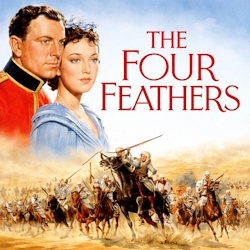
THE FOUR FEATHERS – Miklós Rózsa
 GREATEST SCORES OF THE TWENTIETH CENTURY
Original Review by Craig Lysy
Renowned film maker brothers Zoltan and Alexander Korda decided that for their next film they wanted to go for a historical epic. They chose to adapt the 1902 novel “The Four Feathers” by A. E. Wilson, which tells the story of the Madhist Wars circa 1881. Alexander would oversee production with a budget of $1.0 million, Zoltan would direct, and R. C. Sherriff, Lajos Bíró and Arthur Wimperis were hired to write the screenplay. The cast would include John Clements as Harry Faversham, Ralph Richardson as Captain John Durrance, C. Aubrey Smith as General Burroughs, and Jack Allen as Lieutenant Thomas Willoughby. Read more…
WHEN WORLDS COLLIDE – Leith Stevens
 GREATEST SCORES OF THE TWENTIETH CENTURY
Original Review by Craig Lysy
In 1933 Paramount Pictures purchased the film rights of the novel “When Worlds Collide” by Philip Wylie and Edwin Balmer. Director Cecil B. DeMille intended to move the project into production after filming wrapped on “This Day and Age,”but lack of a script and funding caused the studio scrap the project. In 1949 producer George Pal envisioned the story as a big-budget science fiction movie. His proposal was initially turned down by studio executive Barney Balaban, but following the success of his film Destination Moon in 1951, Balaban had a change of heart and gave a green light to the project. Pal was assigned production with a budget of $936,000 – much less than he believed was necessary to implement his vision. Rudolph Maté was tasked with directing, and Sidney Boehm would write the screenplay. Given budgetary constraints, Pal opted to go with a cast of unknowns, including Richard Derr as Dave Randall, Barbara Rush as Joyce Hendron, Peter Hansen as Dr. Tony Drake, Larry Keating as Dr. Cole Hendron, and John Hoyt as Sydney Stanton. Read more…
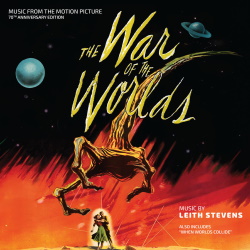
THE WAR OF THE WORLDS – Leith Stevens
 GREATEST SCORES OF THE TWENTIETH CENTURY
Original Review by Craig Lysy
In 1925 Paramount Pictures purchased the film rights to the 1897 H. G. Wells novel “War of the Worlds”. For twenty-six years the studio struggled due to technical challenges to bring the film into production under several producers – Cecil B. DeMille, Arzén Cserépy, Sergei Eisenstein, Alexander Korda, Watterson Rothacker and Alfred Hitchcock. Finally, in 1951, George Pal, who had gained success in the emerging science fiction genre with Destination Moon in 1950 and When Worlds Collide in 1951, was assigned production with a $2 million budget. Byron Haskin was tasked with directing, and Barré Lyndon would write the screenplay. Fort the cast, Pal once again went with lesser known actors, opting to maximize his budget for special effects. Gene Barry would star as Dr. Clayton Forrester, joined by Ann Robinson as Sylvia van Buren, Les Tremayne as Major General Mann, Bob Cornthwaite as Dr. Pryor, and Lewis Martin as Reverend Dr. Matthew Collins. Read more…
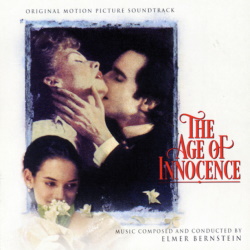
THE AGE OF INNOCENCE – Elmer Bernstein
 THROWBACK THIRTY
Original Review by Jonathan Broxton
Despite it containing almost no physical brutality whatsoever, director Martin Scorsese called his film The Age of Innocence “the most violent film he ever made”. However, unlike the blood-soaked intensity of films like Mean Streets, Taxi Driver, Raging Bull, and Goodfellas, the violence in The Age of Innocence is powerfully emotional, and it takes a heavy toll on the characters in the story. The film is a period drama adapted from the acclaimed novel by Edith Wharton, and is set in New York in the 1870s. Newland Archer (Daniel Day-Lewis), a wealthy and respected lawyer from a prominent family, becomes engaged to May Welland (Winona Ryder), a young woman from a similarly esteemed background. However, Newland’s life takes a complicated turn when May’s cousin, Countess Ellen Olenska (Michelle Pfeiffer), returns to New York after a failed marriage in Europe. Ellen’s arrival disrupts the rigid social norms and expectations of New York’s upper class, as she is seen as unconventional and a potential scandal; despite this, Newland finds himself drawn to Ellen’s free-spirited and non-conformist nature, leading to a passionate but forbidden love affair. Read more…
A HAUNTING IN VENICE – Hildur Guðnadóttir
 Original Review by Jonathan Broxton
A Haunting in Venice is the third adaptation of an Agatha Christie novel by director Kenneth Branagh, after Murder on the Orient Express in 2017, and Death on the Nile in 2022. It’s also, by quite some significant margin, the worst. It’s very loosely based on Christie’s 1969 work Halloween Party and sees the Belgian master detective Hercule Poirot living in semi-retirement in Venice, when he is convinced to attend a Halloween party by his old friend novelist Ariadne Oliver; also at this party will be a supposed psychic medium, Joyce Reynolds, and Ariadne wants Poirot to help her unmask Reynolds as a fraud. However, as the night unfolds, Poirot gets drawn into a sinister plot involving murder, hidden family secrets, and a supposed curse of ghostly children haunting the palazzo where the séance takes place. The film stars Kenneth Branagh as Poirot, Tina Fey as Oliver, and Michelle Yeoh as Reynolds, plus Kelly Reilly, Jamie Dornan, Jude Hill, and Camille Cottin in supporting roles. Read more…
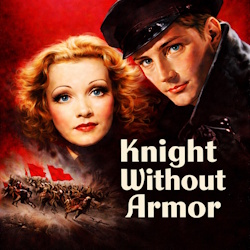
KNIGHT WITHOUT ARMOUR – Miklós Rózsa
 GREATEST SCORES OF THE TWENTIETH CENTURY
Original Review by Craig Lysy
Director Alexander Korda saw opportunity with the 1933 novel “Knight Without Armour” by James Hilton. He believed its tale of romance, intrigue and espionage during the tumult of the Russian Revolution would translate well to the big screen. His London Film Productions company would finance the film and he would oversee production with a $350,000 budget. Jaques Feder was tasked with directing, and Lajos Bíró and Frances Marion were hired to write the screenplay. A fine cast was hired, including Marlene Dietrich as Alexandra Adraxine, Robert Donat as A. J. Fothergill/Peter Ouranov, Irene Vanbrugh as Duchess, Basil Gil as Axelstein, and John Clements as Poushkoff. Read more…
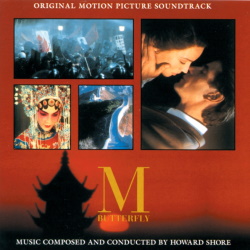
M. BUTTERFLY – Howard Shore
 THROWBACK THIRTY
Original Review by Jonathan Broxton
M. Butterfly is an epic romantic drama film directed by David Cronenberg, based on the Tony Award-winning play of the same name by David Henry Hwang, which was itself inspired by the classic opera Madam Butterfly by Giacomo Puccini. The movie tells the story of Rene Gallimard, a French diplomat stationed in China in the 1960s and 1970s, who becomes romantically involved with Song Liling, a Chinese opera singer. As the years go by, Gallimard’s career flourishes, and he becomes entangled in espionage, sharing sensitive information with Song Liling, whom he believes to be a woman. However, Gallimard remains oblivious (or, perhaps, intentionally overlooks) to the fact that Song Liling is actually a male spy working for the Chinese government; eventually, the revelation of Song’s true identity, and his espionage activities, lead to dramatic and tragic consequences for Gallimard. The film is a fascinating exploration of issues related to gender, sexuality, and East-West cultural clashes, as well as the power dynamics within their unconventional relationship. The film stars Jeremy Irons as Gallimard, and John Lone as Song, with support from Barbara Sukowa and Ian Richardson. Read more…
THE HILL – Geoff Zanelli
 Original Review by Jonathan Broxton
The Hill is a biographical sports drama directed by Jeff Celentano, which tells the true story of Rickey Hill, a young boy growing up in Texas in the early 1970s who dreams of becoming a baseball player despite wearing leg braces and suffering from a degenerative spinal disease. His father, a strict but kind pastor, tries to dissuade young Rickey from following his baseball dreams as he is worried that the physical toll of the game will result in him suffering further injuries, but Rickey persists, and eventually catches the eye of a legendary Major League Baseball scout who encourages him to try out to play for the Montreal Expos. The film was written by Angelo Pizzi – the screenwriter of such classic sports dramas as Hoosiers and Rudy – and contains many of the rousing, overcoming-the-odds touchstones that those iconic films featured. It stars Colin Ford as Rickey, who is supported by screen icons including Dennis Quaid, Scott Glenn, and Bonnie Bedelia. Read more…
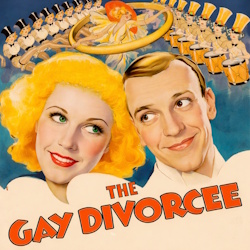
THE GAY DIVORCEE – Kenneth S. Webb and Samuel Hoffenstein
 GREATEST SCORES OF THE TWENTIETH CENTURY
Original Review by Craig Lysy
The 1933 film Flying Down To Rio starring Fred Astaire and Ginger Rogers was a huge commercial success for RKO Pictures, earning the studio a profit of $1.08 million. Pandro S. Berman, the Head of Production at RKO, decided to strike again while the iron was hot with another pairing of the duo. He chose to adapt the very successful 1932 Broadway stage musical The Gay Divorce by Dwight Taylor. He purchased the film rights but was forced to change the film title by the Hays Office censors who determined; “A divorcee might possibly be happy, but it was felt that the institution of divorce itself could never be”. Berman would manage production with a modest $520,000 budget, Mark Sandrich was tasked with directing, and George Marion Jr. and Dorothy Yost would write the screenplay. For the cast, Fred Astaire would reprise his Broadway stage role as Guy Holden, joined by Ginger Rogers as Mimi. Read more…
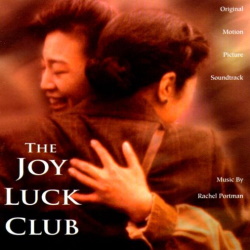
THE JOY LUCK CLUB – Rachel Portman
 THROWBACK THIRTY
Original Review by Jonathan Broxton
Anyone who has read this website for any length of time will know that one of my favorite sub-genres of film music is the ‘east/west crossover,’ meaning scores which blend a western symphonic orchestra with specialist solo instruments from China, Japan, Korea, and other East Asian cultures; instruments like the shakuhachi, shamisen, taiko drums, erhu, dizi, pipa, and so many more. There is something wholly evocative about this style to me, the way the two types of instruments complement each other, one enhancing the beauty of the other. My love of this style goes back thirty years, and was originally influenced by this score – The Joy Luck Club by Rachel Portman – which was the first east/west crossover score I consciously heard. Read more…
MIRACULOUS – LADY BUG & CAT NOIR: THE MOVIE – Jeremy Zag
 Original Review by Jonathan Broxton
Miraculous – Lady Bug & Cat Noir: The Movie is a French animated action adventure film, a big-screen adaptation of the popular animated television series Miraculous: Tales of Ladybug & Cat Noir, which was created by Thomas Astruc and Jeremy Zag and debuted in 2015. It follows two Parisian teenagers, Marinette Dupain-Cheng and Adrien Agreste, who transform into the superheroes Ladybug and Cat Noir, respectively, to protect the city from supervillains. In this story the supervillain is Hawk Moth, who is searching for a magical jewel which could help him bring his dead wife back to life; the twist in this is the fact that Hawk Moth is in reality Adrien’s father. Read more…

Shop at the Movie Music UK Store

Member of the

 MOVIE MUSIC UK