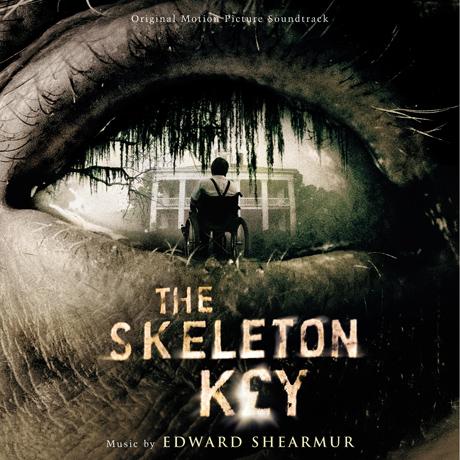
THE SKELETON KEY – Edward Shearmur
 Original Review by Jonathan Broxton
There’s something sinister going on down on the bayou in The Skeleton Key, the latest film by director Iain Softley and “Ring” screenwriter Ehren Kruger. Kate Hudson stars as Caroline Ellis, a palliative care nurse in New Orleans who accepts a job at a rural plantation house out in the Louisiana swamps owned by Violet Devereaux (Gena Rowlands) to look after Violet’s husband Ben (John Hurt), an old man who has suffered a debilitating stroke. However, as Violet sorts out some legal issues with the family lawyer Luke (Peter Sarsgaard), Caroline discovers disturbing evidence of old voodoo rituals up in the attic, leading her to believe that not everything to do with the Devereaux household is what it seems… Read more…
Remembering Miklós Rózsa, 1907-1995
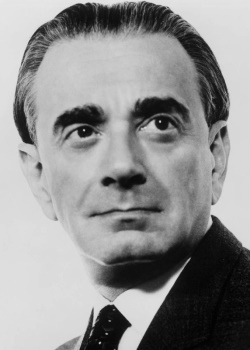 Composer Miklós Rózsa died ten years ago today, on July 27, 1995, at his home in Los Angeles, California, due to complications from a series of strokes. He was 88.
Born in Budapest in April 1907, Rózsa was a child prodigy who studied violin and composition from an early age. He completed his formal training in Leipzig, Germany, and initially made his name as a composer of concert music. In the 1930s he moved to Paris, and later London, having been encouraged by his friend, Swiss composer Arthur Honegger, to supplement his income writing music for cinema. His entry into film scoring came with Knight Without Armour (1937), produced by his fellow Hungarian Alexander Korda, and his success in British cinema led to a contract with MGM and a move to Hollywood in 1940.
Rózsa quickly distinguished himself in America with powerful, emotionally charged scores for films such as The Thief of Bagdad (1940), Lydia (1940), Sundown (1941), That Hamilton Woman (1941), Jungle Book (1942), Double Indemnity (1944), and Spellbound (1945), the latter of which earned him the the first of his three Oscar wins for Best Original Score. He was acclaimed for his ability to seamlessly blend traditional symphonic writing with dramatic storytelling, and often conducted extensive historical and ethnomusicological research to bring authenticity to his scores, resulting in a style that helped define the sound of Hollywood’s Golden Age.
He won his second Oscar for A Double Life (1947), and then a third for Ben-Hur (1959), which at time was heralded as one of the most ambitious film scores ever written, and which subsequently became a benchmark of epic film music. His other acclaimed and popular scores included such titles as The Lost Weekend (1945), The Killers (1946), The Red Danube (1949), Quo Vadis (1951), Ivanhoe (1952), Julius Caesar (1953), Knights of the Round Table (1953), Young Bess (1953), Valley of the Kings (1954), Lust for Life (1956), El Cid (1961), King of Kings (1961), Sodom and Gomorrah (1963), and The Golden Voyage of Sinbad (1974). Read more…
L’AVION/THE PLANE – Gabriel Yared
 Original Review by Jonathan Broxton
Following the controversial (and, in my opinion, wholly inexcusable) rejection of Gabriel Yared’s score for Troy last year, and his subsequent public spat with Warner Brothers, many people wondered whether he would ever work in the Hollywood mainstream again. Although the idea of him being given a complete cold-shoulder by the major studio executives is unlikely, it’s not unsurprising to learn that his first post-Troy feature assignments are all predominantly European films: the German drama Das Leben Der Anderen, English director Anthony Minghella’s Breaking and Entering, and this film: the French drama L’Avion. Read more…
CHARLIE AND THE CHOCOLATE FACTORY – Danny Elfman
 Original Review by Jonathan Broxton
One thing you can say about Tim Burton, he isn’t afraid of taking risks. Having already re-made one of cinema’s all-time classic science fiction films in the shape of Planet of the Apes, he has again subjected himself to the wrath of fans by revisiting another well-loved classic: Charlie and the Chocolate Factory, a remake of the 1971 Gene Wilder classic, which was itself based on a famous novel by Roald Dahl. Along for the ride for the tenth time is Danny Elfman, whose collaborations with Burton have resulted in some of the finest movie music heard in the last 20 years. Interestingly, on Charlie and the Chocolate Factory, Elfman was given the opportunity to write a number of original songs to complement his score, something he has not attempted for over a decade. It was worth the wait. Read more…
WEDDING CRASHERS – Rolfe Kent
 Original Review by Jonathan Broxton
One of 2005’s more effective summer comedies, Wedding Crashers is the latest vehicle for comedy duo Owen Wilson and Vince Vaughn, who seem to be making something of a habit of appearing in movies together. This time round they play best friends John Beckwith and Jeremy Grey, good-natured womanisers who spend each summer crashing society weddings, spinning tall tales about their lives and histories, with the express purpose of ‘having their way’ with the bridesmaids. However, then the pair crash a wedding hosted by powerful US Senator Cleary (Christopher Walken), things change: John (Wilson) meets unexpectedly falls in love with Cleary’s middle daughter Claire (Rachel McAdams), while Jeremy (Vaughn) finds himself pursued by Cleary’s slightly insane youngest daughter Gloria (Isla Fisher). Before they realise what has happened, the happy-go-lucky conmen have been invited up to the Senator’s lavish summer home in the country, where they meet the rest of the family, including Cleary’s sex crazed wife Kathleen (Jane Seymour) and Claire’s jock boyfriend Sack (Bradley Cooper). Unfortunately, John and Jeremy must continue with their charade in order for true love to blossom… Read more…
Joe Harnell, 1924-2005
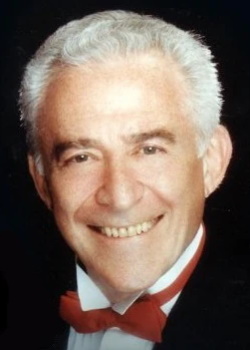 Composer, arranger, conductor and pianist Joe Harnell died in Sherman Oaks, California, on July 14, 2005, at the age of 80, from heart failure.
A musician whose career stretched from the big-band era to modern television, Harnell was best known for his haunting music for The Incredible Hulk, especially the melancholy piano piece “The Lonely Man,” which became one of the most memorable television themes of the 1970s. His other major screen credits included The Bionic Woman, V, Santa Barbara and Alien Nation.
Harnell was born Joseph Hittelman in the Bronx, New York, on August 2, 1924. His father performed in vaudeville and played in jazz and klezmer groups, and Harnell began piano lessons at six. By 14 he was already performing professionally. He studied music at the University of Miami before joining the United States Army Air Forces during World War II, where he toured with Glenn Miller’s celebrated military band.
Following the war Harnell continued his studies, including composition lessons with Aaron Copland, while establishing himself as a pianist, arranger and musical director. He worked with artists including Frank Sinatra, Judy Garland, Lena Horne, Pearl Bailey and Peggy Lee, accompanying Lee in concert and contributing to several of her recordings. Read more…
DARK WATER – Angelo Badalamenti
 Original Review by Jonathan Broxton
A remake of the 2002 Japanese film Honogurai Mizu No Soko Kara, which was directed by Hideo Nakata, Dark Water is a slow-burning horror movie which takes everyday circumstances and mixes them with a healthy dose of the supernatural, with chilling results. Jennifer Connelly stars as Dahlia, a young mother who moves into a run down apartment block with her daughter Ceci (Ariel Gade) while her divorce is being finalized. Before long, strange events are happening in their new home. Water begins to drip from the ceiling, much to the consternation of the building’s superintendent (Pete Postlethwaite); footsteps are heard coming from the vacant apartment above; a strangely sinister red bag keeps turning up in odd places; ghostly images appear on the CCTV camera footage from inside the apartment’s lift; and, worst of all, Ceci keeps having fleeting glimpses of a child in a yellow raincoat, who seems to bear a remarkable similarity to a little girl who went missing years previously. Is the stress of her life causing Dahlia to slowly go insane, as her ex-husband Kyle (Dougray Scott) believes? Or is some specter haunting her… Read more…
FANTASTIC FOUR – John Ottman
 Original Review by Jonathan Broxton
All of a sudden, it seems, Hollywood is full of super-heroes. The comic book, once the exclusive domain of spotty teenagers and their escapist fantasies, is now the deepest well of cinematic inspiration for the movie making machine, having recently sprung forth with new versions of Superman, Batman, Spider-Man, X-Men, Hulk, Daredevil, Elektra, Blade, The Punisher, Hellboy, Sin City, and a multitude of others. In many ways, the Fantastic Four can lay legitimate claim to being the grand-daddy of them all, having first appeared in print way back in 1961. The quartet first appeared on film in 1994 in a movie which was made with the intent of it never seeing the light of day, purely as an exercise so that the production company could hold on to the publication rights. That debacle aside, director Tim Story’s 2005 summer blockbuster marks the first time the four have “properly” appeared on the big screen. Read more…
WAR OF THE WORLDS – John Williams
 Original Review by Jonathan Broxton
British author Herbert George Wells first published his alien invasion novel The War of the Worlds in 1898, and in so doing probably invented an entire genre of science fiction storytelling. When Orson Welles performed a live radio adaptation of the story on Halloween night in 1938, he famously scared half of the American public into thinking an actual alien invasion was taking place, such was the believability and sincerity in Welles’s performance. Director George Pal brought the story to life in 1953 in what is now regarded a landmark entry into cinematic science fiction. Composer Jeff Wayne wrote a popular and successful musical concept album in 1978, which featured a young George Fenton playing a variety of instruments. Now, director Steven Spielberg has brought the classic tale to the big screen once more in what promises to be the definitive cinematic retelling, with a starry cast and a budget to match. Read more…
LAND OF THE DEAD – Reinhold Heil, Johnny Klimek
 Original Review by Jonathan Broxton
George A. Romero and zombies go together like peaches and cream, Tom and Jerry, or peanut butter and jelly. The 65-year old American director has built his career on movies such as Night of the Living Dead, Dawn of the Dead and Day of the Dead, up to the point where today his name is virtually synonymous with the shambling, moaning creatures of our nightmares. His latest horror effort is Land of the Dead, the fourth installment in the “Dead” series, which stars Simon Baker, Dennis Hopper, John Leguizamo and Asia Argento as some of the last surviving humans, battling to stay alive in their fortified walled city after the zombies have finally taken over the world. Although some of the previous “Dead” films have included cult-like scores by artists as varied as Italian pop group Goblin and composers Claudio Simonetti and John Harrison, I have never seen their appeal. Although they inarguably suit the bleak nature their films, and though I acknowledge the fact that many of them are extremely popular with devotees of the genre, they have always seemed to me to be too bizarre, too experimental, too much out in left field to be truly enjoyable listening experiences. Read more…
IN MY FATHER’S DEN – Simon Boswell
 Original Review by Jonathan Broxton
A searing, dramatically potent, quietly devastating film from New Zealand, In My Father’s Den is the debut feature by writer-director Brad McGann. Based on a novel by Maurice Gee, the film explores the tragic events that befall a small South Island community when one of its long-lost sons returns home. Paul Prior (Matthew McFadyen) is a celebrated but world-weary war photographer who, following the death of his father, returns to his childhood home to seek reconciliation with his brother Andrew (Colin Moy) and sister-in-law Penny (Miranda Otto) and sort out their estate. While exploring in the old house, Paul stumbles across a long forgotten escape: the den of the title, where he and his father once shared their love of life and literature, and where he and his old girlfriend Jax (Jodie Rimmer) explored teenage passions. Read more…
SHALLOW GROUND – Steve London
 Original Review by Jonathan Broxton
Shallow Ground is the debut international feature from young director Sheldon Wilson, a low-budget independent horror movie with lots of good ideas, but a disappointing lack of sense and professionalism. It focuses on a small sheriff station in a remote California mountain town, staffed by three officers (Timothy V. Murphy, Stan Kirsch, Lindsey Stoddart), all of whom are packing up, ready to leave town following the completion of building work on a nearby dam. Their journey is halted, however, by the macabre appearance of a naked teenage boy (Rocky Marquette), covered from head to toe in blood, who refuses to speak, but who emits a palpable sense of malevolence and menace. Thus begins a terrible night for the Sheriff and his deputies, who try to piece together the mystery of who – or what – this boy is, and what his appearance has to do with the unsolved murder of a local girl a year previously. Read more…
BATMAN BEGINS – Hans Zimmer, James Newton Howard
 Original Review by Jonathan Broxton
The general consensus about the fifth modern Batman movie, Batman Begins, is that the franchise has finally been revitalised. Personally, I always considered Joel Schumacher, the director of Batman Forever and Batman & Robin, to have completely undermined the effectiveness of the series, shattering the feelings of gothic grandeur Tim Burton initiated and replacing it with gaudy, neon-lit overkill. In the hands of director Christopher Nolan – whose previous films include the excellent thrillers Memento and Insomnia – Batman Begins is a more introspective film that tempers its large-scale action scenes with a thoughtful, serious edge that marks, for me at least, a step in the right direction. Read more…
THE ADVENTURES OF SHARKBOY AND LAVAGIRL – Robert Rodriguez, John Debney, Graeme Revell
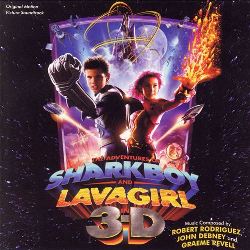 Original Review by Jonathan Broxton
Director Robert Rodriguez’s career continues to confound me: having wowed the world with his ultra low budget thriller El Mariachi in 1992, and subsequently risen to be a “darling of the cool independent set” with films such as Desperado, From Dusk Til Dawn and The Faculty, he has simultaneously developed a sideline in action-adventure children’s movies, notably the Spy Kids series. Rodriguez’s bizarre duel life had arguably reached its nadir in 2005 with the release of the ultra-slick, ultra-violent Sin City, and this polar opposite film: The Adventures of Sharkboy and Lavagirl. Co-written by Rodriguez’s 7-year-old son Racer, The Adventures of Sharkboy and Lavagirl is an unashamedly juvenile action adventure starring young actors Taylor Dooley (female) and Taylor Lautner (male) as the titular Sharkboy and Lavagirl, the imaginary creations of a young kid named Max (Cayden Boyd), who spends most of his time daydreaming up adventures for his super-heroes to have. However, one day, Sharkboy and Lavagirl appear in real life, and bring Max to their home of Planet Drool, which is apparently being destroyed, and only he can save it… It’s a perfect childhood fantasy, and wholesome entertainment for younger kids, but much has been made of the fact that Rodriguez has filmed significant portions of it in rather shoddy 3-D, a cinematic technology that should have been consigned to history a decade ago. Nevertheless, I won’t personally be venturing to the cinema to confirm or deny this for myself, having suffered enough during Spy Kids 3. Read more…
MR. & MRS. SMITH – John Powell
 Original Review by Jonathan Broxton
One of the kind of high-concept action movies that Hollywood often unleashes during the summer months, Mr. & Mrs. Smith is a knockabout action-comedy from director Doug Liman. Brad Pitt and Angelina Jolie star as happily married couple John and Jane Smith who, unbeknownst to each other, work as assassins for rival firms. For a while, and with the exception of the occasional trip to a marriage guidance counsellor, all is rosy in the suburban Smith household – until, one day, two different clients hire them to eliminate the same target, and the pair discover the truth about each other. With their covers blown, all hell breaks loose, initiating the mother of all domestics… Read more…

Shop at the Movie Music UK Store

Member of the


