Under-the-Radar Round Up 2024, Part 7
 Original Reviews by Jonathan Broxton
I’m pleased to present the latest installment in my on-going series of articles looking at the best under-the-radar scores from around the world.
This article, the seventh and last of 2024, is a massive bumper crop covering NINE scores from across the world, all of which deserve to be considered in people’s end-of-year best lists. The scores include a Spanish animated adventure film, an acclaimed WWII documentary, an Italian comedy-drama, a Hungarian historical epic film, an uplifting and life-affirming Norwegian documentary , a sultry Italian thriller TV mini-series, a Spanish Christmas-themed animated action-adventure comedy, a Spanish horror-thriller TV series for Netflix, and a Japanese drama television series! Read more…
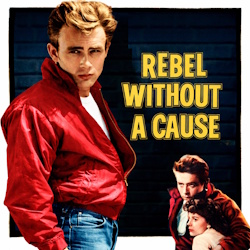
REBEL WITHOUT A CAUSE – Leonard Rosenman
 GREATEST SCORES OF THE TWENTIETH CENTURY
Original Review by Craig Lysy
Warner Brothers Pictures was looking for a vehicle to showcase their new, young contract actor James Dean. In 1954 they decided that they had finally found it with a 1944 novel by Robert M. Lindner, “Rebel Without A Cause: The Hypnoanalysis of a Criminal Psychopath”. They purchased the film rights, David Weisbart was assigned production with a $1.5 million budget, Stewart Stern was hired to write the screenplay, and Nicholas Ray was tasked with directing. For the cast, James Dean would star as Jim Stark, and joining him would be Natalie Wood as Judy, Sal Mineo as John “Plato” Crawford, Jim Backus as Frank Stark, Ann Doran as Carol Stark, Corey Allen as Buzz Gunderson, and William Hopper as Judy’s father. Read more…
THE QUICK AND THE DEAD – Alan Silvestri
 THROWBACK THIRTY
Original Review by Jonathan Broxton
The Quick and the Dead is a Western action film written by Simon Moore, directed by Sam Raimi, and starring Sharon Stone, Gene Hackman, Russell Crowe, and Leonardo DiCaprio. The story follows Ellen (Stone), also known as The Lady, a mysterious gunslinger who arrives in the frontier town of Redemption circa 1881. The town is controlled by the ruthless John Herod (Hackman), a powerful outlaw who has installed himself as the town mayor and who now hosts an annual quick-draw tournament where gunfighters compete to the death. Ellen enters the tournament with a secret motive – she seeks revenge on Herod for the death of her father, a marshal whom Herod had killed when she was a child. As the competition unfolds, Ellen encounters various colorful participants, including The Kid (DiCaprio), a cocky young gunslinger claiming to be Herod’s son, and Cort (Crowe), a former outlaw turned preacher who refuses to kill. Read more…
EMILIA PÉREZ – Clément Ducol, Camille Dalmais
 Original Review by Jonathan Broxton
One of the most acclaimed films of 2024, and the recipient of 13 Oscar nominations, is Emilia Pérez. Directed by the French auteur Jacques Audiard and filmed almost entirely in Spanish, it is a genre-bending mix of ideas: it explores themes involving Mexican drug cartels, political corruption, and transgender issues; it is about redemption and forgiveness; tonally, it veers from heavy drama to absurd comedy, and even includes some action sequences; and, most importantly from the point of view of this review, it is also a fully sung musical containing almost twenty originals songs, each performed by different members of the cast. Read more…
OKLAHOMA! – Richard Rodgers, Oscar Hammerstein II, Adolph Deutsch, Robert Russell Bennett, Jay Blackton
 GREATEST SCORES OF THE TWENTIETH CENTURY
Original Review by Craig Lysy
In 1943 Richard Rodgers and Oscar Hammerstein II’s “Oklahoma!” opened on Broadway and ran for an unprecedented 2,212 performances. Studios began a bidding war to acquire the film rights in hope of capitalizing on the play’s phenomenal success. Eventually Magna Theatre Corporation prevailed, purchasing the rights for an astounding $1 million. It would take eleven years to get the project off the ground as the company insisted on using a new widescreen filming process called “Todd-AO”. Arthur Hornblow Jr. was assigned production with a $6.8 million budget, Sonya Levien and William Ludwig were hired to write the screenplay, Agnes de Mille would stage the choreography, and Fred Zinneman would direct his first, and only musical of his career. A fine cast was assembled, which included Gordon MacRae as Curly McLain, Shirley Jones as Laurey Williams, Gloria Grahame as Ado Annie Carnes, Charlotte Greenwood as Aunt Eller, Rod Steiger as Jud Fry, Gene Nelson as Will Parker, and Eddie Albert as Ali Hakim. Read more…
Academy Award Nominations 2024
 The Academy of Motion Picture Arts and Sciences (AMPAS) have announced the nominations for the 97th Academy Awards, honoring the best in film in 2024.
In the Best Original Score category, the nominees are:
- VOLKER BERTELMANN for Conclave
- DANIEL BLUMBERG for The Brutalist
- KRIS BOWERS for The Wild Robot
- CLÉMENT DUCOL and CAMILLE DALMAIS for Emilia Pérez
- JOHN POWELL and STEPHEN SCHWARTZ for Wicked
These are the first Oscar nominations for Blumberg, Bowers, Ducol, and Dalmais, although Bowers is a 2-time Oscar nominee in a different category – Best Documentary Short – which he won in 2023 for The Last Repair Shop. It is the third nomination for Bertelmann (who previously won for All Quiet on the Western Front in 2022), the second nomination for Powell, and the fourth nomination for Schwartz (who previously won for Pocahontas in 1995). Schwartz also has five previous nominations as a songwriter, with wins for Pocahontas in 1995 and The Prince of Egypt in 1998.
In the Best Original Song category, the nominees are:
- ABRAHAM ALEXANDER and ADRIAN QUESADA for “Like a Bird” from Sing Sing
- CLÉMENT DUCOL, CAMILLE DALMAIS, and JACQUES AUDIARD for “El Mal” from Emilia Pérez
- CLÉMENT DUCOL and CAMILLE DALMAIS for “Mi Camino” from Emilia Pérez
- ELTON JOHN, BERNIE TAUPIN, BRANDI CARLILE, and ANDREW WATT for “Never Too Late” from Elton John: Never Too Late
- DIANE WARREN for “The Journey” from The Six Triple Eight
The winners of the 97th Academy Awards will be announced on March 2, 2025.
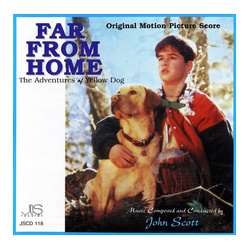
FAR FROM HOME: THE ADVENTURES OF YELLOW DOG – John Scott
 THROWBACK THIRTY
Original Review by Jonathan Broxton
Far from Home: The Adventures of Yellow Dog is a family-friendly adventure-drama written and directed by Philip Borsos. The film follows the journey of a teenage boy named Angus, played by Jesse Bradford, who is spending the summer with his family in a remote part of British Columbia. While there, Angus befriends a stray dog named Yellow, who has a mysterious past. After a series of unfortunate events, Angus and Yellow become stranded together in the wilderness when a storm hits. As the two navigate the challenges of the wild, they face dangers such as wild animals, the elements, and the need to find food and shelter, and must work together to find their way back to safety. It was a moderate success upon its release in the early months of 1995, and many found it to be a nostalgic throwback to the popular Walt Disney ‘wilderness adventure’ films of the 1950s and 60s. Read more…
Under-the-Radar Round Up 2024, Part 6
Original Reviews by Jonathan Broxton
I’m pleased to present the latest installment in my on-going series of articles looking at the best under-the-radar scores from around the world.
This article, the sixth of 2024, covers another five scores from a wide array of genres and countries, including a spectacular documentary score about dinosaurs, a Japanese action thriller based on a popular TV series, and three scores for a trio of acclaimed short films: one from France, one from the Netherlands, and one from the United States, several of which are on the shortlists to receive Short Film Academy Award nominations.
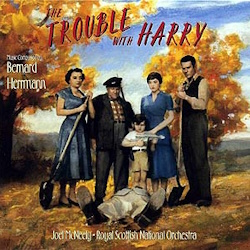
THE TROUBLE WITH HARRY – Bernard Herrmann
 GREATEST SCORES OF THE TWENTIETH CENTURY
Original Review by Craig Lysy
Director Alfred Hitchcock took a liking to the 1950 black comedy novel “The Trouble With Harry” by Jack Trevor Story and purchased the film rights for $11,000. Hitchcock used his own production company to finance the film, with him overseeing production with a $1.2 million budget. He would also direct and hired John Michael Hayes to write the screenplay. For casting, Hitchcock embarked on an experiment – not hiring any established stars as he believed that many times a big star can hinder the narrative flow of his movie. As such, the cast included; Edmund Gwenn as Captain Albert Weiss, John Forsythe as Sam Marlowe, Shirley MacLaine in her acting debut as Jennifer Rogers, Mildred Natwick as Miss Ivy Gravely, Mildred Dunnock as Mrs. Wiggs, James Mathers as Arnie Rogers, and Royal Dano as Deputy Sheriff Calvin Wiggs. Read more…
Los Angeles Wildfires
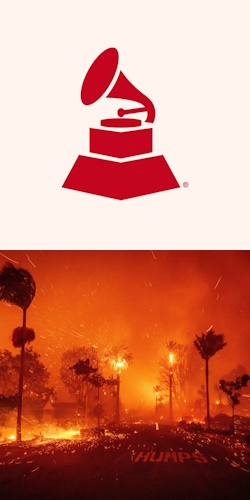
As many of you will have noticed, there has been a slight pause in new film music reviews recently. My mind has somewhat been preoccupied with other matters, so I thought I would just take a moment to explain, for anyone who is unaware.
Los Angeles was ravaged by two devastating wildfires last week. At the time of writing 28 people have died, more than 12,000 structures have been destroyed or damaged, and more than 200,000 people had to be evacuated from an area of more than 60 square miles.
The Palisades fire destroyed much of the city of Malibu, and the Los Angeles neighborhood of Pacific Palisades, and forced people to evacuate all the way down into Santa Monica. Similarly, the Eaton fire destroyed much of the city of Altadena and affected people in nearby Pasadena. There were also smaller fires in the Hollywood Hills, in the northern part of the San Fernando Valley near Sylmar, and in the western part of the San Fernando Valley near Woodland Hills (close to where I live), which also resulted in mass evacuations, although thankfully very little damage was done to property in those latter three.
I am fine, my family is fine, and my property is fine, but nevertheless it has been a mentally exhausting week not conducive to film music criticism. With the Santa Ana winds howling across the bone-dry terrain that has not seen rain in nine months, you spend days in a constant state of anxiety, worrying whether a new fire is going to crop up near you, forcing to you to evacuate, threatening everything.
Having lived in the greater Los Angeles area since 2005 I am very familiar with the cycle of wildfires that are a part of everyday life here, but even knowing that they are a natural – and sometimes necessary – phenomenon doesn’t lessen the impact of such devastation when you see it happening in front of your eyes, in places you know and love. I know dozens of people who have been affected by this: many people have lost their homes, all their possessions, sometimes their entire communities, and it’s just horrifying.
Wealth and status are not respected by these fires: yes, some multi-millionaire celebrities lost their homes, but hundreds and hundreds of everyday working people have also seen their lives go up in flames, especially in Altadena, and the impact of this is devastating no matter who you are. These people have families, children, animals. Many of them came from humble beginnings and worked for decades to build these lives for themselves, only to see it turn to ash in a matter of hours.
 Many people in the film music industry have been affected by this – not just composers whose names we know, but many working musicians and technical staff behind the scenes who all contribute significantly to the music we love so much – and at this point they need all the help they can get to rebuild. From what I have been reading online, one of the best charities to donate to appears to be the National Academy of Recording Arts and Sciences’ MusiCares foundation, and so if you are able to do so, and if you feel so inclined, I would recommend donating to them here: https://musicares.org/. There is also an excellent website, Media Musicians United, which gives information about other resources for affected individuals, and other opportunities for charitable donations, which can be found here: https://www.mediamusiciansunited.com/
We at Movie Music UK are heartbroken at these events, and on behalf of myself and Craig we wish everyone who has been impacted strength and hope going forward.
BAFTA Nominations 2024
 The British Academy of Film and Television Arts (BAFTA) has announced the nominations for the 78th British Academy Film Awards, honoring the best in film in 2024.
In the Best Original Music category, which is named in memory of the film director Anthony Asquith, the nominees are:
- VOLKER BERTELMANN for Conclave
- DANIEL BLUMBERG for The Brutalist
- KRIS BOWERS for The Wild Robot
- ROBIN CAROLAN for Nosferatu
- CLÉMENT DUCOL and CAMILLE DALMAIS for Emilia Pérez
This is the third BAFTA nomination for Bertelmann, who previously won for All Quiet on the Western Front in 2022. All the other nominees are first time nominees.
The winners of the 78th BAFTA Awards will be announced on 16 February, 2025.
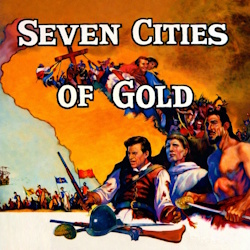
SEVEN CITIES OF GOLD – Hugo Friedhofer
 GREATEST SCORES OF THE TWENTIETH CENTURY
Original Review by Craig Lysy
In 1951 the New York Times declared the novel “The Nine Days of Father Sierra” (1951) by Isabelle Gibson Ziegler a “brief, tender and impressive novel”. Sensing opportunity to 20th Century Fox Studios purchased the film rights and prepared for production in 1952. The project however stalled and in 1955 was reassigned for production to Robert D. Webb and his wife Barbara McLean with a $1.5 million budget. Webb would also take on directing duties, and he hired Richard L. Breen to write the screenplay. Webb brought in a fine cast, which included Richard Egan as Lieutenant José Mendoza, Anthony Quinn as Captain Gaspar de Portolà, Michael Rennie as Father Junipero Serra, Jeffrey Hunter as Matuwir, and Rita Moreno as Ula. Read more…
Golden Globe Winners 2024
 The Golden Globe Foundation (GGF) has announced the winners of the 82nd Golden Globe Awards, honoring the best in film and American television of 2024.
In the Best Original Score category composers Trent Reznor and Atticus Ross won the award for their upbeat electro-pop inspired score for Challengers, director Luca Guadagnino’s spicy drama starring Zendaya, Josh O’Connor, and Mike Feist, about a love triangle that develops over several years in the world of professional tennis. This is the third Golden Globe win for Reznor and Ross – they previously won for The Social Network in 2010, and for Soul in 2020. In the acceptance speech Ross, speaking on behalf of both men, said:
“Thank you to Golden Globes, this really means a lot, particularly in this special moment. First I’d like to thank my best friend, my musical partner, the great talent Trent Reznor. The music that revealed itself as the voice to Challengers never felt like a safe choice, but it always felt like the right one. I’d like to thank the maestro, the visionary director, and our friend Luca Guadagnino – where is he? – for his unwavering support and commitment to the idea. In fact I’d like to thank everyone that helped bring this film to life, and to acknowledge Amy Pascal, Rachel O’Connor, and the fabulous Zendaya, for their encouragement. To be honest we always we thought we’d get the call – ‘can you just turn it down a little bit’ – but it never came, and here we are. Lastly, we want to thank the most important people in our lives, our wives and our children. Mariqueen [Maandiq], Trent loves you. Claudia [Sarne], I love you. And all the kids, we love you. Thank you! ”
The other nominees were Volker Bertelmann for Conclave, Daniel Blumberg for The Brutalist, Kris Bowers for The Wild Robot, Clément Ducol and Camille Dalmais for Emilia Pérez, and Hans Zimmer for Dune: Part 2
In the Best Original Song category, the winners were Clément Ducol, Camille Dalmais, and Jacques Audiard for “El Mal” from the audacious Mexican drug cartel musical drama Emilia Pérez.
The other nominees were Brittany Amaradio (Delacey), Jordan K. Johnson, Stefan Johnson, Maren Morris, Michael Pollack, and Ali Tamposi for “Kiss The Sky” from The Wild Robot; Clément Ducol and Camille Dalmais for “Mi Camino” from Emilia Pérez; Trent Reznor, Atticus Ross, and Luca Guadagnino for “Compress/Repress” from Challengers; Robbie Williams, Freddy Wexler, and Sacha Skarbek for “Forbidden Road” from Better Man; and Andrew Wyatt, Miley Cyrus, and Li Lykke Zachrisson (Lykke Li) for “Beautiful That Way” from The Last Showgirl.
MURDER IN THE FIRST – Christopher Young
 THROWBACK THIRTY
GREATEST SCORES OF THE TWENTIETH CENTURY
Original Review by Jonathan Broxton
Every person who develops a liking for film music has a score, or group of scores, which are special to them on a personal level. They are the ones which first piqued their interest, first caught their attention, maybe inspired them to go out and buy a physical album for the first time, and eventually led them down the path to full-blown film music fandom. I have a few of them myself: Star Wars, of course, Raiders of the Lost Ark, and E.T. by John Williams. Dances With Wolves, and the James Bond scores of John Barry. Several James Horner scores, including the significant mid-1990s trio comprising Legends of the Fall, Braveheart, and Apollo 13. However, perhaps my most unexpected ‘keystone score’ is this one: Murder in the First by Christopher Young. The film opened in cinemas in England in December 1995, almost a year after it premiered in the United States, and I went to see it at the old Warner Village Cinema in Meadowhall Shopping Centre in Sheffield. I have a vivid memory of coming out of the cinema, meeting up with my mum in the foyer, and barely being able to speak because I had been so emotionally overwhelmed by the film, and especially its music. Read more…
THE BRUTALIST – Daniel Blumberg
 Original Review by Jonathan Broxton
There’s a famous quote – which no-one seems to want to take credit for – which states that ‘writing about music is like dancing about architecture’. It basically means that it’s impossible, and probably futile, to try to encapsulate in words what is, at its core, an entirely subjective response to art. As I have spent almost 30 years writing about music I disagree with this sentiment, and that is even more true when it comes to this review of The Brutalist, in which I will attempt to write about the music for a film which is in part about architecture, among many other things. Read more…

Shop at the Movie Music UK Store

Member of the

 MOVIE MUSIC UK