Archive
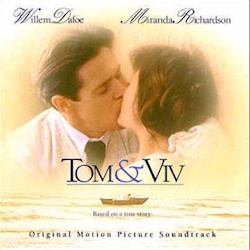
TOM & VIV – Debbie Wiseman
 THROWBACK THIRTY
Original Review by Jonathan Broxton
Thomas Stearns ‘T. S.’ Eliot is considered to be one of the 20th century’s greatest poets, with notable works such as The Love Song of J. Alfred Prufrock, The Hollow Men, Ash Wednesday, Four Quartets, and Old Possum’s Book of Practical Cats, the latter of which inspired the Andrew Lloyd Webber musical. While living in London in 1914 Eliot met and married Vivienne Haigh-Wood, a governess from Cambridge, who became not only the love of his life, but also his muse, inspiring what is possibly Eliot’s most acclaimed work, The Waste Land, written in 1922. However, their relationship was also turbulent, in part because of Viv’s health problems, which eventually resulted in her having significant mental instability and often being confined to an asylum. Although they formally separated in 1933 Eliot refused to divorce her, and they remained married until her death in 1947. Their relationship became the subject of the 1984 play Tom & Viv by Michael Hastings, which was then adapted into this film by Hastings and screenwriter Adrian Hodges. The film starred Willem Dafoe as Eliot and Miranda Richardson as Haigh-Wood, and was directed by Brian Gilbert. Although not especially successful from a financial point of view it was acclaimed by critics, and both Richardson and Rosemary Harris (who played Haigh-Wood’s mother) were nominated for Oscars for their roles. Read more…
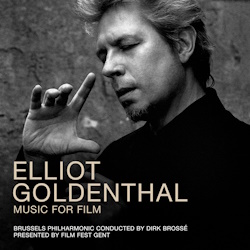
ELLIOT GOLDENTHAL: MUSIC FOR FILM – Elliot Goldenthal
 Original Review by Jonathan Broxton
Each year at the Film Fest in Ghent, Belgium, one composer is awarded the Lifetime Achievement Award by the World Soundtrack Awards committee, and as part of that experience there is a live concert of their music, and an accompanying soundtrack compilation CD. Previous Lifetime Achievement Award winners include Laurence Rosenthal, Mark Isham, Mychael Danna, Gabriel Yared, Shigeru Umebayashi, Marco Beltrami, Carter Burwell, Terence Blanchard, Ryuichi Sakamoto, and Alan Silvestri. In 2024, the recipient was Elliot Goldenthal, and this is the album celebrating him and his work. Read more…
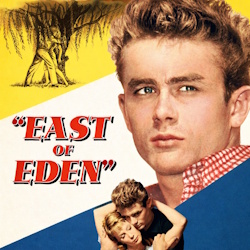
EAST OF EDEN – Leonard Rosenman
 GREATEST SCORES OF THE TWENTIETH CENTURY
Original Review by Craig Lysy
Warner Brothers Studios was approached by director Elia Kazan with a proposition to base a film on the fourth, and final part of John Steinbeck’s 1952 novel East of Eden. Given his reliable track record of success, the studio gave him the green light to proceed with the project. Kazan purchased the film rights from Steinbeck, and would manage production as well as direct. Paul Osborn was hired to write the screenplay. Casting was a struggle; Kazan rejected Marlon Brando and Montgomery Cliff as too old to play the teenage brothers and instead selected new talent 24-year-old James Dean to play Cal Trask. Joining him would be Julie Harris as Abra Bacon, Raymond Massey as Adam Trask, Richard Davalos as Aron Trask, Jo Van Fleet as Cathy Trask, and Burl Ives as Sam the sheriff. Read more…
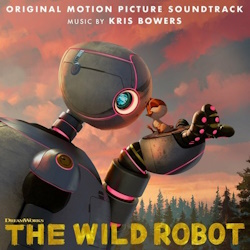
THE WILD ROBOT – Kris Bowers
 Original Review by Jonathan Broxton
The Wild Robot is a new animated science fiction adventure film, based on the 2016 children’s novel of the same name by Peter Brown, and directed by Chris Sanders, one of the co-directors of How to Train Your Dragon. The story follows the life of Roz, a highly sophisticated service robot who is shipwrecked on an uninhabited island and who must quickly adapt to her surroundings. Over time she builds relationships with the local wildlife, including befriending a fox named Fink, and becoming the adoptive mother of an orphaned goose named Brightbill; however, she soon finds that her new idyllic life as a ‘wild robot’ is under threat from the company that built her. The film has an enormously impressive voice cast led by Lupita Nyong’o as Roz, Pedro Pascal as Fink, and Kit Connor as Brightbill, plus Bill Nighy, Stephanie Hsu, Mark Hamill, Catherine O’Hara, Matt Berry, and Ving Rhames. The film is a beautifully drawn, artistically rendered, funny, moving exploration of numerous concepts related to environmentalism and nature, consumerism, motherhood, adaptability and building relationships, and it has been an enormous box office success, grossing more than $270 million, and sequels based on Brown’s other Roz novels are already in the works. Read more…
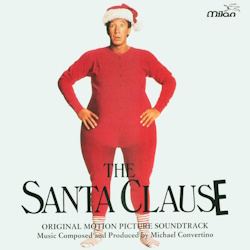
THE SANTA CLAUSE – Michael Convertino
 THROWBACK THIRTY
Original Review by Jonathan Broxton
The Santa Clause is a Christmas fantasy comedy movie starring Tim Allen as Scott Calvin, a divorced father who accidentally causes Santa Claus to fall from his roof and die one Christmas Eve. Scott unwittingly agrees to a “contract” – the titular “Santa clause” – by putting on Santa’s suit, and magically transforming into a new Santa Claus. This sets off a series of transformations in Scott’s life, as he gains weight, grows a white beard, and develops a love for milk and cookies. However, his transformation strains his relationship with his young son Charlie (Erik Lloyd), and his ex-wife Laura (Wendy Crewson), who thinks he’s endangering Charlie with fantasies of being Santa. Read more…
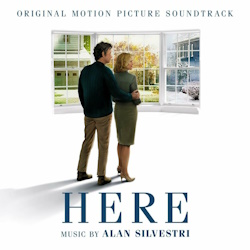
HERE – Alan Silvestri
 Original Review by Jonathan Broxton
Here is a cinematic experiment film directed by Robert Zemeckis, adapted from a graphic novel by Richard McGuire, which uses the ‘static camera’ conceit to tell the story of a specific place throughout time – from the era of the dinosaurs through the ice age, to the dawn of humanity, pre-Columbian native Americans, and then after a house is built on that spot, the different families who live there, from the Colonial era to the present day. The main story follows the Young family – WWII veteran Al and his wife Rose, who buy the house and raise their children there, one of whom, Richard, marries his childhood sweetheart Margaret, and lives there too. It’s an intimate, sensitive portrayal, a snapshot of vignettes that chart the passage of time in non-linear fashion, and which touches on all that comes with it – birth, death, and all the ups and downs of life in between. Some critics have decried at as being overly-sentimental and mawkish, and while I admit that it does go for the emotional jugular with unashamed regularity, I nevertheless thought it was lovely, a welcome escape from depressing reality. I also thought the main technical idea, where the camera never moves but the world moves around it, worked really well; the way Zemeckis uses overlapping boxes to delineate the shifts in time were especially effective. Read more…
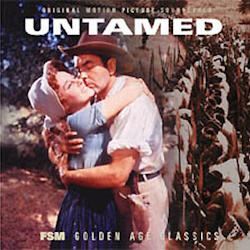
UNTAMED – Franz Waxman
 GREATEST SCORES OF THE TWENTIETH CENTURY
Original Review by Craig Lysy
The genesis Untamed lies with South African Helga Moray, who wrote a 17-page outline of the story that drew inspiration from one her female ancestors. Her handiwork caught the eye of producer William Bacher who saw a story that needed to be brough to the big screen. He purchased the film rights, which allowed Moray to expand her story into a full-fledged novel. After being rejected by many studios due to cost concerns, 20th Century Fox agreed to finance the film to exploit their new CinemaScope technology. Bacher and Bert E. Friedlob were assigned production with a $3.56 million budget, Henry King was tasked with directing, and a team of writers that included Michael Blankfort, Frank Fenton, Talbot Jennings and William Bacher would write the screenplay. A fine cast was assembled, led by Tyrone Power as Paul van Riebeck and Susan Hayward as Katje O’Neil. Joining them would be Agnes Moorehead as Aggie O’Toole, and Richard Egan as Kurt Hout. Read more…
CONCLAVE – Volker Bertelmann
 Original Review by Jonathan Broxton
Conclave is the latest film from German director Edward Berger, whose last film All Quiet on the Western Front won the Oscar for Best Foreign Language Film, and was nominated for Best Picture, in 2022. It is based on the 2016 novel of the same name by Robert Harris and stars Ralph Fiennes, Stanley Tucci, John Lithgow, Sergio Castellitto, and Isabella Rossellini. Fiennes plays Cardinal Thomas Lawrence, an English catholic priest who is called into action by the Vatican when the Pope dies of a heart attack. Lawrence is charged with organizing and overseeing the papal conclave – a gathering of the Roman Catholic cardinals from around the world which is convened to elect the next pope – but quickly finds himself at the center of a firestorm, investigating allegations and scandals inside the church, while also navigating his own personal crisis of faith. Read more…
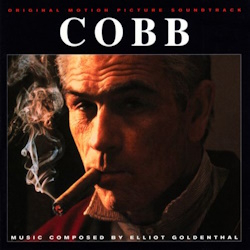
COBB – Elliot Goldenthal
 THROWBACK THIRTY
Original Review by Jonathan Broxton
Growing up in the United Kingdom, baseball was never a sport that was ever on my radar, but even with my limited knowledge of its history there were still some names which transcended and were familiar as icons of the game: Babe Ruth. Lou Gehrig. Joe Di Maggio. One of the most controversial players of that era was another familiar name: Ty Cobb, who played for the Detroit Tigers between 1906 and 1926 and was one of the first people inducted into the Baseball Hall of Fame when it was first established in 1936. By all accounts he was a mercurial player, with especially incredible batting ability, aggressiveness, and mental toughness; such was his prodigiousness he held the record for the highest career batting average for almost 100 years until 2024, when MLB decided to include players from the Negro League in official statistics, and he was overtaken by Josh Gibson. Read more…
BEETLEJUICE BEETLEJUICE – Danny Elfman
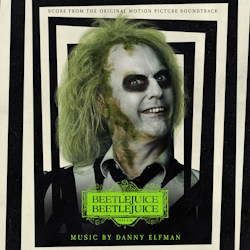 Original Review by Jonathan Broxton
It has taken more than 35 years for it to happen, but director Tim Burton has finally made a sequel to his classic comedy-horror film Beetlejuice. It seems that Burton, and his star Michael Keaton, are keen to recapture the feeling of their 1980s heyday by returning to the projects that made them famous – Keaton himself has already returned to play Batman in The Flash in 2023 – but unfortunately Beetlejuice Beetlejuice, despite some fun moments, is wholly inferior to the original across the board. The film sees Keaton returning with two of his co-stars from the first film, Winona Ryder and Catherine O’Hara, alongside franchise newcomers Jenna Ortega, Justin Theroux, Arthur Conti, Willem Dafoe, and Monica Bellucci, the latter of whom is director Burton’s current paramour. Read more…
BATTLE CRY – Max Steiner
 GREATEST SCORES OF THE TWENTIETH CENTURY
Original Review by Craig Lysy
The genesis of Battle Cry lay with Leon Uris, author of the 1953 novel on which the film is based. He served in World War II as a radio man in the 2nd Battalion, 6th Marines, during the Guadalcanal and Tarawa campaigns, being evacuated with malaria. The novel was a Top Ten seller and by 1954 was already in its sixth printing. Warner Brothers saw opportunity for an epic WWII drama in cinemascope and so bought the film rights. Jack L. Warner and Raoul Walsh oversaw production, with Walsh also directing and Uris adapting his novel for the screenplay. A huge stellar cast was assembled, including Van Heflin as Major Sam “High Pockets” Huxley, Aldo Ray and Private First Class Andy Hookens, Nancy Olsen as Pat Rogers, James Whitmore as Master Technical Sergeant Mac, Tab Hunter as Private First Class Danny Forrester, Mona Freeman as Kathy, Dorothy Malone as Mrs. Elaine Yarborough, Ray Massey as Major General Snipes and Ann Frances as Rae. Read more…
MONSTER SUMMER – Frederik Wiedmann
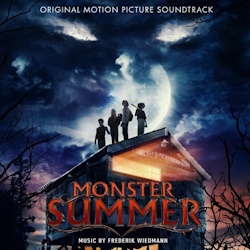 Original Review by Jonathan Broxton
Monster Summer is a lighthearted yet spooky Halloween movie for kids, written by Cornelius Uliano and Bryan Schulz, and directed by former child actor David Henrie from Wizards of Waverly Place. The story is set in the 1990s on the island of Martha’s Vineyard, and stars Mason Thames as Noah, a local teen with dreams of becoming an investigative journalist. Noah’s chance at a big story comes when he notices that local children are mysteriously vanishing, only for them to reappear the next day in a catatonic state. His main suspect is Miss Halverson (Lorraine Bracco), a mysterious elderly woman who recently moved into his mother’s boarding house and shows all the classic signs of being a witch; with the help of his friends and a retired, reclusive police detective (Mel Gibson), Noah embarks on a quest to uncover the truth. Read more…
MARY SHELLEY’S FRANKENSTEIN – Patrick Doyle
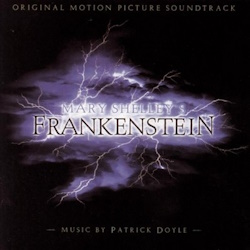 THROWBACK THIRTY
Original Review by Jonathan Broxton
Following the critical and commercial success of Bram Stoker’s Dracula in 1992 there was a brief resurgence and interest in Hollywood for making faithful adaptations of classic horror novels. Mary Shelley’s Frankenstein was director Kenneth Branagh’s attempt to bring the classic 1818 story back to the big screen, with high production values, a star-studded cast, and a more intellectual focus on its dark philosophical themes of creation, ambition, and the consequences of playing God. Branagh himself plays scientist Victor Frankenstein, who after the passing of his mother becomes obsessed with defying death. Victor moves to Germany to study science and medicine with his friend Henry Clerval (Tom Hulce), and marries his long-time love Elizabeth (Helena Bonham Carter). Eventually Frankenstein has a breakthrough where he discovers how to bring inanimate matter to life; wanting to take things further, he begins collecting human body parts, which he stitches together and tries to bring to life. Miraculously, Frankenstein succeeds, but the resulting creature (Robert De Niro) is grotesque and terrifying, leading Victor to abandon it in horror. The Creature, left to fend for itself, struggles with loneliness, rejection, and a desire for companionship; it learns language and human behavior but is consistently met with fear and violence from the people he meets, and in time vows revenge on Victor for bringing him into a world that hates him. Read more…
PRINCE OF PLAYERS – Bernard Herrmann
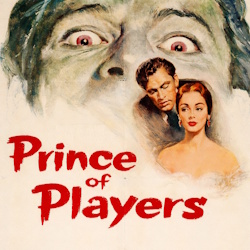 GREATEST SCORES OF THE TWENTIETH CENTURY
Original Review by Craig Lysy
In February of 1953, 20th Century Fox studio executive Daryl F. Zanuck came upon the novel “Prince of Players” by Eleanor Ruggles. He decided that a film adaptation of the biographical story of thespians Edwin “Ned” Booth and his notorious brother John Wilkes Booth would be an excellent vehicle for their rising star Richard Burton, who had just signed a seven film contract. Philip Dunne was placed in charge of production and provided a budget of $1.57 million, Moss Hart was hired to write the screenplay, and Dunne would also direct. The cast included; Richard Burton as Edwin “Ned” Booth, Maggie McNamara as Mary Devlin, John Derek as John Wilkes Booth, and Raymond Massey as Julius Brutus Booth. Read more…
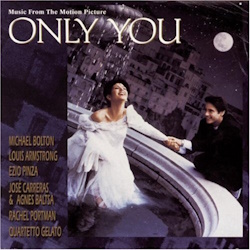
ONLY YOU – Rachel Portman
 THROWBACK THIRTY
Original Review by Jonathan Broxton
Only You is a romantic comedy about destiny, love, and chance encounters, directed by Norman Jewison and starring Marisa Tomei and Robert Downey Jr. The story follows Faith Corvatch (Tomei), a woman who has always believed in fate and soulmates; as a young girl, Faith was told by a Ouija board and a fortune teller that she was destined to marry a man named “Damon Bradley,” and over the years, she becomes fixated on this name, believing that her perfect match is out there somewhere. Years later, Faith is engaged to a practical but unromantic podiatrist not named Damon Bradley, but she still feels something is missing from her life. Just before her wedding, she receives a phone call from one of her fiancé’s old classmates – a man named Damon Bradley – who is about to fly to Italy. Spurred by this coincidence and her lifelong belief in fate, Faith impulsively decides to pursue him, convinced he is the love of her life. She travels to Italy with her best friend Kate (Bonnie Hunt) in search of Damon, but instead meets Peter Wright (Downey). Peter is immediately smitten with Faith, and pretends to be Damon Bradley in order to get close to her, a lie which complicates their budding relationship… Read more…

Shop at the Movie Music UK Store

Member of the

 MOVIE MUSIC UK