Archive
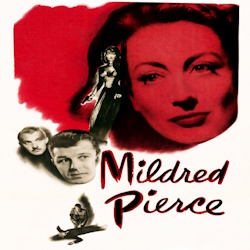
MILDRED PIERCE – Max Steiner
 GREATEST SCORES OF THE TWENTIETH CENTURY
Original Review by Craig Lysy
After eighteen years as a marquee actress for MGM, Joan Crawford departed the studio in search of better roles, signing a three-year contract with Warner Brothers. The studio had purchased the film rights to the popular novel “Mildred Pierce” by James M. Cain and Crawford campaigned hard for the role. Director Michael Curtiz did not believe she was right for the role, but relented when she acquiesced to the indignity of a screen test, which changed his mind. Jerry Wald was placed in charge of production with a $1.4 million budget, Curtiz would direct, and Ranald MacDougall was hired to write the screenplay. Joining Crawford would be Jack Carson as Wally Fray, Zachary Scott as Monte Beragon, Eve Arden as Ida Corwin, Ann Blyth as Veda Pierce Forrester, and Bruce Bennett as Bert Pierce. Read more…
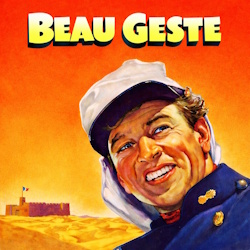
BEAU GESTE – Alfred Newman
 GREATEST SCORES OF THE TWENTIETH CENTURY
Original Review by Craig Lysy
Paramount Pictures executives decided that they wanted to remake their 1926 silent film “Beau Geste”, which starred Ronald Coleman. William Wellman was assigned production, he would also direct, and Robert Carson was tasked with writing the screenplay. The 1926 film was based on the novel “Beau Geste” (1924) by P. C. Wren and the creative team ultimately decided to adopt the screenplay of the 1926 film almost verbatim. For the cast, Gary Cooper would star in the titular role, joined by Ray Milland as John Geste, Robert Preston as Digby Geste, J. Carrol Naish as Rasinoff, Susan Hayward as Isobel Rivers, and Brian Donlevy as Sergeant Markoff. Read more…
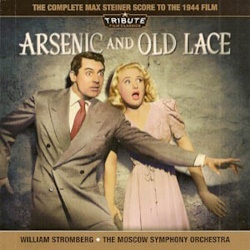
ARSENIC AND OLD LACE – Max Steiner
 GREATEST SCORES OF THE TWENTIETH CENTURY
Original Review by Craig Lysy
Renowned producer and director Frank Capra saw opportunity with the popular success of the Broadway play “Arsenic and Old Lace”, which was adapted from Joseph Kesserling’s novel of the same name. He purchased the film rights, however the contract stipulated that the film could not be released until the Broadway run had ended. Due to the enduring success of the play, the film debut was delayed by almost two years. Capra would manage production with a budget of $1.2 million, and also direct, with Julius J. Epstein and Philip G. Epstein writing the screenplay based on Joseph Kesselring’s novel. A fine cast was hired, with Cary Grant starring as Mortimer Brewster, Priscilla Lane as Elaine Brewster, Raymond Massey as Jonathan Brewster, Jack Carson as Officer Patrick O’Hara, and Peter Lorre as Dr, Herman Einstein. Read more…
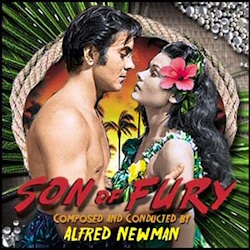
SON OF FURY – Alfred Newman
 GREATEST SCORES OF THE TWENTIETH CENTURY
Original Review by Craig Lysy
In 1941 20th Century Fox Studio Director Darryl F. Zanuck was seeking a new film to showcase his star, Tyrone Power. He came across the 1941 novel Benjamin Blake by Edison Marshall and purchased the film rights for $50,000 one month prior to its publication. Zanuck would manage production with a $2 million budget, John Cromwell would direct, and Philip Dunne was tasked with writing the screenplay. Tyrone Power would star in the titular role, joined by Gene Tierney as Eve, George Sanders a Sir Arthur Blake, Kay Johnson as Lady Helena Blake, Dudley Diggs as Pratt, Frances Farmer as Isabel, and Roddy McDowell as Benjamin as a boy. Read more…
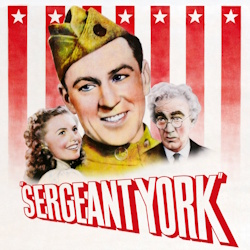
SERGEANT YORK – Max Steiner
 GREATEST SCORES OF THE TWENTIETH CENTURY
Original Review by Craig Lysy
Alvin C. York was an iconic American WWI Medal of Honor hero celebrated in the 1928 biography “Sergeant York: His Own Life Story and War Diary” by Tom Skeyhill and York himself. Producer Jesse L. Lasky approached York several times to allow a movie to be made of his life, but was repeatedly refused, declaring; “this uniform ain’t for sale.” Lasky eventually convinced York that, with war threatening in Europe, it was his patriotic duty to allow the film to proceed. York finally agreed, but only on three conditions. First, his share of the profits would be contributed to a Bible school he wanted to be built. Second, no cigarette-smoking actress could be chosen to play his wife. Third, only Gary Cooper could recreate his life on screen. Cooper at first turned down the role, but when Lasky sent him a letter with a personal plea that included York’s forged signature, Cooper agreed to do the picture. Lasky, Howard Hawks and Hal B. Wallis were placed in charge of production with a $1.7 million budget, Hawks would also direct, and the team of Harry Chandlee, Abem Finkel, John Huston and Howard Koch would adapt York’s biography. Gary Cooper would play the titular role supported by Walter Brennan as Pastor Rosier Pile, and Joan Leslie as Gracie Williams. Read more…
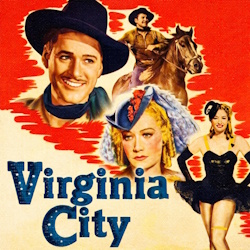
VIRGINIA CITY – Max Steiner
 GREATEST SCORES OF THE TWENTIETH CENTURY
Original Review by Craig Lysy
Following the commercial success of Dodge City in 1939, Warner Brothers decided to again showcase their marquee star Errol Flynn in another Western. A story by Robert Bruckner fit the bill, and Robert B. Fellows was placed in charge of production with a $1.179 million budget. Michael Curtiz would direct, with Bruckner writing the screenplay. For the cast Errol Flynn would star as Captain Kerry Bradford, again paired with Olivia de Haviland as Julia Hayne. However, after de Haviland dropped out, as did her replacement Brenda Marshall, Miriam Hopkins won the role. Joining them would be Randolph Scott as Captain Vance Irby, Humphrey Bogart as John Murrell, and Alan Hale as Olaf “Moose” Swenson. Read more…
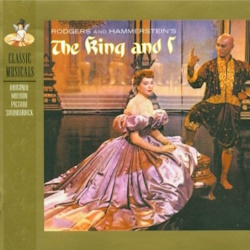
THE KING AND I – Richard Rodgers, Oscar Hammerstein II, Alfred Newman
 GREATEST SCORES OF THE TWENTIETH CENTURY
Original Review by Craig Lysy
In 1950 composer Richard Rodgers and lyricist Oscar Hammerstein II adapted the play “Anna and The King of Siam” (1944) by Margaret London into a Broadway Musical titled “The King And I”. It had a very successful run of 1,246 performances and in 1951 they secured backing from Darryl F. Zanuck of 20th Century Fox Studios to do a film adaptation. Charles Brackett was assigned production with a $4.55 million budget, Ernest Lehman was hired to write the screenplay, Jerome Robbins was tasked with creating the choreography, and Walter Lang given the reins to direct. Casting was problematic as Rodgers rejected Maureen O’Hara who had a trained soprano voice, which led to Deborah Kerr landing the role of Anna Leonowens, although her singing voice required dubbing by Marni Nixon. Joining her would be Yul Brynner as King Mongkut of Siam, Rita Moreno as Tuptim, Terry Sanders as Lady Thiang, Martin Benson as Kralahome, and Rex Thompson as Louis Lenowens. Read more…
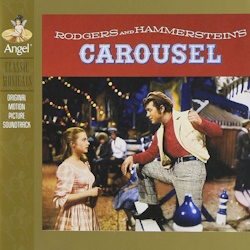
CAROUSEL – Richard Rodgers, Oscar Hammerstein II, Alfred Newman
 GREATEST SCORES OF THE TWENTIETH CENTURY
Original Review by Craig Lysy
In 1945 composer Richard Rodgers and lyricist Oscar Hammerstein II adapted the 1909 play “Liliom” by Hungarian playwright Ferenc Molnár into a Broadway Musical titled “Carousel”. It had a very successful run and in 1955 they secured backing from 20th Century Fox Studios to do a film adaptation. Studio executive Darryl F. Zanuck and Henry Ephron would manage production with a $3.3 million budget. Ephron would also write the screenplay, and Henry King was given the reins to direct. A fine cast was brought in, including Gordon MacRae (replacing Frank Sinatra) as Billy Bigelow, Shirley Jones as Julie Jordan, Cameron Mitchell as Jigger Craigin, Barbara Ruick as Carrie Pepperidge, and Gene Lockhart as the Starkeeper. Ruick, of course, would go on to become John Williams’s first wife when they married later in 1956. Read more…
THE SWAN – Bronislau Kaper
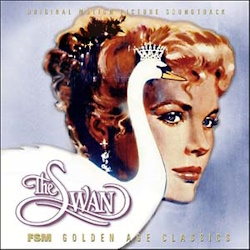 GREATEST SCORES OF THE TWENTIETH CENTURY
Original Review by Craig Lysy
In May of 1955 Don Schary, MGM’s Executive for Film Production, was seeking a film to showcase the studio’s marquee star, Grace Kelly. He believed he found the story and so bought the film rights to a Hungarian play entitled “A Hattyú, Vígjáték Három Felvonásban” (The Swan, A Comedy in Three Acts) written in 1914 by Ferenc Molnár. Schary took personal charge of production, allocating a budget of $3.094 million. John Dighton was hired to write the screenplay and Charles Vidor was tasked with directing. Joining Grace Kelly in the starring role of Princess Alexandra would be Alec Guiness as Crown Prince Albert, Louis Jourdan as Dr. Nicholas Agi, Jessie Royce Landis as Princess Beatrix, Brian Aheme as Father Carl Hyacinth, and Agnes Moorehead as Queen Maria Dominika. Read more…
TRIBUTE TO A BAD MAN – Miklós Rózsa
 GREATEST SCORES OF THE TWENTIETH CENTURY
Original Review by Craig Lysy
MGM Studios has suffered a string of loses and sought to recoup them with a film in a popular, money-making genre – Westerns. They came across the short story “Hangings for the Lucky” by Jack Schaefer, and purchased the film rights, which ultimately became this film: Tribute to a Bad Man. Sam Zimbalist was assigned production with a $2.8 million budget. Schaefer and Michael Blankfort would write the screenplay, and Robert Wise was tasked with directing. Casting was not smooth sailing as the star Spencer Tracy was fired by Wise for disrupting filming and Grace Kelly left her career to marry Prince Ranier III of Monaco. James Cagney was brought in for the starring role of Jeremy Rodock, and joining him would be Don Dubbins as Steve Millar, Stephen McNally as McNulty, and Irene Papas as Jocasta Constantine. Read more…
DIANE – Miklós Rózsa
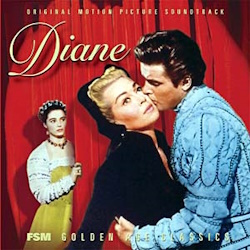 GREATEST SCORES OF THE TWENTIETH CENTURY
Original Review by Craig Lysy
Samuel Goldwyn of MGM was given a fifty-page manuscript titled “Diane de Poitiers” by John Erskine, which producer Edwin H. Knopft purchased in 1939. The project was given the green light to proceed, however financing delayed production until 1953 when Knopft renewed his effort and received the blessing of studio executive Don Schary to proceed. A $3.892 million budget was provided. Christopher Isherwood was hired to adapt Erskine’s story, and David Miller was tasked with directing. An impressive cast was assembled, which included Lana Turner as Dian de Poitiers, Pedro Armendáriz as King Francis I, Roger Moore as Prince Henri/King Henri II, Marisa Pavan as Catherine dé Medici, Sir Cedric Hardwick as Ruggieri, Torin Hatcher as Count de Brézé, Taina Elg as Alys, John Lupton as Regnault, and Henry Danelli as Gondi. Read more…
THE RAINS OF RANCHIPUR – Hugo Friedhofer
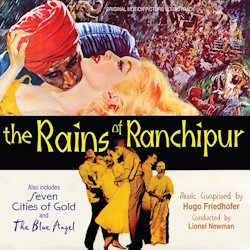 GREATEST SCORES OF THE TWENTIETH CENTURY
Original Review by Craig Lysy
In the early 1950s, 20th Century Fox Studio executives committed to remaking several of their popular black and white films of the 1930s in DeLuxe Color Cinemascope. It was decided that the 1939 film “The Rains Came” would be refashioned as “The Rains of Ranchipur”. It would again be based on the 1937 novel “The Rains Came” by Louis Bromfield, with Merle Miller adapting the screenplay. Frank Ross was placed in charge of production, provided a budget of $2.9 million, and Jean Negulesco was tasked with directing. A stellar cast was assembled, including; Lana Turner as Lady Edwina Esketh, Richard Burton as Dr. Rama Safti, Fred McMurray as Tom Ransome, Michael Rennie as Lord Esketh, Joan Caufield as Fern Simon, and Eugenie Leontovich as Maharani. Read more…
PICNIC – George Duning
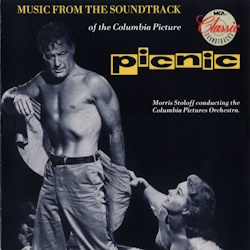 GREATEST SCORES OF THE TWENTIETH CENTURY
Original Review by Craig Lysy
Columbia Pictures took notice of the enormous success of the Broadway play “Picnic” by William Inge, which opened on February 19, 1953 at the Music Box Theater, ran for 477 performances, and won the Pulitzer Prize in Drama in 1953. The studio purchased the film rights in 1953 for $350,000, Fred Kohlmar was placed in charge of production with a budget of $3 million, Joshua Logan, the director of the Broadway stage production was tasked with directing, and Daniel Taradash joined William Inge in writing the screenplay. For the cast, the studio made the controversial decision to cast 37 year old William Holden, their marquee star, as 21 year old Hal Carter, joining him would be Kim Novak as Madge Owens, Rosalind Russel as Rosemary Sydney, Betty Field as Flo Owens, Cliff Robertson as Alan Benson, Nick Adams as Bomber, and Susan Strasberg as Millie Owens. Read more…
DODGE CITY – Max Steiner
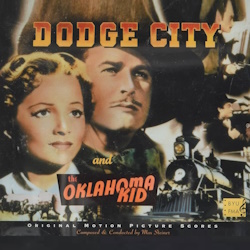 GREATEST SCORES OF THE TWENTIETH CENTURY
Original Review by Craig Lysy
In 1937 Studio executive Jack Warner decided to join the Western genre bandwagon following Paramount Pictures commercial success with “The Texas Rangers” (1936) and “The Plainsman (1936). In 1938 they believe that they had struck gold when they came across a story “Dodge City” by screen writer Robert Buckner. They purchased the film rights, Hal B. Wallis was assigned production with a $1.06 million budget, Michael Curtiz was tasked with directing, and Buckner would write the screenplay. Wallis struggled to find a leading man for the role of Wade Hutton, and decided to roll the dice with thirty-year-old Errol Flynn. Joining Flynn would be a fine cast, which included Olivia de Haviland as Abbie Irving, Ann Sheridan as Ruby Gilman, Alan Hale as Rusty, Henry O’Neill as Colonel Greenville M. Dodge, Bruce Cabot as Jeff Surrett, Victor Jory as Yancy, and Frank McHugh as Joe Clemens. Read more…
THE SON OF KONG – Max Steiner
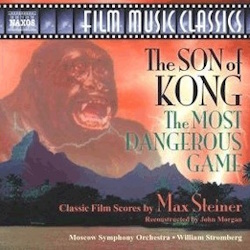 GREATEST SCORES OF THE TWENTIETH CENTURY
Original Review by Craig Lysy
Given the tremendous commercial success of King Kong in 1933, RKO executives decided to milk the cash cow and make an immediate sequel. Merian C. Cooper and Ernest B. Schoedsack, the producers and directors of the first film were asked to again manage production, however Cooper’s enthusiasm was dampened when he was provided with a budget of only $269,000, which was half the budget of original, with the caveat that they had to have it in theaters within six months, for a Christmas 1933 release. Ruth Rose was tasked with writing the screenplay. She decided that the sequel could not duplicate the success of the first film, and so she made a creative decision; “If you can’t make it bigger, make it funnier”. The cast would include Robert Armstrong, who would reprise his role as Carl Denham. Joining him would be Helen Mack as Hilda Petersen, Frank Reicher as Captain Englehorn, John Marston as Nils Helstrom, Victor Wong as Charlie, and Ed Brady as Red. Read more…

Shop at the Movie Music UK Store

Member of the

 MOVIE MUSIC UK