Archive
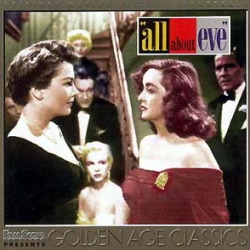
ALL ABOUT EVE – Alfred Newman
 GREATEST SCORES OF THE TWENTIETH CENTURY
Original Review by Craig Lysy
In 1949 renowned director Joseph Mankiewicz envisioned for his next project a story about an aging actress. By chance he came upon a short story “The Wisdom of Eve” by actress Mary Orr, published in the May 1946 issue of Cosmopolitan, which piqued his interest. He contacted 20th Century Fox studio executive Darryl Zanuck who was receptive, and was given the green light to proceed with the project. Zanuck agreed to produce the film and provided a generous $1.4 million budget. Mankiewicz would not only direct, but also write the screenplay, which was significantly edited to incorporate numerous suggestions for improvement offered by Zanuck. Casting the lead role was challenging to fill with Susan Hayward, Marlene Dietrich, Gertrude Lawrence and Claudette Colbert all considered before Mankiewicz finally selected Bette Davis. Joining her would be Anne Baxter as Eve Harington, Gary Merrill as Bill Sampson, George Sanders as Addison DeWitt, Celeste Holm as Karen Richards, and Hugh Marlowe as Lloyd Richards. Read more…
KING OF KINGS – Miklós Rózsa
 GREATEST SCORES OF THE TWENTIETH CENTURY
Original Review by Craig Lysy
Producer Samuel Bronston related that the most impactful event in human history was the birth, life and death of Jesus Christ. He had long nurtured the dream to bring this remarkable tale to the big screen. His conception, which was presented to Metro-Goldwyn-Mayer Studios was to make Jesus more accessible, by presenting Him as a flesh and blood man living during tumultuous times. Given the stunning success of Ben-Hur in 1959 MGM decided to cash in on the public’s love of biblical epics and gave Bronston permission to proceed. He hired writers Philip Yordan and Ray Bradbury to write the screenplay, and brought in veteran director Nicholas Ray to direct. A splendid cast was assembled, which included Jefferey Hunter as Jesus, Siobhán McKenna as Mary, Robert Ryan as John the Baptist, Ron Randell as Lucius, Hurd Hatfield as Pontius Pilate, Frank Thring as Herod Antipas, Rip Torn as Judas Iscariot, Harry Guardino as Barabbas, Carmen Sevilla as Mary Magdalene, Brigid Balzen as Salomé, and Guy Rolfe as Caiaphas. Read more…
JASON AND THE ARGONAUTS – Bernard Herrmann
 GREATEST SCORES OF THE TWENTIETH CENTURY
Original Review by Craig Lysy
Producer Charles Schneer and famed stop-motion photography master Ray Harryhausen decided that their fourth collaboration would take them to the realm of the ancient Greek myths. They chose the epic hero’s quest tale of Jason and his Argonaut crew who sail to the ends of the earth in search of the Golden Fleece, born from a winged ram and a symbol of divine sanction and kingship. Schneer would produce the film using his Morningside Productions company in partnership with Columbia pictures. A very generous budget of $3 million was provided and Don Chaffey was tasked with directing. Beverly Cross and Jan Read were hired to write the screenplay and a fine cast was assembled, which included Todd Armstrong in the titular role, joined by Nancy Kovack as Medea, Gary Raymond as the villain Acastus, Laurence Naismith as Argus, Niall MacGinnis as Zeus, Honor Blackman as Hera, Jack Gwillim as King Aeetes, John Carey as Hylas, and Nigel Green as Hercules. Read more…
MYSTERIOUS ISLAND – Bernard Herrmann
 GREATEST SCORES OF THE TWENTIETH CENTURY
Original Review by Craig Lysy
Following the commercial success of The Seventh Voyage of Sinbad (1958), Columbia Pictures signed producer Charles Schneer to a contract, in which they would distribute nine of his films. He and Ray Harryhausen were eager to launch their third collaboration and chose to adapt another Jules Verne novel, The Mysterious Island (1874). John Preeble, Daniel Uhlman and Crane Wilbur teamed up to write the screenplay, adding fantastic beasts to create drama for the story, which would allow Harryhausen to once again awe audiences with his stop-motion Dynamation photography. Veteran director Cy Endfield was tasked with directing and a fine cast was assembled including Michael Craig as Captain Cyrus Harding, Joan Greenwood as Lady Mary Fairchild, Michael Callan as Herbert Brown, Gary Merrill as Gideon Spilitt, Herbert Lom as Captain Nemo, Beth Rogan as Elena Fairchild, Percy Herbert as Sergeant Pencroft, and Dan Jackson as Corporal Neb Nugent. Read more…
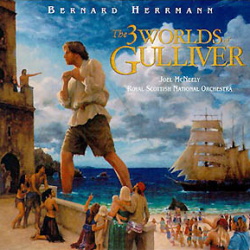
THE THREE WORLDS OF GULLIVER – Bernard Herrmann
 GREATEST SCORES OF THE TWENTIETH CENTURY
Original Review by Craig Lysy
After the critical and financial success of The Seventh Voyage of Sinbad in 1958, Charles Schneer and Ray Harryhausen decided to further explore the fantasy genre drawing inspiration from a literary classic, Jonathan Swift’s 1726 novel Gulliver’s Travels. Columbia Pictures would finance and distribute the film, with Schneer again producing. Harryhausen would again oversee the Dynamation stop-motion animation and special visual effects. Jack Sher was tasked with directing, and he would collaborate with screenwriter Arthur Ross to write the screenplay, which would be loosely based on Swift’s novel. For the cast, Kerwin Matthews would again play the titular role, supported by Jo Morrow as Gwendolyn, June Thorburn as Elizabeth, Basil Sydney as the Emperor of Liliput, Sheri Aberoni as Glumdalclitch, Lee Patterson as Reldresal, and Gregoire Aslan as King Brob. Read more…
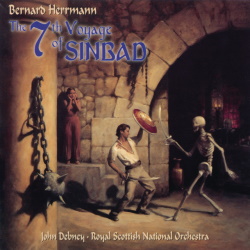
THE SEVENTH VOYAGE OF SINBAD – Bernard Herrmann
 GREATEST SCORES OF THE TWENTIETH CENTURY
Original Review by Craig Lysy
In the 1950s, a collaboration between producer Charles Schneer and special animation effects artist Ray Harryhausen resulted in a trio of very successful science fiction films; It Came From Beneath the Sea (1955), Earth vs. The Flying Saucers (1956) and 20 Million Miles to Earth (1957). They decided that they wanted to explore a new genre, which had always fascinated Harryhausen – mythological fantasies. He had a story already envisioned for Sinbad the Sailor and Schneer decided to use his production company Morningside Productions partnering with Columbia Pictures to finance and distribute the film. Harryhausen would again create and manage the Dynamation special effects. Nathan Juran was tasked with directing, and he cast two young stars for the principle roles; studio contract player Kerwin Matthews as Sinbad, and Kathryn Grant as Princess Parisa. Joining them would be Richard Eyre as the Genie, Torin Thatcher as Sokurah, Alec Mango as the Caliph of Bagdad, and Harold Kasket as the Sultan. It would take Harryhausen eleven months to complete the filming of all the widescreen stop-motion animation scenes, which included the use of a flamethrower to simulate the dragon’s fiery breath. His iconic scene where Sinbad fights a skeleton continues to awe audiences to this day. Read more…
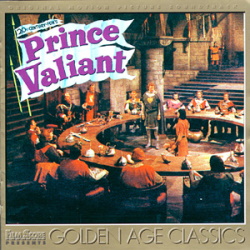
PRINCE VALIANT – Franz Waxman
 GREATEST SCORES OF THE TWENTIETH CENTURY
Original Review by Craig Lysy
MGM studios had purchased the film rights to the legendary comic book saga but was never able to reduce the sprawling story into a discreet screenplay. After languishing on the shelf for many years MGM allowed its option to lapse. Robert Jacks, who was the son in law of studio executive Darryl F. Zanuck of 20th Century Fox secured the film rights, sensing an opportunity given that swashbuckler films had been experiencing a resurgence in popularity after Ivanhoe (1952). Robert L. Jacks was given a generous budget of nearly $3 million to produce the film, which would be shot in CinemaScope. Dudley Nichols was hired to condense Hal Foster’s comic book tale into a more concise and cogent screenplay, and Henry Hathaway was tasked with directing. A stellar cast was assembled with 24-year-old heartthrob Robert Wagner playing the titular role. Joining him would be James Mason as the villain Sir Brack, Janet Leigh as love interest Princess Aleta, Debra Paget as Princess Irene, Sterling Hayden as Sir Gawain, Victor McLaglen as Boltar, Donald Crisp as King Aguar, Brian Aherne as King Arthur, and Primo Carnera as Sligon. Read more…
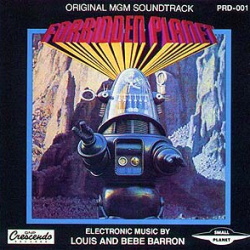
FORBIDDEN PLANET – Louis Barron, Bebe Barron
 GREATEST SCORES OF THE TWENTIETH CENTURY
Original Review by Craig Lysy
The massive commercial success of the science fiction film The Day The Earth Stood Still in 1951 motivated MGM executives to cash in on the emerging genre, which had captured the public’s imagination. They came upon a screenplay entitled Fatal Planet by Irving Block and Allen Adler, and believed they had found their film. Nicholas Nayfack was hired to produce, and he brought in Fred Wilcox to direct. They were not fully satisfied with the script and brought in screenwriter Cyril Hume to make adjustments, beginning with the title, which was changed to “Forbidden Planet” as it was believed to have greater mystery and box office appeal. An excellent cast was hired, which included Walter Pidgeon as Dr. Edward Morbius, Ann Francis as his daughter Altaira, Leslie Nielsen in his acting debut as Commander John Adams, Robby the Robot as himself, Warren Stevens as Lieutenant Doc Ostrow, Jack Kelly as Lieutenant Jerry Farman, Richard Anderson as Chief Quinn, and Earl Holliman as the Cook. The story draws inspiration from William Shakespeare’s play “The Tempest” 1610. It takes place in the distant 23rd century on the planet Altair IV. Captain Adams commands the starship C-57D on a mission to discover the fate of the starship Bellerophon, which was sent there on a mission 20 years earlier. They discover two survivors, Dr. Mobius and his daughter Altaira along with their robot Robby, who relate that an unknown entity killed the other crew members and destroyed the Bellerophon. They also learn that Dr. Mobius has discovered technology from an ancient race known as the Krell, which inhabited this planet yet disappeared in a cataclysm some 200,000 years ago. Read more…
THE PRIVATE LIVES OF ELIZABETH AND ESSEX – Erich Wolfgang Korngold
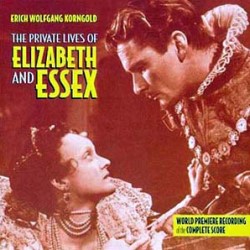 GREATEST SCORES OF THE TWENTIETH CENTURY
Original Review by Craig Lysy
Warner Brothers Studio executives saw the commercial success of Maxwell Anderson’s 1930 New York stage production of “Elizabeth The Queen,” which ran for an impressive 147 performances, and decided to purchase the film rights. Hal B. Wallis would produce the film, Michael Curtiz was tasked with directing, and Norman Reilly Raine and Aeneas MacKenzie were hired to write the screenplay. A stellar cast was assembled with Bette Davis starring as Queen Elizabeth I, Errol Flynn as Robert Devereux the Earl of Essex, Olivia de Havilland as Lady Penelope Gray, Donald Crisp as Francis Bacon, Alan Hale Sr. as Earl of Tyrone and Vincent Price as Sir Walter Raleigh. Drama arose immediately as Davis and Flynn did not like each other, something which was exacerbated by his insistence that his character be included in the film title led. This did not sit well with Davis; in a dress rehearsal scene, she purposely slapped Flynn’s face hard in front of the entire production crew instead of feigning it. Flynn did not retaliate and luckily, she did not reprise the slap during live filming. as he related in his memoirs that he would have slapped her back! Read more…
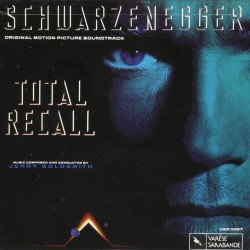
TOTAL RECALL – Jerry Goldsmith
 THROWBACK THIRTY
GREATEST SCORES OF THE TWENTIETH CENTURY
Original Review by Jonathan Broxton
Total Recall is one of my all-time favorite sci-fi action films, and is one of the best movies Arnold Schwarzenegger ever made. Adapted from the short story ‘We Can Remember It For You Wholesale’ by Philip K. Dick, it was the third English-language film from Dutch director Paul Verhoeven, following Flesh + Blood in 1985 and Robocop in 1987, and continued his explorations of American consumerism and capitalism through thinly-veiled satire, dressed up with large-scale action sequences. The film is set in a future time period where humans have colonized other planets, and have invented technology that allows ‘false memories’ to be implanted into the mind. Schwarzenegger plays Doug Quaid, a regular blue collar worker who has vivid recurring dreams of visiting Mars. One day Quaid decides to visit Rekall, a company which implants memories of vacations in people who have never been on them. However, the process goes wrong, and Quaid learns that he has already had his memory wiped; he is, in fact, a deep-cover elite secret agent with ties to Vilos Cohaagen, the corrupt and ruthless governor of the Mars Colony. Before long Quaid is knee deep in an inter-planetary adventure involving shady secret organizations and underground resistance movements seeking to overthrow the Martian government. The film co-stars Rachel Ticotin, Ronny Cox, Michael Ironside, and a pre-Basic Instinct Sharon Stone, and was a massive hit with both critics and audiences, who praised its clever story, vivid action sequences, impressive (if occasionally gory) special effects, and mind-bending distortions of what is real and what isn’t. Read more…
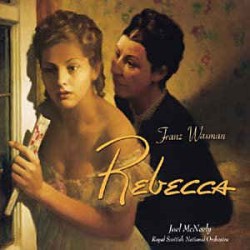
REBECCA – Franz Waxman
 GREATEST SCORES OF THE TWENTIETH CENTURY
Original Review by Craig Lysy
David O. Selznick was captivated by the 1938 novel Rebecca by Daphne du Maurier, a romantic psychological thriller, which he was determined to bring to the big screen. He purchased the film rights for $50,000, took on producing the film, and tasked Alfred Hitchcock to direct – his debut film in America. The screenplay was written by Robert Sherwood and Joan Harrison with adaptation by Philip MacDonald and Michael Hogan. Selznick insisted that the film remain faithful to the novel, and friction occurred when he overruled a number of changes made by Hitchcock. Selznick’s initial choices for the lead roles were Ronald Coleman and Carole Lombard, but both declined. Nevertheless a stellar cast was assembled, which included Joan Fontaine as the second Mrs. De Winter, Laurence Olivier as Maxim de Winter, Judith Anderson as the housekeeper Mrs. Danvers, George Sanders as Jack Favell, Reginald Denny as Frank Crawley, and C. Aubrey Smith as Colonel Julyan. Read more…
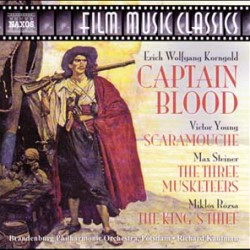
CAPTAIN BLOOD – Erich Wolfgang Korngold
 GREATEST SCORES OF THE TWENTIETH CENTURY
Original Review by Craig Lysy
The commercial success of Treasure Island and The Count of Monte Cristo in 1934 inspired Warner Brothers Studio executives to remake their earlier silent film of Captain Blood, which first hit the silver screen in 1923. They tasked producers Harry Joe Brown and Gordon Hollingshead to manage the project with a generous $1.24 million budget and hired Michael Curtiz to direct. They would again adapt the film from the 1922 novel Captain Blood by Rafael Sabatini and hired Casey Robinson to write the screenplay. However, casting got off on the wrong foot; Robert Donat and Jean Muir were originally sought for the lead roles, but when Donat declined the offer, the studio decided to bypass Muir and recruit new young talent. 24-year-old Australian actor Errol Flynn would make his Hollywood debut, cast in the titular role supported by 19-year-old Olivia de Havilland, who would play Arabella Bishop. Joining them would be Lionel Atwill as Colonel Bishop, Basil Rathbone as Levasseur, Ross Alexander as Jeremy Pitt, and Henry Stephensen as Lord Willoughby. Read more…
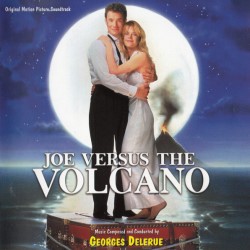
JOE VERSUS THE VOLCANO – Georges Delerue
 THROWBACK THIRTY
GREATEST SCORES OF THE TWENTIETH CENTURY
Original Review by Jonathan Broxton
After receiving his first Oscar nomination for Big in 1988, but before he became an established box office draw with titles like Sleepless in Seattle and Philadelphia, Tom Hanks spent a couple of years trying to find his niche. One of the projects he tried which never took off was Joe Versus the Volcano, a highly peculiar comedy written and directed by John Patrick Shanley. Hanks plays Joe Banks, a luckless everyman who works a terrible dead-end job and is chronically sick. One day Joe is told he is dying of a mysterious and incurable rare disease, and accepts a financial offer from billionaire Samuel Graynamore (Lloyd Bridges) – he can live like a king for a short period, but then has to travel to a South Pacific island and throw himself into a volcano to appease the superstitious natives. With nothing to lose, Joe agrees, but when he meets and falls in love with Patricia (Meg Ryan), Graynamore’s daughter, who is captaining the yacht taking him to the island, he realizes he may have something to live for after all. The film was a critical and commercial flop when it was first released, but has become something of a cult film in the intervening years, receiving praise for its offbeat tone and sweet nature, and for the fact that this was the first on-screen pairing of Hanks and Ryan, who would go on to be Hollywood’s romantic comedy golden couple. Read more…
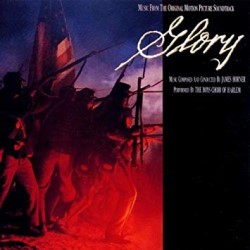
GLORY – James Horner
 THROWBACK THIRTY
GREATEST SCORES OF THE TWENTIETH CENTURY
Original Review by Jonathan Broxton
Blow the horn, play the fife, beat the drum so slowly. Blow the horn, play the fife, make the drum beat glory…
Stories from the American Civil War have fascinated filmmakers for decades. Films as great and respected as Gone With the Wind, The Red Badge of Courage, and even things like The Outlaw Josey Wales, have examined different elements of the conflict that so ravaged the fledgling nation from 1861 to 1865. However, for my money, one of the best movies about that period was the 1989 epic Glory, written by Kevin Jarre and directed by Edward Zwick. It tells the story of the 54th Massachusetts Infantry Regiment, a platoon of ‘free black’ soldiers and former slaves fighting for the Union Army. Under the command of Colonel Robert Shaw, the regiment becomes involved in numerous battles and incidents, culminating with their heroic charge on Fort Wagner, a Confederate stronghold in South Carolina. But the film is about more than that – it’s about bravery, and honor, and courage. It’s about the dignity of these African American soldiers, and how they inspired similar feelings of honor and dignity in their communities. It’s about the relationships between Shaw and his officers and soldiers, and how the racism and prejudice that still existed in the North was turned into friendship and mutual respect as a result of their experiences. The film has an astonishing cast – Matthew Broderick, Cary Elwes, Morgan Freeman, Denzel Washington who won an Oscar – and was a major critical success. Read more…
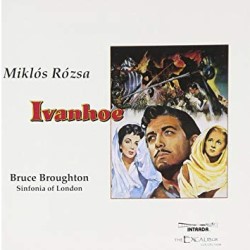
IVANHOE – Miklós Rózsa
 GREATEST SCORES OF THE TWENTIETH CENTURY
Original Review by Craig Lysy
In 1935 MGM Studio sought to bring Sir Walter Scott’s epic Medieval Knight tale Ivanhoe (1819) to the big screen. After crafting a screenplay, the project never got off the ground as production delays resulted in selecting two different casts, one in 1935 starring Fredric March, Loretta Young and Gary Cooper, and another in 1938 starring Robert Taylor, Myrna Loy and Clark Gable. Another setback to production occurred with the onset of WWII, which caused filming on location in England to be put hold. New energy for the project arose in 1946 when Æneas MacKenzie crafted a new script, which satisfied MGM executives. Pandro S. Berman was given a very generous budget to produce the film and he brought in Richard Thorpe to direct. A third stellar cast was hired, which included; Robert Taylor as Ivanhoe, Elizabeth Taylor as Rebecca, Joan Fontaine as Rowena, George Sanders as Sir Brian De Bois-Guilbert, Emlyn Williams as Wamba and also the Narrator, Felix Aylmer as Isaac, Finlay Currie as Cedric, and Guy Rolfe as Prince John. Read more…

Shop at the Movie Music UK Store

Member of the

 MOVIE MUSIC UK