Archive
WINDTALKERS – James Horner
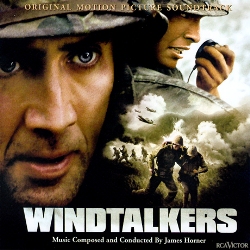 Original Review by Jonathan Broxton
It’s getting more and more difficult to review James Horner scores objectively these days – and everyone knows why. Listening to and writing about Horner’s music is a bit like having an itch you’re not supposed to scratch – you know it’ll do you no good in the long run but, by God, it irritates you so much, you just can’t help yourself – and the short term relief is worth it. I am almost at pains to say so, but on the whole Windtalkers bored me. Horner rarely does this; if nothing else, Horner’s music is usually interesting and worth taking the time to listen to. But, here, its as though he intentionally drew the majority the heart and color from his score, leaving instead a soulless musical shell that is technically sound but bereft of anything remotely resembling emotion. Read more…
THE BOURNE IDENTITY – John Powell
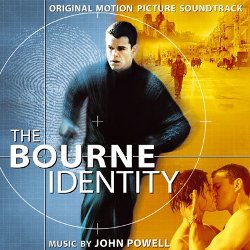 Original Review by Jonathan Broxton
Film music is a funny thing. Sitting down to listen to The Bourne Identity, the latest score from British composer John Powell, I fully expected to hate it. Electronics, synthesizers, drum loops, very little in the way of an orchestral palette – all the things I generally dislike about certain types of score are in place here. But, much to my own surprise, I didn’t hate it at all – it actually entertained me for much of its running length, and left me marveling at the deftness of Powell’s MIDI programming and electronic inventiveness. Read more…
STAR WARS: ATTACK OF THE CLONES – John Williams
 Original Review by Jonathan Broxton
Talk about pressure. Could any composer other than John Williams ever write a Star Wars score successfully? After the mixed critical reception of The Phantom Menace, it would be difficult for Attack of the Clones NOT to be a better movie; but Williams’ score was roundly praised, and to improve upon the incredible choral power of Duel of the Fates would be a task indeed. As the second installment in the trilogy, speculation was rife about how the middle Star Wars movie is always the best, dramatically and musically, adding further expectation upon Williams’s talents. Fortunately, all the doubts and worries are groundless. Attack of the Clones is a monster, surpassing The Phantom Menace on almost all counts. Read more…
UNFAITHFUL – Jan A. P. Kaczmarek
 Original Review by Jonathan Broxton
Jan A.P. Kaczmarek, the least-known of the triumvirate of Polish film composers that includes Wojciech Kilar and Zbigniew Preisner, continues to make in-roads into Hollywood with his score for Unfaithful, the latest film by maverick director Adrian Lyne. Kaczmarek has had an interesting career to date, scoring mainly art house fare such as Total Eclipse and Bliss, but dabbling in the mainstream with things like Lost Souls and Washington Square without being widely recognized. I have a feeling that Unfaithful could change all that. Basically a three-way character study about the emotional effects of infidelity, Unfaithful stars Richard Gere and Diane Lane as Edward and Connie Sumner, a happily married couple living in the New York suburbs with their precocious young son Charlie (Erik Per Sullivan). One stormy autumn day, Connie makes a trip to the city, and literally bumps into handsome French book dealer Paul Martel (Olivier Martinez). Cleaning her grazed knee in his apartment, Connie obviously feels an attraction to Paul, but ignores her instincts, dismissing them as mere juvenile lust. However, Connie and Paul’s feelings for each other gradually grow too strong to ignore, and eventually they embark on a stormy, passionate affair. Meanwhile, the dependable Edward begins to notice subtle changes in his wife’s behavior, and hires a detective to find out about her illicit daytime liaisons. What transpires thereafter begins to tear at the fabric of the Sumner family, culminating in anger, betrayal and murder. Read more…
ENIGMA – John Barry
 Original Review by Jonathan Broxton
A new John Barry score is a rare thing indeed in this day and age. As one of the all-time greats of film music, with a career that stretches back to the 1950s, the quality of Barry’s work and his influence on the genre as a whole cannot be understated. However, in recent years, Barry’s musical oeuvre has become so familiar and – dare I say it – predictable, that every score sounds like the last. Playing By Heart, his last score, broke the mould somewhat by embracing a distinctive type of moody jazz, but everything else has been much of the same. Enigma is no different. Read more…
Remembering Georges Delerue, 1925-1992
 Composer Georges Delerue died ten years ago today, on March 20, 1992. He had a stroke, just hours after recording the last cue for the soundtrack to his last film, Rich in Love, and died two days later. He was 67.
Georges Henri Jean-Baptiste Delerue was born in Roubaix, France, in March 1925. A clarinet and piano player as a child, Delerue attended the Turgot Institute, the Roubaix conservatory, and the Conservatoire de Paris, where he studied composition with Darius Milhaud and Henri Büsser. His friends there included Maurice Jarre and Pierre Boulez, and together the three of them would make often make money on the side performing jazz in piano bars near the Paris Opera House.
He began writing stage music during the late 1940s, for the Théâtre National Populaire, the Comédie-Française, and the Théâtre Babylone, before being hired to direct the orchestra of the Club d’Essai for French National Radio and Television. His work for FRNT led directly to him scoring his first major project, television drama, Princes du Sang, in 1952. Read more…
MONSOON WEDDING – Mychael Danna
 Original Review by Jonathan Broxton
Bollywood. Even today, in this enlightened age, the term conjures up hackneyed images of bad acting, bad dubbing, cheesy dance routines, and actors and actresses bursting into song at inappropriate moments, accompanied by a cast of thousands in tracksuits. In reality, the Indian film industry is the strongest and most successful on the planet, with the city of Bombay releasing more motion pictures in a year than anything from a Hollywood studio. But as well as the singing and dancing, India has real pedigree in “proper” drama, with films like Shekhar Kapur’s Bandit Queen and Santosh Sivan’s recent Asoka proof of the sub-continent’s increasing aptitude for epics on a grand scale. Director Mira Nair, while not exactly a household name, has nevertheless become India’s top female director, with Salaam Bombay, Mississippi Masala, The Perez Family and Kama Sutra: A Tale of Love to her name. Her current film, Monsoon Wedding, is possibly her crowning glory to date. Read more…
DRAGONFLY – John Debney
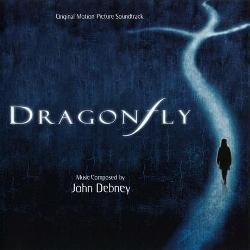 Original Review by Jonathan Broxton
I’m going let you into a personal anecdote about the score for Dragonfly. The first time I ever listened to this CD was in May 2002, while I was on holiday in Los Angeles. I was heading back from John Debney’s studio in Burbank to the hotel where I was staying in Culver City, having just been for lunch with him. John kindly gave me a copy of the score, and I eagerly played it as soon as I got back to the car. I took the scenic route home, driving over Mulholland Drive and down Laurel Canyon Boulevard to where it intersects with Sunset near the Bel Air gates. Half way down the hill on Laurel Canyon, the final track of the CD, ‘Emily’s Message Revealed’, kicked in. Seven minutes later, I almost had to stop the car because I couldn’t see for the tears. I had just heard one of the most beautiful and majestic cues in years. I realize that this story may not really mean very much to people, but for a cue to make me cry like that upon a first listen is rare indeed, and gives you an idea of the power inherent in this gorgeous score. Read more…
Academy Award Nominations 2001
 The Academy of Motion Picture Arts and Sciences (AMPAS) have announced the nominations for the 74th Academy Awards, honoring the best in film in 2001.
In the Best Original Score category, the nominees are:
- JAMES HORNER for A Beautiful Mind
- RANDY NEWMAN for Monsters, Inc.
- HOWARD SHORE for The Lord of the Rings: The Fellowship of the Ring
- JOHN WILLIAMS for A.I. Artificial Intelligence
- JOHN WILLIAMS for Harry Potter and the Sorcerer’s Stone
This is the first Oscar nomination for Shore, the 6th nomination for Horner, the 8th nomination for Newman, and the 35th and 36th nominations for Williams, Horner previously won for Titanic in 1997. Williams previously won for Fiddler on the Roof in 1971, Jaws in 1975, Star Wars in 1977, E.T. the Extra Terrestrial in 1982, and Schindler’s List in 1993.
In the Best Original Song category, the nominees are:
- ENYA BRENNAN, NICKY RYAN, and ROMA RYAN for “May It Be” from The Lord of the Rings: The Fellowship of the Ring
- PAUL McCARTNEY for “Vanilla Sky” from Vanilla Sky
- RANDY NEWMAN for “If I Didn’t Have You” from Monsters, Inc.
- GORDON SUMNER (STING) for “Until” from Kate & Leopold
- DIANE WARREN for “There You’ll Be” from Pearl Harbor
The winners of the 74th Academy Awards will be announced on March 24, 2002.
BAFTA Nominations 2001
 The British Academy of Film and Television Arts (BAFTA) has announced the nominations for the 55th British Academy Film Awards, honoring the best in film in 2001.
In the Best Original Music category, which is named in memory of the film director Anthony Asquith, the nominees are:
- CRAIG ARMSTRONG and MARIUS DE VRIES for Moulin Rouge!
- ANGELO BADALAMENTI for Mulholland Drive
- HARRY GREGSON-WILLIAMS and JOHN POWELL for Shrek
- HOWARD SHORE for The Lord of the Rings: The Fellowship of the Ring
- YANN TIERSEN for Amélie
These are the first nominations for Badalamenti, Gregson-Williams, Powell, and Tiersen. It is the second nomination for Armstrong, the second nomination for De Vries, and the second nomination for Shore. Armstrong and De Vreis previously won for William Shakespeare’s Romeo + Juliet in 1997.
The winners of the 55th BAFTA Awards will be announced on February 24, 2002.
Mario Nascimbene, 1913-2002
 Composer Mario Nascimbene died on January 6, 2002, at his home in Rome, Italy, after a short illness. He was 88.
Born in Milan in 1913, Nascimbene studied composition and orchestration at the Giuseppe Verdi Conservatory. His early work in Italian cinema during the 1940s quickly brought him attention for its originality and subtle emotional shading. He became one of the first Italian composers to find international success in Hollywood, scoring major American productions during the 1950s and 1960s.
Nascimbene’s distinctive style, which often incorporated unconventional instruments and electronic effects alongside traditional orchestration, set him apart. He was an early adopter of tape loops and ambient sound in film scoring, helping to modernize the language of cinematic music. He collaborated with legendary directors including Joseph L. Mankiewicz, Roberto Rossellini, and Michelangelo Antonioni, and scored over 150 films across genres, from historical epics to psychological dramas.
His score for Alexander the Great (1956), starring Richard Burton, and his evocative work on titles such as The Barefoot Contessa (1954), A Farewell to Arms (1957), The Vikings (1958), Room at the Top (1959), Solomon and Sheba (1959), Barabbas (1961), Light in the Piazza (1962), Swordsman of Siena (1962) earned him a place among the leading Italian film composers of his generation. Later in his career Nascimbene worked on several films for the Hammer studio in the UK, notably titles such as One Million Years B.C. (1966), The Vengeance of She (1968), The Mummy (1969), When Dinosaurs Ruled the Earth (1970), and Creatures the World Forgot (1971). Read more…
CHARLOTTE GRAY – Stephen Warbeck
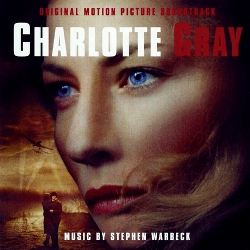 Original Review by Jonathan Broxton
In the four years since he won the Oscar for his score for Shakespeare In Love, British composer Stephen Warbeck’s stock has risen considerably. At first, I was guilty of dismissing him as a flash in the pan: after all, prior to that film, his only work of note was for the popular UK crime series Prime Suspect and the critically acclaimed Mrs. Brown, at that time his only internationally released score. Since then, however, Warbeck has continually surprised and delighted me with score after score of exquisite music. First came Billy Elliott, then Quills, and then Captain Corelli’s Mandolin, easily one of my favorite scores of 2001. The new level of expectation on Warbeck is such that now I look forward to each new work by him, hoping that he can surpass his last effort each time – and it comes as something of a shock to learn that, with Charlotte Gray, he has not. Read more…
THE SHIPPING NEWS – Christopher Young
 Original Review by Jonathan Broxton
Films set in Newfoundland are few and far between, and scores based upon the musical heritage of that uniquely isolated part of Canada are rarer still. The Shipping News, Miramax’s big Oscar movie of 2001, is not a film about the indigenous people of Newfoundland, but the white European settlers who moved there centuries ago, and as such embraces their culture wholeheartedly, allowing composer Christopher Young to explore a musical style he had never before attempted: Celtic music. Adapted from the novel by E. Annie Proulx and directed by Lasse Hallström (The Cider House Rules, Chocolat), The Shipping News stars Kevin Spacey stars as Guy Quoyle, a lonely New Yorker who returns to his childhood home in Newfoundland with his daughter after emerging from a tragic, loveless marriage to Petal (Cate Blanchett). Moving in with his long lost aunt (Judi Dench) and taking a job writing the shipping news column in the local newspaper, “The Gammy Bird”, Quoyle finds his world-vision slowly changing his life… that is, until he meets widow Wavey (Julianne Moore), an emotionally damaged woman with whom Quoyle begins to come to terms with his own life, heal the rift with his daughter, and put his past behind him. Read more…
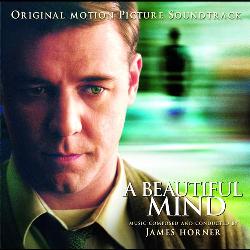
A BEAUTIFUL MIND – James Horner
 Original Review by Jonathan Broxton
A Beautiful Mind, directed by Ron Howard, has become one of the most critically successful movies of 2001. Telling the true-life story of Nobel Prize winning genius John Forbes Nash Jr. and his battle with schizophrenia, A Beautiful Mind has been nominated for multiple Academy Awards in 2002 and looks set to go-head with The Lord of the Rings for top honors on Oscar night. Russell Crowe stars as Nash, a brilliant mathematician and innovative thinker, whose groundbreaking work at Princeton and MIT in the 1940s and 1950s made him the cause celebre of the academic world. Before long, Nash is approached by the military to work on a top secret code-breaking operation run by the mysterious and sinister William Parcher (Ed Harris), and his success in the field indirectly leads to him meeting and marrying the love of his life, the beautiful and equally talented Alicia Larde (Jennifer Connelly). However, as time passes, Nash’s behavior becomes more and more erratic, it becomes apparent that Nash is suffering from increased paranoia and a persecution complex than can mean only one thing – that his beautiful mind is being attacked by schizophrenia. Read more…
THE LORD OF THE RINGS: THE FELLOWSHIP OF THE RING – Howard Shore
 Original Review by Jonathan Broxton
To say that Peter Jackson took on a mammoth task in undertaking a 9-hour, three-film cinematic version of The Lord of the Rings is an understatement indeed. Adapting J.R.R. Tolkien’s mammoth literary work for the screen took three years of the affable New Zealander’s life, and as the first part of the trilogy hits the world’s multiplexes, his vision and talent are for all to see. The Fellowship of the Ring is quite possibly the best fantasy film ever made, putting to shame Ralph Bakshi’s lamentable 1978 attempt to tell the same story through animation. Read more…

Shop at the Movie Music UK Store

Member of the

 MOVIE MUSIC UK