Archive
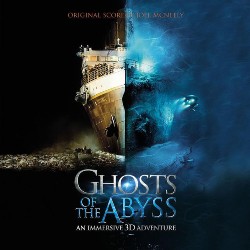
GHOSTS OF THE ABYSS – Joel McNeely
 Original Review by Jonathan Broxton
Following his Oscar winning 1997 movie Titanic, director James Cameron has since become very interested in the shipwreck of the real life ocean liner, which struck an iceberg on 14 April 1912, while on its maiden voyage from Southampton to New York, and sunk beneath the freezing waters of the north Atlantic, killing almost 1,500 passengers. In Ghosts of the Abyss, Cameron, along with a team of the world’s foremost historic and marine experts and his friend, actor Bill Paxton, embarks on an unscripted adventure back to where some of the footage for his dramatic film was shot. Using state-of-the-art technology and new 3-D IMAX cameras developed expressly for this expedition, Cameron and his crew explore virtually all of the wreckage, inside and out, as never before. In addition, actors re-create key moments from the Titanic’s last moments (in a way similar to Discovery Channel documentaries), breathing life and immediacy to the science. Read more…
NIRGENDWO IN AFRIKA/NOWHERE IN AFRICA – Niki Reiser
 Original Review by Peter Simons
Nowhere In Africa (or, in its native German, “Nirgendwo In Afrika”) tells the tragic story of a Jewish family that moves from Germany to Kenya just before WWII in 1938. There, in Africa, they start a farm, but not all members of the family can get used to their new lives. However, the war in Europe makes it impossible for them to return back home. So, all anyone can do is try and make the best out of things. The film was written and directed by Caroline Link, who based her screenplay on the book by Stefanie Zweig. Quite surprisingly, this German film nabbed the Oscar for Best Foreign Language Film at this year’s ceremony. This is the third time Swiss composer Niki Reiser composed a score for director Link. They previously worked together on Jenseits Der Stille (Beyond The Silence, 1996) and Pünktchen Und Anton (Annaluise & Anton, 1999). The soundtrack for Nowhere In Africa is a lovely combination of European and African music. There are bittersweet string chords that could have sprung from the minds of James Horner or Rachel Portman, a theme for oboe that’s quite reminiscent of the theme from The English Patient and there’s quite a bit of mellow African percussion and chanting. There are, unfortunately, a few things working against this score, but ultimately the music is just too darn nice to be really upset by its shortcomings. Read more…
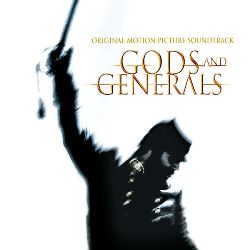
GODS AND GENERALS – John Frizzell, Randy Edelman
 Original Review by Jonathan Broxton
After the massive success of Randy Edelman’s Gettysburg score in 1993, it was only natural that he should be involved in the music for the sequel. However, whereas most of the music in Gettysburg made surprisingly good use of an anachronistic synthesiser and string amalgam, the music for Gods and Generals is more traditionally orchestral, employing powerful instrumental and choral forces without anything remotely electronic to be heard. The most surprising – and pleasing – thing about it is that it was written by John Frizzell, who is enjoying something of a career renaissance with what is easily his most high-profile and accomplished score since Alien Resurrection. Rather than being an actual sequel to Gettysburg, Gods and Generals actually covers much of the same ground, but from different perspectives and points of view, notably that of the legendary General Thomas “Stonewall” Jackson (Stephen Lang) and the events of 1861-1863, leading up to the legendary battle at Gettysburg. Gods and Generals is directed by Robert F. Maxwell, from the book by Jeff Shaara, features a star-studded supporting cast including Jeff Daniels, Mira Sorvino, Kevin Conway, Bill Campbell, and Robert Duvall as General Robert E. Lee, and clocks in at a staggering 3 hours 40 minutes running time. Read more…
DAREDEVIL – Graeme Revell
 Original Review by Peter Simons
In many ways, 2003 has become the year of the comic book revival, with movies inspired by characters including The Incredible Hulk, the X-Men and even The League of Extraordinary Gentlemen hitting cinema screen’s throughout the year. Stan Lee’s Daredevil is another to add to this list. Directed by Mark Steven Johnson, whose previous movies include the syrupy drama Simon Birch, and whose screenplay credits include Jack Frost and the Grumpy Old men films, Daredevil tells the tale of attorney Matt Murdock (Ben Affleck), blinded by toxic waste as a child, whose lack of sight increases his remaining senses to such an extent that he find he has the ability to become a superhero and fight crime. Before long, Murdock finds himself up against New York’s number one crime lord The Kingpin (Michael Clarke Duncan) and his newest apprentice Bullseye (Colin Farrell) – and crossing paths with the sexy, leather-clad Elektra (Jennifer Garner), who has an agenda of her own. A triumph of style and atmosphere over plot and performance, director Johnson said he wanted to make a movie similar to The Crow – which he lists as one of his favourite films – in both look and feel. Unsurprisingly, given this fact, he turned to Graeme Revell for the music. Read more…
Academy Award Nominations 2002
 The Academy of Motion Picture Arts and Sciences (AMPAS) have announced the nominations for the 75th Academy Awards, honoring the best in film in 2002.
In the Best Original Score category, the nominees are:
- ELMER BERNSTEIN for Far from Heaven
- PHILIP GLASS for The Hours
- ELLIOT GOLDENTHAL for Frida
- THOMAS NEWMAN for Road to Perdition
- JOHN WILLIAMS for Catch Me If You Can
This is the 10th Oscar nomination for Bernstein, the 2nd nomination for Glass, the 3rd nomination for Goldenthal, the 5th nomination for Newman, and the 37th nomination for Williams, Bernstein previously won for Thoroughly Modern Millie in 1967. Williams previously won for Fiddler on the Roof in 1971, Jaws in 1975, Star Wars in 1977, E.T. the Extra Terrestrial in 1982, and Schindler’s List in 1993.
In the Best Original Song category, the nominees are:
- ELLIOT GOLDENTHAL and JULIE TAYMOR for “Burn It Blue” from Frida
- PAUL HEWSON (BONO), DAVID EVANS (THE EDGE), ADAM CLAYTON, and LARRY MULLEN for “The Hands That Built America” from Gangs of New York
- JOHN KANDER and FRED EBB for “I Move On” from Chicago
- MARSHALL MATHERS III (EMINEM), JEFF BASS, and LUIS RESTO for “Lose Yourself” from 8 Mile
- PAUL SIMON for “Father and Daughter” from The Wild Thornberrys Movie
The winners of the 75th Academy Awards will be announced on March 23, 2003.
THE RECRUIT – Klaus Badelt
 Original Review by Peter Simons
Ever since John Powell and Harry Gregson-Williams left the Media Ventures studio, Klaus Badelt has been busier than ever. We are barely halfway through 2003 and already the young composer has scored five movies, including the Aussie drama Ned Kelly, the Matrix rip-off Equilibrium, and the swashbuckler Pirates of the Caribbean. And then there is this one: The Recruit. A thriller directed by Roger Donaldson, starring Colin Farrell as a brilliant CIA-trainee who is asked by his mentor (Al Pacino) to detect a mole operating within the Agency. If nothing more, Donaldson has created an entertaining movie. Donaldson is a bit of a stealthy director in Hollywood, despite several entertaining high-profile movies such as Species, Dante’s Peak and Thirteen Days. For the music Donaldson has turned to a different composer for every new movie, creating an impressive track record of having worked with the likes of Vangelis, Maurice Jarre, Mark Isham, Chris Young and Trevor Jones. For The Recruit, he turned to Klaus Badelt. Read more…
BAFTA Nominations 2002
 The British Academy of Film and Television Arts (BAFTA) has announced the nominations for the 56th British Academy Film Awards, honoring the best in film in 2002.
In the Best Original Music category, which is named in memory of the film director Anthony Asquith, the nominees are:
- JOHN KANDER, FRED EBB, and DANNY ELFMAN for Chicago
- PHILIP GLASS for The Hours
- WOJCIECH KILAR for The Pianist
- HOWARD SHORE for Gangs of New York
- JOHN WILLIAMS for Catch Me If You Can
These are the first nominations for Ebb, Elfman, Glass, Kander, and Kilar. It is the third nomination for Shore, and the tenth nomination for Williams. Williams previously won for Jaws and The Towering Inferno in 1975, Star Wars in 1978, The Empire Strikes Back in 1980, E.T. the Extra-Terrestrial in 1982, Empire of the Sun in 1988, and Schindler’s List in 1993.
The winners of the 56th BAFTA Awards will be announced on February 23, 2003.
DARKNESS FALLS – Brian Tyler
 Original Review by Jonathan Broxton
Traditionally, horror movies have given enthusiastic young composers an opportunity to “show what they are made of” and demonstrate their orchestral know-how to the world at large. Unconstrained by the demands of subtlety and studio interference, and working in a genre where music is perhaps more important than in any other, these ambitious men and women have regularly begun their careers writing for stalk and slash, knife-wielding stories, honing their craft, and demonstrating their talents. Over the years, the likes of James Horner, Christopher Young and (more recently) Marco Beltrami have embarked on their career ladder by scoring serial killer movies and monster flicks – and now Brian Tyler can be added to this list. It’s been quite a while since we had a balls-to-the-wall horror score on our hands. Darkness Falls is one of them. Read more…
Ron Goodwin, 1925-2003
 Composer Ron Goodwin died on January 8, 2003, at his home near Reading, England. He was 77. Earlier that evening he had completed conducting a series of Christmas concerts with the Bournemouth Symphony Orchestra, and died in his sleep that night.
Ronald Alfred Goodwin was born in Plymouth, Devon, in February 1925, and raised in London . He studied trumpet and piano, eventually attending the Guildhall School of Music. After beginning his career in the 1940s as a music copyist and arranger for music publishers, he found early success orchestrating for dance bands and providing musical direction for celebrated vocalists such as Petula Clark and Jimmy Young, including the orchestration of Young’s hit “Too Young”.
Goodwin made his feature film debut in 1958 with Whirlpool, but it was in the following decade that he rose to prominence as a film composer. He became best known for his dynamic music for war and adventure films, notably 633 Squadron (1964), Where Eagles Dare (1968), and Battle of Britain (1969). His score for 633 Squadron, with its soaring main theme and martial energy, became a classic of the genre and remains one of his most widely recognized works, especially in the UK. Read more…
THE HOURS – Philip Glass
 Original Review by Jonathan Broxton
In film music circles, Philip Glass is the victim of a certain degree of “reverse-snobbishness” that is rather unusual. As a classical composer, some of his film music work lacks the same depth of emotion as those by his contemporaries – not because he cannot write in this way but because, as he still maintains a high standing in the classical music world, he seems to embrace the “technique over emotion” standpoint favored by the classical glitterati. It is surprising, therefore, to discover that The Hours is by far his most emotional film score to date. Sadly, it sounds broadly like every other score he has written, and is repetitive to a point where you almost want to pull out your hair. Read more…
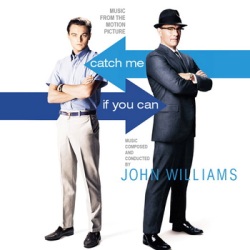
CATCH ME IF YOU CAN – John Williams
 Original Review by Jonathan Broxton
Steven Spielberg and John Williams have been working together since 1974, when the then-young director hired Williams to score The Sugarland Express. Their subsequent creative collaboration has become near-legendary, spanning almost 20 movies in as many years. Catch Me If You Can, their latest offering, is something of a departure for both of them: a) because Spielberg has made his first “light hearted” movie since the lamentable 1941, and b) because John Williams has given it a jazz score. The film is based on the true life story of Frank Abagnale Jr, who in the 1960s became the youngest person to be placed on the FBI’s most wanted list after committing a series of elaborate confidence tricks. Leonardo Di Caprio stars as the eponymous Abagnale, oozing bravado and charisma, while all the while being shadowed but never quite outwitted by FBI Agent Carl Hanratty (Tom Hanks, in an unusually low-key and monochrome role). Christopher Walken co-stars as Abagnale’s father, with Martin Sheen and Jennifer “Alias” Garner in extended cameos. Read more…
SPIDER – Howard Shore
 Original Review by Jonathan Broxton
Following the critical and commercial success of his scores for the Lord of the Rings trilogy, it has somehow been forgotten that, prior to the world at large hearing his work for Peter Jackson’s epic masterpieces, Howard Shore was known as a “dark” composer. His scores, for directors such as David Fincher and David Cronenberg, were predominantly moody, themeless, atmospheric works which thrived in the grimmer aspects of film music, where evil things lurked in the shadows. Before Lord of the Rings, no one really knew that he was capable of the grand, orchestral-and-choral majesty he ultimately delivered, and since then his musical nightmares have almost been forgotten. But, with Spider, the latest film from David Cronenberg, Shore proves that he has not completely abandoned his roots. Read more…
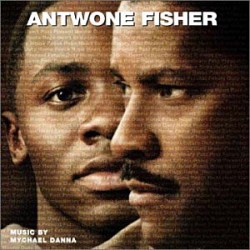
ANTWONE FISHER – Mychael Danna
 Original Review by Jonathan Broxton
I’m almost certain I’ve written this sentence before, but Mychael Danna continues to surprise and delight me with each new score he pens. The 45-year-old Canadian composer first challenged my perceptions of him with his brilliant, breathtaking Western epic Ride With The Devil, and has continued to impress me with such wide and varied works as Girl Interrupted, Green Dragon, Monsoon Wedding and Hearts in Atlantis. His 37th feature score, Antwone Fisher re-asserts Danna’s standing as one of the most talented and consistently enjoyable composers working today. Read more…
TWO WEEKS NOTICE – John Powell
 Original Review by Jonathan Broxton
It’s nice to see the development of John Powell as a film composer is continuing apace. Although his modern action scores, for films such as Face/Off and The Bourne Identity, have never really impressed me, his thematic consistency in scores such as Antz, Chicken Run, Shrek and Evolution appeals to me a great deal. And, despite the high quality of his works with Harry Gregson-Williams, it’s also nice to see him developing a distinct individual persona away from the clutches of the old Media Ventures franchise. As far as I am aware, Powell has never attempted a “traditional” rom-com before but, if Two Weeks Notice is anything to go by, he has a career following in the footsteps of Alan Silvestri ahead of him. Read more…
THE LORD OF THE RINGS: THE TWO TOWERS – Howard Shore
 Original Review by Jonathan Broxton
Howard Shore, welcome to the world of film music pressure. It’s a peculiar phenomenon, akin to the “second album” syndrome faced by rock and pop musicians whose debut works are hugely successful; John Williams faced it when embarking on the follow-up scores in the Star Wars saga. Jerry Goldsmith and James Horner, such is their popularity and fan base, face it each time they write a new score. Other composers face it when they write music for a beloved piece of fiction – especially in the fantasy or comic book genres – or have scored a major hit with their last effort in a series. With The Lord of the Rings, Howard Shore has joined this latter group. Read more…

Shop at the Movie Music UK Store

Member of the

 MOVIE MUSIC UK