Archive
Remembering Henry Mancini, 1924-1994
 Composer Henry Mancini died ten years ago today, on June 14, 1994, at his home in Los Angeles, California, after a battle with pancreatic cancer. He was 70 years old.
Enrico Nicola Mancini, nicknamed Henry or Hank, was born in April 1924 in Cleveland, Ohio, the son of Italian immigrants, and raised in a rural steelworking town in nearby Pennsylvania. He showed early musical promise and studied at the Juilliard School, but his education was interrupted by World War II, during which he served in the Army and worked with the Glenn Miller Air Force Band. After the war, Mancini joined Universal-International’s music department, where he gained experience scoring dozens of B-movies, including classics such as Creature from the Black Lagoon (1954).
Mancini’s big break came in 1958 when he collaborated with director Blake Edwards on the television series Peter Gunn, which featured a groundbreaking jazz score that became a hit in its own right. Their partnership continued through numerous films, with Mancini’s music often becoming as iconic as the films themselves. He won an Oscar for scoring Edwards’s film Breakfast at Tiffany’s in 1961, and co-wrote the iconic song “Moon River” for lead actress Audrey Hepburn. He won another Oscar in 1962 for the title song for Edwards’s film Days of Wine and Roses, received an Oscar nomination for timeless slinky jazzy main theme from The Pink Panther in 1964, and earned critical acclaim for his work on several other Edwards-directed films including The Great Race (1965), Darling Lili (1970), 10 (1979), and Victor/Victoria (1982), among many others.
Mancini had a rare ability to blend classical technique with contemporary popular styles, from swing and jazz to lush romantic ballads. Throughout the 1960s and 70s Mancini combined his scoring career with an equally successful parallel career as a songwriter, recording artist, touring conductor, and media personality, which made him one the most famous and popular American classical musicians of his era. His songs were recorded by the most popular vocalists of the day – Andy Williams, Frank Sinatra, Perry Como, Johnny Mathis, Tony Bennett, dozens of others – and many of them topped the charts. Read more…
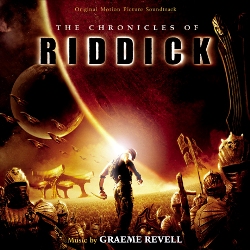
THE CHRONICLES OF RIDDICK – Graeme Revell
 Original Review by Jonathan Broxton
David Twohy’s 2000 film Pitch Black was an unexpected success, both critically and commercially. Having had his career restricted to bit parts in the likes Saving Private Ryan , and voice-over work on The Iron Giant, its star Vin Diesel was suddenly an action hero, and it even inspired Kiwi composer Graeme Revell to write one of his most widely-praised scores of the 1990s. The Chronicles of Riddick is a sequel, set five years after the conclusion of Pitch Black, and with the eponymous Riddick (Diesel) on the run from bounty hunters. Riddick meets up with his old friend Imam (Keith David), who has been told of a prophecy that a man will save his home planet from being laid to waste by the warmongering Necromongers and their near-invincible Lord Marshall (Colm Feore) – and he believes that Riddick may be that man. However, Riddick is unable to prevent the Lord Marshal from attacking Helion, and instead he finds himself thrown in a brutal subterranean prison where he encounters Jack, now known as Kyra (Alexa Davalos), the other survivor of Riddick’s time on the Pitch Black planet. Together, Riddick and Kyra plan to escape from the prison and overthrow the Lord Marshal and the Necromongers once and for all… Read more…
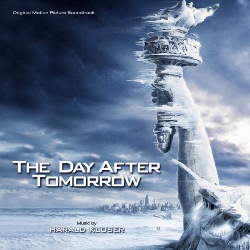
THE DAY AFTER TOMORROW – Harald Kloser
 Original Review by Jonathan Broxton
2004 has proved to be a year where several composers have been given their “shot at the big time”. Among these was Austrian composer Harald Kloser, best known to date for his occasional forays into the North American market on films such as The Thirteenth Floor and the critically acclaimed TV movies such as RFK and Rudy: The Rudy Giuliani Story. That he was hired to score The Day After Tomorrow was surprising in that no-one expected him to be scoring this high-profile a movie without achieving some kind of success beforehand. On the other hand, director Roland Emmerich has often gambled on young, relatively unknown composers before, with great effect – he is the man who ‘discovered’ David Arnold after all. Read more…
SHREK 2 – Harry Gregson-Williams
 Original Review by Peter Simons
Considering the enormous success of the original Shrek in 2001, there was never any doubt that a sequel would follow. Shrek was always going to be a tough act to follow, but somehow but the filmmakers succeeded – in fact, the results even outdo the first film. Shrek 2 has better animation, is a lot funnier, has Puss in Boots, and made a lot more money at the box office. Most of the cast returned for this sequel, with Mike Myers doing the voice of the ogre Shrek, Eddie Murphy voicing Donkey and Cameron Diaz providing the voice for the Princess Fiona. New to the sequel are Antonio Banderas as the hilarious feline Puss in Boots, Jennifer Saunders as the Fairy Godmother and John Cleese and Julie Andrews as the King and Queen of Far Far Away. Read more…
TROY (REJECTED SCORE) – Gabriel Yared
 Original Review by Jonathan Broxton
Gabriel Yared began work on Wolfgang Petersen’s Troy during the first phases of production, in early 2003. He was certainly an unexpected choice to score a film of this type, having spent much of his Hollywood career scoring sentimental romantic dramas such as The English Patient, City of Angels, Message in a Bottle, Possession and Cold Mountain, and scoring them well. Nevertheless, Yared threw himself into the project, exploring ancient and modern musical techniques, integrating Bulgarian choirs and Macedonian soloists into his work, and much more besides. For over a year, Yared immersed himself in the music of Trojans and Spartans and Greeks, having been afforded the luxury of time, something not often given to film music composers these days. The score was recorded in February 2004, and everyone, from Wolfgang Petersen to the studio execs at Warner Brothers, loved Yared’s work. Then, the film was screened for a test audience in Sacramento, California, and everything changed. The focus group at the test decided Yared’s music was “overpowering and too big, old fashioned and dated the film” and, sensing potential trouble, Warner Brothers unceremoniously threw out Yared’s work. Overnight, a year’s worth of research and planning was discarded by a group of studio executives who believed that the Sacramento focus group had better taste in film music than a director of Petersen’s caliber, and a composer of Yared’s standing. Read more…
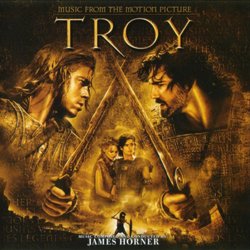
TROY – James Horner
 Original Review by Peter Simons
In what was one of this years most upsetting events in film music, Gabriel Yared’s powerful score for Troy got rejected and was replaced by one from James Horner. After Yared had been fine-tuning his work for almost a year, it was suddenly up to Horner to write ‘something better’, i.e. something better fitting the studio’s wishes, in a mere two weeks. Such a task is nearly impossible and, needless to say, Horner’s work sounds less inspired and thought-through than Yared’s does. That doesn’t mean it isn’t a good score. On the contrary, it’s a surprisingly fine effort featuring some of Horner’s most rousing material since Enemy at the Gates. One would just wish that the composer was given more time to explore and elaborate on his ideas. Read more…
VAN HELSING: THE LONDON ASSIGNMENT – John van Tongeren
 Original Review by Jonathan Broxton
One of the recent phenomenons in the world of motion pictures are straight-to-video animated spin-offs based on major feature films. Virtually every Disney animated classic has its own straight-to-video sequel, the recent Chronicles of Riddick has been given Dark Fury as a bridge-gap between it and the original Pitch Black, and the 2004 summer blockbuster Van Helsing has Van Helsing: The London Assignment. Essentially a prequel telling of Gabriel Van Helsing’s first encounter with the Dr. Jekyll and Mr. Hyde character who appears at the beginning of the cinematic film, it is directed by Sharon Bridgeman and features the voices of many of the same actors who played in the live-action movie, including Hugh Jackman, Robbie Coltrane and David Wenham. Read more…
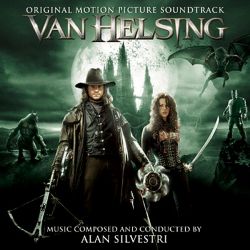
VAN HELSING – Alan Silvestri
 Original Review by Peter Simons
We’ve said it several times now: 2004 was the year of big drums. Large percussion has dominated most of this year’s blockbusters, from Harry Potter and the Prisoner of Azkaban to King Arthur. Never one to buck a trend, Alan Silvestri was all too happy to jump on the bandwagon and deliver what may be the loudest score of the year: Van Helsing. Brass fanfares, chanting choruses and thundering drums dominate the score and its movie. What separates Silvestri from his lesser contemporaries is that, in spite of everything, he makes this kind of music sound good. As loud and overblown as it may be, the composer infuses the score with a textural richness and compositional quality that is quite rare these days. Read more…
BOBBY JONES: STROKE OF GENIUS – James Horner
 Original Review by Jonathan Broxton
American golfer Bobby Jones was one of the pioneers of the game; the winner of thirteen major tournaments, including the 1923 US Open at Inwood, the 1926 British Open, the 1926 US Open at Scioto, the 1927 British Open, the 1929 US Open at Winged Foot, and the “grand slam”– all four majors in a season – in 1930, he is regarded as one of the all-time greats, and stands in second place behind Jack Nicklaus in the list of champions. Jones retired from golf after this incredible feat to concentrate on a career in law, but not before helping design the world famous Augusta gold course in his home state of Georgia. Jones died in 1971 aged 69. Rowdy Herrington’s film Bobby Jones: Stroke of Genius is a straightforward biopic starring Jim Caviezel (hot from The Passion of the Christ) as Jones, Claire Forlani as his wife Mary, Jeremy Northam as fellow golfer Walter Hagen, and Malcolm McDowell as O.B. Keeler, the man who would eventually go on to write Jones’s biography. Read more…
13 GOING ON 30 – Theodore Shapiro
 Original Review by Jonathan Broxton
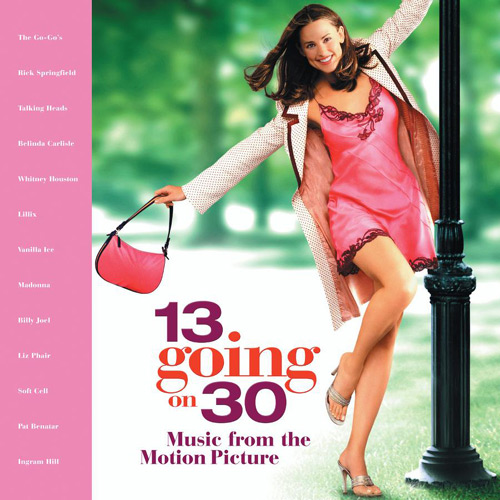
A delightfully nostalgic throwback to the 1980s, 13 Going on 30 is a charming fantasy-comedy that plays like the female version of the classic Tom Hanks movie Big. Teenager Jenna Rink (Christa Allen) wants nothing more than to be popular and date one of the cutest boys in school, but when her birthday party turns into a disaster, and she had an argument with her friend Matt (Jack Salvatore Jr.), she retreats to a closet. Wishing she could be 30 years old, Jenna knocks over “pixie dust” from the dolls house Matt makes for her… and awakens the next morning in the year 2004, looking like Jennifer Garner. She’s has a power-house job as an editor for Poise magazine, and is friends with Lucy (Judy Greer), the girl for whose companionship she craved all those years ago. However, Jenna’s mind is still stuck in 1987: not knowing what to do, and adrift in a world she doesn’t know or understand, she tracks down the only one she believes she can trust: 30-year old Matt, now a hip New York photographer who looks like Mark Ruffalo. Read more…
MAN ON FIRE – Harry Gregson-Williams
 Original Review by Jonathan Broxton
A dark thriller about murder, kidnap and revenge – and a remake of a 1987 film of the same name, which was directed by Elie Chouraqui, starred Scott Glenn in the Denzel Washington role, and featured a score by John Scott – Man on Fire is directed by Tony Scott and stars Denzel Washington as John Creasy, a former US Government operative whose life in the military has driven him to drink, and the brink of suicide. Tempted to come to Mexico by his old comrade Rayburn (Christopher Walken), Creasy takes the job as the bodyguard to a wealthy Ramos family – father Samuel (Marc Anthony), mother Lisa (Radha Mitchell), but specifically their precocious young daughter Pita (Dakota Fanning). Seeing a chance for redemption in the eyes of a young girl, Creasy grows to be a part of the family unit – until young Pita is kidnapped by a gang of ruthless criminals. Thinking the young girl is dead, and seeking retribution, Creasy embarks on a personal vendetta to seek out, and get even with, the perpetrators of the crime, whoever they may be. Read more…
HOME ON THE RANGE – Alan Menken, Glenn Slater
 Original Review by Jonathan Broxton
Eight-time Oscar winner Alan Menken has been away from film music since 1997, after the Disney animated film Hercules crashed and burned both critically and commercially. The announcement that he would finally be returning to the fray with Home on the Range was met with almost universal praise. The man is far too talented, and far too well respected to be consigned to film music history just yet. But, what does he give us as a welcome back gift…? Singing cows and yodeling. Billed as “Chicken Run with cows”, Home on the Range features the voices of Roseanne Barr, Judi Dench and Jennifer Tilly as a trio of precocious cows who go off to collect the bounty on the head of the infamous yodeling cattle rustler, Alameda Slim (Randy Quaid), in an attempt to save their ranch from falling into the clutches of an unscrupulous developer. Read more…
HELLBOY – Marco Beltrami
 Original Review by Jonathan Broxton
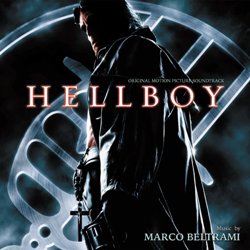
Comic books seem to be Hollywood’s most fertile breeding grounds for new stories these days; after exhausting the Batman, Spider-Man and Superman franchises, some lesser-known works have been adapted recently – and so hot on the heels of Daredevil and The Punisher comes Hellboy, adapted from the work of Mike Mignola by my old drinking buddy Pete Briggs, and directed by Guillermo Del Toro. Hellboy is the story of a demon (Ron Perlman), conjured up by a team of Nazi scientists to help their failing cause at the end of World War II. Rescued, while still a baby, by the kindly Professor Bruttenholm (John Hurt), Hellboy grows up to be a member of the FBI Bureau of Paranormal Research and Defense, whose motto is “There are things that go bump in the night – we are the ones who bump back”. Hellboy is called into action when the Russian mad monk Rasputin (Karel Roden) – who originally summoned Hellboy all those years ago – is resurrected, and attempts to open a portal between Earth and the Netherworld, which will allow all manner of unspeakable evil to pass through. Accompanied by rookie FBI agent Myers (Rupert Evans) and fellow BPRD “freaks” Abe Sapien (Doug Jones) and Liz Sherman (Selma Blair), Hellboy sets off to track down Rasputin and his minions, unaware that he has a larger part to play in the scheme of things… Read more…
NED KELLY – Klaus Badelt
 Original Review by Peter Simons
Now here’s a composer who has shot to stardom at rocket speed: Klaus Badelt. Whether or not he really deserved all the projects he’s worked on remains a hot issue on many a forum. I, for one, have yet to hear a soundtrack by Badelt that is not remarkably derivative of other scores. That is not to say his albums aren’t enjoyable, no siree! His music for The Time Machine, albeit severely “inspired” by many other scores, was one of last year’s highlights. Badelt’s latest, Ned Kelly, is no exception. It too shares so many similarities with other scores that I’ve had to look at the cover to remember which CD I put on. Not that the score isn’t enjoyable, though. It is in fact quite beautiful, if you can get past the obvious influences. Read more…
STARSKY & HUTCH – Theodore Shapiro
 Original Review by Jonathan Broxton
It is de rigueur in Hollywood at the moment to re-make classic TV shows of the 70s and 80s as big-budget cinema outings: we’ve already had Charlie’s Angels and SWAT, and there are rumors of A-Team and Knight Rider movies in the pipeline. Starsky & Hutch was one of the comedy successes of the min-genre, paying loving homage to the well-loved original series while gently lampooning the fashions and morals of the decade. Directed by Todd Phillips, the film starred Owen Wilson and Ben Stiller as the eponymous Bay City detectives, the roles made famous by David Soul and Paul Michael Glaser. Here, they find themselves on the trail of shady businessman Reese Feldman (Vince Vaughan), who they believe is a drug dealer; along the way they are helped by their flamboyant jive-talking snitch Huggy Bear (Snoop Dogg), and hindered by their cantankerous boss Captain Doby (Fred Williamson). Plot is, of course, secondary in a film like this, which revels instead in the comedy set pieces, and the sense of nostalgia in the production: everything, from the classic Ford Torino, to the costumes and hairstyles, and the sexual attitudes, are a prefect recreation of the original setting. It’s a blast. Read more…

Shop at the Movie Music UK Store

Member of the

 MOVIE MUSIC UK