Archive
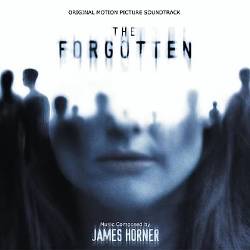
THE FORGOTTEN – James Horner
 Original Review by Peter Simons
Having one of the year’s more interesting premises, The Forgotten tells the story of Telly Paretta (Julianne Moore), a mother who is told that her recently deceased son never even existed, and that she merely imagined nine years of her life with him. Unwilling to accept this shocking news and firmly believing that the truth is out there, Telly embarks on a personal quest for her lost child. Written by Gerald Di Pego, the film has a promising scenario, but critics derided it for making a few too many unwelcome plot turns, and eventually leaving the realms of the “intriguing” and becoming “ridiculous”. Nevertheless, the film performed rather well at the box office, taking over $60 million in its first six weeks. Read more…
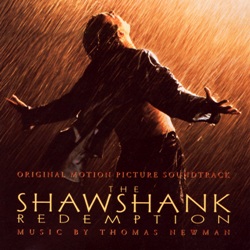
THE SHAWSHANK REDEMPTION – Thomas Newman
 MOVIE MUSIC UK CLASSICS
Original Review by Jonathan Broxton
As it is currently enjoying a limited cinematic re-release to celebrate its tenth anniversary, and has recently been released on a special 3-disc collectors DVD, I thought I would take the opportunity re-visit and re-review Thomas Newman’s score for The Shawshank Redemption. When I first saw this film back in March 1995, I thought it to be a worthy, enjoyable film, taking into account my comparative immaturity and lack of experience in things cinematic. Now, a decade later on, I consider it one of the best films I have ever seen; a warm, uplifting, moving tribute to the indomitable human spirit, the power of friendship, and the need for hopes and dreams. Read more…
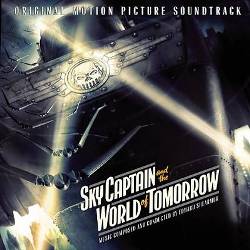
SKY CAPTAIN AND THE WORLD OF TOMORROW – Edward Shearmur
 Original Review by Jonathan Broxton
Having recently been forced to suffer the deaths of Jerry Goldsmith and Elmer Bernstein – by anyone’s estimation two of the greatest film music composers who ever lived – thoughts within the film music world have quite naturally been turning to wonder who will fill their shoes. One name which keeps re-occurring as a possible future ‘great’ is that of Edward Shearmur, the young English composer who began his career shuffling papers for Michael Kamen, and who now has carved out a solid career for himself through recent scores such as Reign of Fire, The Count of Monte Cristo and Johnny English. As talented as he has shown he can be in the past, nothing will quite prepare you for how good his latest score, Sky Captain and the World of Tomorrow, is. Read more…
RESIDENT EVIL: APOCALYPSE – Jeff Danna
 Original Review by Jonathan Broxton
As the second in a projected series of movies spinning off from the classic Capcom computer game Biohazard, Resident Evil: Apocalypse has a big reputation to live up to. The original game is one of the most-played and best-loved survival horror games in history, and is credited as being the inspiration for an entire genre of similar experiences. The first Resident Evil movie made $101 million worldwide in 2002, and was the highest-grossing movie of the year for the Sony subsidiary Screen Gems. Apocalypse, which is once again is written by British sci-fi specialist Paul W.S. Anderson, essentially picks up where the first movie left off, with ass-kicking heroine Alice (Milla Jovovich), having battled hordes of virus-infected zombies and other assorted nasties, escaping alive from the Hive of the Umbrella Corporation building, only to find Raccoon City a desolate wasteland. With the deadly T-virus on the loose and turning the good citizens of the city into slavering zombies, Alice and the other survivors she encounters (Sienna Guillory, Oded Fehr, Zack Ward) must fight their way through the hordes to safety. However, their biggest challenge lies with the seemingly unstoppable Nemesis, a super-human mutation created by the virus, whose sole goal is to kill every living thing… Read more…
ANACONDAS: THE HUNT FOR THE BLOOD ORCHID – Nerida Tyson-Chew
 Original Review by Jonathan Broxton
Quite why anyone made a sequel to the 1997 minor hit Anaconda is beyond me. The original, directed by Luis Llosa, was famous for featuring early star turns from Jennifer Lopez and Owen Wilson, for the ‘Jon Voight leer’, and (amongst score fans at least) for having a serviceable score by Randy Edelman. Now, seven years after the fact, journeyman director Dwight H. Little has resurrected the franchise, and turned out one of the most critically derided movies of 2004 – an over-egged pudding that threatens to destroy the fledgling movie careers of stars Johnny Messner, Kadee Strickland and former Coronation Street actor Matthew Marsden almost before they have begun. Read more…
Elmer Bernstein, 1922-2004
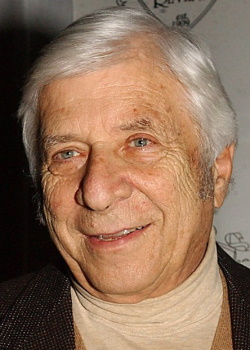 Composer Elmer Bernstein died on August 18, 2004, at his home in Ojai, California, after a lengthy battle with cancer. He was 82.
Bernstein was born in New York City in April 1922, the son of immigrants from Ukraine and Austria-Hungary. He studied piano as a child and showed early promise as a performer; during his childhood, he performed professionally as a dancer and an actor, but then switched to music and trained at the Juilliard School where he was encouraged by prominent figures such as Aaron Copland. During World War II, he served in the Army Air Forces, where he composed and arranged music for military radio programs.
Bernstein moved to California in in the early 1950s, when he was hired to score the thriller Sudden Fear in 1952. However, along with many other artists in Hollywood, Bernstein faced censure during the McCarthy era of the early 1950s, and was called by the House Un-American Activities Committee. After he refused to name names, pointing out that he had never attended a Communist Party meeting, he found himself composing music for Z-grade sci-fi movies such as Robot Monster and Cat-Women of the Moon.
His work on The Man with the Golden Arm (1955), one of the first major studio films to feature a jazz score, brought him back into the mainstream, earned him his first Oscar nomination and marked him as a daring and contemporary voice in film music. His score for The Ten Commandments (1956), an epic of biblical scale, demonstrated his facility with grand orchestration and established him as a composer of serious dramatic substance. He followed it with the heroic and unforgettable theme to The Magnificent Seven (1960), whose galloping rhythms and bold brass fanfares became one of the most enduring musical signatures in film history. Read more…
ALIEN VS. PREDATOR – Harald Kloser
 Original Review by Jonathan Broxton
In an attempt to breathe life into the franchises, Twentieth Century Fox have done what Universal did over half a century ago by pitching two of their greatest monster creations against each other in a single motion picture. But this is not Frankenstein, Dracula or The Wolfman: the monsters here are Predators and Aliens. Directed by Paul W.S. Anderson, Alien vs. Predator stars Lance Henriksen as Charles Weyland, a billionaire industrialist leading an archaeological expedition in Antarctica in the not-so-distant future. When the team unearths the ruins of an ancient pyramid buried beneath the ice, it is hoped that a great breakthrough in human history has been reached. However, the team soon find themselves unwittingly caught in the middle of an intergalactic war in which the fearsome Predators come to earth to take part in a coming-of-age ritual that involves them hunting and killing a group of fully-grown Aliens, who have also been buried under the ice for the past few millennia… Read more…
David Raksin, 1912-2004
 Composer David Raksin died on August 9, 2004, in Los Angeles, after a short illness. He was 92.
Raksin was born in Philadelphia, Pennsylvania, in August 1912. He studied at the University of Pennsylvania and the Curtis Institute of Music, and later with Isadore Freed in New York and Arnold Schoenberg in Los Angeles. He worked as an arranger for Charlie Chaplin on the score for Modern Times in 1936 when he was just 24 years old, and soon after began a long career as a composer for studio films.
With a career spanning more than six decades, Raksin composed music for over 100 films and numerous television programs, earning a reputation for melodic sophistication and dramatic sensitivity. His theme for the 1944 classic Laura is often cited as one of the most memorable in film history, and became a popular standard, with lyrics later added by Johnny Mercer. Raksin’s theme song for the 1953 film The Bad and the Beautiful (also called “Love is For the Very Young”) was also a hit.
Rakin’s other major composing credits include Forever Amber (1947), The Secret Life of Walter Mitty (1947), Force of Evil (1948), Whirlpool (1950), The Magnificent Yankee (1950), Across the Wide Missouri (1951), The Big Combo (1955), Bigger Than Life (1956), Separate Tables (1958), and Two Weeks in Another Town (1962), among many others. He received two Academy Award nominations and numerous honors for his work, which was admired for its lyrical beauty, harmonic depth, and keen dramatic sense. One of his last major scores was for the critically acclaimed nuclear holocaust-themed TV drama The Day After in 1983. Read more…
THE VILLAGE – James Newton Howard
 Original Review by Jonathan Broxton
With the exception of The Sixth Sense, which was brilliant on all fronts, I have never been that fond of M. Night Shyamalan’s slow-moving thrillers, or of the scores his regular composer James Newton Howard wrote for them. Unbreakable was sub-par, and Signs was a fairly good film but I was one of the few who did not connect with the score. Shyamalan’s fourth and latest film is The Village, a mysterious tale set in Covington, a hamlet in 19th century Pennsylvania. Creatures dwell in the woods near the village, and an unspoken truce has existed between the humans and the creatures for decades – essentially, we won’t disturb you, if you don’t disturb us. However, things change for the worse when young Lucius Hunt (Joaquin Phoenix) ventures beyond the boundaries and into the domain of ‘Those We Don’t Speak Of’ and incites their wrath. With a cast that includes Sigourney Weaver, William Hurt and Adrien Brody, the film has the right credentials to be a success, while the score is a rarity in that, already, it is by far the best for a Shyamalan film to date. Read more…
THE BOURNE SUPREMACY – John Powell
 Original Review by Jonathan Broxton
When The Bourne Identity, the first film based upon Robert Ludlum’s massively successful spy novels, grossed almost $122 million at the US box office, a sequel was inevitable. The Bourne Supremacy sees Matt Damon returning as the eponymous Jason Bourne, the former CIA assassin who, following the exploits of the last film, has settled down with a new identity in a tropical paradise with his girlfriend Marie (Franka Potente). However, when the CIA comes knocking on Bourne’s door once more, trying to frame him for a bungled operation, Bourne decides to fight back and clear his name. The film is directed by Englishman Paul Greengrass, making his Hollywood debut following years of sterling work creating top-notch dramas for British TV, and co-stars Joan Allen, Brian Cox, Julia Stiles and Karl Urban. Read more…
Jerry Goldsmith, 1929-2004
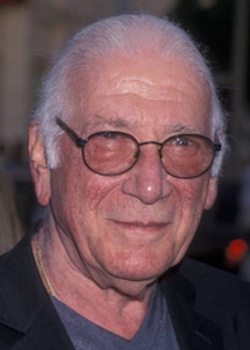 Composer Jerry Goldsmith died on July 21, 2004 at his home in Beverly Hills, California, after a battle with cancer. He was 75.
Jerrald King Goldsmith was born in Pasadena, California, in February 1929, and started playing piano at an early age, before later being tutored by pianist Jakob Gimpel and composer Mario Castelnuovo-Tedesco. He studied music at both the University of Southern California – where he attended classes given by Miklós Rózsa – and Los Angeles City College, before securing a job as a clerk-typist in the music department of TV network CBS under music director Lud Gluskin. He began writing music as early as 1951, for radio shows and live television (one of his first gigs was the first ever James Bond story, Casino Royale, produced as part of the Climax! series), and quickly became a television mainstay, contributing scores to such series as The Lineup, Black Saddle, Playhouse 90, Perry Mason and The Twilight Zone.
Goldsmith scored his first feature film, the western Black Patch, in 1957 at the age of 28, and spent much of the 1950s and 60s scoring both feature films and television projects: he worked on hit TV shows such as Gunsmoke, Wagon Train, Rawhide, Cain’s Hundred, Dr Kildare, The Man from U.N.C.L.E., The Loner, Room 222 and The Waltons, while scoring such popular films as Freud (1962), for which he received his first Oscar nomination, The List of Adrian Messenger (1963), Seven Days in May (1964), A Patch of Blue (1965), In Harm’s Way (1965), The Blue Max (1966), The Sand Pebbles (1966), the groundbreaking and avant-garde Planet of the Apes (1968), and numerous revisionist Westerns, which seemed to be his forte for much of the first two decades of his career. Read more…
I, ROBOT – Marco Beltrami
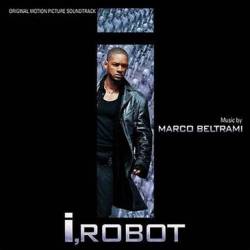 Original Review by Jonathan Broxton
Marco Beltrami was a late addition to the creative team of I Robot, following the dismissal of original composer Trevor Jones by director Alex Proyas. Beltrami had just nineteen days to write and record his replacement score – no mean feat to accomplish in such a short space of time, and with the added pressure of knowing that the film was one of 2004’s most anticipated summer releases. His success is nothing short of remarkable, and it’s quality is testament to his increasing stature as one of film music’s true emerging talents. Read more…
KING ARTHUR – Hans Zimmer
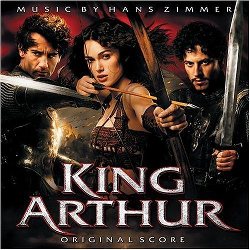 Original Review by Jonathan Broxton
I was going to open this review by saying something along the lines of “Can Media Ventures sink any lower than this, yet another tepid regurgitation of past scores?”, but in actual fact, the more I have listened to King Arthur, it seems less terrible than it did on that first spin. It’s certainly not a great score: it’s unoriginal, clichéd, and at times quite laughably predictable in its construction and execution. But, mixed in with all the familiarity, there’s a great score trying to break out. Zimmer only lets it shine in brief, so-near-and-yet-so-far snippets, which tantalise the listener into wondering what this score could have been, if only… Read more…
THE CLEARING – Craig Armstrong
 Original Review by Jonathan Broxton
I’ve been a big admirer of the work of Scottish composer Craig Armstrong throughout his relatively short career. From his early work on William Shakespeare’s Romeo and Juliet, through great scores such as Plunkett & Macleane, The Bone Collector, The Quiet American, Moulin Rouge and Love Actually, Armstrong has continually displayed a mastery of the orchestra, superb use of electronics, and an aptitude for powerful and memorable themes. It comes as something of a shock, therefore, to discover that The Clearing is a quite horribly boring score, easily one of the worst for a mainstream release in 2004. Read more…
AROUND THE WORLD IN 80 DAYS – Trevor Jones
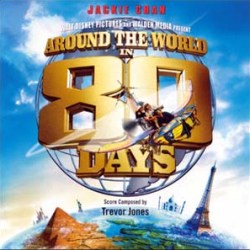 Original Review by Peter Simons
Based on Jules Verne’s classic novel, Around The World In 80 Days is not quite the adventure film fans were hoping for. With Steve Coogan and Jackie Chan in the lead roles, the classic adventure with a touch of science fiction – at least, it was sci fi when Verne wrote it – has been reduced to a comedy; and not a very funny one. Coogan, a British comedian, stars as inventor Phileas Fogg who wages his life to prove he can travel around the globe in eighty days. Chan plays Fogg’s assistant Passepartout, who is on a mission of his own to return a sacred sculpture that was stolen from his hometown in China. Needless to say, the film’s plot serves merely as a vehicle for Chan’s martial arts choreography. Read more…

Shop at the Movie Music UK Store

Member of the

 MOVIE MUSIC UK