DRACULA – Danny Elfman
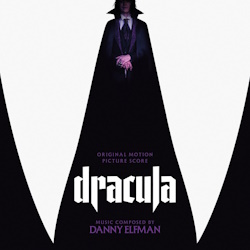 Original Review by Jonathan Broxton
Bram Stoker’s classic 1897 novel Dracula, which introduced the world to the modern concept of the vampire, has been made into films dozens and dozens of times over the years, from the early German expressionist silent version by F.W Murnau, to Bela Lugosi’s classic Hollywood portrayal in 1931, to the Christopher Lee-Peter Cushing British Hammer horrors of the 1950s and 60s, and many more besides. Last year director Robert Eggers made one of the best ever versions of the story with his Nosferatu, which portrayed the undead count as more plague than man, twisted and evil. Now, the latest director to take on the story is French director Luc Besson, but his version of the story is different from Eggers’s, and is instead closer in tone to the luxurious romanticism of Francis Ford Coppola’s Dracula from 1992, which remains my personal favorite of all Dracula films. Besson’s film – which was made entirely by a French crew – was nevertheless shot in English, and stars Caleb Landry Jones in the title role as the blood-sucking count who is both debonair and demonic, with Christoph Waltz, Zoë Bleu, and Matilda De Angelis in major supporting roles.
Considering who he is and what his career trajectory has been, it’s a bit surprising that Danny Elfman has never scored a traditional period vampire before now, but he has now rectified that oversight with this score. Elfman has of course scored vampires before – notably Dark Shadows in 2012 – and he has scored period horror films before too, including Sleepy Hollow in 1999, the animated Corpse Bride from 2005, and The Wolfman from 2010, but this is the first time he has tackled the classic Stoker story head on. Considering also that director Besson appears to be trying to emulate everything that Coppola did in 1992, visually, tonally, and dramatically, it perhaps comes as no surprise that the biggest influence on Danny Elfman’s score is the one that Wojciech Kilar wrote for that film, and that the final result is an enticing blend of Kilar’s velvety romance and Elfman’s brand of Gothic horror.
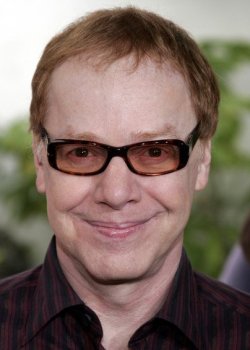 When he was first approached to score the film, Elfman admitted to Besson that he had wanted to score a Dracula film for going on 30 years, and he seized the opportunity to finally do so with both hands. The score was recorded in Hungary with the Budapest Scoring Symphonic Orchestra, and it is as broodingly romantic as one would expect from a vampire film subtitled ‘A Love Story’. It’s a score overflowing with Elfman’s darkly sensuous sound, elegantly draped around music box themes and luxurious waltzes, and which very occasionally emerges into muted actions sequences and unique moments of raw, neck-biting horror.
Tonally, the score is very much in keeping with many of Elfman’s aforementioned gothic horror scores, but in terms of thematic content the main melody is most similar to one which first appeared in Corpse Bride, albeit fleshed out here into something much more substantial. Coincidentally, the Dracula main theme is also very similar to the main theme from Christopher Young’s The Piper from a couple of years ago, suggesting that there may have been some reciprocal temp-tracking going on in both scores. What’s clever about this main theme, though, is how adaptable it is, and how much mileage Elfman gets from it across numerous styles and settings.
In the opening “Music Box” is starts out sounding fragile and gentle, like a broken lullaby slowly picking up a moody oboe, soft strings, and crystalline choral textures that bring back memories of Edward Scissorhands. Later, “Dinner” arranges the theme for a delicate solo piano, “A Very Sad Story” and “Let It Be” offset the piano against solo violins and vocals to create an atmosphere of gloom and dismay, and “She’s Back” and “It’s Her” have a sense of faded, anguished romance, before becoming more traditionally beautiful during “Remembering” and “My Husband”.
Some of the more unusual cues – things like “Blessings,” the sinewy and insistent “Asylum,” the guttural and metallic “Big Trouble,” the nervous “He’s Here”– showcase Elfman’s more textural and occasionally more dissonant side, featuring groaning strings with heavy emphasis on cellos, brutal brass howls, lightly rhythmic percussion, even some electronic manipulation which occasionally give the score a more modern horror sound. The stark and animalistic “A Bloody Meal” is an especially notable example of a cue where Elfman prominently leans into the belligerently buzzing synth textures; this is something that Elfman has been experimenting with for a few years now, and some of it actually reminded me of the stylistics of his 2021 ‘angry rock’ album of new songs, Big Mess.
Parts of the aforementioned “Blessings,” as well as cues like “Don’t Leave” and “Frozen Lake” lean heavily into that thick Wojciech Kilar action sound from his Dracula score, not only in the orchestration but in the specific chord progressions Elfman uses. “Neverending Death” is a large and striking example of this part of the score at its best, with stronger and more imposing choral sounds and a more rhapsodic piano element. The thematic ideas that run through many of these these cues appear to be even darker variants on the Dracula theme for his more horrific moments of bloody murder.
Other cues of note include “The Dance,” which brings a harpsichord, quirky chanted vocals, and unusually contemporary Latin-esque rhythms into the mix, in a piece which feels closer to his TV score for the Addams Family spinoff Wednesday; “Carnival,” which is lovely and is probably the most traditionally melodic piece in the entire score; and then “Amore Mio” and the epic “Last Combat,” which adopt a more aggressive action attitude.
One thing that listeners will notice when listening to all this is the fact that, for the most part, Elfman doesn’t really raise his voice or erupt into one of his famous sweeping renditions of his main themes at any point in the score. When you think he’s going to lay it on thick, he pulls back, preferring instead to tell Dracula’s story as a more intimate, personal story of romance and horror, and this creates a sort of constant tension in the music which isn’t really resolved until the finale. For some, this might be a source of frustration, but personally I appreciated the subtlety, and how Elfman doesn’t give in to the expected conventions of the genre.
The conclusive pair, “Amen” and the “End Credits” are again built around reprises of the main theme, and it’s only here in these final moments that Elfman brings the fullest version of the full orchestra out to play, but even here the emphasis is more on highlighted textures and moments of delicate interplay than raw power.
It’s been an odd couple of years for Danny Elfman. The controversy surrounding his sexual assault allegations, the non-disclosure agreement he signed with composer Nomi Abadi regarding this, the resultant back and forth regarding what actually happened – which still isn’t clear – continues to cast a shadow on his recent career. I’m not going to go into any opinions about what may or may not have happened, because frankly I don’t have enough information about it one way or the other, but I will make the observation that you can sort of hear this tension in the music he has written since this all broke in 2023. Like Beetlejuice Beetlejuice before it, Elfman’s Dracula doesn’t have the sense of anarchic mischief, power, or out-and-out Gothic romance as his earlier works, even though on paper one would expect it to the perfect vehicle for him to recapture all that.
Nevertheless, fans of Elfman’s darkly sensuous sound, the combination of horror and romance, will still find plenty to enjoy and appreciate, and those who are also drawn to similar scores by Christopher Young and Wojciech Kilar will embrace it even more, but anyone expecting this to be one of those overwhelming celebrations of tragic romantic melodrama should temper their expectations a touch, because it’s not really that kind of score. The textures are lovely, the themes are pretty, and the instrumental choices are sometimes fascinating, but as I mentioned the score is less flamboyant and more introspective than one would otherwise expect, and ultimately the enduring emotion upon its conclusion – at least for me – was one of wistful reflection.
Buy Dracula soundtrack from the Movie Music UK Store
Track Listing:
- Music Box (2:54)
- Blessings (4:34)
- Asylum (3:00)
- Dinner (0:55)
- Detective Work (2:08)
- Don’t Leave (0:59)
- Big Trouble (2:39)
- A Very Sad Story (3:24)
- Neverending Death (2:20)
- The Dance (2:09)
- Only Dust (1:49)
- She’s Back (2:46)
- A Few Questions (3:16)
- A Bloody Meal (3:31)
- Let It Be (2:47)
- Frozen Lake (1:25)
- Gypsy Arriving (2:06)
- It’s Her (0:56)
- Carnival (2:49)
- Remembering (1:14)
- My Husband (2:51)
- He’s Here (1:39)
- Amore Mio (1:29)
- Last Combat (1:27)
- Eternal Love (1:58)
- Amen (4:35)
- End Credits (4:31)
Because Music/EuropaCorp (2025)
Running Time: 66 minutes 08 seconds
Music composed by Danny Elfman. Conducted by Péter Illényi and Dániel Erik Fülöp. Orchestrations by Steve Bartek. Recorded and mixed by Dennis Sands. Edited by Bill Abbott and Denise Okimoto. Album produced by Danny Elfman and Bill Abbott.
Leave a reply to MPC Cancel reply

Shop at the Movie Music UK Store

Member of the

 MOVIE MUSIC UK
I’m surprised Elfman recorded this in Budapest, you’d figure with EuropaCorp footing the bill they would record in Paris or London.