BATMAN FOREVER – Elliot Goldenthal
 THROWBACK THIRTY
Original Review by Jonathan Broxton
Batman Forever is the third installment in the original Warner Bros. Batman film series, following Batman in 1989 and Batman Returns in 1992, both of which were directed by Tim Burton. However, Burton left the Batman franchise during the development of the third film because Warner Bros. wanted to go in a lighter, more commercial, and family-friendly direction, which clashed with Burton’s increasingly dark, gothic depiction of Gotham City. The studio saw diminishing returns on the edgier tone and opted to reset the franchise’s style, paving the way for Joel Schumacher to come into replace him. Schumacher had directed a number of box-office hits in the decade prior, including St. Elmo’s Fire, The Lost Boys, The Client, and Falling Down, but his neon-soaked reinterpretation of the dark knight in Batman Forever was polarizing: some approved of the elaborate set designs, as well as the campier tone which more was reminiscent of the 1960s Adam West Batman TV series, while others missed Burton’s more introspective and visually dramatic approach. One person who certainly disapproved was Michael Keaton, who declined to return to the main role due to creative differences after Burton left; ultimately he was replaced by Val Kilmer underneath the mask and cowl.
In Batman Forever Batman faces two new villains threatening Gotham City: Harvey Dent/Two-Face (Tommy Lee Jones), a former district attorney whose face was disfigured by acid and who now makes decisions based on the flip of a coin, and Edward Nygma/The Riddler (Jim Carrey), a disgruntled former Wayne Enterprises employee who becomes obsessed with riddles and seeks revenge after his invention is rejected by Wayne. Nygma creates a device called “the box,” which manipulates brainwaves and steals information from people’s minds, giving him immense power, and he teams up with Two-Face to discover Batman’s secret identity and destroy him. Meanwhile, Batman’s alter-ego Bruce Wayne struggles with his dual identity and forms a bond with Dick Grayson (Chris O’Donnell), a young circus performer whose family is killed by Two-Face. Grayson eventually becomes Batman’s partner, nicknamed Robin, and together they must stop the villains and rescue Dr. Chase Meridian (Nicole Kidman), a psychologist who becomes Wayne’s love interest after she is brought in to treat Nygma.
Ultimately Batman Forever received mixed-to-positive reviews, with critics praising Jim Carrey’s energetic performance as The Riddler, and the film’s visual style, but criticizing the uneven tone and lack of depth. As an enormous fan of Burton’s work I personally didn’t care for the change in tone; for me, it is an overblown self-parody that omitted all the parts that made Burton’s originals so great. Val Kilmer, while competent in the lead role, never came close to re-creating the intensity or mystery Michael Keaton brought to the caped crusader. Tommy Lee Jones was wasted as the schizophrenic villain Two-Face, Nicole Kidman was virtually invisible as Bruce Wayne’s love interest, and Joel Schumacher’s overbearing direction replaced Burton’s handsome gothic architecture with rubber nipples and garish neon, ultimately giving me a headache. And then there was the script… sheesh. I will always maintain that Akiva Goldsman was the man who effectively killed that first Batman franchise. However, despite these divided opinions, the film was a box office success, to the extent that a fourth film – Batman & Robin – was greenlit for release in 1997.
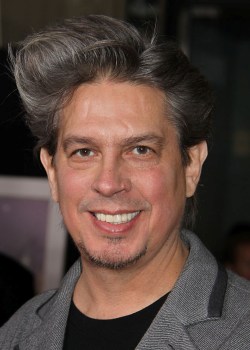 One of the other casualties of Tim Burton’s directorial exit from Batman Forever was composer Danny Elfman, and he was replaced by Elliot Goldenthal. By 1995 Goldenthal was well on his way to the top of the film music pecking order, having received an Oscar nomination for Interview With the Vampire in 1994, and having written critically acclaimed scores for films like Alien 3, Demolition Man, and Cobb. Back then I didn’t appreciate him at all, and I’m so pleased that my opinion has changed in the intervening decades.
Goldenthal’s score is a standout element of the film – bold, operatic, stylish, but also somewhat chaotic, full of angular melodies and vivid orchestral flourishes that draw on everything from modernist classical music to jazz, circus-like motifs, and more. Perhaps most notably, Goldenthal moved away from Elfman’s themes entirely, creating a brand new identity for Batman, plus different musical identities for the two main villains.
The centerpiece of Goldenthal’s score is the eight-note brass fanfare for Batman himself which, although for me it does not come close to emulating Elfman’s march in terms of emotional impact and memorability, still conveys a sense of power and strength in its own right. It is generally heard whenever Batman does something heroic, and features in just about every cue on the album in one form or another. The “Main Title” introduces the fanfare, accompanying the winged wonder as he swoops in to save a security guard from being flattened by a huge safe Two-Face is trying to remove from a bank. Further great performances in the rousing “Fledermausmarschmusik,” the thrilling “Victory,” the brutally percussive “Descent,” and “Holy Rusted Metal” compound the fanfare’s effectiveness.
One of the things I like about the theme is that it is heroic and commanding, reflecting Batman’s more open, active role in this film, and that it leans into dissonance and instability, giving it a more contemporary edge. Goldenthal’s iconic, howling trombones feature prominently in the theme’s orchestration, and these often act as heraldic fanfares at the beginnings of action sequences; massive set pieces like the sadly brief “Perpetuum Mobile,” the brilliantly anarchic “Gotham City Boogie,” and the astonishing, sometimes brutally intense “Under The Top” give Goldenthal an opportunity to really let rip with his orchestra, counterbalancing the fanfare with a series of increasingly unconventional rhythms and textures to drive the action along. He often pits his string ostinatos against a bubbling, almost comical electronic accompaniment, compounded by shrill woodwind textures, and clanging anvils in the percussion section.
The two villains of the piece, Two-Face and The Riddler, also get their own musical identities, which see Goldenthal finding new and exciting ways to work in some of the most bizarrely brilliant music imaginable, ranging from theremin solos to a quartet of skewed dance numbers. The Riddler’s theme is eccentric, at times almost playful, and often features squealing woodwinds, pizzicato strings, and chaotic rhythms to represent the Riddler’s unstable genius and manic energy. Meanwhile, Two-Face’s music reflects his split personality: violent, erratic, and discordant, and is often percussive and aggressive, with abrupt brass stabs and swirling chaos. Some passages also suggest a kind of grotesque circus, which ties into the exaggerated tone of Tommy Lee Jones’s performance, and Robin’s backstory.
The “Nygma Variations,” as well as giving the liner note reader an Elgar in-joke, sees Goldenthal emulating everything from Stravinsky’s Rite of Spring to Bernard Herrmann’s classic science fiction scores, making great use of the eerie sound of a theremin, a Hammond organ, and classic ‘horror movie strings,’ skipping from style to style in an attempt to capture the insanely obsessive mindset of Jim Carrey’s brilliant but unbalanced Riddler character. Later, “Mr. E’s Dance Card” sees Goldenthal adding rhumba, foxtrot, and tango rhythms into the mix, and using them to twist and manipulate all three central themes beyond all recognition, while the “Two-Face Three Step” is a demented waltz that puts his specific theme into a menacing classical setting.
A softer, more lyrical theme appears for the love story between Bruce and Dr. Chase Meridian, and this is one of the few more traditionally beautiful cues in the score, acting as a reprieve from the otherwise intense soundscape. A touch of 1930s jazz anchors its introduction in the lovely “Chase Noir,” and it wanders through a moody and sometimes quite abstract variation in “The Pull of Regret,” before finally coming to full fruition in the gorgeous “Mouth to Mouth Nocturne,” which is possibly one of the most romantic cues Goldenthal has ever written, despite obviously owing a great debt of gratitude to the tortured strings of Alfred Newman.
Other cues of note include the brooding “The Perils of Gotham,” which has a lot of both Alien 3 and Interview With the Vampire in its darkly menacing sound, and the brilliantly-named “Spank Me! Overture,” which combines amusing jazz textures with increasingly dramatic orchestral flourishes. “Batterdammerung,” the conclusive cue, also closely resembles the operatic finale from Alien 3, with whirling strings and shrill woodwinds competing with a stately performance of the main Batman fanfare.
The original Atlantic Records score album for Batman Forever featured a 45-minute presentation that I have always felt was more than enough in terms of it being a cohesive listen; it received a Grammy nomination the following year, and sold in decent numbers in conjunction with the film’s simultaneously-released song soundtrack album which featured U2’s “Hold Me, Thrill Me, Kiss Me, Kill Me” and Seal’s “Kiss from a Rose,” both of which were written for the film and became popular chart hits. “Hold Me, Thrill Me, Kiss Me, Kill Me” was also nominated for a Golden Globe Award for Best Original Song.
 In 2012 La-La Land Records and producers Dan Goldwasser and Neil S. Bulk released an expanded two-disc set of the score, limited to 3,500 copies, which featured the original score as heard in the film alongside the original soundtrack presentation and two bonus tracks: a suite released as a B-side on U2’s CD single, and an alternate take. The album is of course great – it offers more of the same, more action, more energy, more bombast, more chaos – but I have to admit I do find the 100+ minute run time a little exhausting. Fans of the score should pick it up, of course, but I find myself returning to the original album presentation most frequently.
Elliot Goldenthal’s score is one of the few elements of Batman Forever that critics and fans from all camps often agree on: it’s bold, experimental, and entirely its own thing. Where Schumacher amped up the visuals, Goldenthal gave the film a rich and at times overwhelming sonic landscape that matched its operatic tone. Although I still believe that his work is still inferior to Elfman’s sensational scores for the two preceding Batman films, I find I appreciate it more and more as time goes on, as my affinity for his style increases. As has been stated many times before, Elliot Goldenthal offered a truly original voice in Hollywood, one whose avoidance of cliché and steadfast adherence to his idiosyncratic own voice should be commended. Batman Forever, if taken on its own terms, is easily one of the most approachable scores of Goldenthal’s career, with several hugely enjoyable moments, and listening to it again now thirty years down the line only makes me miss his contributions to cinema more.
Buy the Batman Forever soundtrack from the Movie Music UK Store
Track Listing:
- ORIGINAL 1995 ATLANTIC ALBUM
- Main Titles and Fanfare (1:50)
- Perpetuum Mobile (0:55)
- The Perils of Gotham (3:01)
- Chase Noir (1:45)
- Fledermausmarschmusik (1:15)
- Nygma Variations (An Ode to Science) (6:02)
- Victory (2:37)
- Descent (1:02)
- The Pull of Regret (2:50)
- Mouth to Mouth Nocturne (2:14)
- Gotham City Boogie (2:02)
- Under the Top (5:42)
- Mr. E’s Dance Card (3:21)
- Two-Face Three Step (2:20)
- Chase Blanc (1:23)
- Spank Me! Overture (2:46)
- Holy Rusted Metal (1:51)
- Batterdammerung (1:21)
- EXPANDED 2012 LA-LA LAND ALBUM
- Main Title (1:54)
- Batmobile/Introducing Two-Face (1:39)
- Thug Fight (0:55)
- Obligatory Car Chase (2:40)
- Nygma’s Cubicle/Bat-Signal (3:22)
- Capsule (1:07)
- Rooftop Seduction/Roof Plunge (2:05)
- Nygma After Hours/Brain Drain/You Are Terminated (4:52)
- Suicide/First Riddle/Second Riddle Delivered (4:14)
- Dream Doll (2:23)
- Big Top Bomb (4:19)
- Circus Opening/The Flying Graysons/Death Drop (3:41)
- Flashback/Signal/Robin’s Lament (4:00)
- Have a Safe Flight/Through the Eye (5:57)
- Nygma’s Apartment/Two-Face’s Lair/Riddler’s Entrance/Schizoid Stomp/Brain Drain Expo/Heist Montage (6:04)
- Laundry Room Stunt (0:25)
- More Heists/Third Riddle/Nosy Robin (1:06)
- Building Nygmatech/Family of Zombies (1:29)
- Master Dick (0:56)
- Memories Repressed/Love (2:34)
- Alley Rumble/Screen Kiss (1:38)
- Batcave/Nygmatech Tango/Public Demo (4:39)
- Nygma & Chase Dance (1:16)
- Two-Face’s Entrance/Batman’s Entrance (2:50)
- Gas Trap/Batman Phoenix (2:30)
- Gratitude Problem (1:33)
- Go to Chase (2:16)
- Batcave Closeout/Dick Leaves Wayne Manor (1:24)
- Happy Halloween/The Bat/Love Scene/Twick or Tweat/Seize and Capture (7:08)
- Riddles Solved/Partners/Battleship (6:21)
- Scuba Fight/Claw Island/Emperor of Madness (5:10)
- Fun and Games (3:07)
- Batterdämmerung (1:20)
- Two-Face’s Demise (1:47)
- Bat Descent/Arkham Asylum (1:00)
- Wet Screen Kiss/March On! (1:22)
- Themes from Batman Forever (B-Side Single) (3:39) BONUS
- More Heists (Alternate Version) (0:39) BONUS
Running Time: 44 minutes 23 seconds – Original
Running Time: 149 minutes 30 seconds – Expanded
Atlantic Records 7567-82776-2 (1995) – Original
La-La Land Records LLLCD 1189 (1995/2012) – Expanded
Music composed by Elliot Goldenthal. Conducted by Jonathan Sheffer. Orchestrations by Robert Elhai, Elliot Goldenthal, David John Olsen, Michael McCuistion, Lolita Ritmanis, Randy Kerber and Shirley Walker. Recorded and mixed by Steve McLaughlin. Edited by Joel Iwataki. Album produced by Elliot Goldenthal and Matthias Gohl. Expanded album produced by Dan Goldwasser and Neil S. Bulk.

Shop at the Movie Music UK Store

Member of the

 MOVIE MUSIC UK