THE WILD ROBOT – Kris Bowers
 Original Review by Jonathan Broxton
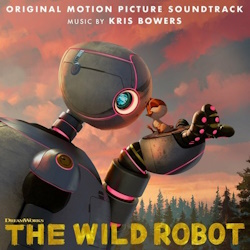
The Wild Robot is a new animated science fiction adventure film, based on the 2016 children’s novel of the same name by Peter Brown, and directed by Chris Sanders, one of the co-directors of How to Train Your Dragon. The story follows the life of Roz, a highly sophisticated service robot who is shipwrecked on an uninhabited island and who must quickly adapt to her surroundings. Over time she builds relationships with the local wildlife, including befriending a fox named Fink, and becoming the adoptive mother of an orphaned goose named Brightbill; however, she soon finds that her new idyllic life as a ‘wild robot’ is under threat from the company that built her. The film has an enormously impressive voice cast led by Lupita Nyong’o as Roz, Pedro Pascal as Fink, and Kit Connor as Brightbill, plus Bill Nighy, Stephanie Hsu, Mark Hamill, Catherine O’Hara, Matt Berry, and Ving Rhames. The film is a beautifully drawn, artistically rendered, funny, moving exploration of numerous concepts related to environmentalism and nature, consumerism, motherhood, adaptability and building relationships, and it has been an enormous box office success, grossing more than $270 million, and sequels based on Brown’s other Roz novels are already in the works.
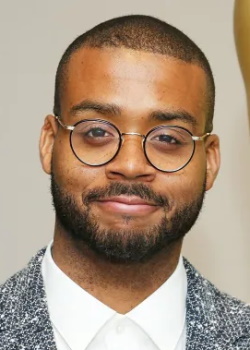
The score for The Wild Robot is by the brilliant 35-year-old Oscar-winning composer, pianist, and documentary filmmaker Kris Bowers, who in the space of less than a decade, and just 20 or so film and TV scores, has well and truly announced himself as one of the most exciting young composers to emerge into film music in quite some time. He has already shown an excellent aptitude for a variety of genres and styles but, the animated part of Space Jam: A New Legacy notwithstanding, The Wild Robot is his first score for feature animated film.
The score is a traditional thematic orchestral score written for a large symphony orchestra augmented with a small amount of synths to acknowledge the tech aspect of Roz being a robot. Bowers also made fascinating use of additional percussion ideas performed by Sandbox Percussion, a contemporary classical chamber ensemble featuring soloists Ian Rosenbaum, Jonny Allen, Terry Sweeney, and Victor Caccese, whose idiosyncratic items range from chromatically tuned glass bottles and teacups to planks of wood and cowbells. These three core ideas – orchestra, electronics, and specialist percussion – work together tremendously well, resulting in a sound palette that feels natural and organically cohesive.
 The score is built around four recurring main themes – one each for the three main characters Roz, Brightbill, and Fink, and one for the overarching concept of ‘family’ – which weave their way in and around numerous outstanding pieces that range in tone from pastoral beauty to quirky comedy, rambunctious action, large-scale battle scenes, and moments of soaring exhilaration that reach for the sky. What’s interesting about these four themes is that, for the most part, they all seem to be about rhythm rather than melody, but that’s not a criticism. Rather than then being expansive long-lined themes, they all come in short, sharp bursts, clusters of four or five notes that tend to drive the beating heart at the core of the cues. It’s an interesting idea, which possibly speaks in part to Roz’s mechanical nature, possibly comments on the collision of nature vs industry, and then possibly to how the different natural parts of the island come together as a whole to work as one, but honestly it’s never that clearly enunciated, and in the end it may simply be a stylistic choice from Bowers to score it that way.
Roz’s Theme is first heard when the music plays directly from Roz’s machinery as she’s approaching animals on the island at the very start of the film (this is actually the last cue on the album, “Roz’s Startup Music”), but then as the story develops, and Roz finds herself needing to adapt to her new wild environment, her theme adapts too, evolving from being entirely synthetic to being a bold amalgam of electronics and orchestra. Sometimes Bowers intentionally ‘breaks’ or somehow distorts the electronic sounds in an attempt to illustrate the idea that Roz is continually malfunctioning as she tries to adjust, and this is a clever little touch that adds to the humor of the piece overall. You can hear this idea clearly in the “Universal Dynamics” cue, a whimsical march for the company that made Roz, and which becomes more sinister in the score’s final third.
There are several outstanding performances of Roz’s Theme; it dominates the early part of the score through cues like “The Island,” “Activating Learning Mode,” and “Deploying Rescue Transmitter,” before exploding into the heart of the score’s first major action sequence, “System Breach,” a vivid and hair-raising scamper through the island’s dense foliage full of flashing strings, bright horns, and the offbeat sounds of Sandbox Percussion. Some of those early cues have the pleasantly eccentric, inquisitive tone that a composer like Thomas Newman or John Powell might have brought to a score like this – I’m reminded at times of Newman’s score for Wall*E, elsewhere of Powell’s score for Robots – but then later, as Roz begins to integrate herself into the animal community on the island, her theme becomes warmer and more optimistic, especially during its renditions in cues like the busy and determined-sounding “Roz Builds a Home” and “Choosing a Name”.
Brightbill’s Theme is usually carried by woodwinds – he is a bird, after all – and it first appears right after Brightbill hatches and begins to follow Roz, at the beginning of the eponymous “Brightbill,” which is delightfully spirited and curious. Meanwhile Fink’s Theme is a perfect musical encapsulation of the sarcastic fox who starts out as Roz and Brightbill’s nemesis, but eventually becomes their closest friend. His theme is initially pitched as a jazzy groove for bluesy horns and Sandbox Percussion, forming the cornerstone of the fun action sequence “The Egg and the Fox,” which underscores the scene where Fink steals the egg with an un-hatched Brightbill inside, and Roz begins chasing him. There’s another prominent statement of Fink’s theme in the appropriately mischievous “Fink,” but over the course of the film Fink’s theme becomes more welcoming and tender, to reflect his character growth – more on that later.
For me, the cornerstone of the score is undoubtedly the Family Theme, a rising 4-note theme that occurs frequently in key moments relating to Roz’s protectiveness of the animals on the island. It first starts to emerge in conjunction with Roz’s Theme in the aftermath of “The Accident” and the “Hatching” that leads to her becoming Brightbill’s surrogate mother. Thereafter the Family Theme and Brightbill’s Theme often work in conjunction with each other, playing in lovely counterpoint in numerous cues including “You’re His Mother Now,” “Eat, Swim, Fly,” the aforementioned “Roz Builds a Home,” the gentle and twinkly “Bedtime Story,” and “Swimming Tests,” as their relationship deepens. Bowers often uses part of one theme as an ostinato underneath the other one – listen for how Brightbill’s Theme is carried by pianos at the beginning of “Bedtime Story,” but then switches things around in another cue to subtly shift the score’s dramatic focus. It’s intelligent scoring which really gets to the heart of the drama.
There’s an unexpectedly brutal action setting of Brightbill’s theme in “Rockmouth,” underscoring a scene where the inexperienced gosling has to swim for his life away from the danger of a hungry carnivorous fish. Then things take a tragic turn in the one-two emotional gut-punch comprising “That Thing” and “The Confession,” which sees Bowers arranging the Family Theme for heartbreaking soft strings as Roz reveals the truth of what actually happened to Brightbill’s parents.
However, by far the most prominent use of the Family Theme is during the migration sequence, especially the powerhouse showstopper cue “I Could Use a Boost”. This cue is The Wild Robot’s equivalent of “Ride the Dragon” from Shrek, or “Test Drive” from How to Train Your Dragon, in terms of how it slowly, gradually builds and builds over the course of several minutes before exploding into a rapturous celebration of flight and freedom. In context it underscores the scene where Roz and Brightbill reconcile just as Brightbill is about to leave as part of a goose migration, and Brightbill asks Roz to help him take to the air by running alongside the flock. Bowers’s music here is a stunning realization of the Family Theme, bold and searching orchestral lines underpinned with powerful, driving, heroic percussion and subtle electronic embellishments. In several interviews Bowers explained that, while writing this piece, he was inspired by the fact that his wife had just given birth to his first child, a daughter, and the emotions he would feel if their relationship was fractured like Roz and Brightbill’s was. He also imagined himself dropping his daughter off at college, many years from now, and captured those feelings into the music. Whatever the inspiration was, it elicited movie music magic.
One would have expected the final third of the film, following Brightbill’s departure as part of the goose migration, to wind down, but on the contrary Roz and the animals find themselves having to deal with new threats to their home in the shape of the onset of winter, and the even more dangerous threat of Universal Dynamics finally finding Roz and sending out tracker robots to bring her home. There are a couple of moments of reflection and introspection, including a rhapsodic piano rendition of Roz’s Theme in “Task Complete,” and a sweet and tender version of Fink’s Theme arranged for clarinet in “Good To See a Friend,” but these quickly give way to some unexpectedly intense action and drama.
There’s an action arrangement of the Family Theme in the fast paced and brilliantly dynamic “Unauthorized Lifeforms” that accompanies Brightbill as he leads his flock out of harm’s way when they accidentally stumble across a Universal Dynamics farming facility and are attacked by its sentry robots. The brass writing in this cue is especially dense and complicated, some of the most impressive of this type I have yet heard Bowers create.
Both Roz’s Theme and the Family Theme are intricately woven into the fabric of the superbly exciting “Rescue Mission,” as Roz and Fink scour the island searching for their friends who have been caught in an unexpectedly brutal snowstorm; then, an intimate version of the same two themes is heard in “Truce” when Roz convinces all the animals she has saved to set aside their instincts and help each other survive the winter. I especially appreciate the increased use of woodwinds as part of the action in “Rescue Mission” as a clever reflection of the cold and snow, and the first soft use of a choir in “Truce”.
The peppy Universal Dynamics march heard earlier in the score turns more sinister in “Vontra,” an insidious theme for the fake-nice robot sent to the island to retrieve Roz, no matter the cost. This then emerges into the score’s big action finale comprising “Robots vs. The Wild,” “Back Online,” and “I Have Everything I Need”. The whole thing is a barnstorming action sequence that incorporates all four main themes into the fabric of the cues, as Roz, Brightbill, Fink, and the rest of the island creatures launch a stalwart defense of their home against Vontra, the Universal Dynamics robots, and the devastating forest fire that starts as a result of the fight. Again, this is by far the most impressive and complicated orchestral action music of Bowers’s career thus far – he showed glimpses of it in Haunted Mansion and his score for the Marvel TV series Secret Invasion, but nothing on this scale. I especially love the huge statement of the Family Theme in “I Have Everything I Need” to underscore the moment when Roz jumps off the Universal Dynamics ship with Brightbill in her arms.
The score ends on an emotional note in “You Don’t Have To” and “Roz’s Story” as the robot – fearing for the long-term safety of her friends, and the island as a whole – makes the heartbreaking decision to go back to Universal Dynamics after all. Tear-jerking statements of the Family Theme and Roz’s Theme dominate these moments, and the whole thing ends with a tremendous rush of positive sentiment.
The album also includes two original songs co-written and performed by country superstar Maren Morris. “Kiss the Sky” plays over a montage where Roz and Fink are teaching Brightbill how to fly, and “Even When I’m Not” plays over the first part end credits. Both songs are fine, inoffensive country-pop ballads, although the melody for “Kiss the Sky” is distractingly similar to American Idol season 11 winner Philip Phillips’s 2012 song “Home”. Both are in contention for Oscar nominations.
The Wild Robot is likely to follow How to Train Your Dragon and earn Kris Bowers his first Academy Award nomination for Best Score next year, and it would be 100% fully deserved. If he had not already done so with his previous work, The Wild Robot has firmly cemented Bowers as a young film music superstar; his work is sophisticated, dramatic, and emotionally intelligent, respectful of classic film music but also contemporary enough to connect with modern audiences. He is the full package, and this is one of the scores of the year.
Buy the Wild Robot soundtrack from the Movie Music UK Store
Track Listing:
- Kiss the Sky (written by Maren Morris, Ali Tamposi, Michael Pollack, Brittany “Delacey” Amaradio, Jordan Johnson, and Stefan Johnson, performed by Maren Morris) (3:36)
- Even When I’m Not (written by Maren Morris, Ali Tamposi, Michael Pollack, Brittany “Delacey” Amaradio, Jordan Johnson, and Stefan Johnson, performed by Maren Morris) (3:05)
- The Island (1:20)
- Activating Learning Mode (0:48)
- Deploying Rescue Transmitter (0:48)
- System Breach (2:37)
- The Accident (1:12)
- The Egg and the Fox (2:04)
- Hatching (1:04)
- Brightbill (1:02)
- Pinktail (0:32)
- You’re His Mother Now (1:42)
- Eat, Swim, Fly (0:56)
- Fink (1:45)
- Roz Builds a Home (2:37)
- Choosing a Name (1:21)
- Bedtime Story (2:41)
- Activating Interspecies Outreach Protocol (1:06)
- Swimming Tests (1:04)
- Kind of Normal (1:16)
- Rockmouth (1:17)
- That Thing (1:05)
- The Confession (1:46)
- In the Wrong Place (1:51)
- Universal Dynamics (1:07)
- Non-Negotiable (0:35)
- I Could Use a Boost (3:07)
- Task Complete (1:51)
- The Migration (1:12)
- Unauthorized Lifeforms (2:43)
- Good to See a Friend (0:49)
- Rescue Mission (2:29)
- Truce (2:27)
- Return (1:51)
- Vontra (2:36)
- Robots vs. The Wild (6:11)
- Back Online (2:14)
- I Have Everything I Need (1:29)
- You Don’t Have To (3:05)
- Roz’s Story (2:03)
- Roz’s Startup Music (0:52)
Back Lot Music (2024)
Running Time: 75 minutes 17 seconds
Music composed by Kris Bowers. Conducted by Geoff Alexander. Orchestrations by Gregory Jamrok, Abraham Libbos, Cara Batema, Andrew Rowan, Zach Yakolkovsky and Joseph Zimmerman. Additional music by Thomas Kotcheff and Michael Dean Parsons. Featured musical soloists Ian Rosenbaum, Jonny Allen, Terry Sweeney, and Victor Caccese of Sandbox Percussion. Recorded and mixed by Nick Wollage, Peter Cobbin, and Alan Meyerson. Edited by DeVaughan Watts. Album produced by Kris Bowers and Max Wrightson.
-
February 7, 2025 at 7:01 amMovie Music UK Awards 2024 | MOVIE MUSIC UK

Shop at the Movie Music UK Store

Member of the

 MOVIE MUSIC UK