WITH A SONG IN MY HEART – Alfred Newman
 GREATEST SCORES OF THE TWENTIETH CENTURY
Original Review by Craig Lysy
In 1950 a bidding war among Hollywood studios unfolded for the film rights to the Jane Froman story, the famous actress-singer who was crippled by an airplane crash on February 22, 1943. Producer Lamar Trotti wooed and convinced Froman to sign with 20th Century Fox, even though MGM offered her $25,000 more. Trotti was assigned production with behind-the-scenes assistance from studio executive Daryl F. Zanuck, Walter Lang was tasked with directing, and Trotti would also write the screenplay. For the cast, studio star Susan Hayward would play Jane Froman, joined by Rory Calhoun as John Burn, David Wayne as Don Ross, Thelma Ritter as Clancy, Helen Wescott as Jennifer March, Una Merkel as Sister Marie, and Robert Wagner as a GI paratrooper.
The film is a biopic musical, which follows the life of actress-singer Jane Froman. She begins her career as an obscure singer at a Cincinnati radio station. Her sterling voice catapult’s her career and brings recognition and fame. She impulsively marries her agent Don Ross, only to realize that she is not in love with him. As her popularity soars, she consents to fly to Europe to entertain the troops. Yet her sea plane crashes in the Tagus River near Lisbon, resulting in sever injuries to her legs. She perseveres, recuperates, and later fulfills her desire to entertain the troops, coming on stage with cutches. The film was a commercial success and critical reception was very favorable. The film received five Academy Award nominations, including; Best Costume Design, Best Sound Recording, Best Actress, Best Supporting Actress, and winning one for Best Score for a Musical.
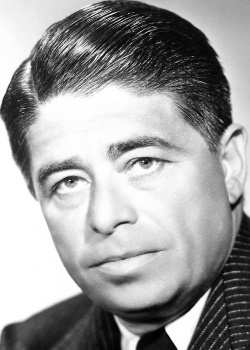
Alfred Newman was renowned for scoring musicals earning seven of his nine Academy Award wins doing so. Jane Froman’s songs were iconic and her voice at 45 years of age, still sterling. Susan Hayward’s singing would be dubbed by Jane Froman and Newman understood that for the film to succeed, Froman’s voice needed to shine and he needed to weave together the numerous song vignettes into a unified film score tapestry. In a masterstroke he found Jane’s essence within the lyrics of the titular song, which would serve as an expression of her romantic longing. He would unify the film’s musical narrative using this beautiful melody. In addition, he provided a number of waltzes and dances to foster elegance and scene ambiance.
 Songs woven into the score’s narrative included; “With a Song in My Heart” (1929) by Richard Rodgers and Lorenz Hart, “Hoe That Corn” by Max Showalter and Jack Woodford, “That Old Feeling” (1937) by Sammy Fain and Lew Brown “Jim’s Toasty Peanuts” (1952) by Ken Darby, “I’m Thru with Love” (1931) by Fud Livingston and Matty Malneck, “Get Happy” (1930) by Harold Arlen and Ted Koehler, “Blue Moon” (1930) by Richard Rodgers and Lorenz Hart, “On the Gay White Way” (1942) by Ralph Rainger and Leo Robin, “The Right Kind” (1948) by Alfred Newman, Don George, and Charles Henderson, “Home on the Range(1904) by Daniel E. Kelley and Brewster M. Higley, “Montparnasse” (1948) by Alfred Newman and Eliot Daniel, “Embraceable You” (1930) by George Gershwin and Ira Gershwin, “Tea for Two” (1925) by Vincent Youmans and Irving Caesar, “It’s a Good Day” (1947) by Peggy Lee and Dave Barbour, “They’re Either Too Young or Too Old” (1943) by Arthur Schwartz and Frank Loesser, “I’ll Walk Alone” (1944) by Jule Styne and Sammy Cahn, “America the Beautiful” by Samuel A. Ward and Katharine Lee Bates, “Wonderful Home Sweet Home” by Ken Darby, “Give My Regards to Broadway” (1904) by George M. Cohan, “Chicago” (1922) by Fred Fisher, “California, Here I Come” (1924) by Joseph Meyer, Al Jolson, and Buddy G. DeSylva, “Carry Me Back to Old Virginny” (1878) by James Allen Bland, “Stein Song” (1901) by E.A. Fenstad and Lincoln Colcord, “Indiana” (1917) by James F. Hanley and Ballard MacDonald, “Alabamy Bound “ (1925) by Ray Henderson, Bud Green, and Buddy G. DeSylva, “Deep in the Heart of Texas” (1941) by Don Swander and June Hershey, and “Dixie” (1859) by Daniel Decatur Emmett. Lastly, the Capitol LP album of songs from this film was the best-selling album of 1952. It was Billboard’s top album from May 10 through October 11 – 25 weeks at #1.
00:00 “Main Title” supports the roll of the opening credits set against a red, white and blue tricolor on which display various armed forces insigne. Newman supports with the sound of his classic “Newman Strings” offering a romanza with the titular song’s melody, which perfectly sets the tone of the film. The credits close with script; “This is a true story – the story of a girl and the story of a voice. The girl is Jane Froman, the voice is her own”. 1:32 “Gala” reveals a small orchestra on stage overlooking an elegant dining room with patrons dining and dancing on its oval dance floor. Narration informs us that this is the annual New York Newspaper Men Ball. Newman sustains the melody of the titular song rendered in dance form. At 2:05 a piano usher in heraldic horns, followed by the conductor announcing the award of “Courageous Entertainer of the Year”, Miss Jane Froman. Warm horns declare the opening bars of the titular song to support her arrival on stage. As the audience applauds, a piano cadenza usher in Rita Hayworth, dubbed with Jane Froman’s voice, singing the romantic ballad.
Narration initiates a flashback to her visiting radio station WCKX in Cincinnati for an audition carried by the song melody. Jane rushes to the recording studio and takes a seat outside. 4:12 “Hoe That Corn” reveals a comedic duet performed by Harry Guild and Don Ross offers silliness and buffoonery as the radio director suffers their performance. The director advises that this is radio, not Vaudeville, and that they are not a good fit as he departs. Harry and Don quarrel and part ways. Jane enters the studio, mistakes Don for the director, and he plays along. She offers a song to audition, and he takes her sheet music and accompanies her on the piano as she sings at 8:27 “That Old Feeling. He interrupts and counsels her to be more animated and expressive while singing to better connect with the audience. She accepts his coaching and begins anew. The director enters, Don admits his deception, and insists that he stay and listen, to which the director agrees. The director interrupts and says he is looking for a more up-tempo performance, and Don offers a spirited tempo – his “Ellis Island” version. She begins anew with a vibrant and animated performance. He offers her a job supporting commercials, with the possibility of moving up to staff artist. She agrees and after he departs, she bonds with Don and accepts his invitation to lunch. 13:32 “Jim’s Toasty Peanuts” reveals the next day her singing with a men’s trio, a sponsoring product’s song commercial, “Jim’s Toasty Peanuts”.
13:53 “I’m Through With Love” begins with narration by Don who says she was a hit and moved up to singing as a staff artist at night. With a small band supporting, she sings a sad song of heartache for a jilted lover. 14:25 “Jane’s Career Takes Off” offers a montage supported by Don’s narration saying that the name Jane Froman was a daily feature on the major networks as we see theater billboards showing her star ascendent. A vibrant musical narrative by strings animato propel the narration. 15:02 “Jane’s Big Chance” reveals her billed at a major 3,000 seat theater. A drum roll launches her performance with a big band rendering of “Get Happy” where Froman dazzles us with her vocals, offering a stunning performance of the inspirational song of faith.
18:23 “I’m Her Manager” reveals Jane back stage with Don as the theater owner congratulates her and expresses interest in signing her to a contract. Don intervenes, asserts he is her manager with no objection from Jane, and they head off to the theater office. In the office the owner cancels Don’s act, but he and Jane sign a contract for $1,000 a week that will secure her a good living and propel her career. Newman supports the scene with a delightful valzer gentile. 20:35 “Onward to New York!” reveals a train churning to a kinetic locomotive motif as narration informs us of Jane’s conquering Chicago, and now on her way to the grandest stages in the country – New York City. 20:47 “Radio City New York” reveals Tony conducting with his orchestra from the legendary theater a valzer romantico prelude crowned with fanfare magnifico when he introduces Jane. At 21:27 we flow into a big band supported performance of yearning romantic ballad “Blue Moon” with mixed chorus, The song’s offers one of the finest ever written and the joining of her sterling heartfelt vocals and the Lorenz Hart’s lyrics achieves a stirring cinematic confluence.
24:31 “Jane’s Star Rises” offers a montage of scenes narrated by Don, who speaks of her success, and love by the public as she is catapulted into stardom. Newman supports with a vibrant strings felice borne musical narrative. At 24:59 we shift to a forlorn Don drinking at a bar supported by soft dance music. He feels something is missing in his life, his career and dreams unrealized, his life consumed 24 hours a day by Jane’s career. The slow dance ambiance continues as he arrives at Jane’s house, who warmly greets him. Upstairs he finds lots of flower gifts from admirers and asks about the polo player she has been seen with. She deflects, saying none of it matters to her, but we see it matters to him. As she fixes him a drink, he again broaches the topic of marriage, proposing yet again. She confesses she may indeed be in love with him, but is unsure. Yet he is persistent, promising her the best, and she succumbs to his charm. 29:40 “Marriage” reveals a small and intimate gathering in her home supported by organ solenne, which blossoms with Mendelssohn’s “Wedding March”. 30:01 “Life Together” offers a vibrant musical narrative borne by strings felice as we they drive among California orange tree blossoms to celebrate their honeymoon. Yet, Don narrates that their plans changed as Jane ended up on a movie stage as the star, while he could still play the piano, offering a cadenza prelude, which launches Jane singing and dancing the song “On the Gay White Way” with a quartet of men. The song is buoyant, fun and light-hearted.
32:28 “Jane’s Blossoming Career” reveals that they have returned to New York. Narration by Don relates of Jane’s career blossoming with countless hit records, nightclub acts and theater shows while he struggles to write music at his piano. The titular song sung by Jane plays on her phonograph and supports the narration. Jane arrives home and finds him frustrated saying the song is no good, but she says otherwise and lovingly coaxes him to play it and she joins with her vocal, singing “The Right Kind” composed by Newman. The song is sensual, and seductive, with her dance moves heightening her sexual allure. Here the scene shifts seamlessly to a night club performance of the song; a handsome man joins her on stage and they begin to dance, and a as she sings the final lines the man repeatedly lifts her sensually, with their dancing becoming erotic as Don stews off stage.
36:45 “You’re Killing Me” reveals a distraught Don, who frets that he is a composer whose music is eclipsed by his wife’s vocal. She tries to console and extol the value of his music but to no avail. When she tells him that is difficult for any man to endure when his wife is in the spotlight, and that she understands his jealousy. He starts to storm out, but is halted when she says she will give up her career to save their marriage. His ego wounded; he leaves saying he will not allow such a sacrifice. Newman supports the scene with soft source music wafting in from the nightclub. 39:06 “What Does She See In You?” reveals Don fleeing to the bar to escape Jane only to have a phonograph playing her singing “Blue Moon”. His drunken friend Harry joins and asks Don what his wife sees in him? Don holds his anger and orders him away as he downs a double Scotch. Later, narration follows with Don admitting that they patched things up, like they always did. He said he was on the road, with Jane left alone in a cold apartment. She turns on the radio and hears news of the Japanese attack of Pearl Harbor.
41:56 “Opening Night” offers an exquisite romantic musical highlight. It opens with trumpeting fanfare as a Roxy Theater billboard displays Jane Froman starring with Henry Fonda. She is late arriving and a valzer elegante carries her arrival. As she dresses, he advises that the USO requests she stand ready when called to entertain the troops. At 43:38 horns announce the opening bars of “With a Song in My Heart”, which is taken up by a solo violin romantico that is joined by violins and angelic woman’s chorus. We open with Jane off stage singing “Where are you? Where are you?”. We then flow into the song “Montparnasse” sung by tenor David Wayne. A duet reprise of “A Song In My Heart” now unfolds for a sumptuous romantic performance. At 47:11 they and eight other couples begin dancing with the song melody rendered as a valzer romantico. At 48:30 the duet resumes sumptuously concluding on a crescendo romantico. 49:39 “Departure” narration informs us that 24 hours later Jane was on a plane flight to London, refueling in Lisbon. The song melody for “A Song In My Heart” carries the departure. John the 4th officer is clearly enamored with Jane and recruits her to assist him demonstrating the use of a life jacket. At 52:44 Jane and fellow passengers join in singing the folk song “Home on the Range”.
John, the 4th officer orders everyone to take their seats as they are about to land in Lisbon. The plane crashes and rescue boats are dispatched to rescue survivors. 55:01 “Grim News” reveals the Catholic hospital nuns and doctors treating the survivors. Newman initially drapes the scene with solemn religioso auras. Slowly as the camera pans to John’s bed, and then to Jane’s, the musical narrative shifts atop celli grave, becoming grim, and foreboding. The doctor informs Jane that her right leg below the knee may have to be amputated, and that her left ankle is crushed. He orders her prepped for surgery and the sad music ends with a fleeting quote of “A Song In My Heart” as she is wheeled to surgery. 59:42 “Jane Survives” narration by an American nurse Clancy relates that they were able to save all fifteen survivors. Newman supports with a soothing musical narrative borne by strings tenero. Later Jane, in a right leg cast, John, and the general banter with nurse Clancy as they recover. 1:02:35 “John’s Confession” reveals Clancy taking the general back to his room, leaving John and Jane alone. He finally discloses to her that he loves her, and that he knows she is not happy in her marriage. Woodwinds voice a tentative rendering of “A Song In My Heat”, tinged with sadness. Before she can respond, a priest enters the room. After they confirm they are doing well, he departs. The song melody resumes, struggling to achieve a more romantic exposition as she says it is only natural that they have bonded by this shared experience, but he says what he feels is more than that. He presses that they need to acknowledge these feeling, but before she can answer, Don arrives. She is delighted and he says he has booked a steamer home and arranged for the best medical care.
1:05:31 “Back In New York” soft woodwinds support the revelation of Jane receiving care at St. Anthony’s Hospital. She receives a huge bouquet of roses from John and gifts one to her orthopedic surgeon. He says that a second operation that installs a bone graft is needed for her to regain her ability to walk. After he and Don depart, she receives a call from John. He says after he gets his body cast removed, he intends to visit. At 1:09:31 after he hangs up, strings tristi emote “A Song In My Heat” as she cries in front of Clancy, saying she knows she should not see him, adding, what am I going to do? She relates that she does not want to hurt Don, but for the first time in her life she is truly in love. As Clancy calms her down, and tells her to pull herself together, a kernel of hope can be heard in the melody. The surgery proceeds and days later Don brings a piano to her room believing it will be good therapy to hasten her recovery. Don gives a synopsis of the act and sits down to play the title song “Artists and Models” at 1:14:03, followed by and short medley. 1:15:38 “Jane Returns” reveals a theater lighted billboard displaying “Jane Froman in “Artists and Models”. At 1:16:40 the curtain opens and sumptuous strings romantico offer a prelude to her song. However, the crowd stands, offering sustained applause, and a repeat of the string prelude. Jane is overwhelmed, stands with assistance, and bows her head. No performance is seen in the film, instead narration by Clancy saying the act had to close due to a flare up of her leg, which required additional surgery followed by long months of suffering, uncertainty, bitterness, and despair. A montage of countless surgeries, a couple bringing her close to death follow in a montage. Newman speaks to this with a sad and anguished string borne narrative of woe.
Back in her room, Jane declares to Clancy that she is giving up, saying she knows she will never walk again and that they should just cut the leg off. Well, Clancy let’s her have it, reproaching her for giving up and storms out in tears. 1:21:00 “Me or Him” reveals that she was over her pity party and out dining with Don at the La Rivera, which Newman supports with source music for ambiance. Don then drops all pretenses and calls her out on her frequent meetings with John, saying he wants a simple answer yes or no, me or him. She tries to deflect saying she has two performances tonight, but he persists. Then John arrives and Don discloses that he invited him to join us. As John sits down next to Jane, Don goes to the bar to retrieve their drinks. At 1:23:22 As she tells him Don believes it is time for a showdown, John agrees and the band takes up the titular melody. She then tells him her decision is to stop seeing him, as Don is her husband for better or for worse. He persists, but she is adamant and calls Max to take her to her dressing room. Don returns, and insists John remain to watch Jane’s stellar performance. 1:24:54 “Embraceable You” reveals her singing the classic Gershwin romantic ballad;
At this point she banters with a group of army men, and brings a dashing young paratrooper (Robert Wagner) on stage as she flatters him and resumes singing the song. She keeps him on stage, asks him to hop atop the piano, and the at 1:28:25 begins to serenade him, singing the aspirational romantic song “Tea for Two”. A rousing applause follows with the band taking up a festive tube. The next day Jane ponders going overseas to entertain the troops, using Clancy as a sounding board. She encourages her to go, and Jane sets off to inform Don and the USO. We shift to a hospital in Cologne Germany and Jane enters on crutches, and tells the men she is going give them a good show. 1:34:32 “It’s a Good Day” reveals her spritely, sunny, and forward-looking song.
1:36:12 “Jane Travels” reveals an army caravan taking her to her next venue supported by a trumpet led, field drum propelled melody for “You’re In The Army Now”. Narration by Clancy informs us of travelling over 30,000 miles through seven countries. 1:36:24 reveals her next performance singing the comedic and ironic song, “They’re Either Too Young or Too Old”. She asks for a soldier to join her and the shell-shocked paratrooper she performed with at the Rivera club makes his way to the stage. He is clearly still traumatized by his injuries but her energy is infectious and she agrees to sing a song of his choosing. He chooses a heartfelt song of romantic longing, 1:40:45 “I’ll Walk Alone”.
Afterwards, the boy is overcome, and lays his head on her shoulder. With a scene shift to Miami, a drunk Don calls John and informs him that Jane is returning home and that they have been washed up for some time, but that he did not want to walk out on her while she was down and recuperating. Now that she is again a success, he is departing to focus on his career and wishes him and Jane happiness. A USO billboard display reveals Jane Froman’s Farewell Performance. At 1:45:06 a drumroll and standing ovation greets Jane on stage with the US Army band, who is presented with a cake from the troops. 1:47:40 “American Medley” reveals Jane’s final performance, a medley of classic, folk, and traditional songs. We open with men’ chorus singing; “The sweetest face in all the world is home. . .” Jane then launches into one of cinema’s finest and most entertaining medleys with choral support, commencing with America the Beautiful, and then on through Wonderful Home Sweet Home, Give My Regards to Broadway, Chicago, California Here I Come, Carry Me Back to Old Virginny, Stein Song, Indiana, and Alabamy Bound. The Texan contingent start yelling; We want Texas! We want Texas! so Jane accommodates with Deep in the Heart of Texas and Dixie. Jane concludes the medley with classic Americana of “America, America:.
1:55:30 “The Voyage Home” reveals Jane performing in the dining hall of a luxury liner taking her to New York as John lovingly watches in the audience. She closes the film with the titular song, her song, backed by woman’s chorus and a small orchestra. She provides us with a performance for the ages, which ends in a grand flourish.
A song album was originally released on LP, but it is now not commercially available in any format. Alfred Newman astutely understood that Jane Struggled throughout her life to find fulfillment in love. She succumbed to Don’s persistent entreaties and married, even though she was not truly sure she loved him. When she at last found true love, her marriage vows seemed to present an insurmountable impediment. Fortunately, Don graciously released her allowing her and John to at last find happiness. Within the yearning romanticism of her immortal song “With A Song In My Heart” Newman found the unifying thread to weave together the tapestry of her story. Its melody permeates the film, forever reminding us of her desire for true love. The film’s other songs span the full spectrum of emotions, offering silliness, fun, romance, sadness, and happiness, all sung with Froman’s singular vocal. The American medley offers one of the finest in cinematic history. Folks, I believe Newman expertly used his score to propel the film and sustain its storytelling and forward momentum with splendid dance and waltz compositions, as well as popular tunes of the day. I believe he merited the Academy Award Win for Best Music Score for a Musical Picture, and to fully appreciate it, I recommend you take in the film.
For those of you unfamiliar with the score, I have embedded a YouTube link to Jane Froman singing her immortal song:https://www.youtube.com/watch?v=7ZdKa-JFaG0
Buy the With a Song In My Heart soundtrack from the Movie Music UK Store
Track Listing:
- Opening Production (1:40)
- It’s A Good Day (1:34)
- Tea For Two (2:18)
- Blue Moon (3:16)
- That Old Feeling (2:31)
- Embraceable You (3:16)
- Get Happy (2:25)
- I’ll Walk Alone (1:47)
- They’re Either Too Young Or Too Old (1:07)
- I’m Thru With Love (3:07)
- An American Medley (4:40)
- With A Song In My Heart (1:48)
Capitol Records T-309 (1952)
Running Time: 29 minutes 47 seconds
Music composed and conducted by Alfred Newman. Orchestrations by Herbert W. Spencer and Earle Hagen. Vocal direction by Ken Darby. Recorded and mixed by XXXX. Score produced by Alfred Newman. Album produced by XXXX.
Leave a reply to Doreen Hoover Cancel reply

Shop at the Movie Music UK Store

Member of the

 MOVIE MUSIC UK
Why is Rita Hayworth mentioned in this article? Susan Hayward was the leading actress.