HORIZON: AN AMERICAN SAGA, CHAPTER ONE – John Debney
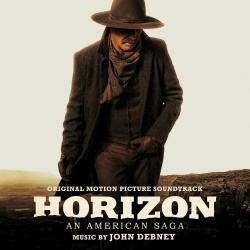 Original Review by Jonathan Broxton
It feels like Kevin Costner has been single-handedly trying to save the western genre from cinematic oblivion for going on forty years now, ever since he enjoyed his breakout role in Lawrence Kasdan’s Silverado in 1985. Since then Costner has been involved with numerous western or western-adjacent movies, either starring in them, directing them, or both, ranging from his Oscar-winning masterpiece Dances With Wolves in 1990 to more recent efforts like Wyatt Earp, The Postman, Open Range, the TV mini-series Hatfields & McCoys, and the now long-running contemporary western TV drama Yellowstone. His latest effort, Horizon: An American Saga, may be his most ambitious effort yet. It’s a sprawling tale that follows the stories of multiple fictional characters in pre- and post-Civil War America, detailing multiple aspects of the exploration of the American West. Costner began writing Horizon as early as 1988 – before he even started on Dances With Wolves – and it is planned to be a four-film 12-hour epic that covers almost the entire history of the United States in that period.
Chapter One follows multiple character threads: the first involves the town of Horizon itself, which is established on the banks of a river in Apache country, and is frequently attacked by natives who resent the white settlers. In the aftermath of one of these attacks the newly-widowed Frances Kittredge (Sienna Miller) and her daughter are taken to safety at a nearby military camp by Sgt. Thomas Riordan (Michael Rooker); there, Frances soon begins a hesitant romance with Lieutenant Trent Gephart (Sam Worthington). Meanwhile, elsewhere in the west, a woman named Ellen (Jena Malone) escapes an abusive relationship and flees south with her baby, where she encounters a horse trader named Hayes Ellison (Costner) and a kind-hearted prostitute named Marigold (Abbey Lee). When a pair of bounty hunter brothers catch up with Ellen intent on bringing her back, Hayes and Marigold resolve to help her retain her freedom. The third plot strand involves a wagon train heading west towards Horizon led by prospector Matthew Van Weyden (Luke Wilson), and examines the hardships they endure in search of the promised land.
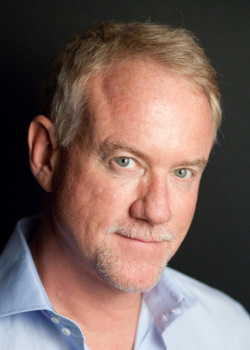 These disparate stories, along with other stories not yet examined, are intended to be explored and resolved over the course of the next several years. Horizon Chapter Two is scheduled to hit cinemas in August 2024, Chapter Three is in production as I write, and Chapter Four is in pre-production. The film has been praised for its cinematography, production design, and attention to period-authentic detail, which is not surprising for a Kevin Costner film, but to my great delight it has also received a great deal of positive attention for its score, which was written by John Debney. Although one scrooge in the Los Angeles Times uncharitably called it “syrupy, sentimental and emotionally oppressive,” which is of course film critic shorthand for “I noticed it as something other than a dull drone,” most of the rest of the commentary about the score has praised it as a welcome throwback to the golden era of the genre.
Costner often commissions excellent scores for the films he directs and produces – John Barry on Dances With Wolves, James Newton Howard on Wyatt Earp and The Postman, Michael Kamen on Open Range – and John Debney is no stranger to the genre either, having written Hatfields & McCoys, and having also scored numerous western and broadly Americana efforts ranging from his early TV work on The Young Riders, through titles such as White Fang 2, Dreamer, and Texas Rising. Debney has always been a classic orchestral themes-and-variations composer, and here he brings that approach to the glorious sound of the old west as pioneered by composers like Alfred Newman, Elmer Bernstein, Jerome Moross, Dimitri Tiomkin, and others. Debney recorded his score in Glasgow with the Royal Scottish National Orchestra, and included fiddle and violin solos by Molly Rogers Goldbaum, guitar solos by George Doering and Andrew Synowiec, and traditional ‘western’ musical performances by Nashville-based musicians Teddy Morgan and Matt Combs, plus special vocal performances by Lisbeth Scott, into his final mix.
Probably the most impressive thing about Horizon is how expansive it is. Considering the sheer amount of characters and locations involved in the story – some of whom, despite being introduced in this film, may not even meet each other until part three or four, if they ever meet at all – Debney chose to write a score which is a vast tapestry of ideas, each one allowing the individual storylines to have its own identity, while existing within an overarching soundscape. The “Horizon Main Title Theme” is a rousing, patriotic theme in the classic western tradition, which begins with competing textures for woodwinds, fiddles, and guitars, but soon emerges into a magnificent statement for the full orchestra. The theme is perhaps not as prominent in the score proper as I personally might have liked – it does appear in the hauntingly beautiful “End of Massacre,” the dour “Leaving Horizon,” the sweeping and uplifting title track “Horizon,” and the dainty “Mrs. Riordan Takes a Walk” to excellent effect – but I only say this because the theme is so good, I want it to appear more!
Instead, the rest of the score moves seamlessly between the different character threads, offering moments of drama, introspection, hesitant romance, anguish, desolation, and tension, while frequently emerging into bold, expansive musical evocations of the American landscape. The score also contains several pieces of thunderous action, which I’ll talk about later, and also offers several cues which respectfully acknowledge the musical heritage of the Apache people, who of course are as much at the heart of this story as the white settlers and their notions of manifest destiny.
Numerous cues stand out. “Desmarais Off Track” has a gorgeous, almost hymnal sound to its central acoustic guitar melody, lonely and melancholy, but as beautiful as a sunset over the desert. “Young Surveyor’s Death” contains what appears to be a soulful variation on the main theme built around a vocal by Lisbeth Scott, and which appears later to beautiful effect in cues like “Battle Pauses/Opening Jar of TNT” and at the end of “Tonto Sentry Prepares to Shoot”. “James Sykes” contains the first statement of the forthright, steely-eyed, guitar-heavy theme for Ellen, who shoots the titular scumbag before fleeing with their child away from his malevolent influence.
“White Eyes of the Changing World” has a thoughtful, pensive quality that I really like, gently passing a melody around different sections of the orchestra while accompanied by a tender acoustic guitar. “Hayes Entrance,” as one might expect, introduces the jaunty, steadfast, noble theme for Costner’s character, horse trader Hayes Ellison, a folk-like motif for fiddles and guitars bolstered by a terrific underpinning melody for the full orchestra; it receives excellent recapitulations later in “Hayes Quits Town with Marigold and Samson” and the more stirring “Junior IDs Hayes.”
On the more romantic side of things, “Persistent Marigold” is a lovely lullaby for guitars, accordions, and lilting strings for the hooker-with-a-heart-of-gold that reminds me very much of Clint Eastwood’s theme for his film Unforgiven; it gets lovely reprises later in the first half of “One More Night” (before it turns all brassy and militaristic to accompany soldiers heading off to fight in the beginnings of the Civil War) and in the pretty “Seducing Hayes”. “Gephart Approaches Frances” is a folksy love theme for the taciturn but morally upstanding soldier and the pretty widow, whose relationship develops in the weeks after the death in battle of Frances’s husband. “Elizabeth Meets Mrs. Riordan” is a beautiful, solemn but sadly short piano solo that has its melodic roots in the main theme, and then “Cloth Flowers” is a lovely orchestral reprise of the love theme for Frances and Gephart.
My pick of the action cues include things like “Start of Massacre,” the magnificently energetic “Russell Escapes,” “Tunnel Collapse,” the dirty and shrill “Caleb Beats Walt,” the vicious and dissonant “Gunfight at Marigold’s,” and the bombastic conclusive pair “Tonto Sentry Prepares to Shoot” and “Janney’s Party Finishes Massacre”. Some of these action sequences are a little more modernistic than one might expect, especially when it comes to the style of the percussion writing and the occasional use of synths deeper down in the mix. These cues have much more in common with Debney’s more contemporary action scores than anything from the classic canon; I was actually reminded on more than one occasion of Debney’s score for the 1995 Van Damme movie Sudden Death, of all things. They still pack a heck of a punch, though; Debney’s writing for brass is especially fierce and complicated, the dynamic string writing that underpins it all adds a powerful sense of forward motion, and the moments where Debney allows his orchestra to explode into moments of rousing heroism represent some of his best writing in this style since Cutthroat Island.
These action cues often work in tandem with cues like “Mimbreño Brave,” the brooding “Pawnee Braves Observe Wagon Train,” and the vivid “Tonto Sentry Spots Janney’s Party,” which make use of impressionistic percussion textures, fluttering ethnic woodwinds, and threatening orchestral passages to illustrate the intimidating aura of the Apaches as they are seen by the white settlers.
The final cue, “Horizon Montage Begins/Closing Survey,” is an absolute showstopper, an arrangement of the main theme that begins with a driving, almost Zimmer-esque cello ostinato underpinning a series of heroic brass phrases, but which eventually erupts into the most stirring rendition for the full orchestra backed by strumming guitars and subtle electro-acoustic synth ‘zing’ effects that add a new dimension to the palette. When Lisbeth Scott’s vocals join the fray in the second half of the cue, the whole thing just soars, and then those brass triplets just take it over the edge. For me, it’s the most satisfying single piece of music that John Debney has written in years.
Fans of the scores that composers like James Newton Howard and Michael Kamen have written for prior Costner movies, or of the western scores composers like James Horner wrote in their prime, will find Horizon: An American Saga, Chapter One to be something very special indeed. What John Debney has done here is nothing short of remarkable – he has written a classic western score, full of themes and melodies, with moments of both high energy action and gentle romance, and somehow not had it toned down by studio executives who think this sort of music is ‘old fashioned’ or ‘overly-manipulative,’ or some other such nonsense. If this is the standard of music that we can expect when Chapter Two rolls around later in the summer, and (hopefully) when Chapters Three and Four hit cinemas in the future, this could be the beginning of one of the best western scores of the century. As it is, this is already in the conversation for score of the year.
Buy the Horizon: An American Saga, Chapter One soundtrack from the Movie Music UK Store
Track Listing:
- Horizon Main Title Theme (1:19)
- Desmarais Off Track (1:11)
- Desmarais Finds Bodies/Young Surveyor’s Death (2:19)
- James Sykes (2:44)
- Mimbreño Brave (1:45)
- Start of Massacre (5:11)
- Russell Escapes/Nathaniel Leaving Frances and Elizabeth (2:49)
- Tunnel Collapse (3:16)
- Battle Pauses/Opening Jar of TNT (1:43)
- End of Massacre (1:50)
- Horizon in Ruins (1:56)
- Fallen Settlers (1:02)
- White Eyes of the Changing World (3:42)
- Burying the Dead and Identifying Bodies (3:29)
- Leaving Horizon/The Tribe Splitting Up (2:18)
- Hayes Entrance (2:11)
- Horizon (2:13)
- Persistent Marigold (1:07)
- Gephart Approaches Frances (1:00)
- Horizon Line Shack (1:11)
- It’s Our Day (0:55)
- Caleb Beats Walt (2:14)
- Gunfight at Marigold’s (5:56)
- Hayes Quits Town with Marigold and Samson (1:10)
- Mrs. Riordan Takes a Walk (1:37)
- Elizabeth Meets Mrs. Riordan (1:12)
- Pawnee Braves Observe Wagon Train (2:50)
- Junior Brings Caleb’s Body Home (2:31)
- Junior IDs Hayes (1:06)
- Trading Post Standoff/Migrant Camp (3:57)
- One More Night (2:27)
- Cloth Flowers (2:53)
- Seducing Hayes/Frances and Gephart (3:47)
- Soul of Honor (0:58)
- Tonto Sentry Spots Janney’s Party (3:38)
- Tonto Sentry Prepares to Shoot (2:23)
- Janney’s Party Finishes Massacre (1:44)
- Horizon Montage Begins/Closing Survey (5:09)
- Amazing Grace (traditional, performed by Alyssa Flaherty and Shelley Morningsong) (4:53)
Sony Classical (2024)
Running Time: 95 minutes 36 seconds
Music composed and conducted by John Debney. Performed by the Royal Scottish National Orchestra. Orchestrations by Mark Graham and Mike Watts. Featured musical soloists Molly Rogers Goldbaum, George Doering, Andrew Synowiec, Teddy Morgan and Matt Combs. Special vocal performances by Lisbeth Scott. Recorded and mixed by Simon Rhodes. Edited by XXXX. Album produced by John Debney.
Leave a reply to Carole Williams Cancel reply

Shop at the Movie Music UK Store

Member of the

 MOVIE MUSIC UK
Saw this movie on its release date with family and friends. We all enjoyed and loved the entire movie. Music was excellent
I have read many reviews but don’t agree with many. I’ve noticed that the public likes Horizon, Part 1, it’s the critics who have put a black mark on this film. It’s not the critics whose opinion should count more than that of the viewing public. I personally loved the film and cannot wait to see the next chapter.
I purchased horizon two days ago downloaded it on my television for $25 and I’ve watched it twice and I plan to watch it again. I think Mr. Koster done a good job and I think he should get number one or number 2. Horizon video out soon so the people that like it can watch it and the heck with what the rotten tomatoes and other places like that don’t like it. I’m 82 years old and a woman and I love the movie. I didn’t like it when the white folk cut off the Indian scallops, I suppose it was true Costner this wonderful movie
Please please please release a CD format