Under-the-Radar Round Up 2024, Part 2
 Original Reviews by Jonathan Broxton
I’m pleased to present the latest instalment in my on-going series of articles looking at the best under-the-radar scores from around the world.
This article, the second of 2024, covers six more scores from a wide array of genres and countries: a Spanish animated short film, an Italian teenage fantasy romantic drama, two Italian romantic comedy dramas, an Indian drama based on a best-selling novel, and a French romantic drama, all of which feature superb and memorable thematic writing!
CARMEN Y LA CUCHARA DE PALO/CARMEN AND THE WOODEN SPOON – Iván Palomares
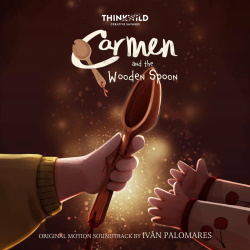 Carmen and the Wooden Spoon, or Carmen y la Cuchara de Palo is an animated short film from Spain, directed by Carlos Gómez-Mira Sagrado. The film tells the heartwarming and endearing story of a 7-year old girl named Carmen. Carmen is given a magic spoon by her elderly Italian grandmother; the spoon is imbued with the power a centuries-old spell which means that, when Carmen eats new food with the spoon, she can travel back into her grandmother’s memories and relive the adventures of her grandmother’s life. It’s a charming, whimsical tale which is helped enormously by the spectacular score by composer Iván Palomares.
I have been reviewing and celebrating Palomares’s music for years now. His work on scores like En Las Estrellas, Ron Hopper’s Misfortune, the TV series Le Cocinera de Castamar, and Las Niñas de Cristal earmarks him as one of the best young composers in Spanish cinema, and Carmen and the Wooden Spoon just cements that reputation further. The music was recorded with a full orchestra in Bratislava, Slovakia, and is a gorgeous, sweeping, heartfelt, emotional delight, overflowing with themes and melody.
There’s a wonderful sense of magic and wonderment in the title track “Carmen and the Wooden Spoon,” which passes a lovely melody around the full orchestra, has special moments of focus for lyrical flutes, and has a superb finale that briefly adopts some textures from Spanish flamenco music. There is a real sense of pathos and emotional depth to the writing in cues like “Carmen and Her Mother” and “The Spoon of Memories,” while at the other end of the scale cues like “Memories for Travelling and Dreaming” and “Carmen Doesn’t Give Up” are lighter and more playful, at times almost dance-like in their evocation of the sights and sounds of Carmen’s grandmother’s youth. “Carmen Doesn’t Give Up” also has the carefree circus-like attitude of early Danny Elfman, which is just outstanding.
There is also one cue of unexpectedly dark and aggressive horror music in “Carmen’s Nightmare,” which stands out like a sore thumb against the rest of the score, but is incredibly creative with its dissonant orchestral sounds and unnerving tribal-esque vocal effects.
Often throughout the score Palomares’s music rises and presents moments of lush orchestral beauty; this all comes to a head in the conclusive pair “The Last Voyage” and “Soar,” which are simply spectacular – in these cues Palomares simply pushes for the sky with music, creating an outstanding musical reflection of childhood joy, grand adventure, and deep emotional connections that span generations. The last thirty second of “Soar” are especially glorious.
If Carmen and the Wooden Spoon had been a feature film this would be in contention for Score of the Year awards. As it stands, I still recommend it to anyone who demands and enjoys high quality, beautifully written, emotionally direct orchestral scores, irrespective of how long or short they are. It is available to stream and download from most online retailers on the Meraki Assai Music label.
Track Listing: 1. Carmen and the Wooden Spoon (3:13), 2. Carmen and Her Mother (2:30), 3. Memories for Travelling and Dreaming (2:08), 4. Carmen’s Nightmare (1:32), 5. The Spoon of Memories (1:40), 6. Carmen Doesn’t Give Up (2:18), 7. The Last Voyage (2:34), 8. Soar (1:06). Meraki Assai Music, 16 minutes 58 seconds
FABBRICANTE DI LACRIME/THE TEARSMITH – Andrea Farri
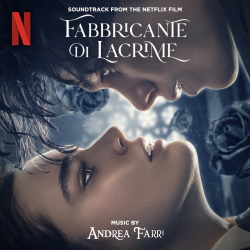 Fabbricante di Lacrime/The Tearsmith is an Italian fantasy romantic drama movie for Netflix, based on the novel of the same name by Erin Doom, directed by Alessandro Genovesi, and starring Simone Baldasseroni and Caterina Ferioli. The film follows the story of two teenagers who grew up in the same orphanage, and who develop a romance after being adopted by the same family, but who both share a history of abuse at the hands of the orphanage’s cruel headmistress.
The score for Fabbricante di Lacrime is by composer Andrea Farri, who is one of the most in-demand and prolific composers in contemporary Italian cinema. The opening cue of this score, “The Tear Maker,” might be the single most outstanding cue I have ever heard from him, and that’s saying something considering that I have 16 Farri scores in my collection dating back more than a decade to 2009. It begins in a gently romantic way, expressive pianos backed by almost subliminal electronics, but as it develops it picks up a warmly inviting string wash, and then a sonorous cello, before absolutely exploding into rapturous delight after the 3:08 mark, a cascade of deep, intense emotions for the full orchestra. It’s just magnificent, one of my absolute favorite cues of the year to date.
The rest of the score, almost inevitably, pales in comparison to this outstanding opening, but there are still moments of excellence to appreciate. A lot of the score proper is more textural and less thematic than the title cue, and generally has a heavier electronic sound in favor of the orchestra, but Farri still references the main theme reasonably frequently, in cues like “Your Perfect Fairy Tale,” the piano solo “Rigel Child,” “The Moth,” the introspective and dreamy “Rigel’s Theme,” and the classically pretty “Nica’s Theme”.
Elsewhere, “Lullaby” is an original song based on the main theme, and “Hell” is an original hard rock song, both performed in English by the stereotypically gravel-voiced Valentina Costanzo. Unfortunately one or two of the cues are also defaced with sound effects and dialogue from the film, which is unforgivable in this day and age. This latter aspect is likely to annoy many listeners, but overall it’s still worth checking the album out, if only for the 5-minute opening track. It is available to stream and download from most online retailers on the Netflix Music label.
Track Listing: 1. The Tear Maker (5:05), 2. Your Perfect Fairy Tale (3:16), 3. Lullaby (2:54), 4. Rigel Child (1:29), 5. Hell (2:00), 6. The Moth (1:47), 7. Rigel’s Theme (3:30), 8. Nica’s Theme (3:32). Netflix Music, 23 minutes 29 seconds.
FLAMINIA – Fabio Frizzi
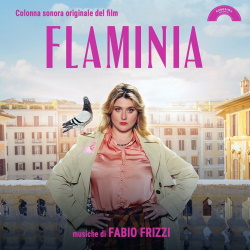 Flaminia is an Italian romantic comedy drama written and directed by Michela Giraud. The film stars Giraud as Flaminia, a wealthy Roman girl who is all set to marry a diplomat’s son when her autistic half-sister Ludovica (Rita Abela) barges into her life, exposing Flaminia’s superficial existence. As they reconnect, an unexpected event threatens their newfound bond.
The score for Flaminia, somewhat unexpectedly, is by Italian composer Fabio Frizzi, who most people will associate with his acclaimed scores for several cult exploitation horror movies in the late 1970s and early 80s, including The Beyond, Manhattan Baby, Paura Nella Città Dei Morti Viventi, and Zombi 2. Honestly, for the longest time I had no idea Frizzi was still writing music almost 50 years later – I thought he was of the same generation as people like Piero Piccioni and Stelvio Cipriani – but it turns out that Frizzi was only in his late 20s when he was writing those classic horror scores, and so is still in his relative film scoring prime today at the age of 72.
Considering his horror credentials, people may also be surprised to learn that Frizzi’s score for Flamini is a delight, a tuneful, upbeat ray of sunshine that makes use of a number of traditional Italianate instruments including guitars and clarinets, and places them into a series of settings that range from delicious romance to 1980s-style pop and rock. It’s very eclectic, and jumps from style to style rather quickly, but everything is done with a great deal of style and it all works together well.
As is often the case with Italian scores, Frizzi takes several core themes and runs them through different variations. The title cue, “Flaminia di Roma Nord,” is a charming piece of whimsy based around a lovely, playful clarinet theme. “Cappuccino in the Gym” is modern and funky, “Nuove Emozioni” is a lovely romantic combination of strings and electric guitars that has a melody reminiscent of the Lady Gaga song Shallow, “Ludo Turbolenta” is quirky piece that juxtaposes a clarinet motif against an electronic jazz fusion beat, and “La Notte Vola” places a terrific string theme into a driving 1980s electropop rhythm that I really like.
I also really enjoy several the one-off cues, including the busy pop stylings of “Ludo Arriva a Casa,” the throbbing guitar funk of “Bass Has Fun,” the sophisticated soft rock romance of “Ludo Tenera,” and the country-adjacent vibes of “Wheels of Freedom,” which has a Fleetwood Mac element to it.
Overall, Flaminia is a lovely score, warm and approachable, which offers listeners a very different side to Fabio Frizzi, a world away from zombie horror and other assorted nasties. It is available to stream and download from most online retailers on the Cinevox label.
Track Listing: 1. Flaminia di Roma Nord (1:08), 2. Cappuccino in the Gym (Prima Versione) (0:56), 3. Ludo Arriva a Casa (1:12), 4. La Palestra di Flaminia (0:49), 5. Nuove Emozioni (Prima Versione) (2:11), 6. Ludo Turbolenta (Prima Versione) (1:38), 7. Flami e Ludo (1:41), 8. Bass Has Fun (0:56), 9. La Notte Vola (Strings Version) (1:23), 10. Nuove Emozioni (Seconda Versione) (2:11), 11. Ludo Turbolenta (Seconda Versione) (1:38), 12. Nuove Emozioni (Terza Versione) (2:11), 13. Cappuccino in the Gym (Seconda Versione) (0:57), 14. Ludo Tenera (3:05), 15. Wheels of Freedom (3:10), 16. Nuove Emozioni (Quarta Versione) (2:11), 17. Sono Sua Sorella (1:30). Cinevox, 28 minutes 36 seconds.
THE GOAT LIFE – A. R. Rahman
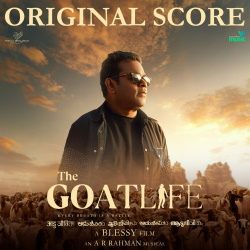 The Goat Life is an Indian drama film written and directed by Blessy Thomas. It is an adaptation of the best-selling Malayalam-language novel ‘Aadujeevitham’ by Benyamin Daniel, which is itself based on the real-life story of Najeeb Muhammad, an immigrant laborer who was forced into slavery working as a goatherd on a secluded farm in a remote part of the Arabian desert. The film stars Prithviraj Sukumaran as Najeeb and Haitian-American actor Jimmy Jean-Louis as Ibrahim Khadiri, a Somalian goatherd in similar circumstances who helps Najeeb escape.
The score for The Goat Life is by A. R. Rahman, who continues to be the most respected and prestigious composer in Indian cinema. It’s interesting to me that, in the wake of his double Oscar-win for Slumdog Millionaire in 2008, Rahman has never quite been able to leverage that into a consistent career writing for film in America. He had some success with a handful of movies – Couples Retreat, 127 Hours, Million Dollar Arm, The Hundred-Foot Journey, Viceroy’s House – but I wish he had been able to capitalize on this success a little more than he had, because he continues to write outstanding music – The Goat Life is a perfect example of that.
There are two albums for The Goat Life, one containing 15 minutes of score, and one with almost an hour of original songs and traditional Palestinian folk music. I’m concentrating solely on the score album here, which is excellent, a diverse range of sounds and textures that help to convey the dramatic complexity of Najeeb’s life.
To capture this Rahman crafted a rich and creative orchestral and instrumental palette. “King of Kerala” is lively and ebullient, light strings and dancing flutes combining with traditional Indian percussion, sung vocals, and moments of orchestral grandeur (the flutes here, oddly, remind me of John Williams’s flutes in The Patriot). “Friendship” is intimate and expressive and contemporary in a sort of Thomas Newman-esque way, and again features an unusual fluttering flute part alongside colorful violin textures. “Mirage” is unexpectedly dramatic and powerful, featuring a tremendous, scampering string line dancing on top of powerful outbursts from the brass section and a deep, booming, almost Mozartian chorus
“The Beloved” is beautifully romantic and tender, and again has more than a hint of classic Thomas Newman in the phrasing of the strings, as well as a lovely exotic lilt in the woodwinds, and a religious, almost beatific sound to the vocals. The conclusive “The Train of Dreams” is just gorgeous, a long-lined and deeply emotional cue for layered strings that become grander and more epic as they develop.
Despite its brevity, The Goat Life is an excellent score, rich and varied and at times deeply emotional. It serves as yet another reminder that A. R. Rahman is significant talent in world film music, and that anyone who still considers his Slumdog Millionaire Oscar win an aberration is clearly not listening closely enough. The album is available to stream and download from most online retailers, and as an import CD from India on the Visual Romance Music label. Just look for the CD with the massive picture of Rahman on the cover!
Track Listing: 1. King of Kerala (1:57), 2. Friendship (2:49), 3. Mirage (4:13), 4. The Beloved (3:02), 5. The Train of Dreams (2:20). Visual Romance Music, 14 minutes 19 seconds.
L’HOMME D’ARGILE/THE DREAMER – Amaury Chabauty
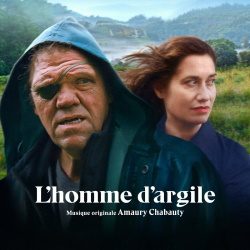 L’Homme d’Argile or The Dreamer is a French drama film written and directed by Anaïs Tellenne. The film stars Raphaël Thiéry as Raphael, a one-eyed sixty-year-old man who lives with his mother and works as a caretaker on a vast estate owned by a wealthy family. With his imposing build and frightening face, Raphaël knows that he scares people, and so he keeps his distance and leads a quiet existence; however, when the owners of the estate die, and their heiress daughter Garance (Emmanuelle Devos) returns to the family home, everything changes for Raphaël in ways he could have never imagined.
The score for L’Homme d’Argile is by composer Amaury Chabauty, who is one of the lesser-known French composers in terms of his international profile. I don’t have a lot of personal experience with his music – this is only the fourth score of his I have heard, after Teddy (2020), L’Année du Requin (2022), and Murder Party (2022) – but he is clearly a composer with a great deal of talent, because L’Homme d’Argile is lovely.
The score mostly focuses on Raphael, whose outward appearance masks a gentle and romantic heart, and who starts to feel the embrace of love and warmth for the first time due to his slowly deepening relationship with Garance. To capture this, Chabauty uses a small orchestra with special focus on strings and woodwinds, and uses that to present a series of lovely thematic ideas which gradually move from pathos and sadness to love and acceptance as the story progresses.
There is a wonderful sense of pastoral beauty in the opening cue, “Il Était Une Fois,” which uses oboes, harps, and lush strings to create a gentle fairytale atmosphere; the melody itself is clearly based on the classic folk tune ‘Greensleeves,’ but it’s still beautiful and evocative. This main theme recurs frequently throughout the score, receiving notable reprises in “Le Muse” while accompanied by little vocal and harp effects, in the dramatic and purposeful “Retour Au Château,” in the exceptionally pretty “D’Ici La Fin de l’Été,” and in the gently sorrowful “The Dreamer” which sees the main theme transposed to an emotional solo piano.
In between these thematic statements there is a fair amount of low-key textural writing which is likely appropriate in context but does tend to be a little meandery on album – I’m thinking here of tracks like the dark and brooding “L’Atelier,” or the eerie operatic voices of “Garance”. However, the score is enlivened by some more unusual ‘live’ cues which make fantastic use of French bagpipes, notably “Montcharmont,” the upbeat and raucous “Piposette,” and “Le Concert,” so these more reserved moments never have an impact on the effectiveness of the score as a whole.
Overall this is a lovely score by Amaury Chabauty, an intimate and heartfelt portrayal of the power of inner beauty and the difference a little kindness can make in someone’s life. The score album is available to stream and download from most online retailers on the 22D Music label.
Track Listing: 1. Il Était Une Fois (2:02), 2. Montcharmont (2:47), 3. L’Arrivée de l’Héritière (0:53), 4. Piposette (2:10), 5. La Dame En Bleu (0:49), 6. L’Atelier (3:03), 7. Le Muse (2:25), 8. Garance (1:53), 9. Le Concert (3:01), 10. Retour Au Château (1:16), 11. D’Ici La Fin de l’Été (1:14), 12. L’Homme d’Argile (2:26), 13. The Dreamer (1:57), 14. Une Statue (2:03), 15. Retour Au Château (Alternative Track) (1:41). 22D Music, 29 minutes 35 seconds.
UN MONDO A PARTE/A WORLD APART – Piernicola Di Muro
 Un Mondo a Parte is an Italian comedy-drama film written and directed by Riccardo Milani. The film stars Antonio Albanese as Michele, a middle-aged man who is dissatisfied with his life and decides to leave Rome and move to a remote village in a national park. The small village is an idyllic place, and Michele is initially happy in his new surroundings, but before long he is asked to teach at a local school, and is drawn into efforts to save it when it is threatened with closure due to having too few students.
The score for Un Mondo a Parte is by Italian composer Piernicola Di Muro, who is a relative newcomer to the film music scene, and who still combined his composing with gigs as a music editor, recording mixer, and producer. His music for Un Mondo a Parte, though, is delightful, a charming, sentimental, slightly whimsical comedy drama score written for a small orchestra recorded in Macedonia, augmented with traditional Italian instruments (clarinets, guitars, mandolin), as well as some contemporary percussion and electronic enhancements to bring it into the twenty first century.
Most of the score is written for this core set of arrangements; the main theme, “Un Mondo a Parte,” is lovely, and later cues such as “State Tranquilli Bambini,” the exceptionally pretty “Prendersi La Felicità,” and the more downbeat “Tra Queste Montagne” build on that sound to excellent effect.
Elsewhere, “La Montagna Lo Fa” and “Raduniamo Le Forze” are quirky and a little jazzy, with plucked and struck instruments, finger-snaps, and little instrumental flutters creating an inquisitive, idiosyncratic mood. “La Vestizione” plays like comedy country music, “In Un Nuovo Mondo” is low-key and filled with emotion and pathos, and “Forti E Gentili” wraps the main theme around a gorgeous, warm guitar texture.
Un Mondo a Parte is a quick listen at just a touch over 15 minutes, but it’s a pleasant enough diversion which makes light work of the comedy and makes me want to investigate whatever else Piernicola Di Muro has written in his career so far. The score album is available to stream and download from most online retailers on the Cinevox label.
Track Listing: 1. Un Mondo A Parte (1:37), 2. La Montagna Lo Fa (1:36), 3. La Vestizione (0:59), 4. State Tranquilli Bambini (0:50), 5. Prendersi La Felicità (1:59), 6. Raduniamo Le Forze (1:21), 7. I Disegni Dei Bambini (0:50), 8. In Un Nuovo Mondo (2:15), 9. Forti E Gentili (2:03), 10. Tra Queste Montagne (1:27), 11. Terra Gentile (1:34). Bixio C.E.M.S.A./Cinevox, 16 minutes 26 seconds.
Leave a reply to Robert Goodale Cancel reply

Shop at the Movie Music UK Store

Member of the

 MOVIE MUSIC UK
A fantastic and enjoyable series. An absolute pleasure to be able to listen to scores that would otherwise be likely missed. Thank you!