MACARTHUR – Jerry Goldsmith
 MOVIE MUSIC UK CLASSICS
Original Review by Craig Lysy
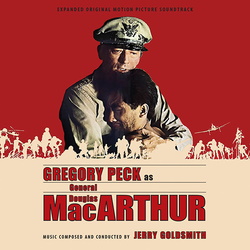
The genesis of Macarthur lay with Frank McCarthy, who served as aide to General George C. Marshall during WWII. McCarthy became a producer at 20th Century Fox Studios in 1949. He was a supreme patriot, and he sought to extol some of America’s greatest generals of WWII. His first project was the biopic Patton in 1970, which explored the life of the brilliant, irrepressible, and profane general of the 3rd Army. Following the great success of the film he selected his next project, a biopic of another iconic, brilliant and rebellious general, Douglas MacArthur. Casting and production challenges derailed McCarthy, but he rebounded and found backing from Universal Studios. He was placed in charge of production with a small $16 million budget, Joseph Sargent was tasked with directing, with Hal Barwood and Matthew Robbins hired to write the screenplay. For the cast, the titular role was turned down by George C. Scott and Marlon Brando, and Sargent eventually recruited Gregory Peck. Joining him would be Ed Flanders as President Harry S. Truman, Dan O’Herlihy as President Franklin D. Roosevelt, Ivan Bonar as Lieutenant General Richard K. Sutherland, Ward Costello as General C. Marshall, and Marj Dusay as Jean MacArthur.
The film was originally conceived as a full-life biopic, but was scaled back to begin at age sixty-two when he was commanding allied forces during the battle of Bataan. It follows his career during WWII, which included the liberation of the Philippines, and the Japanese surrender. The film culminates with his command of United Nation forces during the Korean War, including his insubordination to President Truman, which resulted in him being relieved of his command. The film was a commercial success, earning a $7.3 million profit. Critical reception was generally favorable, but because of budget cuts, that resulted in most of the film being shot on the back lot instead of oversees, it received no Academy Award nominations despite Peck turning in one of his finest performances.
Jerry Goldsmith’s was offered the project due to his success with in Patton in 1970. He related “I really did MacArthur as a sort of masochistic exercise… Because I wanted to see if I can get away from doing Patton. I like the MacArthur score very much myself, but he was a different character – and that’s what I wanted to say. Both were flamboyant but MacArthur was much more social, political animal, more willing to play the game.”
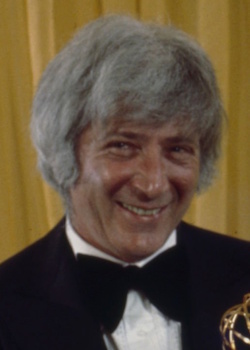 I believe Goldsmith understood that the film centered on MacArthur and that a primary theme was essential in supporting the film’s story-telling. He created a march, which opens as strident marcia militare to emphasize his indomitability and steely determination. Yet it transforms into a marcia pomposa to reflect his ego, pride and confident swagger. The march is pervasive in the film, but also the trumpeting fanfare, which introduces it. A second theme, which I will call the Nostalgia Theme speaks to MacArthur’s wistful remembrances of his youthful and formative days at the West Point Military Academy, and the friendships forged there. Wistful strings evoke a sense of longing during the early years of the new 20th century. The Defeat Theme offers a dark reflection of the bravado main theme using a repeating phrase, which opens with grim bass, joined by a forlorn three-note string figure of despair. There are again pounded piano strings as in the march, but they are shorn of their power and stridency. In two cues, 19 and 21 Goldsmith infuses is soundscape with orientalism as the film offers visuals of a devastated Japan, and its efforts to emerge from the ashes of defeat.
To imbue the film with a contemporaneous cultural context, several pop and classical pieces were infused into the score’s tapestry, including; “Anchors Aweigh” by Charles A. Zimmermann, “Waltzing Matilda” by A.B. Paterson and Marie Cowan, “Don’t Sit Under The Apple Tree” by Lew Brown, Charles Tobias and Sam H. Stept, “Funeral March” from Piano Sonata No. 2, Op. 35 by Frederick Chopin, Symphony No. 7 In A Major – 2nd Movement by Ludwig van Beethoven, “Happy Days are Here Again” by Milton Ager and Jack Yellen, “Admiral Byrd” by Billy May, “Undecided” – Instrumental” by Sid Robin and Charles Shavers, “Orpheus In Hades – Can-Can” by Jacques Offenbach, “Mayday In Moscow” by Billy May, and “Sakura Sakura” (Cherry Blossoms), a Japanese traditional.
“MacArthur – Main Title” offers a score highlight where Goldsmith masterfully captures the persona of MacArthur and sets the tone of the film. It reveals a narration scroll lauding the accomplishments of one of America’s greatest generals. The first bars of MacArthur’s Theme offer a strident, hammered piano cadence which swells with strength into a resolute marcia militare. At 0:33 the opening credits flow with the march transforming into a marcia pomposa as we see the West Point Military Academy in the background, with cadets precision marching on an open field. The now retired general Douglas C. MacArthur observes with his hand over his heart. A diminuendo on filed drums at 1:43 initiates a seamless segue into the Nostalgia Theme by wistful strings as MacArthur offers a personal reminiscence narration about his beloved West Point with solemn oratory;
“Duty, Honor, Country: Those three hallowed words reverently dictate what you ought to be, what you can be, what you will be. They are your rallying points that give you a temper of the will, a quality of the imagination, a vigor of the emotions, a freshness of the deep springs of life, a temperamental predominance of courage over timidity, of an appetite for adventure over love of ease. In this way they teach you in this way to be an officer and a gentleman.
From your ranks come the great captains who hold the nation’s destiny in their hands the moment the war tocsin sounds. The Long Gray Line has never failed us. Were you to do so, a million ghosts in olive drab, in brown khaki, in blue and gray, would rise from their white crosses thundering those magic words: Duty, Honor, Country.
This does not mean that you are war mongers. On the contrary, the soldier, above all other people, prays for peace, for he must suffer and bear the deepest wounds and scars of war. But always in our ears ring the ominous words of Plato, that wisest of all philosophers: “Only the dead have seen the end of war.”
As the final paragraph ends, we flash back to the Philippines in 1942 as American and Filipino troops fight for their survival in the battle of Corregidor Island.
“The Tunnel” reveals wounded men moving into a tunnel for protection from Japanese airplanes. As MacArthur is driven inside, he witnesses bloodied and dispirited men supported with the Defeat Theme, which offers a dark reflection of the bravado main theme using a repeating phrase, which opens with grim bass, joined by a forlorn three-note string figure of despair. Forlorn strings of futility are joined by pounded piano strings as in the march, but they are shorn of their power and stridency, instead contributing to an air of defeat and hopelessness. In an unscored scene President Roosevelt orders General Marshall to issue a presidential order for MacArthur to evacuate himself immediately from Corregidor and relocate his command to Australia. On Corregidor MacArthur threatens insubordination rather than abandoning his men, but his aide convinces him that he cannot disobey a presidential order. He adds that Marshall clearly intends for him to lead a counterattack to retake the Philippines. MacArthur grudgingly agrees and places his friend General Wainwright in command.
“I Shall Return” reveals MacArthur’s jeep caravan arriving at the PT boat dock. The grim Defeat Theme is joined phrases of the MacArthur Theme shorn of its stridentness and vitality. At 0:42 a solo clarinet triste supports MacArthur goodbye to his Filipino friend Castro who intends to soon depart to join the guerilla resistance on the mainland. At 1:11 an extended rendering of the Nostalgia Theme full of sadness is joined by wistful strings as he says goodbye to General Wainwright and pledges that he shall return with all the forces he can muster. At 2:05 a muted solo trumpet sounds with sad resignation as the men watch a dejected MacArthur gift Wainwright shaving cream and cigars. He then requests that he inform the men that a presidential order forced him to leave. At 3:05 defiant, resolute strings and horns empower MacArthur’s departure.
“To Australia” was dialed out of the film. It was intended to support a montage of scenes of MacArthur’s journey across the South China sea to safety in Australia. Goldsmith conception was to support with a forlorn and dispirited musical narrative, which speaks to MacArthur’s disdain of abandoning his men. “The Minefield” reveals MacArthur coming topside to learn why the boat was zig-zagging. The Lieutenant advises that they are using lookouts to navigate a minefield. Goldsmith sow tension with an impressionistic musical narrative featuring hammered piano, fluttering horn wails and distressed woodwinds as they safely pass several mines. At 1:39 the music brightens with relief as the Lieutenant advises that he believes they have safely passed through.
“Statistics” reveals MacArthur traveling by train with his command staff to Melbourne. A welcoming band plays “Waltzing Matilda” as MacArthur arrives to a cheering throng of people. Before he departs, he is informed that there is no combat ready American infantry, that the Australian military of 300,000 men is poorly prepared and equipped, that there is no naval support, and that they have 125 planes of all types in disrepair. He adds that not only is a counterattack against the Philippines off the table, that there is concern that they could not repel a Japanese attack against Australia. Goldsmith supports with a grim musical narrative with the Defeat Theme woven within the notes. At 1:06 reserved French horns nobile and muted trumpets offer the MacArthur fanfare to support MacArthur receiving news that President Roosevelt had awarded him the Congressional Medal of Honor. However, it is short-lived as the Defeat Theme returns with MacArthur’s grim realization of the military situation. After a brief speech to the crowd, a festive quote from the song “Don’t Sit Under The Apple Tree” supports his departure through the cheering crowd.
“Surrender” reveals MacArthur listening to General Wainwright’s surrender speech from Corregidor. The scene shifts to General Wainwright and his command staff signing the surrender papers and submitting them to the Japanese General. Goldsmith supports with a grim musical narrative empowered by a dirge-like Defeat Motif on horns of woe, joined with snare drums and strings tristi of resignation. MacArthur is enraged and believes the broadcast is a ruse. Yet he eventually is persuaded that with no food, supplies and raging malaria, that surrender was inevitable. “Attack Training” reveals a montage of MacArthur supervising the training of the troops he will use to liberate the Philippines. Goldsmith supports with and boisterous and confident rendering of the MacArthur March, one of its finest presentations in the score. In an unscored scene MacArthur asserts his power as supreme allied commander to countermand Australian General Blamey’s defensive plan to retreat to the Brisbane line, instead ordering an attack against New Guinea.
“Casualties” was dialed out of the film. Goldsmith supports with a grotesque mutation of the MacArthur March as soldiers mock him behind his back as he views the grievous casualties of a horrific Japanese attack. I believe omitting Goldsmith’s music was a creative error. “Propaganda” reveals a propaganda film, which extols General MacArthur leadership showing in headquarters. We open with a trumpet propelled rousing march exuding confidence. After 0:21 the music was dialed out of the film, the decision made to allow the announcer and command staff dialogue to proceed without music. On the album at 0:22 there is a quote from “Waltzing Matilda”, and at 0:32 the US naval anthem “Anchors Aweigh”, which was intended to support images of the US navy in action. At 0:42 we conclude the cue with a proud and confident marcia militare.
“Change Is Inevitable” reveals MacArthur ordered to Pearl Harbor to meet with President Roosevelt. Admiral Nimitz and the Navy proposes invasion of Formosa to cut the Japanese supply line. MacArthur however makes an impassioned argument to liberate the Philippines, reminding President Roosevelt of his written pledge to do so after General Wainwright surrendered. Roosevelt ends the meeting, but asks MacArthur to remain. Music joins with a warm, woodwind led rendering of the Nostalgia Theme with strings tenero accompaniment. Roosevelt informs him that the country has evolved, matured, and that change is inevitable, to which MacArthur replies, that the things he values never change. When asked where he considered home, and MacArthur relates of his love of both West Point and the Philippines.
In an unscored scene back at his headquarters, an adjutant brings MacArthur a communique from President Roosevelt authorizing a landing at Leyte in the Philippines 20 October 1944. In “Stand By” strident trumpets, and hammered piano support a variant of the MacArthur Theme as MacArthur orders a sea assault of Leyte. At 1:03 French horns nobile declarations usher in a decidedly more aggressive rendering of the theme as he joins President Osmena on the bridge to witness the battle. The battleships unleash thunderous volleys pummeling the coastal defenses, and aircraft carriers launch their planes, followed by a massive amphibious landing of American infantry men. “The Landing” offers an inspiring score highlight. It reveals MacArthur and President Osmena on a landing craft heading for beach landing on Leyte, as camera crews prepare to shoot the historic landing. Goldsmith supports powerfully with the MacArthur Theme rendered as an aggressive marcia militare. At 1:28 the march swells and shifts to a trumpet declared marcia trionfante as MacArthur at last achieves his pledge “I Shall Return!”. At 2:16 as MacArthur makes an impassioned radio speech to the Filipino people, we shift to a solemn rendering of the Nostalgia Theme, which achieves a profoundly moving cinematic confluence;
“To the people of the Philippines, I have returned. By the grace of almighty God our forces stand again on Philippine soil. The hour of your redemption is here. Rally to me! Let the indomitable spirit of Bataan and Corregidor lead on as the lines of battle roll forward, rise and strike! For your homes and hearths, strike! For future generations of your sons and daughters, strike! In the name of the sacred dead, strike! Let no heart be faint. Let every arm be steel. The divine guidance of God points the way. Follow in His name to the Holy Grail of righteous victory”.
In an unscored scene MacArthur’s jeep takes him to the front lines where he defiantly refuses to stay back for safety, earning praise of his men as a general willing to take the point in battle. As enemy fire unfolds, MacArthur sits stoically in his jeep watching his men attack. After the Japanese retreat, an officer brings a radio dispatch to MacArthur declaring that effective18 December 1944, that he has been promoted to General of the Army by order of President Roosevelt. They hand him the coveted five-star emblem of Supreme Army Commander.
“The Prison” reveals MacArthur visiting Filipino soldiers and civilians who had been imprisoned by the Japanese. Goldsmith supports with a beleaguered Defeat Theme full of woe as MacArthur exits his jeep to enter the camp. As he enters the camp they flock to him, and at 1:15 the music warms as they thank him for their liberation. He then enters the barrack that houses the soldiers who survived the horrific 65-mile Bataan death march. The men thank God and praise him for not forgetting them. He turns, and we segue into “The Reunion”, which reveals MacArthur’s reunion with his Filipino friend Castro. He is half naked, stands with the aid of crutches, and apologizes for being unpresentable. MacArthur comes to him and takes him into a warm embrace. Goldsmith supports the intimate reunion by transmuting the Defeat Theme into a more lyrical form using woodwinds gentile and strings tenero. “Funeral March” reveals a humble Harry Truman assumes the presidency following the death of President Roosevelt. The sombre “Funeral March” from Piano Sonata No. 2, Op. 35 by Frederick Chopin plays as MacArthur listens to the commentary from President Roosevelt’s funeral. A portion of Symphony No. 7 In A Major – 2nd Movement by Ludwig von Beethoven is also heard.
In an unscored scene President Truman is surprised with a request that he deploy the atomic bomb, a weapon on which he was never briefed. MacArthur erupts with fury that his meticulously prepared invasion plans have been shelved for “this apparatus”. An atomic bomb explosion fills the screen and we shift to Tokyo harbor aboard the USS Missouri on which MacArthur will accept the formal Japanese surrender. “Missouri” reveals the Japanese surrender aboard the battleship USS Missouri. We open with a string sustain by violins, from which ascends a refulgent MacArthur’s fanfare. At 0:19 declarations by horns di vittoria crown the momentous occasion.
“The Treaty” reveals MacArthur’s warm reunion with his friend General Wainwright, whom he hugs. Goldsmith supports solemnly, yet with tender warmth, using the Nostalgia Theme. Wainwright feels shame, apologizes and says he will never command again. MacArthur however will not have it, and grants his wish to again command a Corp. At 1:12 we surge atop a crescendo di vittoria into a molto tragico musical narrative as anguished Japanese representative arrive and suffer the unbearable shame of surrender by signing the documents. Solemn horn nobile quotes of MacArthur’s Fanfare interplay as he joins on deck. The signing ceremony is unscored as is MacArthur’s speech. We flow into “New Era” atop a bell toll, which offers a montage of scenes revealing a devastated Japan, including shots of Hiroshima and Nagasaki. Goldsmith chose to infuse oriental sensibilities by interpolating the traditional Japanese song “Sakura Sakura” (Cherry Blossoms). He weaves a tapestry of sadness, a threnody, which uses somber strings, a plaintive solo oboe with harp adornment. Yet at 2:15 the music brightens, revealing that a kernel of hope remains for Japan to rise from the ashes of defeat. MacArthur makes it clear that the Japanese will be treated with respect and that he will not summon the emperor as he understands that it is inevitable that one day, he will cross the moat of the Imperial compound to meet.
In unscored scenes, MacArthur outlines his revitalization and modernization of Japan, which offers a Japanese version of the “New Deal”. He meets with Prime Minister Shidehara who stuns him with a demand that the Japanese military be forever dissolved to prevent militarist leading Japan into another war. In Washington an angry President Truman rages over MacArthur’s lack of support for his occupation plan, and declining of his invitation to meet in Washington, saying he is too busy. Later he calls Soviet General Derevyanko bluff saying he will not allow Soviet occupation of Hokkaido Island and will jail the entire Soviet delegation, including the general if such an invasion occurs. “Newsreel – #1” reveals info-bulletins describing the progress of rebuilding Japan. Goldsmith bathes us in oriental auras replete with gongs. At 0:27 a marcia bravura celebrates Japanese reconstruction progress. “Newsreel – #2” reveals the end of the War Crimes Tribunal and the 1948 celebration by the Japanese of their new constitution. Goldsmith supports with the MacArthur March rendered as a marcia maestoso.
(*) “Happy Days Are Here Again” reveals a jubilant President Truman celebrating his reelection by singing the song and playing the piano. “Admiral Byrd” reveals MacArthur and Jean watching the 1949 Tokyo World Series supported by an instrument rendering of the festive song. A montage follows on a news reel, which shows the westernization that is blossoming in Japanese culture. The reel is supported by the festive jazz rendering of “Undecided”, and then a burlesque rendering of “Orpheus in Hades – Can-Can”. “Hard Gained Ground” reveals MacArthur and Jean watching a western on TV, where Goldsmith interpolates a few seconds of the energetic music from his score to “Lonely Are the Brave” (1962). The two-minute re-recording really brings the exciting and kinetic music to life, far surpassing the quality of the original score recording. “The Last Gift” reveals MacArthur receiving word of the massive North Korean attack against the south. When Jean asks what has happened? MacArthur replies; “One last gift to an old warrior”. Goldsmith opens with the Nostalgia Theme with hammered piano strikes referencing MacArthur’s Theme. At 0:50 a strident yet grim rendering of the Defeat Theme joins as we see MacArthur traveling among the dispirited, retreating American and South Korean forces.
In unscored scenes MacArthur forges a pact with Chinese Nationalist General Chiang Kai-shek, which enrages President Truman. MacArthur is outraged when he receives a letter of rebuke from President Truman, raging; “He is destined to defeat communism, and only God or those Washington politicians will keep me from doing it”. At the Korean front lines, he overrides his general’s order to retreat, demanding that he hold. He then reveals his plan for an amphibious landing at Inchon, which will sever North Korean supply lines. After much discussion with his generals and advisors, Truman gives grudging approval to MacArthur’s battle plan. As the attack commences MacArthur frets that Inchon may be his Waterloo. Elation follows when he is advised that the island of Wolmido has been seized. At the White House Truman is advised of reports that the Chinese will intervene if American troops cross north of the 38th parallel. The sobering advisement that a war with China would draw in the Soviet Union, A-bomb and all, drops a dark pall over the meeting. Truman orders preparations to meet MacArthur at Wake Island. Once there the meeting begins cordially with Truman bestowing praise. They discuss Korea and reiterate that MacArthur is authorized to subdue North Korea, but that no American forces are to operate near the Soviet and Chinese borders. MacArthur states that the prospects of Chinese intervention are minimal and that any war with China requires a political decision first.
“Ambush” reveals a snow storm with American troops happily receiving turkeys to feast on. Ominous piano strikes portend danger as the men celebrate. At 0:25 Goldsmith unleashes a grotesque torrent of violence atop flutter-tongue horns as the Chinese launch a surprise attack, which MacArthur underestimated, resulting in significant deaths and loss of ground. At 0:49 a somber diminuendo returns the piano hammered motif as Truman attempts to process the news. In unscored scenes in Korea Macarthur rages against Truman and the Joint Chiefs of Staff who he believes have betrayed him, by tying his hands. Her refuses Truman’s orders to cease the offensive and prepare for a cease-fire, as well as to not issue any communique to the Chinese. Truman is outraged saying MacArthur is trying to start WWIII, while he is trying to prevent it. He declares that he is going to fire MacArthur. While telling West Point stories over dinner, Jean receives devastating news, which she whispers into his ear, that he has been relieved of his command. His reply; “Well we finally get to go home”.
“MacArthur March” reveals a newsreel showing a festive parade with cheering crowds welcoming home America’s heroic general. Goldsmith supports with a rousing rendition of MacArthur’s March. “Reflections” was dialed out of the film. It was intended to support MacArthur’s speech to a joint session of congress, which slowly dissipates into sad resignation when he closes with the now famous statement; “Old soldiers never die… they just fade away”. Goldsmith’s vision was to support with a final quote of MacArthur’s March shorn of its vitality, offering a dispirited statement of sad resignation. MacArthur and Jean watch the Republican party convention on TV that declares General Dwight D. Eisenhower their 1952 presidential candidate. As MacArthur tells Jean he believes he will make a good president we shift into “I Bid You Farewell”, which offers another very moving score highlight, where Gregory Peck’s oration and Goldsmith’s music achieve a remarkable cinematic confluence. It reveals MacArthur’s final speech to cadets at West Point;
“The shadows are lengthening for me. Twilight is here. My days of old have vanished tone and tint, they have gone glimmering through the dreams of things that were. Their memory is one of wondrous beauty watered by tears and coaxed and caressed by the smiles of yesterday. I listen vainly but with thirsty ear for the witching melody of faint bugles blowing reveille, of far drums beating the long roll. In my dreams I hear the crash of guns, the rattle of musketry, and the strange mournful mutter of the battlefield. But in the evening of my memory, always I return, to West Point. Always there echoes and reechoes, duty, honor, country. Today marks my final roll call with you. But I want you to know that when I cross the river, my last conscious thoughts will be of the Corps, and the Corps, and the Corps. I bid you farewell.”
It is a time of endings and a farewell for MacArthur and Goldsmith speaks to this sadness with an aching and heartfelt rendering of the Nostalgia Theme. “MacArthur” reveals the cadets standing and applauding MacArthur’s speech, which Goldsmith supports boldly with a horn declared homage to a hero. At 0:34 we flow into “End Title” with a glorious rendering of MacArthur’s Theme rendered as a marcia trionfante. Cue 3 “MacArthur March” is a bonus cue and offers MacArthur’s Theme rendered in marcia pomposa form.
 I would like to thank Douglass Fake and Intrada for yet another wonderful score restoration. The restoration digitally mixed and mastered the ½”, 15 i.p.s. session masters and the audio quality are excellent. Jerry Goldsmith wrote an iconic, Oscar nominated score for “Patton”, and decided to accept the challenge of revisiting the famous American General biopic genre. He was determined to chart a different approach and so chose an anthem for MacArthur very much different from Patton’s. He eschewed the flamboyance and boisterous bravado that characterized Patton, embracing a much harder edge and traditional march. He chose two identities for MacArthur. The first opens as strident marcia militare to emphasize his irrepressible steely determination and aggression, but then transforms into a marcia pomposa to reflect his ego, pride and confident swagger. The march and its fanfare are perfectly conceived and drive home MacArthur’s military brilliance and daring. The Nostalgia Theme, however, speaks to MacArthur’s softer side, times when he jettisons his austere personal affect and militarism. It offers wistful remembrances of his youthful and formative days at the West Point Military Academy, and the friendships forged there. It is tender, longing, and reveals MacArthur’s humanity usually hidden beneath his steely veneer. Juxtaposed to Mac Arthur’s anthem is the Defeat Theme, which is used to support times of defeat, retreat, and suffering. It offers a forlorn three-note string figure of despair and a grim dirge-like musical narrative empowered by horns of woe, joined with snare drums and strings tristi of resignation. These three primary themes served to create a powerful synergy that I believed allowed the film to bring this iconic warrior to life. Do I believe that this effort achieved the same standard as “Patton”? No. But it nevertheless succeeds in its mission in supporting and enhancing the film’s narrative. I highly recommend this quality album, which includes alternative cues, source cues and the restored original soundtrack release for your collection.
For those of you unfamiliar with the score, I have embedded a YouTube link to the Main Title: https://www.youtube.com/watch?v=_beBxFcT558
Buy the Macarthur soundtrack from the Movie Music UK Store
Track Listing:
- MacArthur – Main Title (MacArthur March) (2:08)
- The Tunnel [Long Version] (0:36)
- MacArthur March [March Indoors] (With Drum Intro) (1:10)
- I Shall Return (3:53)
- To Australia (0:51)
- The Minefield (1:52)
- Statistics (1:47)
- Surrender (0:54)
- Attack Training (0:43)
- Casualties (0:51)
- Propaganda (2:26)
- Change Is Inevitable (1:22)
- Stand By [Marcato Trumpets] (1:42)
- The Landing (3:26)
- The Prison (1:30)
- The Reunion (0:50)
- Missouri [Extended Version] (0:43)
- The Treaty (2:16)
- New Era (3:01)
- Newsreel – #1 (0:40)
- Newsreel – #2 (0:20)
- Hard Gained Ground (from Lonely Are The Brave) (2:03)
- The Last Gift (1:56)
- Ambush (0:55)
- Reflections (1:03)
- MacArthur March [Newsreel] (1:05)
- I Bid You Farewell (2:07)
- MacArthur – End Title (MacArthur March) (1:54)
- The Tunnel [Short Version] (0:31) ALTERNATE
- MacArthur March – Drums (0:10) ALTERNATE
- MacArthur March [March Indoors] (Without Drum Intro) (1:07) ALTERNATE
- I Shall Return (Alternate Mix) (3:50) ALTERNATE
- Stand By [Legato Trumpets] (1:42) ALTERNATE
- Missouri [Original Version] (0:26) ALTERNATE
- Waltzing Matilda (written by A.B. Paterson and Marie Cowan) (2:04)
- Don’t Sit Under The Apple Tree (written by Lew Brown, Charles Tobias, and Sam H. Stept) (0:41)
- Funeral March – Piano Sonata No. 2, Op. 35 (written by Frederic Chopin) (0:57)
- Symphony No. 7 In A Major – Mvt. 2 (written by Ludwig Van Beethoven) (1:32)
- Admiral Byrd (written by Billy May) (0:29)
- Undecided – Instrumental (written by Sid Robin and Charles Shavers) (1:08)
- Orpheus In Hades – Can-Can (written by Jacques Offenbach, arr. Hal Mooney) (0:20)
- Mayday In Moscow (from The Front Page) (written by Billy May) (0:48)
- MacArthur March (Main Title) (2:48) – ORIGINAL 1977 SOUNDTRACK ALBUM
- I Shall Return (3:56) – ORIGINAL 1977 SOUNDTRACK ALBUM
- The Treaty (2:35) – ORIGINAL 1977 SOUNDTRACK ALBUM
- The Tunnel (2:32) – ORIGINAL 1977 SOUNDTRACK ALBUM
- Statistics (3:03) – ORIGINAL 1977 SOUNDTRACK ALBUM
- Stand By (2:07) – ORIGINAL 1977 SOUNDTRACK ALBUM
- A Last Gift (2:24) – ORIGINAL 1977 SOUNDTRACK ALBUM
- New Era (3:24) – ORIGINAL 1977 SOUNDTRACK ALBUM
- The Landing (3:40) – ORIGINAL 1977 SOUNDTRACK ALBUM
- The Minefield (2:36) – ORIGINAL 1977 SOUNDTRACK ALBUM
- I Bid You Farewell / MacArthur March (4:15) ORIGINAL 1977 SOUNDTRACK ALBUM
Running Time: 33 minutes 18 seconds – Original
Running Time: 93 minutes 09 seconds – Expanded
Varese Sarabande VSD-5260 (1977/1990) – Original
Intrada Special Collection Vol. 499 (1977/2023) – Expanded
Music composed and conducted by Jerry Goldsmith. Orchestrations by Arthur Morton. Recorded and mixed by Dan Wallin. Edited by Morrie McNaughton. Score produced by Jerry Goldsmith. Expanded album produced by Douglass Fake.

Shop at the Movie Music UK Store

Member of the

 MOVIE MUSIC UK