Isaac Hayes, 1942-2008
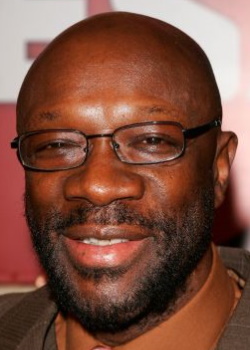 Composer, singer, songwriter, arranger and actor Isaac Hayes died in Memphis, Tennessee, on August 10, 2008, at the age of 65.
One of the defining figures of 1970s soul music, Hayes also made an indelible contribution to cinema through his groundbreaking score for Shaft, whose combination of funk, jazz, orchestral writing and rhythm-and-blues profoundly influenced the sound of American film music. He became the first African-American to win an Academy Award in a music category when “Theme from Shaft” won Best Original Song in 1972.
Isaac Lee Hayes Jr. was born in Covington, Tennessee, on August 20, 1942, and grew up in the Memphis area. A multi-instrumentalist who played piano, organ and saxophone, he joined Stax Records during the early 1960s, initially as a session musician. With lyricist David Porter he became one of the label’s most successful songwriting teams, creating songs including “Hold On, I’m Comin’,” “When Something Is Wrong with My Baby” and “Soul Man” for Sam & Dave. By the end of the decade Hayes had emerged as a recording star in his own right, with the landmark 1969 album Hot Buttered Soul establishing his distinctive mixture of extended song structures, deep vocals, psychedelic soul and elaborate orchestral arrangements.
His entry into film music came with Gordon Parks’s Shaft (1971), starring Richard Roundtree as private detective John Shaft. Hayes approached the project with the same musical freedom that characterized his solo albums, combining wah-wah guitar, driving hi-hat rhythms, brass, strings, jazz improvisation and lengthy instrumental grooves. Rather than merely providing conventional dramatic underscore, he created a complete musical environment for the film, giving its urban New York setting a confidence and contemporary energy rarely heard in mainstream Hollywood scoring at the time.
The opening “Theme from Shaft” became an immediate phenomenon. Its famous guitar figure, insistent rhythm section, sweeping strings and Hayes’s spoken-sung description of the title character transformed a film theme into a major pop hit. The song reached the top of the American charts, while the soundtrack album was also a major commercial success. Hayes received Academy Award nominations for both the song and the dramatic score, winning for Best Original Song, while the soundtrack and its arrangements also brought him Grammy Awards.
Shaft became enormously influential. Its mixture of contemporary Black popular music and cinematic scoring helped establish the musical vocabulary of the emerging blaxploitation genre and encouraged other major soul artists to undertake film projects, most notably Curtis Mayfield with Super Fly and Marvin Gaye with Trouble Man. Hayes demonstrated that a soundtrack could operate simultaneously as dramatic underscore, a commercially successful album and an expression of Black urban identity.
Hayes returned to cinema prominently in 1974 with two further crime scores, Three Tough Guys and Truck Turner, appearing as an actor in both films as well as providing their music. These scores expanded the style of Shaft with tougher funk rhythms, prominent brass, electric keyboards and lengthy instrumental passages. Truck Turner in particular contains some of his most muscular film writing, while pieces from both soundtracks later enjoyed renewed popularity through sampling and their use by filmmakers including Quentin Tarantino.
Film scoring never became Hayes’s principal career. He continued recording throughout the 1970s and later developed a substantial acting career, appearing in films such as John Carpenter’s Escape from New York and the comedy I’m Gonna Git You Sucka. Beginning in 1997 he found an entirely new audience as the voice of Chef on the animated television series South Park. His musical reputation also continued to grow: he was inducted into the Rock and Roll Hall of Fame in 2002, while “Theme from Shaft” entered the Grammy Hall of Fame.

Shop at the Movie Music UK Store

Member of the


