Archive
DECEPTION – Erich Wolfgang Korngold
 GREATEST SCORES OF THE TWENTIETH CENTURY
Original Review by Craig Lysy
Warner Brothers Studios was searching for a film that would showcase two of their leading actors, Barbara Stanwyck and Paul Henried. To that end, late in 1943 they purchased the film rights to the 1927 two-character French play “Monsieur Lamberthier” by Louis Verneuil. They believed that the film noir drama would translate well for a suspenseful big screen adaptation. Henry Blanke was assigned production, provided a $2.882 million budget, and John Collier and Joseph Than were hired to write the screenplay. Irving Rapper was tasked with directing and a powerhouse cast for the ages was assembled, including luminaries; Bette Davis as Christine Radcliffe, Paul Henreid as Karel Novak, and Claude Rains as Alexander Hollenius. In the three years it took to launch the project, Bette Davis, whose star was ascendant, replaced Stanwyck for the lead role. Read more…
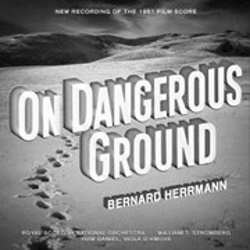
ON DANGEROUS GROUND – Bernard Herrmann
 GREATEST SCORES OF THE TWENTIETH CENTURY
Original Review by Craig Lysy
In 1951 director Nicholas Ray had just wrapped up shooting the WWII action film “The Flying Leathernecks” and decided that his next project would a film noir melodrama based on the 1945 novel “Mad With Much Heart” by Gerald Butler. RKO Pictures executives were initially resistant, finding the novel “unpleasant and uncommercial”, but were ultimately persuaded by Ray’s vision and passion. John Houseman was assigned production and A. I. Bezzerides was tasked with adapting Butler’s novel and writing the screenplay. For the cast, Ray hired Ida Lupino as Mary Malden, Robert Ryan as Jim Wilson, and Ward Bond as Walter Brent. Read more…
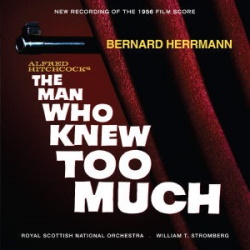
THE MAN WHO KNEW TOO MUCH – Bernard Herrmann
 GREATEST SCORES OF THE TWENTIETH CENTURY
Original Review by Craig Lysy
Alfred Hitchcock had directed in England, the film “The Man Who Knew Too Much” (1934). In 1941 he decided on a new American incarnation, but it did not come to fruition until 1956 when Paramount Pictures agreed it was a movie that could be well-adapted to the new decade. Filwite Productions joined with Paramount and provided a $1.2 million budget. Hitchcock would manage production and direct, and Charles Bennett and D. B. Wyndham-Lewis were tasked with writing the screenplay. A fine cast was assembled with James Stewart as Dr. Benjamin McKenna, Doris Day as Josephine Conway McKenna, Bernard Miles as Edward Drayton, Brenda de Banzie as Lucy Drayton Christopher Olsen as Henry McKenna, and Daniel Gélin as Louis Bernard. Read more…
ANCHORS AWEIGH – Jule Styne, Sammy Cahn, Georgie Stoll
 GREATEST SCORES OF THE TWENTIETH CENTURY
Original Review by Craig Lysy
Gene Kelly caught the eye of Hollywood studios who were impressed by his athletic American style of dancing, as well as his talent as a choreographer. Seeking to capitalize on his talent, MGM studios offered him a contract. This led them to task him to choreograph, dance and star in the studio’s next planned musical – “Anchors Aweigh”. The film was yet another one of MGM Studios penchant for musicals. It would be the first of three “Buddy” films, which teamed Gene Kelly with Frank Sinatra. Production was assigned to Joe Pasternak with a budget of $2.6 million, Natalie Marcin was hired to write the story, with Isobel Lennart writing the screenplay, and George Sidney was tasked with directing. For the cast, Frank Sinatra would star as Clarence “Brooklyn” Doolittle, Gene Kelly as Joe Brady and Kathryn Grayson as Susan Abbott. Read more…
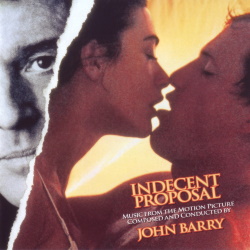
INDECENT PROPOSAL – John Barry
 THROWBACK THIRTY
Original Review by Jonathan Broxton
What would you do for a million dollars? That was the question on everyone’s lips following the release of Indecent Proposal, one of the most talked-about films of 1993. The film is directed by Adrian Lyne – the man behind such equally controversial fare as 9½ Weeks and Fatal Attraction – and stars Demi Moore and Woody Harrelson as Diana and David, a young couple who are deeply in love but in severe financial straits. In a final act of desperation they travel to Las Vegas and invest everything they have in a high-stakes game of poker – but they end up losing it all. Enter John Gage (Robert Redford), a handsome billionaire, who comes to David with the indecent proposal in question: one million dollars, in exchange for one night with Diana. What happens in the aftermath of this will test Diana and David’s relationship to its limits, and the film asks interesting questions about love, temptation, and the consequences of making choices based solely on money. Read more…
CHUPA – Carlos Rafael Rivera
 Original Review by Jonathan Broxton
There have been many ‘boy and his pet’ stories, in both film and literature over the decades – the list is too enormous to mention – but the common threads that link so many of them is the way that humans and animals often bond with each other in extraordinary circumstances, and change each other’s lives for the better as a result. This new film, Chupa, directed by Mexican filmmaker Jonás Cuarón (son of Alfonso Cuarón), was inspired by one specific ‘boy and his pet’ story – 1982’s E.T. The Extra-Terrestrial – but whereas Steven Spielberg’s masterpiece involved friendly aliens, Cuarón’s film involves a creature from Mexican folklore: the chupacabra. The story follows a teenager named Alex (Evan Whitten) who, while visiting family in Mexico, gains an unlikely companion when he discovers a young chupacabra hiding in his grandpa’s shed. To save the mythical creature, Alex and his cousins must embark on the adventure of a lifetime. The film co-stars Demián Bichir and Christian Slater and has been a massive success on Netflix in the weeks since it premiered in April 2023. Read more…
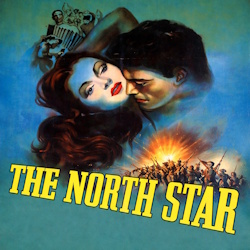
THE NORTH STAR – Aaron Copland
 GREATEST SCORES OF THE TWENTIETH CENTURY
Original Review by Craig Lysy
In 1942 President Roosevelt created the Office of War Information (OWI) to serve as America’s official propaganda agency. The OWI pressured Hollywood studios to make war films that favorably represented the Soviet Union to generate public support given that they and America were now allies fighting Nazi Germany. Following a personal request by President Roosevelt, MGM executive Samuel Goldwyn decided to contribute with the film The North Star. Goldwyn, assisted by William Cameron Menzies, took charge of production with a $3 million budget. Lillian Hellman was hired to write the story and screenplay, and Lewis Milestone was tasked with directing. An exceptional cast was assembled, including Ann Baxter as Marina Pavlova, Dana Andrews as Kolya Simonov, Walter Huston as Dr. Pavel Grigorich Kurin, Walter Brennan as Karp, Ann Harding as Sophia Pavlova, Jane Withers as Clavdia Kurina, Farley Granger as Damian Simonov and Erich von Stroheim as Dr. von Harden. Read more…
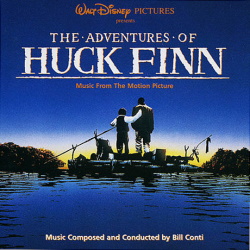
THE ADVENTURES OF HUCK FINN – Bill Conti
 THROWBACK THIRTY
Original Review by Jonathan Broxton
The Adventures of Huck Finn is a period adventure film directed by Stephen Sommers, based on the classic novel by Mark Twain. It’s one of dozens of adaptations of Twain’s timeless story, which combines elements of carefree adventure with more serious explorations of themes relating to friendship, morality, and the injustices of slavery, which were still fresh in the minds of Americans in 1885, when the book came out, considering that Abraham Lincoln’s emancipation proclamation freeing the slaves had been issued in 1862, just 23 years previously. The film follows the adventures of a young boy named Huck Finn (Elijah Wood), who runs away from his abusive father and teams up with an escaped slave named Jim (Courtney B. Vance) as they journey down the Mississippi River on a raft; as they travel down the river, Huck and Jim encounter a variety of colorful characters, including two con men (Robbie Coltrane and Jason Robards) who pretend to be the long-lost brothers of a wealthy man, and a group of feuding families who threaten to tear each other apart. Read more…
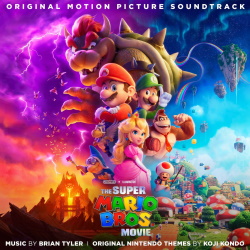
THE SUPER MARIO BROS. MOVIE – Brian Tyler
 Original Review by Jonathan Broxton
In 1981 video gaming was changed forever following the launch of Nintendo’s Donkey Kong arcade game. The game introduced two iconic characters into public consciousness: the titular antagonist, a 300-pound gorilla with a penchant for throwing barrels at people, and the hero, an Italian plumber named Mario. Since then, Mario has appeared in over 200 video games – including some of the most successful and popular titles of all time – and has become the recognizable mascot face of Nintendo as a whole. Understandably, Nintendo have been very protective of their man, and have been reluctant to allow movie adaptations featuring him (or, for that matter, many of their other characters); this reluctance was compounded following the 1993 release of the Super Mario Bros. film starring Bob Hoskins, which was a critical and commercial disaster. Now, almost 45 years after his initial appearance, Nintendo finally have a bonafide hit on their hands with this new Super Mario Bros. Movie, an animated action adventure featuring all the classic characters – Mario, Luigi, Bowser, Princess Peach, Donkey Kong, and more – and the voice talents of Chris Pratt, Anya Taylor-Joy, Charlie Day, Jack Black, Keegan-Michael Key, Seth Rogen, and Fred Armisen, among many others. Read more…
THE PRISONER OF ZENDA – Alfred Newman, Conrad Salinger
 GREATEST SCORES OF THE TWENTIETH CENTURY
Original Review by Craig Lysy
With the onset of a new decade, MGM studio executives embarked on an ambitious plan to remake several popular black and white films in color. To that end, in 1951 they announced that they had purchased the film rights of “The Prisoner of Zenda” (1937) from David O. Selznick for $225,000. A creative decision was to use many of the same production elements as the 1937 film, including; the identical script, camera angles, setting and musical score. Pandro S. Berman was assigned production and provided a $1.708 million budget. Richard Thorpe was tasked with directing, and a stellar cast was assembled, which included; Stewart Granger as Rudolph Rassendyll, Deborah Kerr as Princess Flavia, James Mason as Rupert of Hentzau, Louis Calhern as Colonel Zapt, Robert Douglas as Michael, Duke of Strelsau, Jane Greer as Antionette de Mauban and Robert Coote as Fritz von Tarlenheim. Read more…
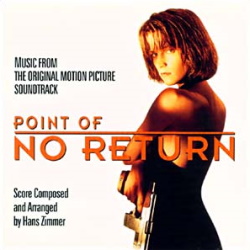
POINT OF NO RETURN – Hans Zimmer
 THROWBACK THIRTY
Original Review by Jonathan Broxton
Point of No Return, also known as The Assassin, is an action thriller film directed by John Badham, and is a remake of the 1990 French film La Femme Nikita directed by Luc Besson. The story follows Maggie Hayward (Bridget Fonda), a drug-addicted criminal who is sentenced to death for her involvement in a robbery that resulted in a police officer being killed. However, instead of being executed, she is given the opportunity to become a government assassin under the guidance of her handler, Bob (Gabriel Byrne). Maggie undergoes intensive training and transformation to become a skilled and professional killer; she is given a new identity as Claudia and is sent on missions to eliminate high-level targets. Along the way, she becomes involved in a romantic relationship with J. P. (Dermot Mulroney), a man who works as a computer expert for Bob. However, things take a dark turn when Maggie’s loyalty is questioned, and she must decide whether to continue her life as a killer or to risk everything to escape and start anew. The film co-starred Anne Bancroft and Harvey Keitel in major supporting roles, and was popular box office success, which cemented the-then 28-year old Bridget Fonda’s status as a viable leading lady. Read more…
DUNGEONS & DRAGONS: HONOUR AMONG THIEVES – Lorne Balfe
 Original Review by Jonathan Broxton
It’s been surprisingly difficult to make a good adaptation of Dungeons & Dragons. In the years since the classic table-top roleplaying game was released in 1974 there have been several attempts; the 1983 animated TV series was fun, but barely resembled the game itself, while the 2000 live action version starring Justin Whalin was critically reviled and commercially disastrous, although it did spawn a series of straight-to-DVD sequels. This new film, Dungeons & Dragons: Honour Among Thieves, is an attempt to finally – finally – convey the fun, excitement, and imagination of the game for movie audiences; it stars Chris Pine, Michelle Rodriguez, Regé-Jean Page, Justice Smith, Sophia Lillis, and Hugh Grant, and was written and directed by self-proclaimed D&D nerds Jonathan Goldstein and John Francis Daley; it’s a classic fantasy story set in a medieval world full of knights, wizards, rogues and thieves, and features a quest for treasure, numerous battles, and wonderous creatures a-plenty. Read more…
THE LIFE OF EMILE ZOLA – Max Steiner
 GREATEST SCORES OF THE TWENTIETH CENTURY
Original Review by Craig Lysy
In 1936 Warner Brothers Studio executives Hal B. Wallis and Henry Blanke received a proposal from Heinz Herald, a literary agent, that they consider a making a biopic film of Émile Zola and the infamous Dreyfus Affair. Wallis and Blanke were favorably disposed to the idea and hired Harold and Geza Herczeg to write the script. Their 200-page script was accepted, but underwent editing by Herczeg, Wallis, director William Dieterle and actor Paul Muni. The final script was approved in early 1937, and Blanke was assigned production with a budget of $699,000. William Dieterle was tasked with directing, and a fine staff was assembled, including Paul Muni as Émile Zola, Gloria Holden as Alexandrine Zola, Gale Sondergaard as Lucie Dreyfus, and Joseph Schildkraut as Captain Alfred Dreyfus. Read more…
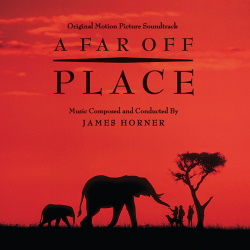
A FAR OFF PLACE – James Horner
 THROWBACK THIRTY
Original Review by Jonathan Broxton
A Far Off Place is a children’s adventure movie directed by Mikael Salomon about a group of teenagers who must survive in the African desert after their families are killed by poachers. It stars a then 17-year-old Reese Witherspoon as Nonnie Parker, a young girl who lives on a game reserve with her father; after the poachers attack and her father is killed, she is forced to flee into the Kalahari with a young African boy named Xhabbo (Sarel Bok), and along the way they are joined by an American teenager named Harry Winslow (Ethan Randall), who is also trying to escape from the poachers and their leader, corrupt ivory smuggler John Ricketts (Jack Thompson). The group faces many dangers in the harsh desert environment, including dehydration, starvation, encounters with dangerous wildlife, and further attacks from Ricketts, but eventually they discover evidence of the poachers’ illegal activities and decide that they must try to put an end to their operation. The film was received as a slightly updated version of the 1971 Australian film Walkabout, and was praised at the time for its beautiful desert cinematography, but it has become somewhat forgotten in the intervening years. Read more…
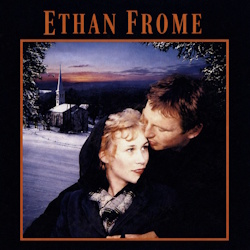
ETHAN FROME – Rachel Portman
 THROWBACK THIRTY
Original Review by Jonathan Broxton
Ethan Frome is a romantic drama directed by John Madden, based on the tragic novel by Edith Wharton. The film is set in snowy Vermont in 1911 and stars Liam Neeson as the titular character, who has been trapped by circumstance and duty his entire life. He is married to a sickly and demanding woman, Zeena (Joan Allen), who has come to live with him and his mother after the death of her own family. The couple is struggling financially, and Ethan is unable to leave the farm to pursue his dream of becoming an engineer. One winter day, a young and vivacious cousin of Zeena’s, Mattie Silver (Patricia Arquette), comes to stay with the Fromes to help care for Zeena. Ethan is immediately drawn to Mattie’s youthful energy and zest for life, and they begin to fall in love, but despite their growing feelings for each other, they are unable to act on them; Zeena is suspicious of their relationship and threatens to send Mattie away. Ethan is torn between his love for Mattie and his duty to Zeena, and in a desperate attempt to escape his unhappy life, considers running away with Mattie. However, their plan is foiled and their decision, and its aftermath, have significant consequences for all. It’s a classic, if somewhat bleak, tale of star crossed lovers, but the film was not a success with either critics or audiences; Roger Ebert famously described it as “the kind of movie they used to show us in high school English class, where it gave literature a bad name.” Read more…

Shop at the Movie Music UK Store

Member of the

 MOVIE MUSIC UK