Archive
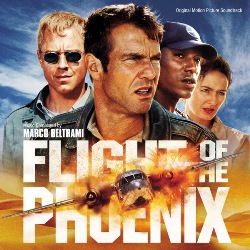
FLIGHT OF THE PHOENIX – Marco Beltrami
 Original Review by Jonathan Broxton
Marco Beltrami, by popular consensus, has enjoyed the most fruitful year of his career in 2004. Having already written excellent sci-fi scores for Hellboy and I Robot, he finishes the year with a score for director John Moore’s re-make of the classic 1965 disaster thriller Flight of the Phoenix. The original was directed by Robert Aldrich, starred Jimmy Stewart and Richard Attenborough, and featured a good score by Frank De Vol. The new version stars Dennis Quaid, Giovanni Ribisi and Miranda Otto, but the basic stories are the same: a group of contractors from an oil company are forced to make a crash landing in the Mongolian Gobi desert after the plane taking them home runs into a huge sandstorm. Hundreds of miles from civilization, and with virtually no hope of rescue, the disparate group of survivors are forced to put their trust in the least trustworthy member of the group – a mysterious and insecure man who claims to be an engineer, and who says he can rebuild their wrecked plane and return them safely home. Read more…
SPANGLISH – Hans Zimmer
 Original Review by Peter Simons
A comedy about the barrier of language, Spanglish is not exactly the most original movie out there. Newcomer Paz Vega stars a Flor, a Mexican immigrant who moves to America hoping to find a better future for herself and her daughter Christina (Victoria Luna). She finds a job as the personal housekeeper of the Clasky family (Tea Leoni and Adam Sandler). Of course, the fact that she doesn’t speak a word of English does complicate things a little. Directed by James L. Brooks who previously made As Good As It Gets and I’ll Do Anything among others, Spanglish was reasonably successful and showed the world that Adam Sandler is not that bad an actor if given half a chance. Read more…
LEMONY SNICKET’S A SERIES OF UNFORTUNATE EVENTS – Thomas Newman
 Original Review by Jonathan Broxton
In what can almost be seen as an extension of the playfulness he showed in writing Finding Nemo in 2003, Thomas Newman has written the score for Lemony Snicket’s A Series of Unfortunate Events, the first big-screen adaptation of the popular children’s stores by author Daniel Handler. Essentially a distillation of three of the Lemony Snicket books – The Bad Beginning”, “The Reptile Room”, and “The Wide Window” – director Brad Silberling’s film stars child actors Emily Browning and Liam Aiken as the Baudelaire children, made orphans in a mysterious fire and sent to live with their thespian uncle, Count Olaf (Jim Carrey). What results are – as the title suggests – a series of unfortunate events as Olaf hatches plot after plot to bump off the children and get his hands on their inheritance. With a supporting cast that includes Meryl Streep, Billy Connolly and Timothy Spall, Lemony Snicket looks set to rival Harry Potter in the coming years as the “literary franchise for children” – especially with another ten stories from which to choose future film storylines. Read more…
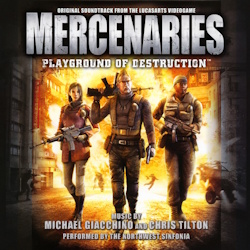
MERCENARIES: PLAYGROUND OF DESTRUCTION – Michael Giacchino, Chris Tilton
 GAME ZONE REVIEW
Original Review by Jonathan Broxton
Whereas television was once the breeding ground for aspiring composers, in the year 2005 the best place for the young and the talented to hone their craft is in the video game arena. I remember back in the 1980s when video game music consisted solely of little electronic blips and bloops; if you were lucky, you got a little synthesised melody which looped endlessly as you played. Not so today – it seems that every new ‘prestige’ game comes loaded with a full, thematic, orchestral score, many of which can rival the best of Hollywood’s output. So it is with Mercenaries: Playground of Destruction, the latest release from LucasArts and software developers Pandemic. Read more…
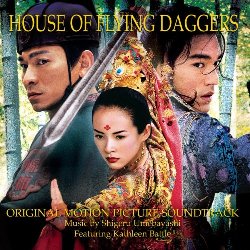
HOUSE OF FLYING DAGGERS – Shigeru Umebayashi
 Original Review by Jonathan Broxton
In the wake of the success of the Oscar-winning 2000 film Crouching Tiger Hidden Dragon, Hollywood seems to be in love with Chinese martial arts films. It’s not difficult to see why: with their simple tales of love, honor and revenge, exotic locales and breathtaking scenery, and highly stylized action sequences (which, more often than not, feature characters performing gravity-defying stunts on wires), the genre is inherently cinematic. In 2002, revered director Zhang Yimou made the critically acclaimed Hero starring Jet Li. Having loved the experience so much, he immediately followed it with another film of a similar nature: House of Flying Daggers. Read more…
UN LONG DIMANCHE DE FIANÇAILLES/A VERY LONG ENGAGEMENT – Angelo Badalamenti
 Original Review by Jonathan Broxton
With the exception of the cult TV series Twin Peaks and the Golden Globe-nominated score for David Lynch’s poetic drama The Straight Story, the vast majority of Angelo Badalamenti’s work has been written for projects on the fringes of the mainstream. He works with offbeat, independent directors like Paul Schrader, and often writes music for films with little or no commercial potential, and often in languages other than English. I’ve been telling myself that I’m a fan of his for quite some time but, when I actually sit down and think about the numbers involved, there are really only four or five titles I actually like: Cousins, The Straight Story, The Beach and Secretary are among them. For this reason I approached his score A Very Long Engagement with a combination of anticipation and unease; on too many occasions, Badalamenti has slightly disappointed me with his final product, despite each film having great potential for excellent music. Fortunately, this is not the case here. Read more…
ALEXANDER – Vangelis
 Original Review by Peter Simons
Since the unexpected success of Ridley Scott’s 2000 sword-and-sandals hit Gladiator, historical biopics are in fashion again; showing us glimpses of the lives of Attila, Helen of Troy, Hannibal and, in this instance, Alexander the Great. Oliver Stone’s film primarily focuses on the eight years of the Macedonian king’s life during which he conquered the vast majority of the then known world. By the age of 25, Alexander (played here by Colin Farrell) had led his armies from Macedonia to India and paved the way for Greek culture to spread its influence. Somewhat controversially, the film also emphasizes Alexander’s bisexual nature and his relationship with boyhood friend Hephaestion (Jared Leto). The spectacular supporting cast Stone gathered together includes Angelina Jolie as Alexander’s mother Olympas and Anthony Hopkins as Old Ptolemy, as well as Val Kilmer, Christopher Plummer and Rosario Dawson. Read more…
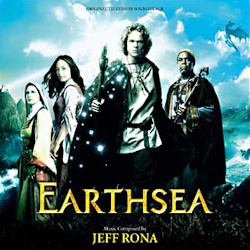
EARTHSEA – Jeff Rona
 Original Review by Jonathan Broxton
Jeff Rona has had an interesting, somewhat unique career to date. The 48-year old American was one of the first composers-in-residence of the Media Ventures organisation when it first started up in the early 1990s, and scored the biggest hit of his career replacing Maurice Jarre on Ridley Scott’s White Squall in 1996, before sort of disappearing. He has contributed “additional ambiences” to occasional Zimmer outings, and written for TV productions such as the recent “Traffic” spin-off, but for some reason has never truly built on the potential he showed in the early 1990s, or capitalised on his association with Hans Zimmer the way other early-MV composers such as Mark Mancina, Trevor Rabin, Harry Gregson-Williams or John Powell have. Read more…
NOUVELLE-FRANCE/BATTLE OF THE BRAVE – Patrick Doyle
 Original Review by Jonathan Broxton
It’s been a while, but Patrick Doyle is back. Having been displaying his considerable talents in the arenas of quiet British comedy (Bridget Jones’s Diary, Calendar Girls) and period farce (Gosford Park) since the turn of the millennium, Scottish composer Doyle has finally returned to the romantic soundscapes he created regularly in the early 1990s and applied them to Nouvelle-France, a lavish French-Canadian film which called for the broad themes, lush orchestrations and powerful melodies many of us fell in love with a decade ago. Read more…
NATIONAL TREASURE – Trevor Rabin
 Original Review by Jonathan Broxton
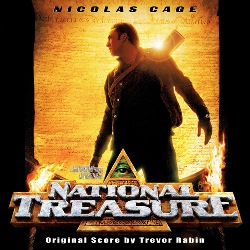
One of late-2004’s surprising smash hit movies, National Treasure is a ludicrous but enjoyable action-adventure romp starring Nicolas Cage and directed by Jon Turteltaub. Cage plays Ben Gates, a sort of combination archaeologist/historian/treasure hunter who is carrying on the family legacy by searching for the ‘national treasure’, a hoard of fabulous wealth passed on from generation to generation by Knights Templar and Freemasons, which he believes was hidden in a secret location by the United States’s founding fathers, including George Washington and Benjamin Franklin. Having been double crossed by his former partner Ian Howe (Sean Bean) and left for dead in the Arctic Circle, Ben escapes and returns to home soil, where he teams up with technical whiz Riley (Justin Bartha) and beautiful museum curator Abigail (Diane Kruger). Together, the trio try to locate a map which Ben believes is hidden on the back of the Declaration of Independence, and find the treasure before Ian does… Read more…
KINSEY – Carter Burwell
 Original Review by Jonathan Broxton
Regular readers of Movie Music UK will know that I have often found Carter Burwell to be a ‘hit and miss’ composer. For as much as I enjoyed his work on things like Fargo, Conspiracy Theory, The Hi-Lo Country and Rob Roy, I was left unimpressed with Gods & Monsters, Hamlet, The General’s Daughter, and many of his more popular and successful scores for the Coen Brothers. I don’t really know what my problem is – he is obviously intelligent, talented, and well-liked by directors such as James Foley, Michael Caton-Jones and Spike Jonze, who return to him time after time to score their films. The only think I can chalk it up to is personal musical taste – his scores just don’t “do” it for me on a regular basis. However, having said all that, I safely say that Kinsey is most definitely one which will join the list of Burwell works I admire – for me, it’s easily his most satisfying score of the last five years. Read more…
THE POLAR EXPRESS – Alan Silvestri
 Original Review by Jonathan Broxton
A film surely destined to be a future Christmas classic, Robert Zemeckis’s film version of Chris Von Allsberg’s children’s tale The Polar Express is one of the most anticipated films of late 2004. Using the revolutionary “motion capture” technique that brought Gollum to life in Lord of the Rings, state-of-the-art animation, and featuring Tom Hanks in a number of vocal roles, The Polar Express brings to life the adventures of a nameless little boy who has come to believe that Santa Claus does not exist. However, late on Christmas Eve night, while the boy is lying in bed listening for the sound of reindeer hooves on the roof, he is amazed to discover a steam engine pulling up outside his bedroom window. The cantankerous but kindly conductor invites the boy on board to accompany several other children on a magical journey to prove that Santa does exist, and that the spirit of the season is alive and well in those who still believe. Read more…
DOGORA: OUVRONS LES YEUX/DOGORA: OPEN OUR EYES – Étienne Perruchon
 Original Review by Jonathan Broxton
A film from the same mold as Godfrey Reggio’s “qatsi” trilogy (Koyaanisqatsi, Powaqqatsi, Naqotqatsi), Dogora: Ouvrons Les Yeux is a documentary feature which ruminates on life, a film without narrative which uses the powerful combination of imagery and music to tell its story. Directed by Patrice Leconte, who was inspired to make the film after an eye-opening visit, Dogora is a film about Cambodia: its people, the landscape, and the culture. By focusing on the lives of everyday Cambodians as they go about their daily business – eating, sleeping, working, playing, travelling – Dogora provides the world with an intimate, realistic portrait of a still largely undiscovered culture, which is still best-known to the West for its bloody history under the Khmer Rouge regime, and the iconic images of the beautiful Angkor Wat temple which adorns the nation’s flag. Read more…
THE INCREDIBLES – Michael Giacchino
 Original Review by Jonathan Broxton
Within our little world of film music, Michael Giacchino is already pretty famous. Having written some of the most spectacular game scores in history for Dreamworks’ Medal of Honor series, and having contributed music to the hit ABC series Alias since its debut in 2001, Giacchino has gradually built up a strong fan base of admirers who fully expect him to develop into one of film music’s major players in the next 10 to 15 years. When it was announced that John Barry, the original choice of composer for The Incredibles, was no longer attached to the project, and that Giacchino would be his replacement, a great whoop of delight was heard: finally, a big screen vehicle worthy of his talents! Read more…
RAY – Craig Armstrong
 Original Review by Jonathan Broxton
Ray Charles, who died on 10 June 2004, was inarguably one of the pioneers of “black” music of the 20th century. Born in extreme poverty in Georgia in 1930, and struck blind by glaucoma at the age of six, Charles overcame obstacles which would stop lesser men in their tracks and became a giant of music. By fusing Gospel music with jazz and rock & roll, he virtually invented a new style of music. With his soulful piano playing and unique vocal delivery, he won legions of fans, who bought records such as “Georgia On My Mind” and “What’d I Say” in droves. Jamie Foxx plays Charles in director Taylor Hackford’s biopic of the great man, and has been receiving accolades galore for his realistic, brave portrayal. The film, which also stars Kerry Washington, Regina King and Clifton Powell, looks set to become a major player at the 2004 Academy Awards, with all eyes on Foxx as a potential Best Actor nominee. Read more…

Shop at the Movie Music UK Store

Member of the


