Archive
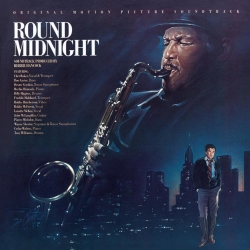
ROUND MIDNIGHT – Herbie Hancock
 THROWBACK THIRTY
Original Review by Jonathan Broxton
During the 1980s the Academy of Motion Picture Arts and Sciences made some truly baffling decisions with regard to the Oscar for Best Original Score. In 1980 Michael Gore’s light pop score for Fame beat out The Empire Strikes Back. In 1981 Vangelis’s one-theme electronic noodling on Chariots of Fire somehow defeated Raiders of the Lost Ark. In 1988 Dave Grusin won for The Milagro Beanfield War – a film and score which, at least amongst my casual acquaintances, virtually no-one has seen or heard. Perhaps the strangest decision, however, came in 1986 when jazz composer and musician Herbie Hancock won for his score for Round Midnight, beating composers of such eminence as James Horner, Jerry Goldsmith, and Ennio Morricone, whose losing score for The Mission was not only the best score of 1986, but is on the list of the best scores ever written. Read more…
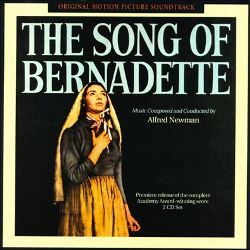
THE SONG OF BERNADETTE – Alfred Newman
 GREATEST SCORES OF THE TWENTIETH CENTURY
Original Review by Craig Lysy
Producer William Perlberg of 20th Century Fox saw opportunity for the studio after reading the novel 1942 novel The Song of Bernadette by Franz Werfel, and so resolved to bring this inspired and miraculous story to the big screen. Henry King was hired to direct and veteran screenwriter George Seaton tasked with writing the screenplay. For the actors, a nationwide talent search found 24 year old Jennifer Jones, who was selected to play the title character of Bernadette Soubirous. Supporting actors included Vincent Price in perhaps his finest performance as (Prosecutor Vital Dutour), Aubrey Mather (Mayor Lacade), Charles Dingle (Chief of Police Jocomet), Charles Bickford (Dean of Lourdes) and Gladys Cooper (Sister Therese Vauzous). Read more…
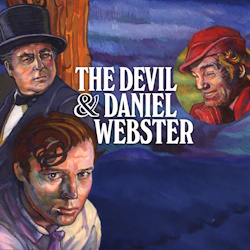
THE DEVIL AND DANIEL WEBSTER – Bernard Herrmann
 MOVIE MUSIC UK CLASSICS
Original Review by Craig Lysy
1941 would prove to be a banner year for Bernard Herrmann as he was honored with two Academy Award nominations. Having completed Citizen Kane, what many believe to be his Magnum Opus, RKO Studios tasked him with a new project The Devil and Daniel Webster for director William Dieterle. Note that the studio later changed the title to “All That Money Can Buy”. From both Herrmann’s and Dieterle’s perspectives, the collaboration was collegial, and in the end, The Devil and Daniel Webster triumphed over Citizen Kane, earning Herrmann his only Academy Award win. Herrmann’s entry into the realm of film score music atop two nominated scores and an Oscar win was an outstanding achievement. Herrmann would later relate that he believed Citizen Kane was a superior score in that it was more original and better integrated into the film’s narrative – your author agrees. Read more…
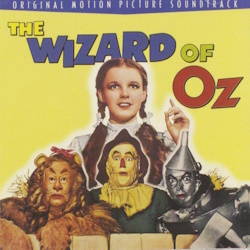
THE WIZARD OF OZ – Herbert Stothart, Harold Arlen, E. Y. Harburg
 GREATEST SCORES OF THE TWENTIETH CENTURY
Original Review by Craig Lysy
Following the enormous commercial success of Walt Disney’s “Snow White And The Seven Dwarfs” (1937), MGM Studio Executive Louis Mayer was determined to cash in and duplicate its success. He found the story he felt was needed and purchased the rights to L. Frank Baum’s novel, “The Wonderful Wizard of Oz” (1900). Noel Langley, Florence Ryerson and Edgar Allan Woolf were tasked with writing the screenplay. Veteran director Victor Fleming was hired for the project and he assembled a cast, which is now legend; Judy Garland (Dorothy), Frank Morgan (Professor Marvel/Wizard of Oz), Ray Bolger (Hunk/Scarecrow), Jack Haley (Hickory/Tin Man), Bert Lahr (Zeke/Cowardly Lion), Billie Burke (Glinda) and Margaret Hamilton (Miss Gulch and the Wicked Witch of the West). Read more…
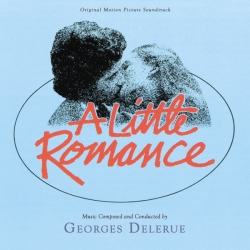
A LITTLE ROMANCE – Georges Delerue
 MOVIE MUSIC UK CLASSICS
Original Review by Craig Lysy
Director George Roy Hill enjoyed success with the romance film The World of Henry Orient in 1964, and when he came across the novel “E=MC2 Mon Amour” by Patrick Cauvan he decided it was time to revisit the genre. He and screenwriter Alan Burns crafted the script and set about finding their cast. Renowned thespian Laurence Olivier was hired to play Julius Edmund Santorin, and provide gravitas to the film, along with the two teenage lovers, Lauren King, played by Diane Lane making her acting debut, and Daniel Michon, played by Thelonius Bernard. The story offers a coming of age romance between Lauren, a 13-year-old American with an astounding IQ of 167, and her French beau Daniel, a street wise 13 year old who loves Hollywood film and betting on the horses. They meet one day at the Château de Vaux-le-Vicomte and fall in love. Their romantic adventure begins when the meet septuagenarian Julius who tells them that if they board a gondola in Venice and kiss under the Bridge of Sighs at sunset as the bells of Saint Mark’s toll, they will be in love forever. Well, since they cannot cross the border as minors without an adult, they join together on this romantic quest. With Julius’ assistance, and after much intrigue and side steps, Lauren and Daniel finally achieve their supreme romantic moment! Although Lauren’s outraged parents take her back to America, the film closes with our lovers locked in a parting gaze, knowing that Venice ensures they will again be together. The film had modest commercial success and received mixed critical reaction. Never the less it secured two Academy Award nominations for Best Screenplay and best Film Score, winning one, Best Film Score. Read more…
MIDNIGHT EXPRESS – Giorgio Moroder
 MOVIE MUSIC UK CLASSICS
Original Review by Craig Lysy
In 1976 director Alan Parker was visiting New York on a business trip. He by chance ran into his old friend, producer Peter Guber, who asked him to review a manuscript, which was based on a true story. On his plane fight back to London he read it and became convinced that this was a story which needed to be told on film. He joined Guber and his new production company, Casablanca Filmworks, and hired Oliver Stone for what would be his first commercial screenplay. Stone delivered the goods, penning a hard-hitting, raw, uncompromising narrative full of rage, and abounding in cinematic energy. For his cast, Parker brought in Brad Davis to play Billy Hayes after negotiations with Richard Gere broke down. Joining him would be John Hurt as Max, Paolo Bonacelli as Rifki, Irene Miracle as Susan, Randy Quaid as Jimmy Booth, and Paul L. Smith as Hamidou. They would shoot the film in Malta, as the Turkish government was decidedly hostile to the project. The true-life story reveals American college student Billy Hays on holiday in Istanbul with girlfriend Susan. Quite stupidly, he straps 2 kg of hashish to his torso, which he intends to smuggle back to the United States. However, Turkey is on a terrorist alert after a recent hijacking, and he is caught when they frisk him as he prepares to board the plane. He is arrested and humiliated with a strip search. A mysterious American named Tex enters the scene and encourages Billy to cooperate with the investigation for a lesser sentence. Billy agrees and fingers the man who sold him the hashish, only to be betrayed by Tex and the Turkish police. His futile attempt to escape earns him a three-year sentence for drug possession. Later, after the prosecutor appeals the verdict, he is re-sentenced to a more severe life sentence for smuggling. Read more…
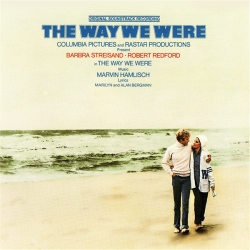
THE WAY WE WERE – Marvin Hamlisch
 MOVIE MUSIC UK CLASSICS
Original Review by Craig Lysy
Producer Ray Stark saw pay gold in the script and bought the film rights. He hired veteran director Sydney Pollack to direct. Casting the right principle actors was essential to the story’s success and so Barbara Streisand was cast as Katie, and Robert Redford as Hubble – a perfect pairing. The supporting ensemble included Bradford Dillman (J.J.), Lois Chiles (Carol Ann), Patrick O’Neal (George Bissinger) and Allyn Ann McLerie (Rhea Edwards). Writer Arthur Laurents created the screenplay based on his real life experiences as an undergraduate at Cornell in 1937. The story revolves around two people attracted in love by their differences, yet ultimately broken apart because of their inability to reconcile those differences. Katie is a strident and vocal Marxist Jew, while Hubble is carefree unaffected, apolitical WASP. They date and eventually marry, with her constantly pushing Hubble to excel and utilize his gift. He however settles for less, a Hollywood screenwriter where he becomes successful writing banal sitcoms. They are affluent, yet increasingly alienated. Her political activities begin to intrude into their lives as Studio executives pressure Hubble to rein her in, in light of the House Committee On Un-American Activities, which is targeting the Hollywood establishment. Well when an emotionally exhausted Hubble has an affair with his ex-girl friend while Katie is pregnant the relationship is ruptured. They divorce and years later re-encounter each other, she with militant flyers in her hand he insulated, but happy with a new wife. It is bittersweet as she relates that he was at his best as a writer when he was with her. They part, cherishing the memory of the way they were… Read more…
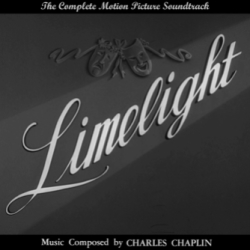
LIMELIGHT – Charles Chaplin, Raymond Rasch, Larry Russell
 MOVIE MUSIC UK CLASSICS
Original Review by Craig Lysy
Charles Chaplin produced, directed, wrote the screenplay and starred in Limelight, a story is set in London, 1914 on the eve of World War I. Calvero (Chaplin) is a famous stage clown who has fallen on bad times and descended into alcoholism. By chance he comes to rescue Terry (Claire Bloom) from herself, as she was poised to commit suicide. He shelters her and helps to heal her, and in so doing, heals himself, regaining his confidence and will to live. Terry falls in love with Calvero, but he believes the age difference is wrong, and that the younger Neville (Sydney Chaplin) would be a more appropriate match. And so Calvero sets off on his own, becoming a street entertainer. Terry rebounds and lands a leading role in a stage production. She is thankful for her new life and so invites Calvero to return to his first love, the stage. He agrees, and reunites with his old partner (Buster Keaton) and brings the house down with a magnificent performance. At this grand moment, tragedy strikes as he succumbs to a heart attack during the second act while Terry is performing. The film is a a truly remarkable achievement, with a stellar cast that supports his passion project. Noteworthy is the fact that in the final musical number we bear witness to the only time Chaplin and Keaton – two iconic actors – ever performed together. Read more…
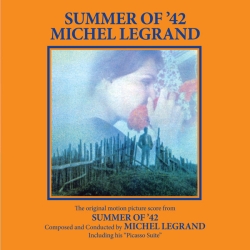
SUMMER OF ‘42– Michel Legrand
 MOVIE MUSIC UK CLASSICS
Original Review by Craig Lysy
Screenwriter Herman Raucher wrote his autobiographical script in 10 days as a tribute to his fallen comrade Oscy who lost his life in the Korean War. He was initially unable to sell the script to any studio, so it languished for many years until producer Robert Roth found a dusty copy lying in an agent’s office. He fell in love with it and resolved to bring this story to the big screen. He hired director Robert Mulligan (To Kill A Mockingbird) and decided to cast the parts of the boys with unknowns. Also, following in the steps of Love Story (1970) Raucher expanded the story into a book that was published as a prelude to the film. Well it became an instant hit and the film’s promotion had “Based on the national best seller” added to its advertisement. For the cast, Jennifer O’Neil was cast as Dorothy with the three boys Gary Grimes (Hermie), Jerry Houser (Oscy) and Oliver Conant (Benjie). Read more…
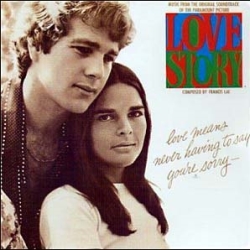
LOVE STORY – Francis Lai
 MOVIE MUSIC UK CLASSICS
Original Review by Craig Lysy
Producer Howard Minsky and Paramount Studios saw opportunity when he read Erich Segal’s “Love Story” script and secured the film rights. They also asked him to publish a novel in advance for the film so as to cultivate public interest. This proved to be a masterstroke, as the Valentine’s Day publication lead to a national best seller. Arthur Hiller was hired to direct and he brought in a fine cast, which included Ryan O’Neal (Oliver Bartlet IV), Ali McGraw (Jenny Cavalleri), Ray Milland (Oliver Barrett III), Katherine Balfour (Mrs. Barrett), John Marley (Phil Cavalleri) and Tommy Lee Jones (Hank Simpson) in his film debut. Read more…
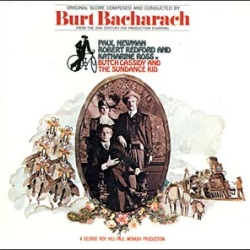
BUTCH CASSIDY AND THE SUNDANCE KID – Burt Bacharach
 GREATEST SCORES OF THE TWENTIETH CENTURY
Original Review by Craig Lysy
For screenplay writer William Goldman, “Butch Cassidy and the Sundance Kid” was a passion project. He first came upon the story of Cassidy and Longbaugh in the late 1950s, was fascinated by the men, and felt it was a story that needed to be brought to the big screen. Richard Zanuck of 20th Century Fox saw gold when he read the script and purchased the rights for an astounding $400,000! He tasked John Foreman to produce and George Roy Hill to direct. A stellar cast was brought in, which included; Paul Newman (Butch Cassidy), Robert Redford (The Sundance Kid), Katherine Ross (Etta Place), Jeff Corey (Sheriff Bledsoe, and Strother Martin (Percy Garris). Read more…
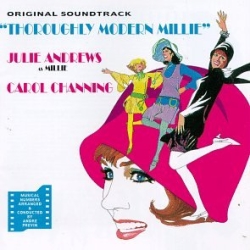
THOROUGHLY MODERN MILLIE – Elmer Bernstein
 MOVIE MUSIC UK CLASSICS
Original Review by Craig Lysy
Julie Andrews was the toast of Hollywood in the 1960s and her success in Mary Poppins (1964) and The Sound of Music (1966) made her the most popular and highest paid actress of the day. Universal Studios and producer Ross Hunter sought to capitalize on her popularity and so decided to adapt the British musical “Chrysanthemum” (1956) for her next musical. Richard Morris was hired to write the screenplay and George Roy Hill tasked with directing the film. Hill brought in a fine ensemble to support Julie Andrews (Millie Dillmount), which included Mary Tyler Moore (Dorothy Brown), James Fox (Jimmy Smith), John Gavin (Trevor Graydon), Carol Channing (Muzzy van Hossmere) and Beatrice Lillie (Mrs. Meers). Read more…
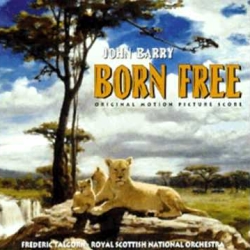
BORN FREE – John Barry
 GREATEST SCORES OF THE TWENTIETH CENTURY
Original Review by Craig Lysy
Producers Carl Forman, Sam Jaffe and Paul Radin came across the book “Born Free: A Lioness of Two Worlds” (1960) by renowned naturalist Joy Adamson, and believed her heart-warming tale could be brought to the big screen. They purchased the film rights and hired screenwriter Lester Cole to forge the screenplay. For the cast, Director James Hill brought in veteran British actors Virginia McKenna (Joy Adamson) and Bill Travers (George Adamson) to lead an ensemble, which included Geoffrey Keen (John Kendall), Peter Lukoye (Nuru), Surya Patel (the Doctor) and Geoffrey Best as (Watson). Read more…
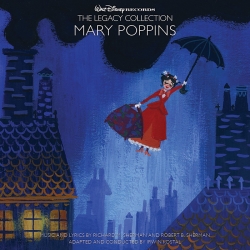
MARY POPPINS – Richard M. Sherman, Robert B. Sherman, Irwin Kostal
 GREATEST SCORES OF THE TWENTIETH CENTURY
Original Review by Craig Lysy
Walt Disney had long kept the book Mary Poppins in his office and was determined to one day bring it to the big screen for his daughters. The book series authored by P. L. Travers offered a series of fantastic tales, which unfortunately lacked a cohesive story. Disney tasked the Sherman brothers and screenplay writer Don DaGradi to create a cogent narrative. Robert Stevenson was tasked with directing the film and he secured a fine cast, which included Julie Andrews making her acting debut as Mary Poppins, Dick Van Dyke as Bert, David Tomlinson as George Banks, Glynis Johns as Winifred Banks, and Karen Dotrice and Matthew Garber the Banks children Jane and Michael. The story tells the tale of a nanny who comes to the aid of a family in disarray. She uses her magical gifts to bring back joy into the lives of the children, but to also reconnect George with his family. The movie was both a critical and commercial success earning eight Academy Award nominations, winning five for Best Actress, Best Film Editing, Best Special Effects, Best Original Song and Best Film Score. Read more…
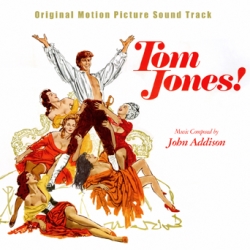
TOM JONES – John Addison
 GREATEST SCORES OF THE TWENTIETH CENTURY
Original Review by Craig Lysy
Producer and director Tony Richardson drew inspiration from an 18th century English novel “A History of Tom Jones, a Foundling”, by Henry Fielding. He hired John Osborne to adapt it to the big screen and cast the film audaciously, selecting rising star Albert Finney for the titular role. Rounding out the cast was Susannah York (Sophie Western), Edith Evans (Miss Western), Joan Greenwood (Lady Ballaston), Hugh Griffith (Squire Western) and making his film debut, David Warner as the villain Blifil. The story offers a classic period piece full of drama, treachery, seduction and intrigue. Squire Allworthy discovers an infant on his bed and chooses to raise little Tom Jones as if he were his own son. Tom’s grows up to become an attractive, dashing, and very popular young man with the ladies, It comes to pass that he falls madly in love with Sophie, who returns his affections. Yet there is an insurmountable impediment – Tom is stigmatized as a bastard, and Sophie’s father forbids her to wed a man below her station. Blifil who seeks Allworthy’s estate engineers Tom’s dishonor and dismissal by Squire Allworthy. An irrepressible Tom however is not to be denied, and he travels far and wide, all the time enjoying a multiplicity of women, fine food and drink along the way! As fate would have it he ultimately triumphs, overcoming all obstacles set against him, and earns Sophie’s hand in marriage when his true identity as Bridget’s Allworthy’s illegitimate son and Allworthy’s nephew is finally revealed. The film was both a commercial and critical success, earning an amazing ten Academy Award nominations, winning four, for Best Picture, Best Director, Best Screenplay and Best Score. Read more…

Shop at the Movie Music UK Store

Member of the

 MOVIE MUSIC UK