Archive
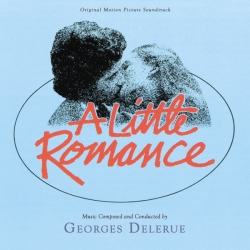
A LITTLE ROMANCE – Georges Delerue
 MOVIE MUSIC UK CLASSICS
Original Review by Craig Lysy
Director George Roy Hill enjoyed success with the romance film The World of Henry Orient in 1964, and when he came across the novel “E=MC2 Mon Amour” by Patrick Cauvan he decided it was time to revisit the genre. He and screenwriter Alan Burns crafted the script and set about finding their cast. Renowned thespian Laurence Olivier was hired to play Julius Edmund Santorin, and provide gravitas to the film, along with the two teenage lovers, Lauren King, played by Diane Lane making her acting debut, and Daniel Michon, played by Thelonius Bernard. The story offers a coming of age romance between Lauren, a 13-year-old American with an astounding IQ of 167, and her French beau Daniel, a street wise 13 year old who loves Hollywood film and betting on the horses. They meet one day at the Château de Vaux-le-Vicomte and fall in love. Their romantic adventure begins when the meet septuagenarian Julius who tells them that if they board a gondola in Venice and kiss under the Bridge of Sighs at sunset as the bells of Saint Mark’s toll, they will be in love forever. Well, since they cannot cross the border as minors without an adult, they join together on this romantic quest. With Julius’ assistance, and after much intrigue and side steps, Lauren and Daniel finally achieve their supreme romantic moment! Although Lauren’s outraged parents take her back to America, the film closes with our lovers locked in a parting gaze, knowing that Venice ensures they will again be together. The film had modest commercial success and received mixed critical reaction. Never the less it secured two Academy Award nominations for Best Screenplay and best Film Score, winning one, Best Film Score. Read more…
MIDNIGHT EXPRESS – Giorgio Moroder
 MOVIE MUSIC UK CLASSICS
Original Review by Craig Lysy
In 1976 director Alan Parker was visiting New York on a business trip. He by chance ran into his old friend, producer Peter Guber, who asked him to review a manuscript, which was based on a true story. On his plane fight back to London he read it and became convinced that this was a story which needed to be told on film. He joined Guber and his new production company, Casablanca Filmworks, and hired Oliver Stone for what would be his first commercial screenplay. Stone delivered the goods, penning a hard-hitting, raw, uncompromising narrative full of rage, and abounding in cinematic energy. For his cast, Parker brought in Brad Davis to play Billy Hayes after negotiations with Richard Gere broke down. Joining him would be John Hurt as Max, Paolo Bonacelli as Rifki, Irene Miracle as Susan, Randy Quaid as Jimmy Booth, and Paul L. Smith as Hamidou. They would shoot the film in Malta, as the Turkish government was decidedly hostile to the project. The true-life story reveals American college student Billy Hays on holiday in Istanbul with girlfriend Susan. Quite stupidly, he straps 2 kg of hashish to his torso, which he intends to smuggle back to the United States. However, Turkey is on a terrorist alert after a recent hijacking, and he is caught when they frisk him as he prepares to board the plane. He is arrested and humiliated with a strip search. A mysterious American named Tex enters the scene and encourages Billy to cooperate with the investigation for a lesser sentence. Billy agrees and fingers the man who sold him the hashish, only to be betrayed by Tex and the Turkish police. His futile attempt to escape earns him a three-year sentence for drug possession. Later, after the prosecutor appeals the verdict, he is re-sentenced to a more severe life sentence for smuggling. Read more…
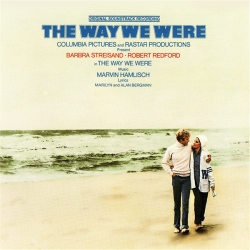
THE WAY WE WERE – Marvin Hamlisch
 MOVIE MUSIC UK CLASSICS
Original Review by Craig Lysy
Producer Ray Stark saw pay gold in the script and bought the film rights. He hired veteran director Sydney Pollack to direct. Casting the right principle actors was essential to the story’s success and so Barbara Streisand was cast as Katie, and Robert Redford as Hubble – a perfect pairing. The supporting ensemble included Bradford Dillman (J.J.), Lois Chiles (Carol Ann), Patrick O’Neal (George Bissinger) and Allyn Ann McLerie (Rhea Edwards). Writer Arthur Laurents created the screenplay based on his real life experiences as an undergraduate at Cornell in 1937. The story revolves around two people attracted in love by their differences, yet ultimately broken apart because of their inability to reconcile those differences. Katie is a strident and vocal Marxist Jew, while Hubble is carefree unaffected, apolitical WASP. They date and eventually marry, with her constantly pushing Hubble to excel and utilize his gift. He however settles for less, a Hollywood screenwriter where he becomes successful writing banal sitcoms. They are affluent, yet increasingly alienated. Her political activities begin to intrude into their lives as Studio executives pressure Hubble to rein her in, in light of the House Committee On Un-American Activities, which is targeting the Hollywood establishment. Well when an emotionally exhausted Hubble has an affair with his ex-girl friend while Katie is pregnant the relationship is ruptured. They divorce and years later re-encounter each other, she with militant flyers in her hand he insulated, but happy with a new wife. It is bittersweet as she relates that he was at his best as a writer when he was with her. They part, cherishing the memory of the way they were… Read more…
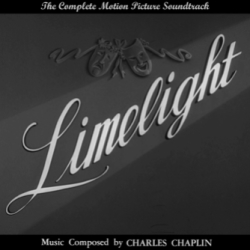
LIMELIGHT – Charles Chaplin, Raymond Rasch, Larry Russell
 MOVIE MUSIC UK CLASSICS
Original Review by Craig Lysy
Charles Chaplin produced, directed, wrote the screenplay and starred in Limelight, a story is set in London, 1914 on the eve of World War I. Calvero (Chaplin) is a famous stage clown who has fallen on bad times and descended into alcoholism. By chance he comes to rescue Terry (Claire Bloom) from herself, as she was poised to commit suicide. He shelters her and helps to heal her, and in so doing, heals himself, regaining his confidence and will to live. Terry falls in love with Calvero, but he believes the age difference is wrong, and that the younger Neville (Sydney Chaplin) would be a more appropriate match. And so Calvero sets off on his own, becoming a street entertainer. Terry rebounds and lands a leading role in a stage production. She is thankful for her new life and so invites Calvero to return to his first love, the stage. He agrees, and reunites with his old partner (Buster Keaton) and brings the house down with a magnificent performance. At this grand moment, tragedy strikes as he succumbs to a heart attack during the second act while Terry is performing. The film is a a truly remarkable achievement, with a stellar cast that supports his passion project. Noteworthy is the fact that in the final musical number we bear witness to the only time Chaplin and Keaton – two iconic actors – ever performed together. Read more…
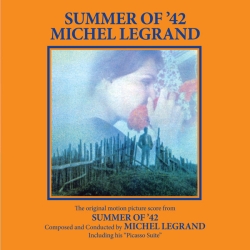
SUMMER OF ‘42– Michel Legrand
 MOVIE MUSIC UK CLASSICS
Original Review by Craig Lysy
Screenwriter Herman Raucher wrote his autobiographical script in 10 days as a tribute to his fallen comrade Oscy who lost his life in the Korean War. He was initially unable to sell the script to any studio, so it languished for many years until producer Robert Roth found a dusty copy lying in an agent’s office. He fell in love with it and resolved to bring this story to the big screen. He hired director Robert Mulligan (To Kill A Mockingbird) and decided to cast the parts of the boys with unknowns. Also, following in the steps of Love Story (1970) Raucher expanded the story into a book that was published as a prelude to the film. Well it became an instant hit and the film’s promotion had “Based on the national best seller” added to its advertisement. For the cast, Jennifer O’Neil was cast as Dorothy with the three boys Gary Grimes (Hermie), Jerry Houser (Oscy) and Oliver Conant (Benjie). Read more…
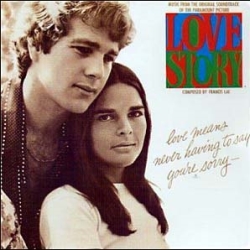
LOVE STORY – Francis Lai
 MOVIE MUSIC UK CLASSICS
Original Review by Craig Lysy
Producer Howard Minsky and Paramount Studios saw opportunity when he read Erich Segal’s “Love Story” script and secured the film rights. They also asked him to publish a novel in advance for the film so as to cultivate public interest. This proved to be a masterstroke, as the Valentine’s Day publication lead to a national best seller. Arthur Hiller was hired to direct and he brought in a fine cast, which included Ryan O’Neal (Oliver Bartlet IV), Ali McGraw (Jenny Cavalleri), Ray Milland (Oliver Barrett III), Katherine Balfour (Mrs. Barrett), John Marley (Phil Cavalleri) and Tommy Lee Jones (Hank Simpson) in his film debut. Read more…
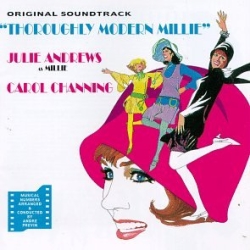
THOROUGHLY MODERN MILLIE – Elmer Bernstein
 MOVIE MUSIC UK CLASSICS
Original Review by Craig Lysy
Julie Andrews was the toast of Hollywood in the 1960s and her success in Mary Poppins (1964) and The Sound of Music (1966) made her the most popular and highest paid actress of the day. Universal Studios and producer Ross Hunter sought to capitalize on her popularity and so decided to adapt the British musical “Chrysanthemum” (1956) for her next musical. Richard Morris was hired to write the screenplay and George Roy Hill tasked with directing the film. Hill brought in a fine ensemble to support Julie Andrews (Millie Dillmount), which included Mary Tyler Moore (Dorothy Brown), James Fox (Jimmy Smith), John Gavin (Trevor Graydon), Carol Channing (Muzzy van Hossmere) and Beatrice Lillie (Mrs. Meers). Read more…
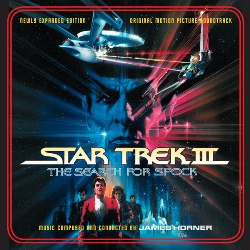
STAR TREK III: THE SEARCH FOR SPOCK – James Horner
 MOVIE MUSIC UK CLASSICS
Original Review by Craig Lysy
Star Trek II: The Wrath of Khan achieved tremendous critical and commercial success, and so Paramount quickly authorized the making of a third film. However, director Nicholas Meyer refused to return in protest over changes made to the prior film’s ending without his consent. When Nimoy was asked to reprise the role of Spock, he said yes, with the caveat that he wanted to direct the film. The studio hesitated, but ultimately agreed, and Harve Bennett was again hired to produce and write the script. The original crew ensemble returned including; William Shatner as Captain Kirk, Leonard Nimoy as Spock, DeForest Kelly as Dr. McCoy, James Doohan as Scott, George Takei as Sulu, Walter Koenig as Chekov and Nichelle Nichols as Uhura. Joining the cast was Christopher Llyod as the villain Captain Kruge, Robin Curtis replacing Kirstie Alley as Lieutenant Saavik, Mark Lenard as Sarek, Merritt Buttrick as Dr. David Marcus, and the renowned Dame Judith Anderson as the Vulcan high priestess T’Lar. Nimoy wanted the film to be operatic with a transpersonal exploration of the themes of life, death and rebirth. Yet he also wanted to explore on a more personal level, the deeper meaning of friendship. Nimoy relates: “What should a person do to help a friend? How deeply should a friendship commitment go? And what sacrifices, what obstacles, will these people endure?” Read more…
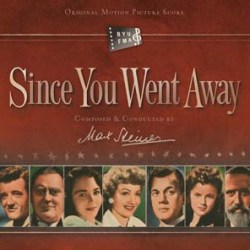
SINCE YOU WENT AWAY – Max Steiner
 MOVIE MUSIC UK CLASSICS
Original Review by Craig Lysy
Legendary producer David O. Selznick wanted to make a film, which demonstrated his patriotic support for the war effort. However, he was adamant that he did not want to make a traditional war movie. As such he personally adapted the screenplay from the 1943 novel “Since You Went Away: Letters to a Soldier from His Wife” by Margaret Buell Wilder. Selznick hired veteran director John Cromwell with whom he had collaborated on nine prior films, and then assembled a quality cast including; Claudette Colbert (Mrs. Anne Hilton), Jennifer Jones (Jane Deborah Hilton), Joseph Cotton (Lieutenant Commander Tony Willett), Shirley Temple (Bridget ‘Brig’ Hilton), Monty Woolley (Colonel William G. Smollett) and Lionel Barrymore as Clergyman. The movie is set in a typical American town located near a military base, where people with loved ones serving in the armed forces struggle to cope with their absence. The main storyline concerns Anne, a housewife whose husband is fighting overseas. She struggles with his absence as she tries to meet the challenges of youthful romance from their two daughters who are growing into womanhood. The film overflows with sentimentality against the somber backdrop of families coping with grief, loneliness or fear for the future. I believe Selznick achieved his ambition, as the film was both a commercial and critical success, earning nine Academy Award nominations, winning one for Best Score. Read more…
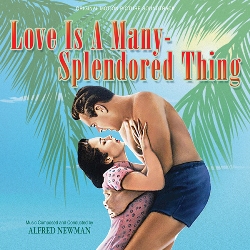
LOVE IS A MANY-SPLENDORED THING – Alfred Newman
 MOVIE MUSIC UK CLASSICS
Original Review by Craig Lysy
Buddy Adler, the Production Head of Fox Studios saw money to be made by the hit novel “A Many Splendored Thing” by Han Suyin. He purchased the film rights an hired trusted screenwriter John Patrick to adapt it for the big screen. The story offers a potent commentary on an inter-racial romance set in Hong Kong during the waning days of the 1940s. American reporter Mark Elliot (William Holden), who is estranged from his wife, falls passionately in love with widowed Eurasian doctor Han Suyin (Jennifer Jones). For a short time they manage to find happiness together, but events soon overtake them. Mark’s wife refuses his request for a divorce, and their romance precipitates a palpable prejudice from both her family and Hong Kong society. Han is eventually ostracized from the community and loses her position at the hospital. As Mark ships out to cover the Korean War they desperately write each other in hope of maintaining a connection and salvaging their relationship, but alas, it is to no avail as Mark gets killed during the war. Han does not relent in her love and the story ends with her visiting the green hill where they used to meet. The film was both a commercial and critical success, earning eight Academy Awards nominations, winning three for Best Costume Design, Best Song and Best Score. Read more…
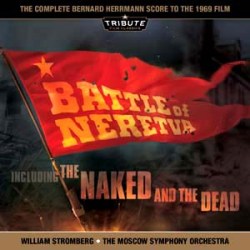
BATTLE OF NERETVA/THE NAKED AND THE DEAD – Bernard Herrmann
 MOVIE MUSIC UK CLASSICS
Original Review by Craig Lysy
BATTLE OF NERETVA
Battle of Neretva is based on actual historical events and was made to celebrate the victory of Yugoslav partisans over the Nazis. In the beginning of 1943 Hitler issued a personal order for his generals to commence operation “Weiss”, which was designed to root out and destroy Yugoslav partisan units. Pushed by far more powerful enemy, the partisans reeled under the attack incurring many casualties, 4500 wounded and a typhus outbreak. As they retreated, they found themselves surrounded in Neretva valley. Only one bridge remained, with heavy enemy forces waiting on the other side, set to massacre the remaining fighters and fleeing non-combatants. Marshall Tito ordered the partisans to destroy the bridge apparently trapping his forces. The move surprised the Germans who responded by transferring their forces to the other side, predicting that Partisans would attempt the suicidal break through. But, during only one night, the partisans managed to build a provisional bridge near the destroyed one and cross to the other side, tricking the enemy. The film earned an Oscar nomination for Best Foreign Language Film but failed to win. Read more…
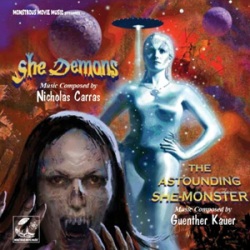
SHE-DEMONS/THE ASTOUNDING SHE-MONSTER – Nicholas Carras/Gene Kauer
 MOVIE MUSIC UK CLASSICS
Original Review by Craig Lysy
SHE-DEMONS
She Demons offers a classic science fiction B film, and that is being generous! Fred Maklin, Jerrie Turner and two others are pleasure boating when a storm shipwrecks them on an uncharted island. Their radio is damaged and cannot transmit, only receive. They soon discover that the island is scheduled to be used by the US navy for bombing practice. Of course things get worse when they also come upon strange human footprints. As the party explores the island, they soon discover that it is inhabited by deformed female humanoids; by products of horrific experiments perpetrated by a party of Nazis, who are led of course by the mad scientist Colonel Osler. We are informed that he has been extracting a rare glandular substance from the girls to inject into his wife Mona, who has suffered terrible facial disfigurement, so as to restore her beauty. This of course now makes perfect sense! In any event the film was a bust and received no critical acclaim. Read more…
DESTINATION MOON – Leith Stevens
 MOVIE MUSIC UK CLASSICS
Original Review by Craig Lysy
Producer George Pal sought to start the decade of the 1950s with a well-made outer space drama. He adapted “Rocket Ship Galileo”, a novel by Robert Heinlein, for his project and installed Irving Pichel to direct. The story reveals humanity’s first effort to fly a spaceship to the Moon. Dr. Charles Cargraves and space exploration enthusiast General Thayer solicit aircraft executive Jim Barnes to join them in a collective effort to build Earth’s first nuclear powered spacecraft. Politics, public hysteria and regulations threaten to shutdown the project but are circumvented by a decision to pre-empt impending interference by launching early. They successfully launch and begin the epic trek, but are forced to make emergency repairs mid flight that includes a dramatic rescue of an un-tethered crewman. As they initiate lunar descent, miscalculation causes them to consume too much fuel during the landing. System check calculations indicate that they now have insufficient fuel reserves to successfully blast off and achieve lunar orbit with the full crew. They make desperate efforts to lighten the ship yet come up short by 110 pounds; meaning one of the crew must remain. With their launch window closing and crew anxiety building, they resolve to not only jettison the ship’s radio equipment, there-by losing contact with Earth, but also their sole remaining space suit. With time almost out the Luna safely blasts off from the Moon with all aboard and completes its epic voyage by returning to Earth. The film was a modest commercial success and earned two Academy Award nominations, winning one for Visual Effects. Read more…
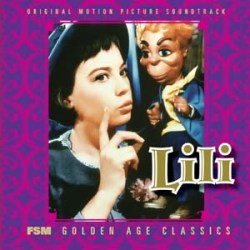
LILI – Bronislau Kaper
 MOVIE MUSIC UK CLASSICS
Original Review by Craig Lysy
MGM producer Edwin Knopf hired director Charles Walters to bring to life Lili, a fantasy tale based on a Saturday Evening Post short story “The Man Who Hated People” by Paul Gallico. For the film a talented cast was chosen; Lili Daurier (Leslie Caron), Paul Berthalet (Mel Ferrer), Marc (Jean-Pierre Aumont), Rosalie (Zsa Zsa Gabor) and Jacquot (Kurt Kaznar). In our story Lili, a naive country girl travels to a small provincial town in hopes of locating an old friend of her late father’s. When she discovers that he has died, a shopkeeper offers her employment as a guise to take sexual advantage of her. Marc, a handsome carnival magician whose Nome de plume is “Marcus the Magnificent” perceives her danger, covets her for himself and comes to her rescue. Yet her purity of heart dissuades his intentions and through him she gains work at the carnival assisting its master puppeteer Paul. Her wonderment and childlike innocence supports just endearing story-telling through his puppets; a brash red-haired boy named Carrot Top, Reynardo, a sly fox, Marguerite, a vain ballerina, and lastly Golo, a cowardly giant. Paul begins to fall in love with Lili but is embittered with life due to a leg injury he suffered during the war that ended his career in the ballet. We sadly see him reduced to expressing his true feelings for Lili through his puppets, while being mean-spirited when out of character. Lili eventually leaves Paul’s torment and while walking out of town, imagines the three puppets, now life-size, joining her as she finds a new life path. As she celebrates by dancing with each puppet, they all magically transform one by one into Paul. Lili realizes through each of them that they are a facet of Paul. She realizes her love for Paul and runs back to the carnival where they embrace and kiss passionately as the puppets applaud. The film was a critical success, earning composer Bronislau Kaper an Academy Award for Best Score. Read more…
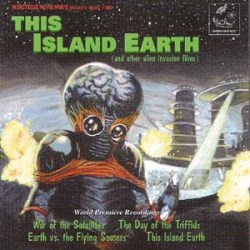
THIS ISLAND EARTH AND OTHER ALIEN INVASION FILMS – Various Composers
 MOVIE MUSIC UK CLASSICS
Original Review by Craig Lysy
Includes music from WAR OF THE SATELLITES by Walter Green, THIS ISLAND EARTH by Herman Stein, EARTH VS. THE FLYING SAUCERS by Daniele Amfitheatrof, and THE DAY OF THE TRIFFIDS by Ron Goodwin
THIS ISLAND EARTH
Universal-International’s producer William Alland well known for his penchant for Sci-Fi films, hired Joseph Newman to direct his latest project “This Island Earth”. Writers Franklin Coen and Edward O’Callaghan adapted a screenplay from ”Thrilling Wonder Stories”, three novelettes written by Raymond F. Jones. Principle actors Jeff Morrow (Exeter), Faith Domergue (Dr. Ruth Adams) and Rex Reason (Dr. Cal Meacham) were hired for the project. The story reveals the inhabitants of the planet Metaluna succumbing in their war with the plant Zahgon. Desperation leads them to Earth’s for its abundant uranium deposits, which they require to fuel their failing planetary shields, and for Earth’s greatest scientists whom they abduct to assist in their war efforts. The film earned praise for its story telling, cinematography and was also a commercial success. Read more…

Shop at the Movie Music UK Store

Member of the

 MOVIE MUSIC UK